
Reorganised from the original TIIOCTI article on heavy duty canvas storage bags, with load, seam and handle details from the product spec sheet.
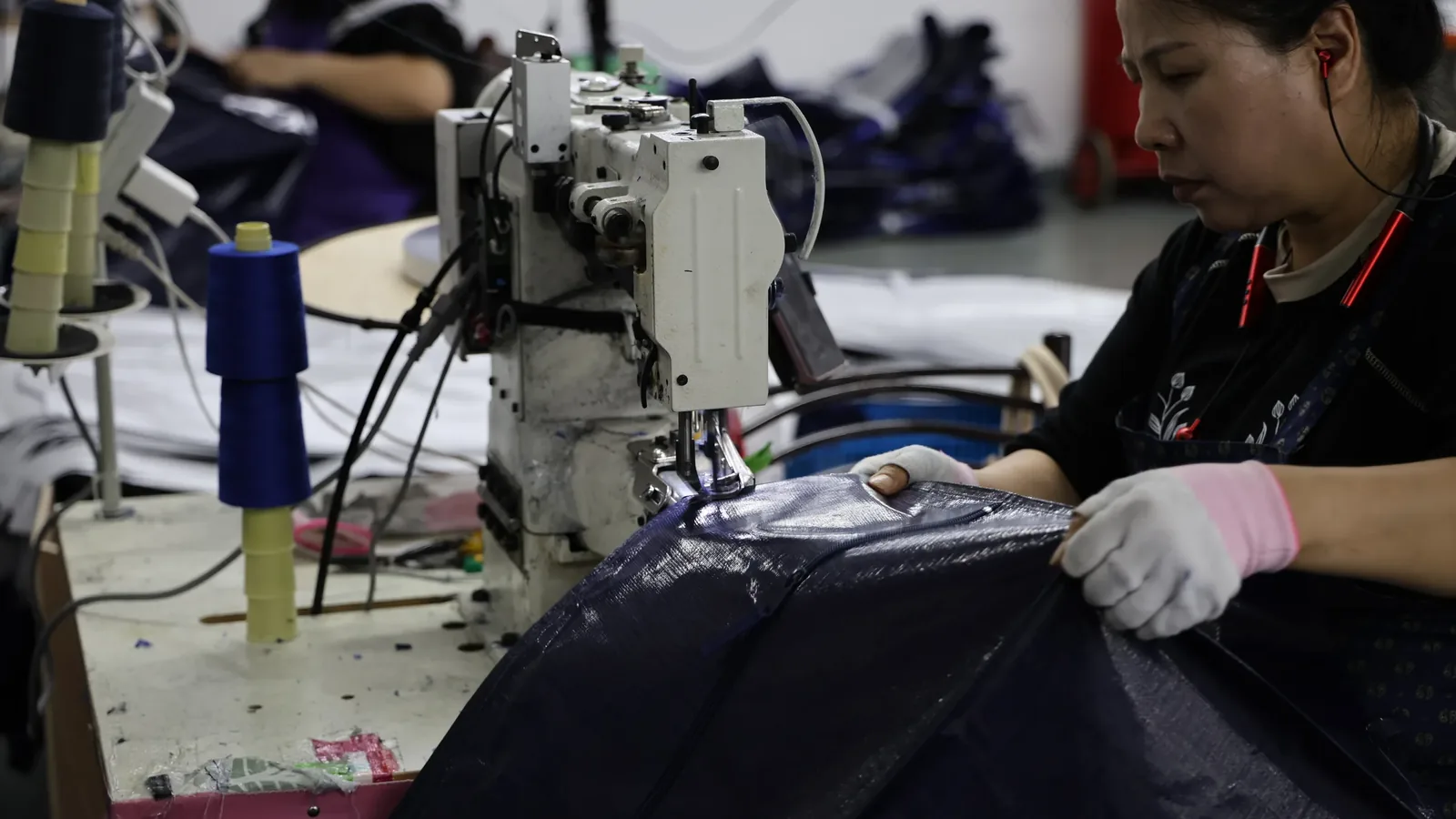
On the canvas line, the handle attachment station runs slower than any other step, and visitors often ask why. The answer is that the bar tack machine at that station sets the load limit for the whole bag, and a buyer who never asks about it is buying an unknown quantity. A procurement manager once spent three weeks comparing shell weights and print methods, then signed off on a handle spec she had never seen tested. Her questions were good. They were also aimed at the wrong end of the bag.
The five questions below are the ones that come up in almost every canvas storage bag meeting. Each one has a real answer and a way to check it before the order is placed.
The question that started the meeting
The meeting began with a simple request: a storage bag for a garage shelving system, sized to hold bedding and winter clothing, ordered in a single run. The buyer had a quote in front of her and one question on the table. Was the higher price for heavy duty canvas storage bags actually justified, or was she paying for a word on the spec sheet?
That question opens five more, and the order of asking matters. A buyer who starts with price will compare quotes that describe different bags. A buyer who starts with load and failure points will compare quotes that describe the same bag, and the price gap becomes readable. The sections below follow that second order.
How much weight will the bag actually hold?
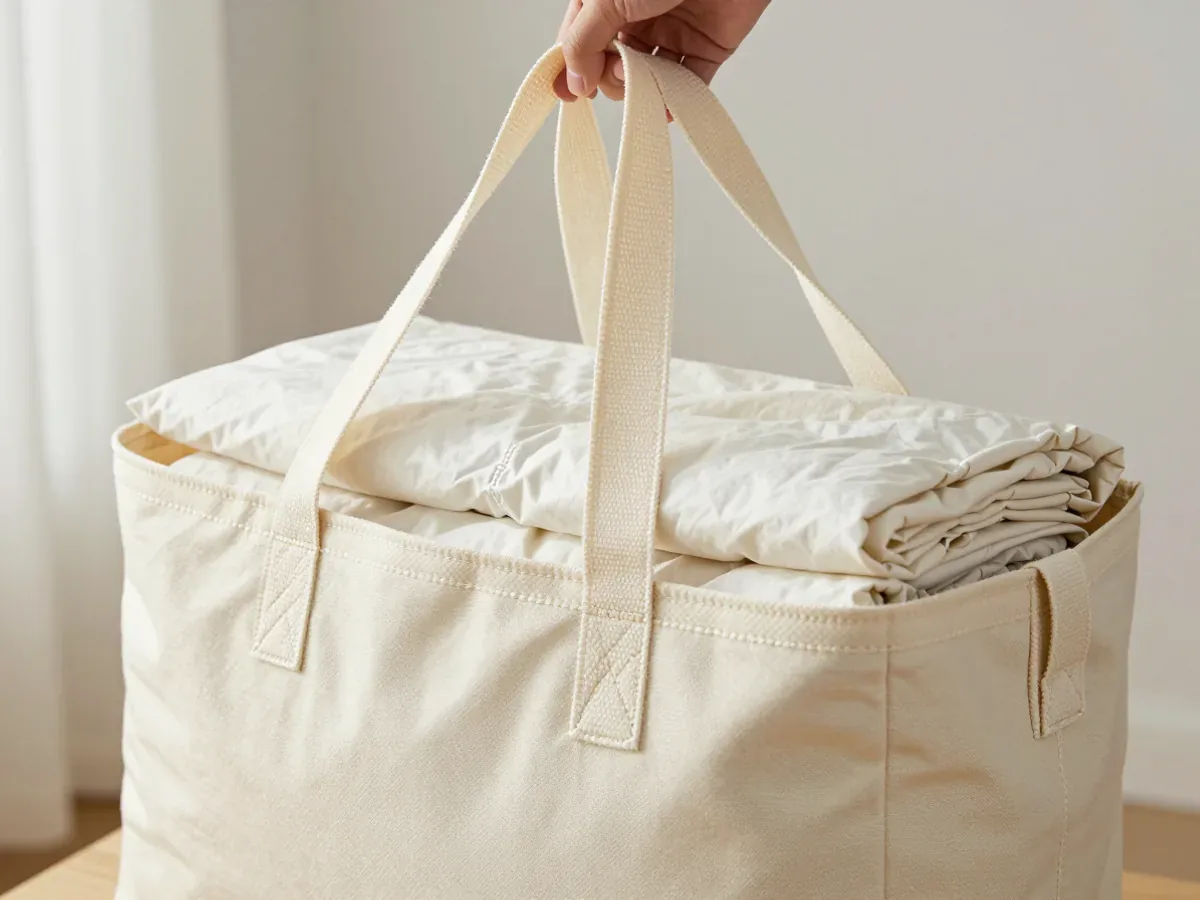
A heavy duty canvas tote can typically carry 30 to 50 pounds, and the range is wide because stitching and handle construction move the number more than the shell does. Two bags cut from the same cotton canvas can sit at opposite ends of that range depending on how the stress points are sewn.
The way to pin the number down is to ask for the load in writing, then ask what the figure is based on. A supplier who names a load without naming the seam and handle spec behind it is guessing. A supplier who ties the load to double stitching at the handle roots and a bar tack at each stress point is describing a tested construction.
A 180 gsm woven shell carries a full bedding load without the base sagging, which is about 5.3 oz per square yard. That figure gives the buyer a reference point: if a quote comes in well below it, the base will bow under the same load, and the bag will look tired after one season.
Where does a canvas storage bag fail first?
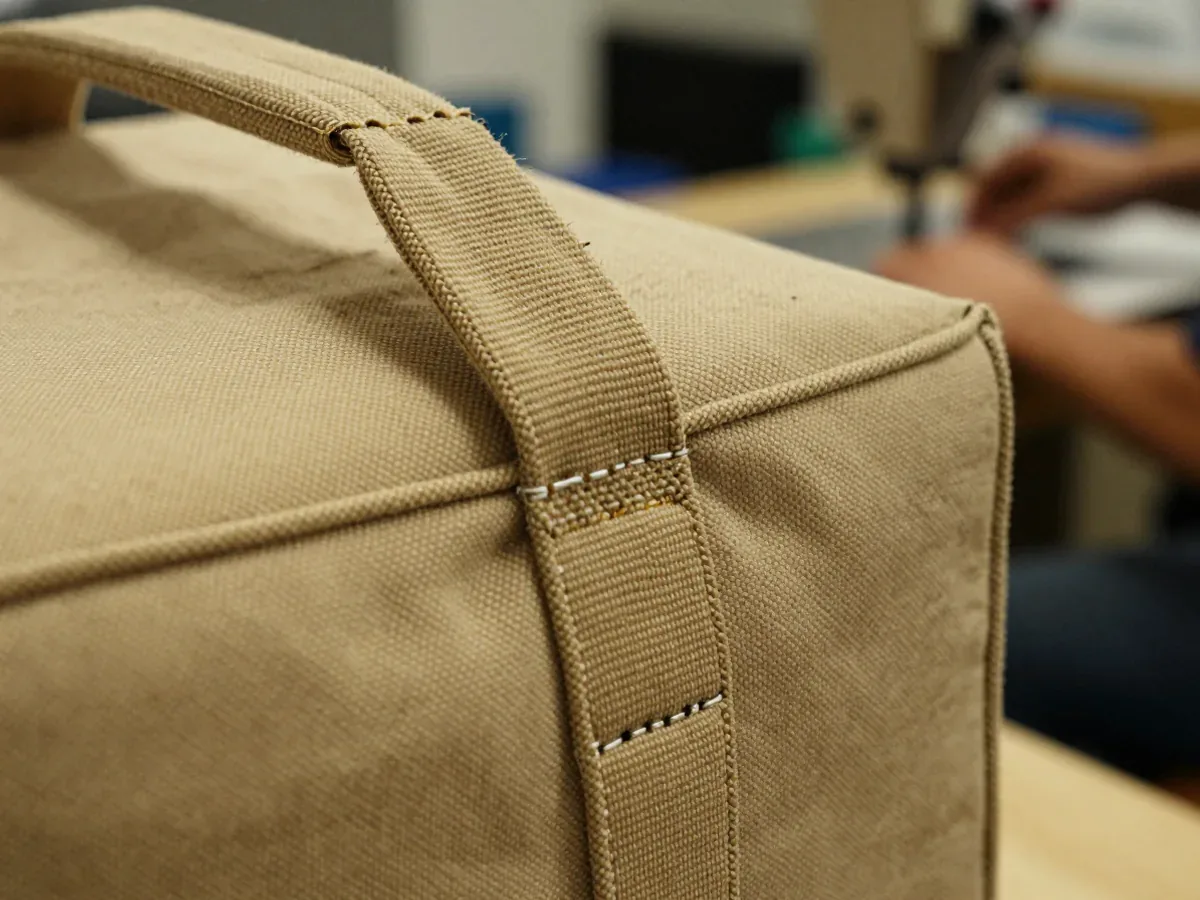
Weak seams and handles lead to early failure, and the failure usually starts at the point where the handle meets the body. The shell itself rarely tears first. The thread pulls, the fabric around the stitch line gives way, and the bag drops its contents at the worst possible moment.
The fix is construction, not material. Bar tack or double stitch the key stress points. Upgrade the handle to thicker cotton or add leather reinforcement where the handle joins the body. A lining, whether canvas or waterproof, adds structure and keeps the bag from collapsing inward when it is half full. A bottom insert in cardboard or plastic stops the base from sagging under weight.
These are small changes with a large effect on load bearing performance, and they are cheapest to specify before production rather than after the first complaint. On our bags the webbing runs the full length of the body rather than stopping at the handles, which spreads the load across the shell instead of concentrating it at four points.
Is cotton canvas the same as heavy duty canvas?
No, and the gap between the two is where most quote confusion begins. On the canvas line the body is cotton canvas, supplied natural or dyed, and the weight of that canvas is a separate decision from the word heavy duty on the label. A light cotton canvas and a heavy duty canvas can carry the same name and behave like different products.
The practical check is to ask for the fabric weight in grams per square metre and to ask whether the shell is a single woven layer or a laminated build. Then ask what the bag is expected to hold. A tote for groceries and a storage bag for bedding put different demands on the same material, and the weight that suits one will sag under the other.
There is also a naming trap worth knowing. A canvas bag refers to the material, while a tote bag refers to the style. A canvas tote is a common combination, but not all totes are canvas and not all canvas bags are totes. A buyer who orders a tote without naming the shell may receive a bag that is technically correct and functionally wrong.
What does the handle choice change?
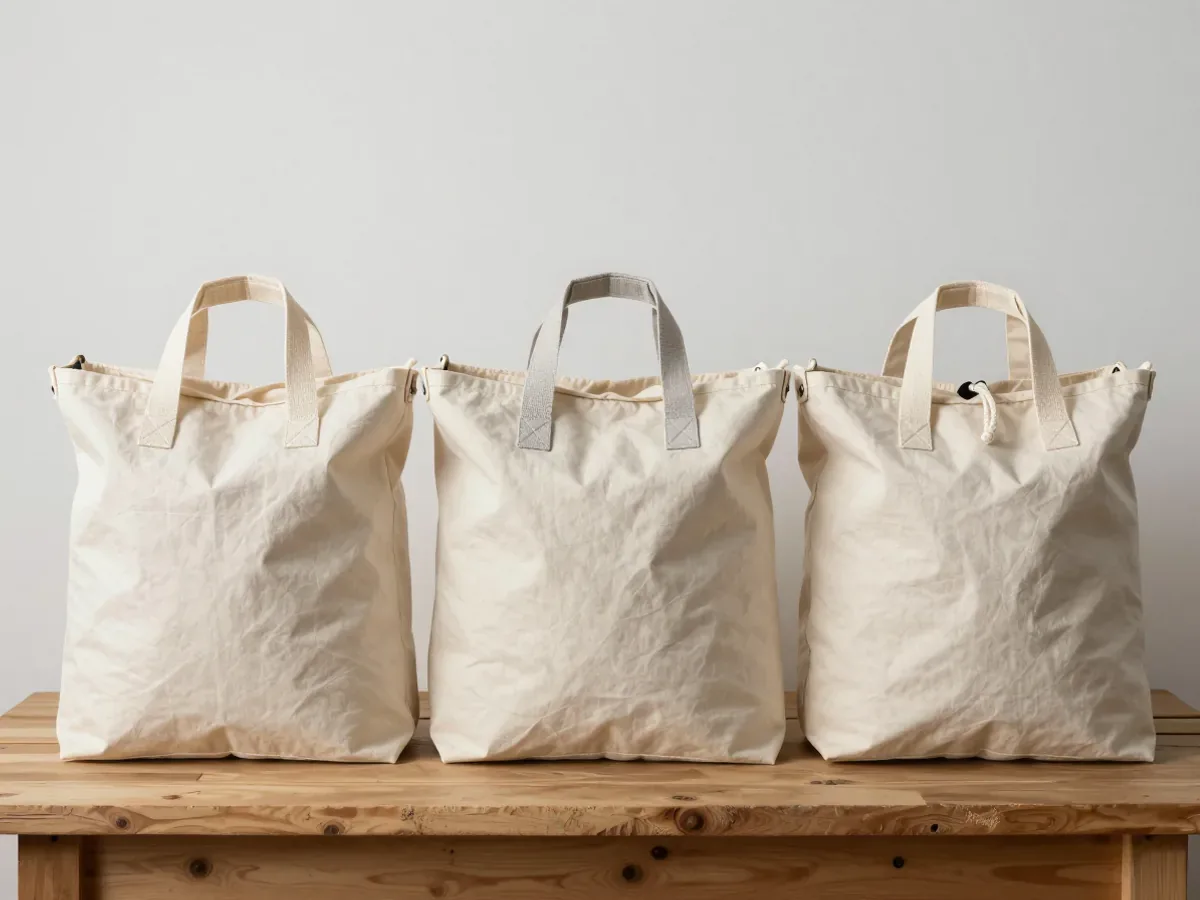
The handle is a separate choice from the shell, and it changes both the load limit and the feel of the bag in the hand. Handles are woven, webbing or rope, and each one pulls on the body differently. Woven handles look finished and suit retail display. Webbing spreads load and takes abrasion well. Rope handles carry weight comfortably but need a reinforced eyelet to stop the cord from cutting through the canvas.
The handle also decides how the bag is carried. A storage bag that will be dragged across a shelf needs a handle that survives friction. A bag that will be lifted by two people needs a handle long enough for two hands and anchored deep enough to take the pull.
Ask for a sample with the production handle, not a stand-in. Then load it to the stated limit and lift it by one handle only. A bag that distorts at the attachment point under a single-hand lift will fail in the same way on a customer’s shelf.
Can the bag survive a wet season in a garage?
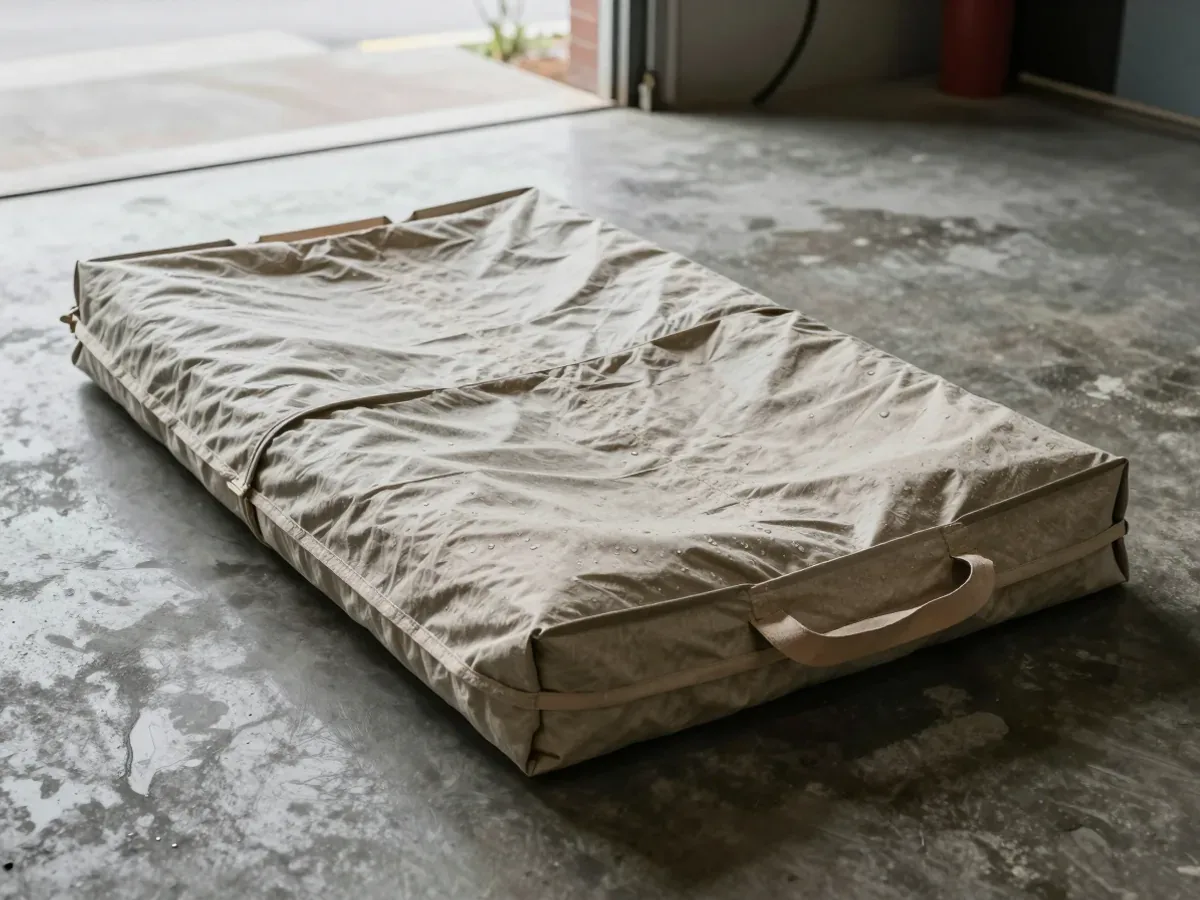
Canvas absorbs water, and a damp garage is a slow test that most storage bags eventually face. Wet canvas is not ruined, but it needs quick action. Left damp, it can shrink or develop mildew, and a bag that holds moisture will pass that moisture to the bedding inside.
A woven shell resists splashes, but the seams are stitched rather than sealed, so the bag is not waterproof. That distinction matters for anyone storing goods in an unheated space. If the contents must stay dry, the answer is a waterproof liner or a treated shell, not a heavier canvas.
Care after a wet season is simple. Air dry the bag completely before refilling it, and reshape it while it dries to avoid shrinkage. Do not tumble dry canvas, because heat causes shrinkage or warping. Blot excess water with a towel first, then dry flat with filler inside to hold the form.
The question the buyer never asked

The buyer in that first meeting asked about weight, fabric and price. She did not ask how the order would be checked before it left the factory, and that omission is the one that decides whether the first container matches the sample.
Every order passes four checks: incoming material, seams and zip, finished bag, and final count. Those checkpoints are where a handle spec either holds or drifts. A bar tack that is skipped on a Friday shift will not show up in a photo of the finished bag, but it will show up in the first month of use.
So the question to add to the list is this: at which checkpoint is the handle attachment inspected, and what happens to a bag that fails it? A supplier who can answer that without checking with someone else has a process, not just a product. That answer is worth more than any single number on the quote.
FAQ
How much weight can a heavy duty canvas storage bag carry?
A heavy duty canvas tote can typically carry 30 to 50 pounds, depending on stitching and handle construction. Ask for the load in writing and for the seam and handle spec behind it.
Is heavy duty canvas storage the same as cotton canvas?
No. Cotton canvas describes the material, while heavy duty describes a build. Ask for the fabric weight in grams per square metre and confirm the shell is a single woven layer or a laminated build.
Can a canvas storage bag be left in a damp garage?
Canvas absorbs water, and a woven shell resists splashes but is not waterproof because the seams are stitched rather than sealed. Air dry the bag fully after damp weather and reshape it while drying to avoid shrinkage.
What is the difference between a canvas bag and a tote bag?
A canvas bag refers to the material, while a tote bag refers to the style. A canvas tote combines both, but not all totes are canvas and not all canvas bags are totes.