
Drawn from archived TIIOCTI articles on reusable bag materials and reuse counts, plus production notes on handle, seam and base construction.
A sample came back to the sample room with a note clipped to the handle: "feels green, but will it last?" The buyer had ordered a thick cotton tote for a three week campaign and wanted the tag to say reusable. That note is where most sustainability claims start to wobble.
The bag looked the part. Heavy fabric, natural colour, a small leaf printed near the base. Nothing on the sample said how many trips it could take before a seam opened or the print washed out.
The claim every buyer hears at the sourcing meeting
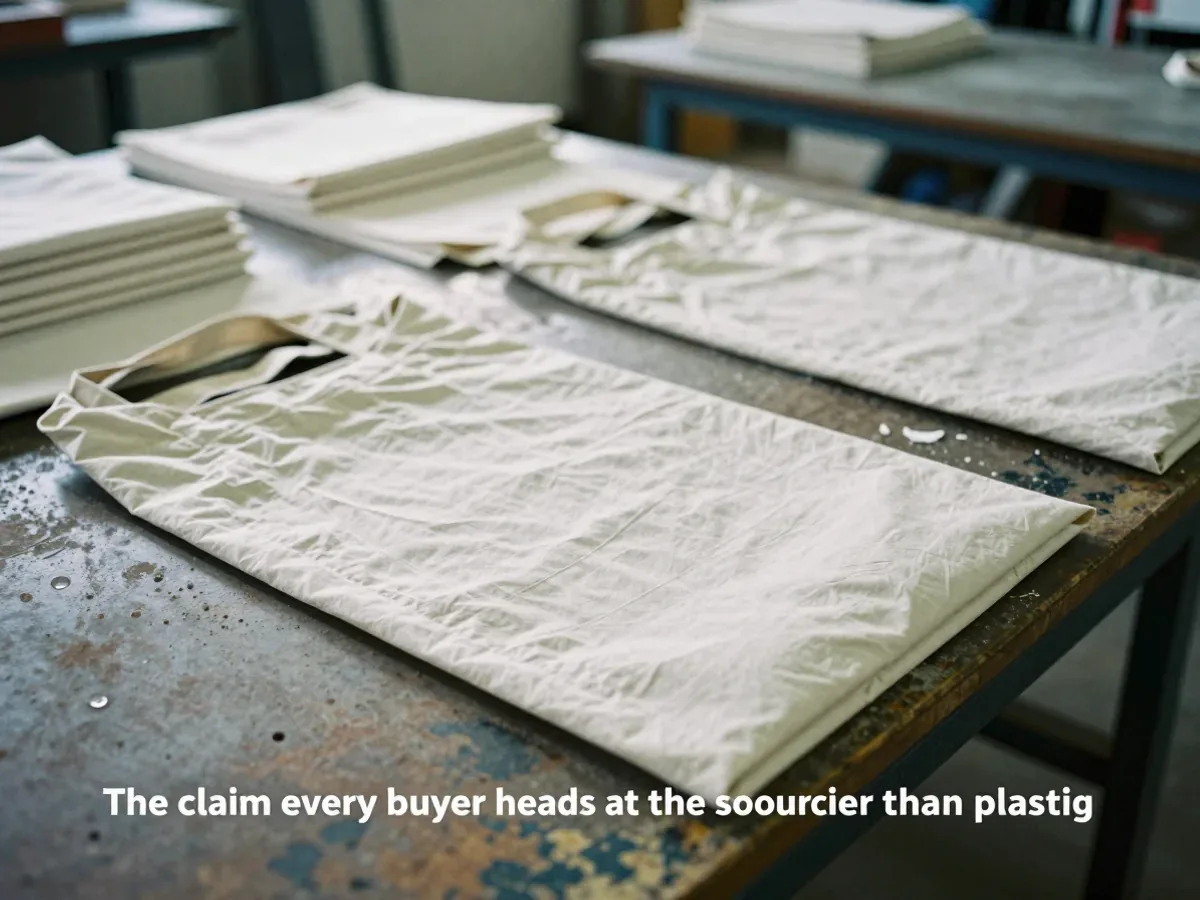
At the sourcing meeting, the supplier slides a bag across the table and says it is the eco option. It replaces plastic, it carries the brand message, and it photographs well for the campaign page. The room nods, because the logic feels obvious.
Reusable bags can reduce environmental harm compared to single use plastic, but only under two conditions. They need to be reused enough times, and they need to be made from materials that carry a lighter production burden. Strip out either condition and the green claim becomes a label, not a result.
Many buyers still assume any bag that is not thin plastic is automatically the answer. That assumption survives because the comparison is usually made between a finished reusable bag on a table and a crumpled plastic bag in a bin. The two objects are never compared across their whole life.
Why a thick cotton bag feels like the safe green choice
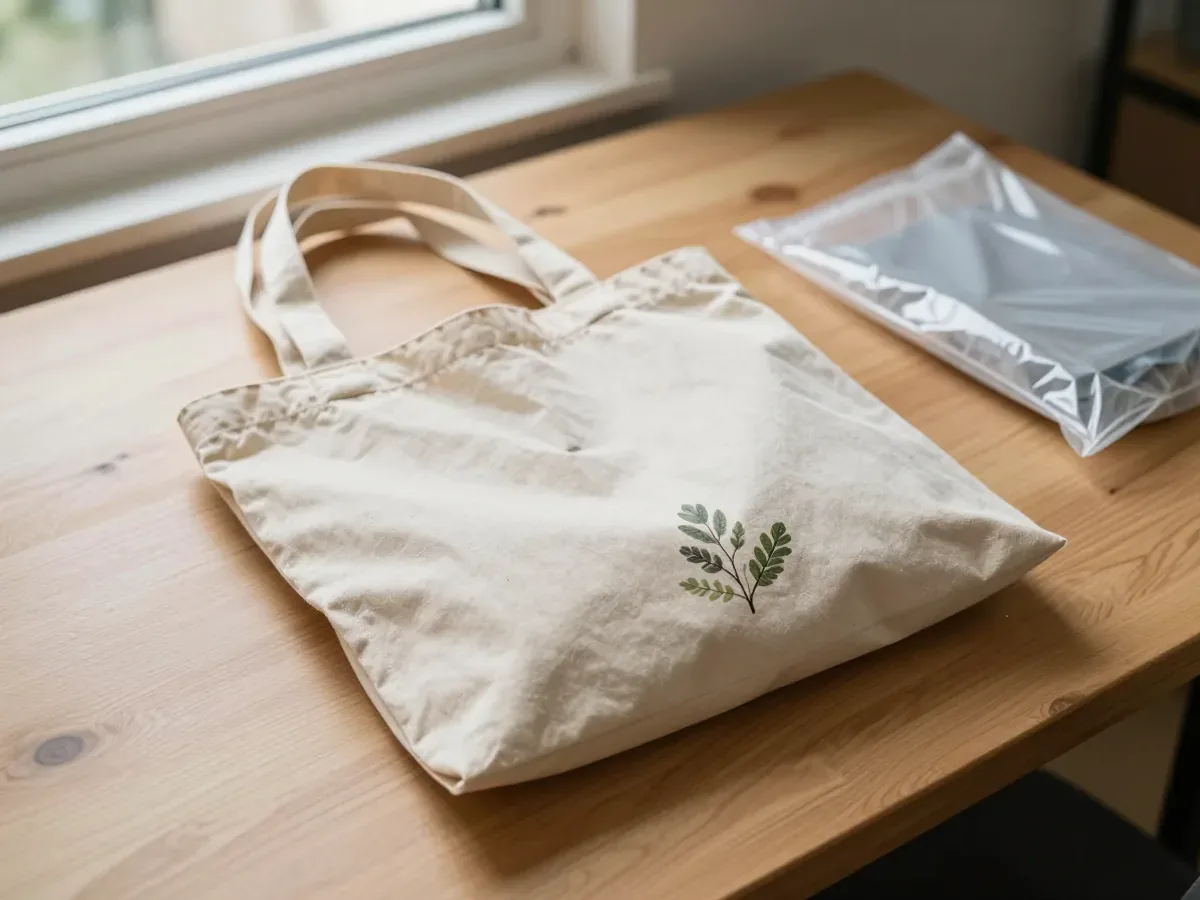
Cotton has a long history as the responsible fibre. It is natural, it biodegrades, and it looks premium on a shelf. A heavy cotton tote signals quality to a shopper in a way that a thin non woven bag never will.
That feeling is not wrong about appearance. It is incomplete about cost. Cotton production uses land, water and energy, and dyeing the fabric adds chemical treatment and heat. A heavy canvas body also adds weight, which raises transport emissions before the bag ever reaches a store.
The safe choice feeling comes from what a buyer can see. The fibre is visible, the stitching is visible, the leaf print is visible. Water consumption, dye chemistry and shipping weight are not visible, so they drop out of the decision.
Where the green story breaks: reuse count and hidden production cost
A reusable bag earns its environmental cost only when it crosses a break even reuse count. Below that number, it is a heavier object that was made, shipped and discarded without replacing the plastic it was meant to displace.
Cotton sits high on that scale. A shopper would need to carry a cotton bag well over a hundred times before the material and production burden is paid back. That is possible for a weekly grocery routine and unlikely for a promotional tote handed out at an event.
Design decides whether that count is reachable. A bag with thin seams, a handle tacked on at two points and a print that fades after one wash will not survive long enough to matter. Real reusability means function, not just form. The bag has to handle multiple trips, resist wear and hold its shape and strength.
Overproduction quietly breaks the story too. A brand that orders a large volume of green bags and hands them out faster than shoppers can reuse them has moved the waste upstream. Bags that are never used are wasted carbon, whatever the fibre.
What a life cycle study counts that a product photo does not
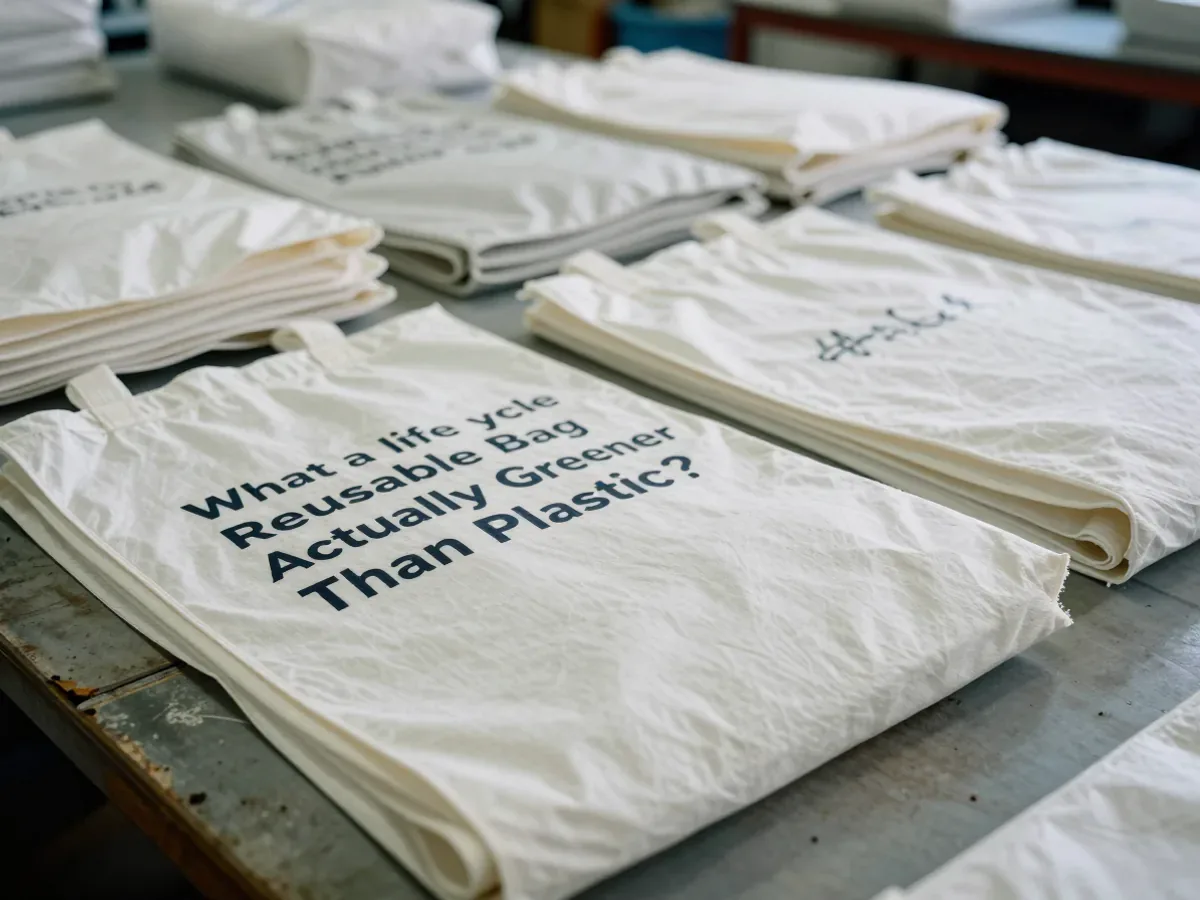
A life cycle study follows a bag from raw material through production energy, transport and end of life. It counts the water used to grow fibre, the heat used in dyeing, the fuel used to move a heavy carton, and what happens when the bag is finally thrown away.
A product photo counts none of that. It shows a flat lay on a wooden table with a plant in the corner. The photo cannot show that a canvas bag is heavier to ship, or that a recycled shell needs a collection and recycling system to close its loop.
This is why two bags with the same eco tag can land in very different places. A recycled PET bag woven from collected bottles carries a different material story than a virgin cotton bag, and a non woven PP bag carries another. The study compares systems, not slogans.
Studies keep landing on the same conclusion. Reusable bags help when they are designed well and reused many times. The design and the reuse count do the work, and the material choice sets the starting burden.
Matching material to programme length instead of to a label
The useful question is not which material is greenest in general. It is which material fits the length of the programme and the behaviour of the people receiving the bag.
For a six to twelve month promotion, recycled PET and non woven PP usually carry a lighter starting burden than cotton or canvas, unless long term reuse is guaranteed. A shopper who keeps a compact recycled bag in a coat pocket for a year will clear the break even point. A shopper who leaves a stiff cotton tote in a cupboard will not.
Cotton and canvas make sense where the bag is meant to be kept and used for years. A premium retail bag with a reinforced base and stitched handles can justify its production cost across hundreds of trips. The same fabric in a thin promotional cut, washed once and distorted, cannot.
A supermarket client once sourced thin cotton bags from a cheaper factory and found them shrunk and distorted after washing. The shift to pre shrunk recycled PET with reinforced handles restored the reuse life the programme depended on. The material changed because the reuse plan changed.
How the bag is built decides whether reuse is even possible
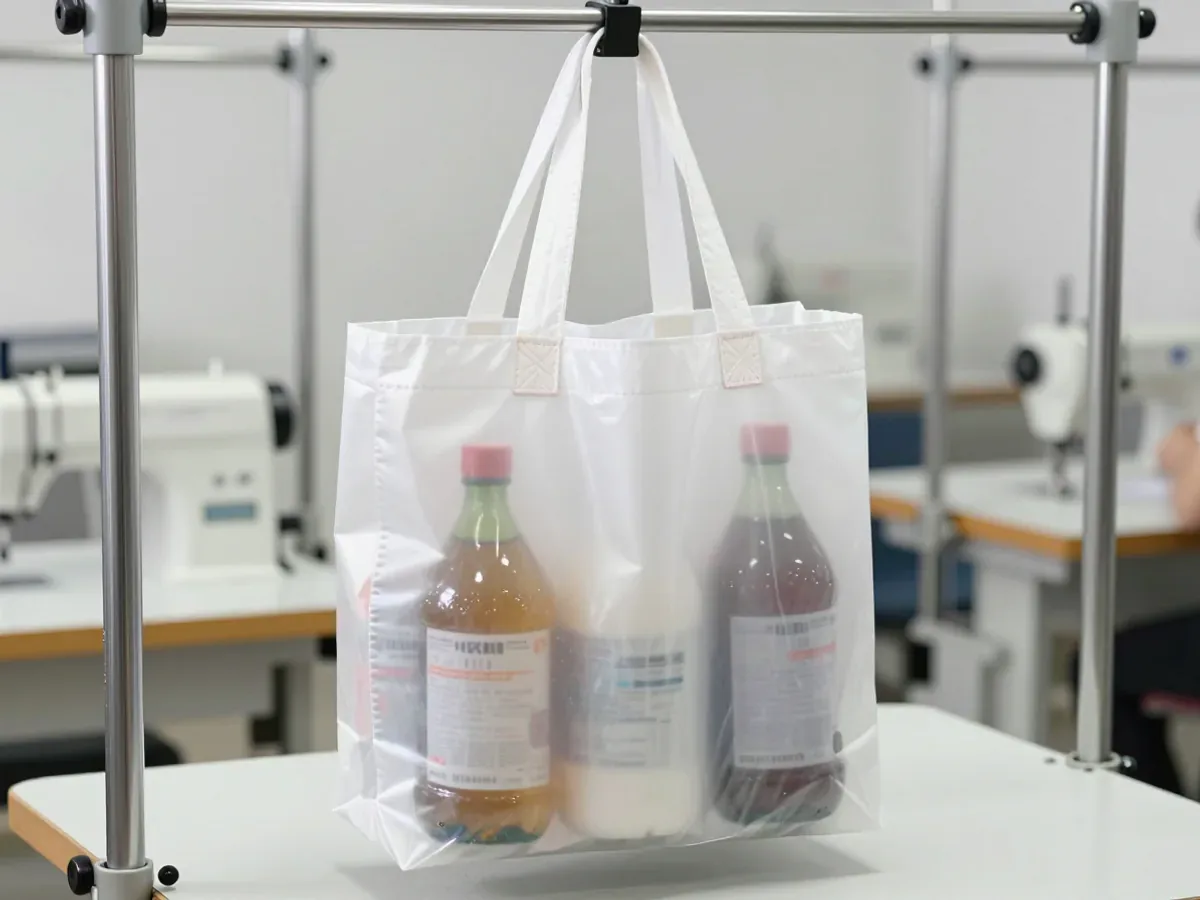
A reusable bag is judged on the second trip. The handle holds under a loaded bottle, the base takes the weight without tearing, and the print survives a wash cycle. None of that is decided by the fibre alone.
Construction carries the reuse count. Handles stitched through the body rather than tacked on at the ends spread the load. A reinforced base where a bottle sits keeps the bottom from blowing out. A flat folding body makes the bag easy to store, which raises the chance it comes back for trip three.
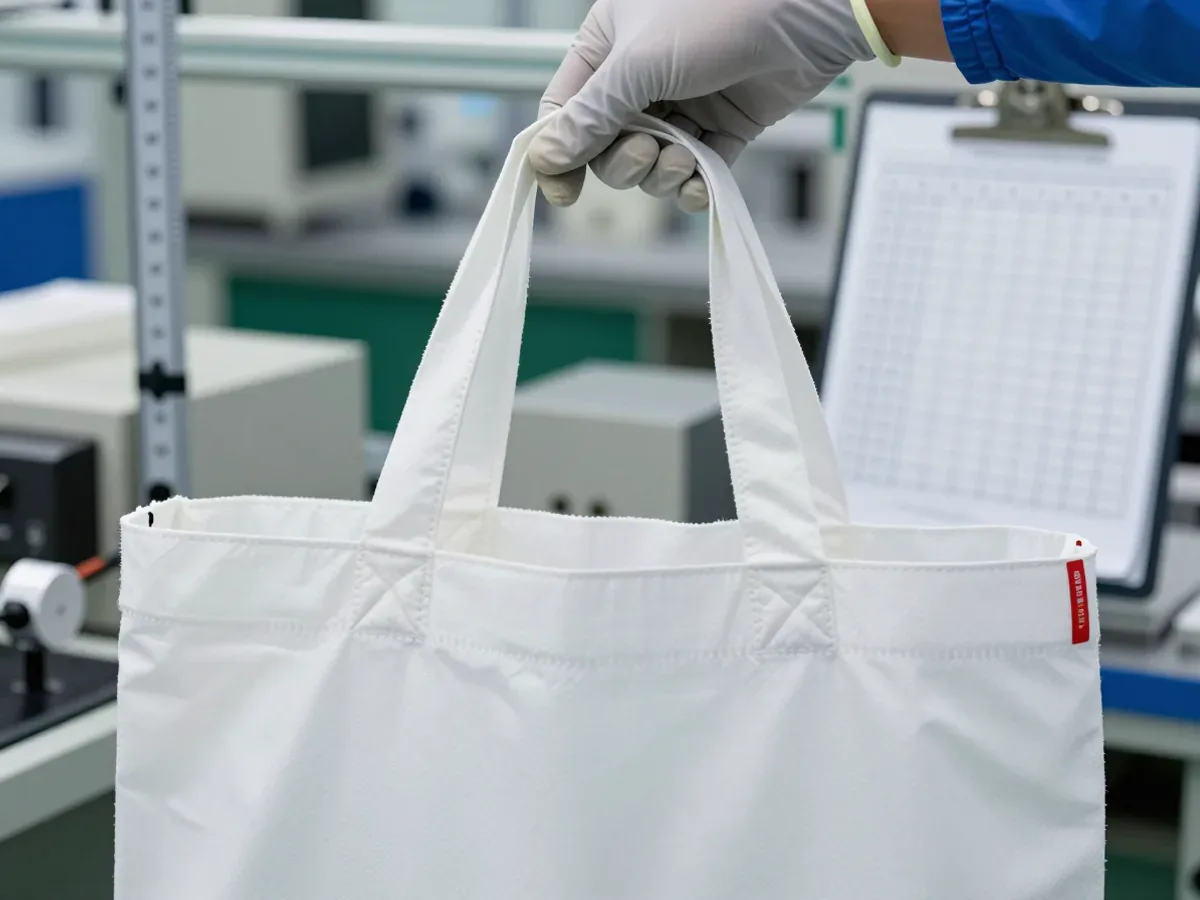
Testing turns those details into evidence. A static pull on each handle, recorded per batch, shows whether the stitching holds. A loaded bag dropped on a corner and inspected shows whether the base survives a real fall. Seam strength and bar tack checks on every batch catch the weak join before it reaches a shopper.
The production floor runs four checks from incoming material to the final count. Material arrives and is inspected, seams and closures are checked on the line, finished bags are reviewed, and the final count is confirmed. A bag that fails a pull test never earns a reuse claim.
A short check list before you sign the purchase order
The purchase order is where a green claim either gets protected or quietly dropped. A few lines in the spec do more for the environment than a leaf icon on the tag.
- Write the expected reuse count into the brief and match the material to it. A three week event and a two year retail programme need different shells.
- Specify the construction that carries reuse: reinforced base, handles stitched through the body, flat folding shape.
- Require a pull test on every handle and a seam check on every batch, with results recorded.
- Ask for a wash check on the print so the bag still looks like the brand after ten cycles.
- Align order volume with realistic distribution. Overstocking green bags pushes waste upstream.
- Ask the supplier what happens at end of life for the chosen material, and whether a take back or recycling route exists.
FAQ
How many times must a reusable bag be used before it beats single use plastic?
It depends on the material. Cotton and canvas carry a high production burden and need well over a hundred trips. Recycled PET and non woven PP reach break even sooner, which is why programme length matters as much as fibre choice.
Is cotton always more sustainable than non-woven PP or RPET?
No. Cotton is natural and biodegradable, but it uses significant water, land and dye energy. Recycled PET and non woven PP usually carry a lighter starting burden unless long term reuse of the cotton bag is guaranteed.
Does a biodegradable bag solve the reuse problem?
It addresses end of life, not reuse. If the bag is used once and discarded, even a biodegradable material can perform worse than low carbon plastic. The reuse count still decides the outcome.
What should I write into the spec to protect reuse count?
Name the expected number of trips, the reinforced base, handles stitched through the body, a flat folding shape, a per batch handle pull test and a print wash check. Those lines turn a claim into a build requirement.