
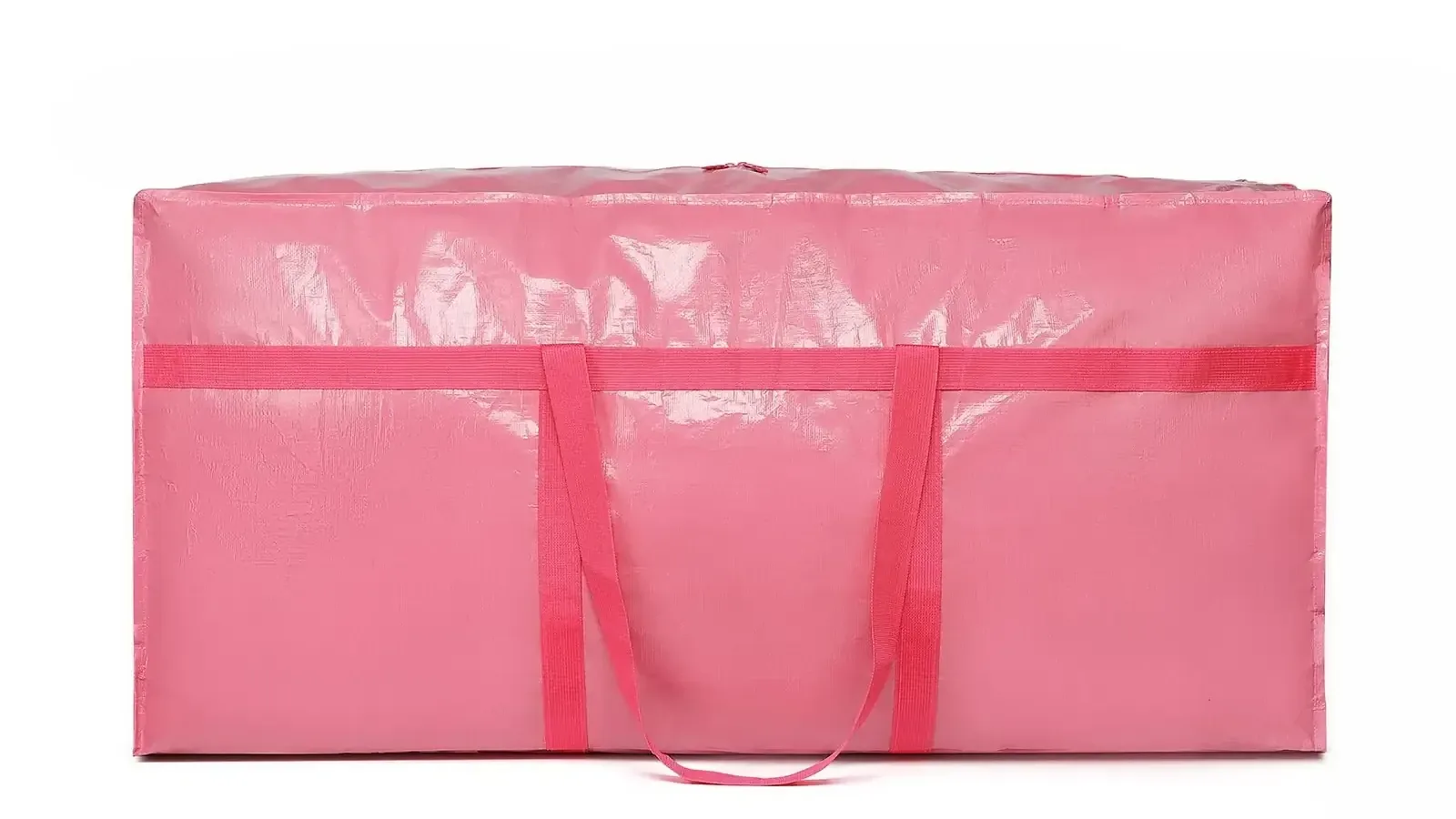
Drawn from legacy notes on bag fabric specification and the product data behind our canvas and moving bag ranges.
The sample bag came back with a note clipped to the handle: the fabric felt thin, almost papery, and the buyer had expected something with more body. The lab slip beside it read 300 GSM, which was exactly what the purchase order asked for. Two people looked at the same number and reached opposite conclusions, and both of them were right about what they were holding.
That return parcel sat on a bench for a week before anyone opened the fabric up properly. When the roll was finally cut and examined, the answer was not a mistake in the mill’s records. The weight was real. What had been ordered and what had been delivered were two different constructions that happened to land on the same scale reading.
The Roll That Passed the Scale and Failed the Hand
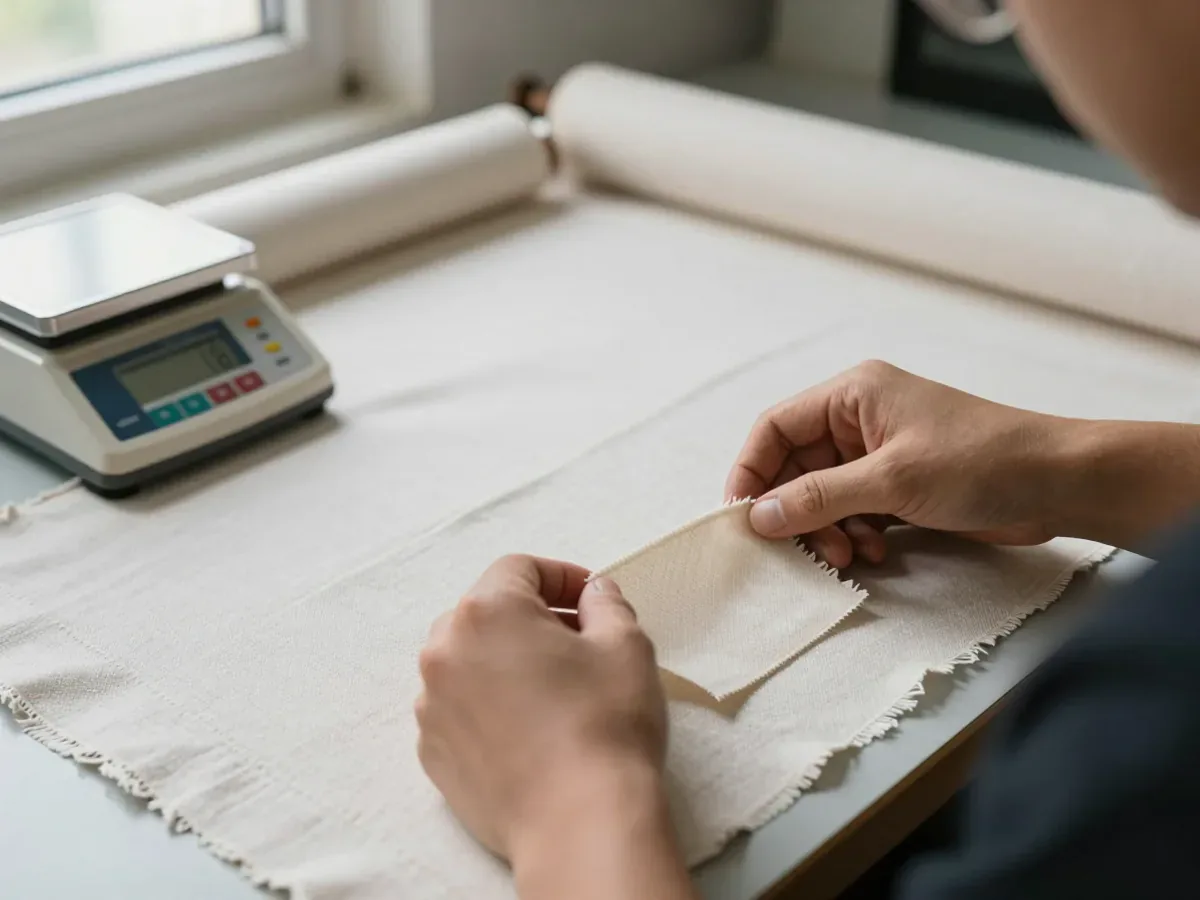
The incoming inspection on that lot was straightforward. A square was cut from the roll, weighed on a calibrated balance, and the figure came back inside the agreed band. Fabric, webbing, zips and thread are held against the approved spec at incoming material, and by that measure the delivery passed. The paperwork was signed and the roll went to cutting.
The failure showed up later, in the hands of the person who would carry the bag. A 300 GSM canvas can be built from heavy coarse yarns in an open weave, or from finer yarns packed tightly together. Both weigh the same per square metre. They do not drape the same, print the same, or wear the same, and the buyer’s note was describing the second kind of difference while the scale was describing the first.
Two Fabrics, One Weight, Two Different Bags
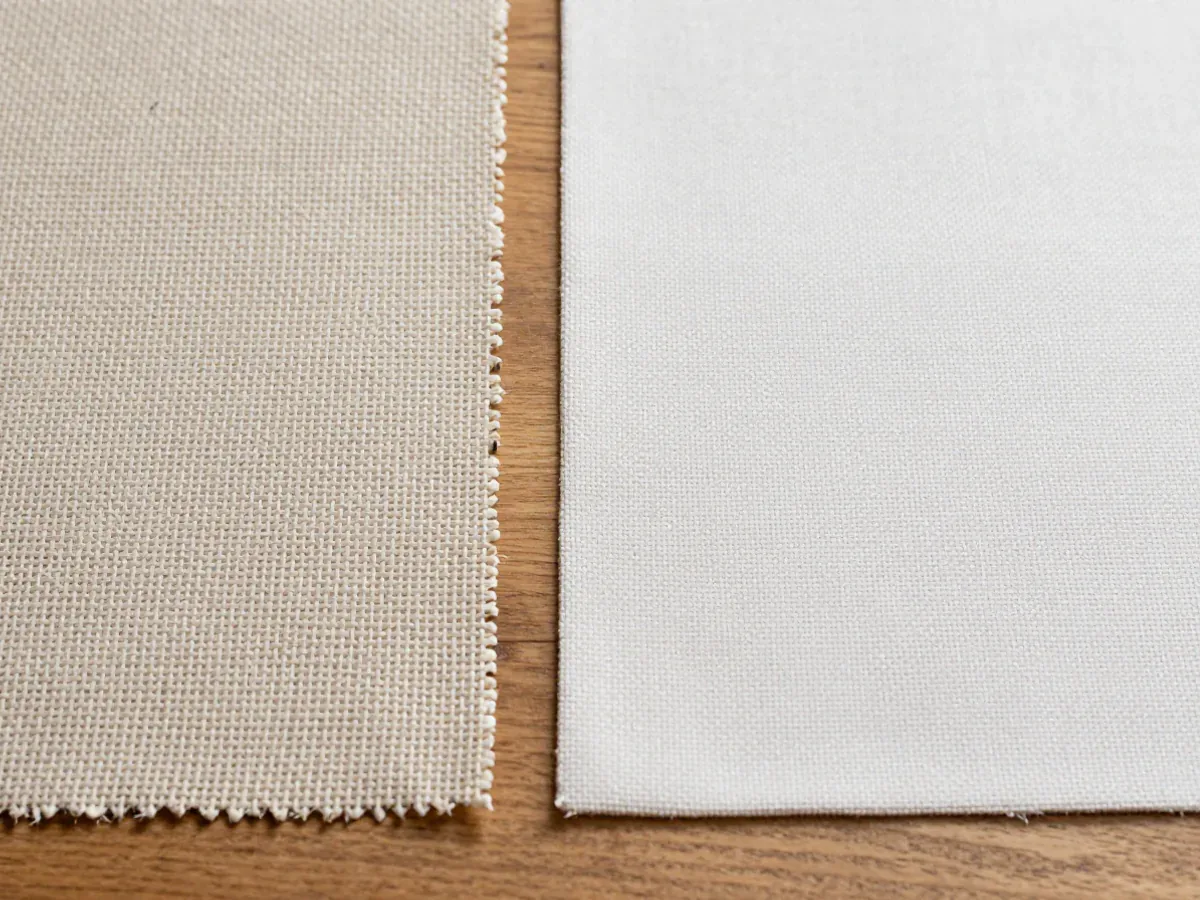
Put the two constructions side by side and the confusion resolves. The open version has visible gaps between yarns, a rougher surface, and more air moving through it. The dense version has a smooth face, a firm hand, and a surface that holds a crisp panel shape when the bag is filled.
GSM is mass per unit area, nothing more. It is a good control on consistency between orders, because it confirms that the fabric delivered matches the fabric approved. It is a poor guide on its own to how a bag will perform, because it says nothing about how that mass was assembled. A buyer who reads only the weight is reading the total and ignoring the structure that produced it.
The return note made sense once the roll was opened. The approved sample had been dense and firm. The bulk roll was open and soft. Same number, different cloth.
Where the Weight Was Actually Built
Thread count describes how many warp and weft yarns occupy a unit length. Yarn count describes how fine each of those yarns is. Together they determine how tightly the fabric is constructed, and that tightness is what the buyer’s hand was actually reporting.
A high thread count of fine yarns produces a dense, smooth fabric that resists print bleeding and holds a crisp panel shape. A lower count of coarser yarns produces a fabric with more texture, better air movement and a different feel in the hand. Neither is better in the abstract. The question is which one the product needs.
This is where a specification stops being a wish and becomes a prediction. Reading the two figures together lets a buyer spot a supplier who is quoting a heavy fabric made of coarse yarns when the product needed a lighter, denser construction. The weight looks generous. The bag will not behave the way the brief described.
What the Pair Predicts Before a Sample Is Cut
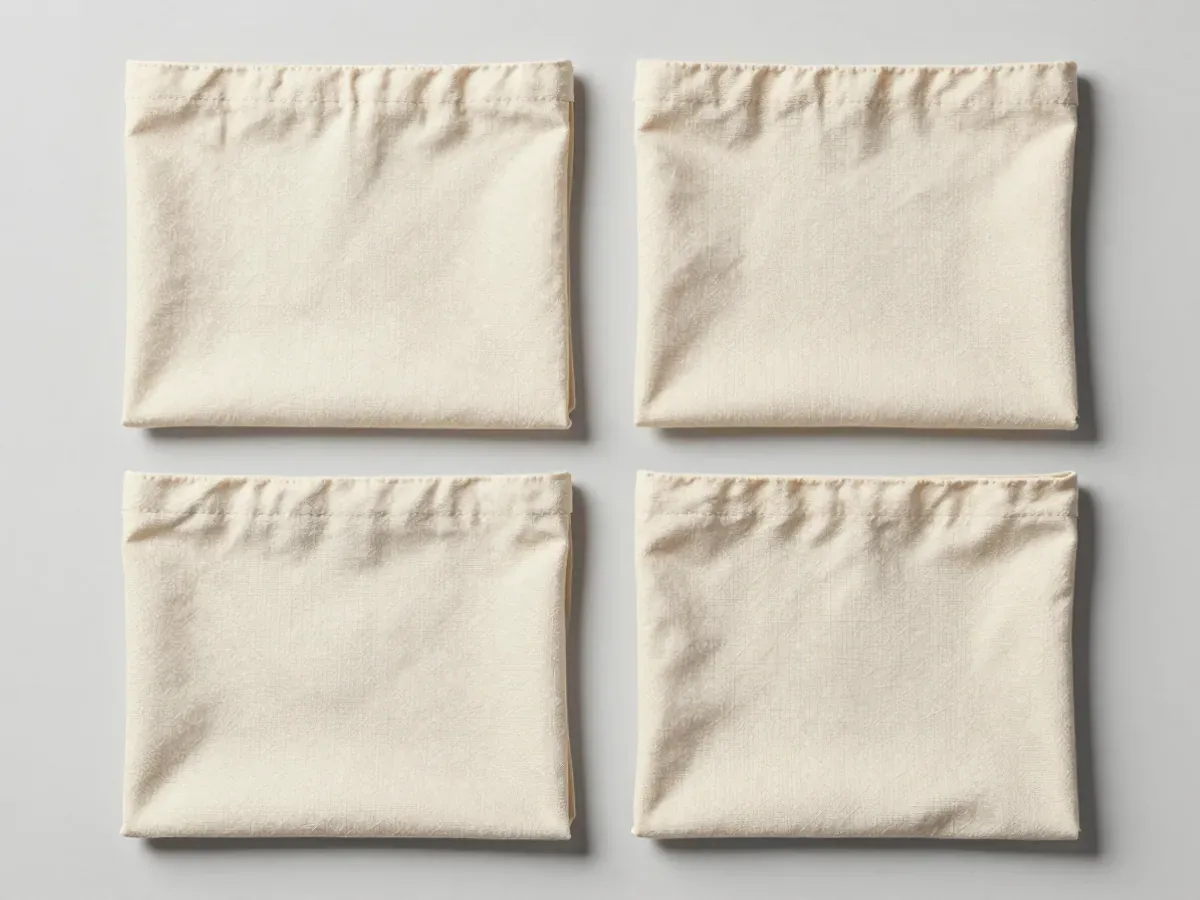
Three product decisions ride on these figures, and each one leans on a different part of the pair. Load capacity depends on strength, which comes from yarn quality, weave and construction rather than from GSM alone. Print quality depends on surface density, which is a thread count and yarn fineness question. Feel depends on both, plus whatever finish was applied.
Four combinations cover most bag fabrics, and each suits a different product. Light and dense gives a smooth surface for detailed printing. Heavy and dense gives maximum durability with a solid feel, and is the usual choice for premium totes. Light and open is the cheapest construction and suits light loads where print detail matters less than cost. Heavy and open gives strength with texture, and suits bags where abrasion resistance matters more than surface finish.
Where a fabric sits in that matrix decides more about the finished bag than either number alone. It is also the first thing to establish when a supplier proposes a substitute fabric during a shortage. The same weight can arrive from a completely different corner of the matrix, and the bag will show it.
Checking the Pair on a Roll Instead of a Certificate
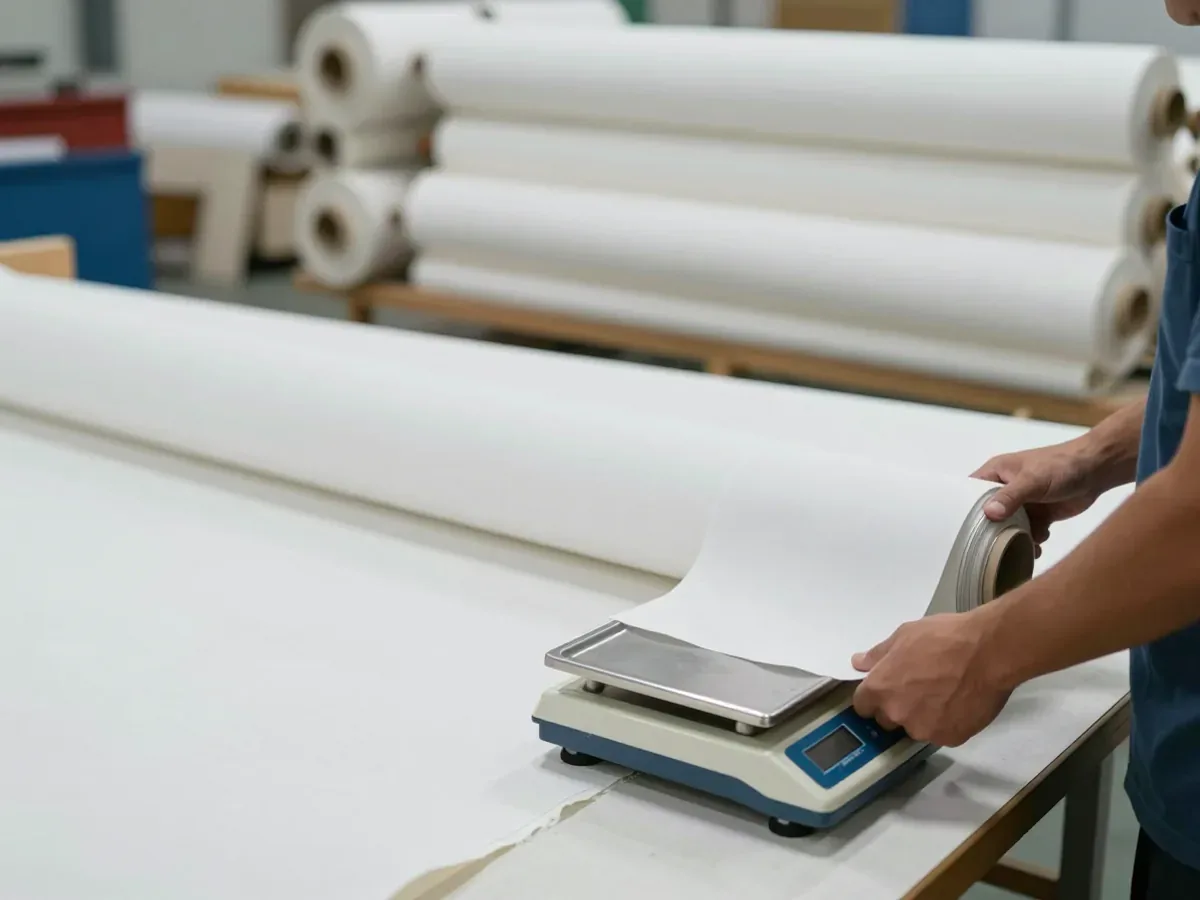
Fabric weight varies within a roll and between rolls, so a tolerance has to be agreed rather than assumed. A workable approach is to specify a nominal GSM with an agreed band and verify it by sampling. The verification method matters more than the certificate that accompanies it.
Cutting and weighing a sample from each roll gives a reliable figure. Weighing a whole roll and dividing by its length does not, because the fabric may not be uniformly wide or the roll length may be nominal. A recognised method such as ASTM D3776 keeps the check unambiguous and repeatable across suppliers.
Finished bag weight is a related but separate check. Once a bag is made, weight and dimensions are verified against specification before packing, and dimensions, handles, logo and stitch density are checked by hand at the same stage. A bag can pass the fabric check and still fail the finished check if the cutting or the stitching drifted.
Writing a Fabric Line That Can Be Compared
Five lines make a fabric specification comparable, and a sixth makes it verifiable. The five are material, nominal GSM with tolerance, yarn count and thread count, weave or construction type, and the finish applied. The sixth is the test method for weight, written into the line so nobody has to guess later.
Keep a retained sample from the approved lot. When a substitute arrives six months later, the retained sample and the written line together answer the question the return note raised. A specification that says only “high thread count” is comparable to a food label that says “natural”: technically perhaps true, and functionally empty.
For natural fibres such as jute or cotton, add a note on moisture behaviour. A dense fabric absorbs and releases moisture more slowly than an open one, which matters for bags stored in humid conditions or shipped across climates. Weight and construction interact with that behaviour, and the interaction belongs in the spec rather than in a later complaint.
What the Numbers Still Cannot Settle
Two fabrics of identical GSM, one with a soft finish and one with a stiff one, will make bags that customers describe completely differently. Finishing sits outside the weight and count pair, and it can move the hand of a fabric further than a small change in yarn count would.
The numbers also cannot settle whether a construction suits a particular print. Printing is proofed before the run and the sample is made to the same spec as bulk, which is where surface density meets ink and the answer becomes visible. A canvas order starts with the canvas weight, the handle style and the size, then the colour of the body, and the fabric line is what keeps those choices attached to a construction rather than to a number.
Load figures on a moving bag range are agreed per order rather than fixed across the range, because the load a bag carries depends on the whole build. Yarn quality, weave and construction carry the strength. GSM records how much material went into the square metre, not how well that material was arranged.
FAQ
Is a higher thread count always better for a bag?
Not universally. A high count of fine yarns gives a smooth, dense surface, while a lower count of coarser yarns gives texture and air movement. The right choice depends on the product, the print and the load.
Why ask for yarn count as well as thread count?
Because thread count without yarn fineness cannot tell you how the fabric is constructed or how heavy it is. The two figures together describe the tightness of the weave.
How is fabric weight checked on a roll?
By cutting and weighing a sample from each roll against a stated tolerance, using a recognised method such as ASTM D3776. Weighing a whole roll and dividing by length is not a reliable substitute.
Can two fabrics with the same GSM feel different?
Yes. The weight can be built from coarse yarns in an open weave or fine yarns woven densely, and finishing adds another layer of difference. The scale reads the same while the hand does not.
The Judgment a Factory Makes
A fabric line that carries only a weight invites exactly the return that started this story. The mill did not cheat and the inspection did not fail. The specification simply described one property and left the construction unspoken, so two honest parties filled the gap with different assumptions.
When a roll arrives, the useful question is not whether it hit the number. It is whether the number was built the way the approved sample was built. Thread count, yarn count, weave and finish answer that question. GSM confirms that the delivery matches the approval, which is a consistency check and not a performance promise.
What to Put on the Next Purchase Order
Write the fabric line in six parts: material, nominal GSM with an agreed tolerance, yarn count, thread count, weave or construction type, and finish. Add the weight test method and keep a retained sample from the approved lot.
At incoming inspection, cut and weigh a sample from each roll rather than trusting a roll average. Compare the construction against the retained sample by hand as well as by number. When a substitute is proposed, place it in the light or heavy, open or dense matrix before approving it, and check what moved.