

Weight needs a calibrated scale with enough resolution for the tolerance, and the calibration status belongs in the record beside the.
On the bench last month, two bags from the same lot looked identical and one of them weighed less than the sheet said it should. A buyer asked us again this season for a bag weight and dimension routine she could write into an inspection plan, so this page sets out what to weigh, how a tolerance is set, and the record that makes a result repeatable instead of a story.
What to measure, and what each number proves
Finished weight is the fastest check on material content, because a bag built to a stated fabric weight and trim list has an expected mass. A delivered bag that is meaningfully lighter has usually lost shell weight, trims or coating rather than gained a personality.
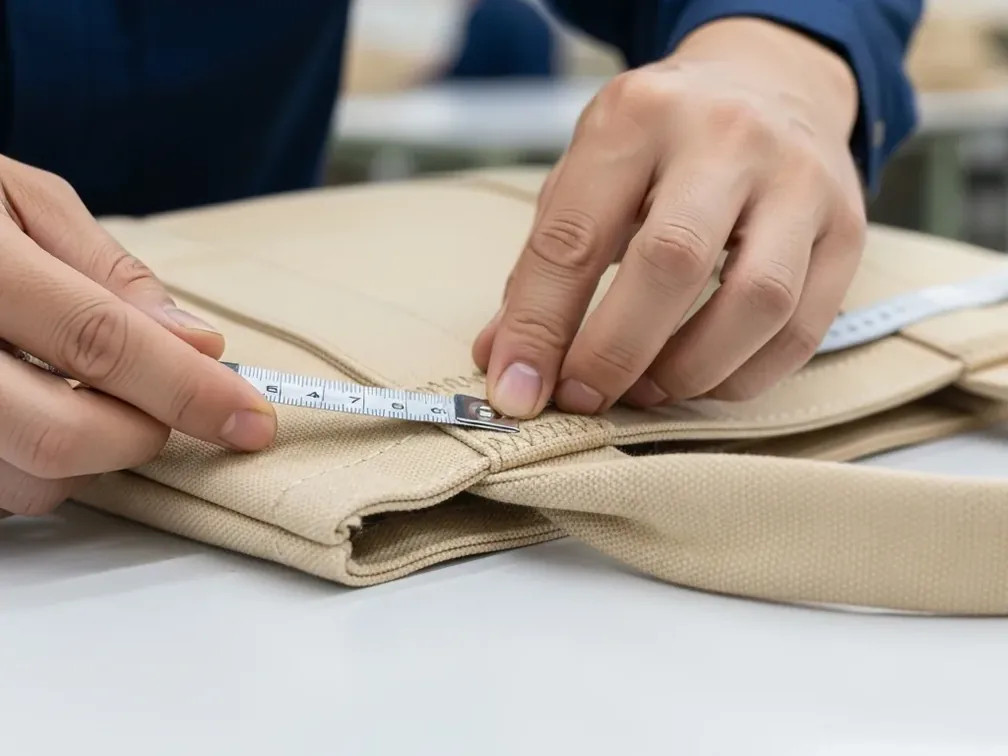
Dimensions check the cutting and the sewing. Width, height, gusset depth and handle drop each carry a functional range, and the failures are practical: a short gusset costs capacity, a long handle drags on the floor, a narrow opening stalls a filling line.
Seam and attachment dimensions earn their own line wherever load matters, because handle attachment width and stitch placement decide where force enters the bag and therefore where a failure will start. Pull, seam strength and bar-tack are tested on every batch on our line, so the attachment is one of the few places where a measurement has a test result behind it.
| Measurement | What it proves | How it goes wrong | Where the tolerance comes from |
|---|---|---|---|
| Finished weight | Material content, coating and trims | A thinner shell or a dropped trim | The fabric and trim list on the spec |
| Width, height, gusset depth | Cutting and pattern accuracy | A tight cutting plan leaves a short gusset | The function the bag has to serve |
| Handle drop and attachment width | Stitching and the load path | A long handle or a narrow bar-tack | The load the handle has to carry |
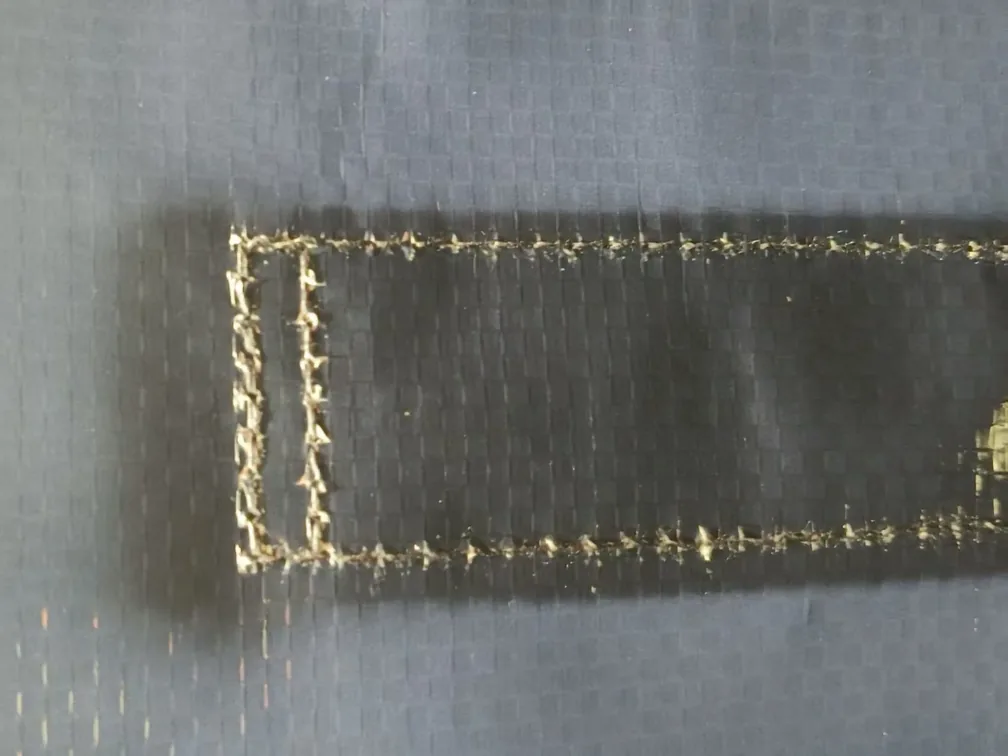
| Stitch density at the seam | Sewing machine setup | A rushed run with a looser stitch | The seam line on the order |
Instruments, conditions and how many to check
Weight needs a calibrated scale with enough resolution for the tolerance, and the calibration status belongs in the record beside the result. A kitchen scale is adequate for most bag checks, but a damp warehouse makes a textile heavier, so the conditions are part of the measurement rather than an excuse around it.
The method behind a legal weighing device is public, and NIST Handbook 44 writes it around repeatability rather than precision for its own sake.
These requirements are intended to encourage the design, installation, testing, and use of weighing and measuring devices that provide for accurate, repeatable measurements
NIST Handbook 44, National Institute of Standards and Technology (2025 edition)
Dimensions need a flat surface, a steel tape and one stated convention, because a bag measured flat and empty and the same bag measured filled can differ by more than the tolerance band itself. Temperature, humidity and the state of the sample belong beside the numbers, since a record that leaves them out cannot be compared with last season.
Sampling follows risk: a new lot, a new fabric shipment or a change of cutting operator each justify a wider sample, while a stable line can run on a smaller one. The count belongs in the sampling plan rather than being chosen on the day, and the standard vocabulary for it is an acceptance sampling scheme.
Tolerances come from 2 directions, and both have to be written down. The buyer’s functional requirement sets the real limit, the process sets the band that can actually be held, and where the two disagree the fix is a change of process or design rather than a stricter number.

Where the check belongs in the flow
The most useful place for a weight and dimension check is inline at the end of sewing and before packing, while a correction still costs minutes rather than a container. Weighing 1 sample from each hour of output catches a fabric switch inside the shift, which is why every batch is checked before packing on our line.
Where a program cannot run its own line checks, the pre-shipment inspection should carry them explicitly, with measured samples, recorded instruments and conditions, and results reported per measurement instead of as a summary. An inspector will do this when the brief asks for it, and the brief has to state both the tolerance band and the convention.
The record format is what makes the check real: each measurement sits against its tolerance so that pass or fail is arithmetic rather than opinion. Cartons are counted and photographed at the end of the run, which closes the chain from the measurement sheet to the shipment.
The trend record is the durable asset. Plot weight and the key dimensions by lot across a year and a program can see seasonality in fabric supply, the effect of a supplier change and the drift in its own specification.

When the numbers disagree
A lot that measures out of tolerance sends the question back one step, because the pattern names the cause. A light bag with correct dimensions points at fabric weight, a correct-weight bag with a short gusset points at cutting, and a bag that meets dimensions but varies inside the lot points at process consistency.
The remedy should be agreed before the first lot ships, whether that is a re-cut, a re-work, an acceptance at a reduced value or a rejection. A program that negotiates every event from scratch spends management time even when the outcome is fair.
The last discipline is a loop back into the specification itself. If one measurement keeps drifting, either the tolerance was never achievable or the process needs changing, and the difference decides the fix, for example after a fabric switch mid season.
The sample round answers bag weight and dimension: the seam, the handle join and the label are read on a sample before the batch. The cutting table is where a dimension is won or lost: fabric is relaxed, cut and bundled by size before anything reaches a needle, so a short gusset is a cutting decision rather than a sewing one.

Questions buyers ask about a measurement sheet
Why weigh a finished bag at all?
Because weight is a proxy for material content, so it catches a lighter fabric, a thinner coating or a missing trim that a visual check passes.
What kind of scale does the check need?
A scale that reads to a fraction of the tolerance, with the calibration date written beside the result rather than remembered.
Which dimension convention should the spec state?
A single convention, named in the spec: flat, filled or under light tension, because those 3 readings differ by more than the tolerance band.
How is a tolerance set in the first place?
From the functional requirement first, then checked against what the process can hold, and where they conflict the design or the process changes rather than the number alone.
Where should the check happen?
Inline after sewing and before packing, with the pre-shipment inspection confirming a result instead of discovering one.
What the sheet has to promise
A weight and dimension argument is settled by the sheet, not by the argument, so the measurable lines belong in the order and the rest belongs in a note. Load figures are agreed per order rather than fixed across the range, and a size or a weight that is not settled yet is quoted on the sample rather than printed on a page.
A measurement tolerance that came from the function can be defended in a conversation, while one that came from another buyer’s sheet cannot.
Handles, zips and seams run on the same line, which is why an attachment measurement has to be read against a stitch spec rather than against a photograph. Every batch is checked before packing on our line, and that batch result is the part of the record a buyer cannot write from an office.
- The instrument and its resolution, written once.
- The convention and the tolerance band, written together.

What to put in the inspection plan
Five lines turn a measurement into a check that survives a change of inspector.
- Name the instrument and its resolution for each measurement.
- State the convention for every dimension once, flat or filled.
- Set the tolerance from the function, then confirm the process can hold it.
- Fix the sample count per lot in the plan before the first lot runs.
- Report each measurement against its tolerance rather than as an average of them.
Two related pages go deeper: Bag Fabric Weight: The Ounce Line covers what a fabric weight figure does and does not say, and Inline vs Final Inspection on a covers which gate catches which defect.
Related reading from the same line: Bag Fabric Weight: The Ounce Line.