

Based on legacy TIIOCTI article 3175-2 and product spec data from the canvas line.
A buyer at a promotional products distributor opened a quote sheet last month and found two canvas tote offers sitting side by side, one at roughly half the unit cost of the other. She forwarded the sheet with a single line: "Same bag, right?" The spec columns looked identical, the artwork placement matched, and both suppliers had quoted the same quantity. What she could not see on that sheet was everything that had been removed to reach the lower number.
That question, and the four that followed it over the next two weeks, is the reason this piece exists. Cheap canvas bags are not a trap and they are not a shortcut. They are a set of tradeoffs, and the buyer’s job is to know which tradeoffs her brand can absorb.
What Does a Low Price Actually Change on a Canvas Bag?

The buyer’s first assumption was that the cheaper quote used a different factory. In most cases the factory is the same and the difference sits in the bill of materials. A canvas tote is a shell, a handle, a seam, a print method, and a finishing step. Lower the cost and one or more of those lines gets lighter.
On the shell side, the body is cotton canvas, supplied natural or dyed, and the weight of that canvas is the single largest lever on price. A lighter canvas uses less cotton per square metre, which lowers the fabric cost and also lowers the shipping weight of the finished carton. The handle is a separate choice entirely: woven, webbing, or rope, each with its own cost and its own failure mode. A quote that keeps the shell heavy but swaps the handle to a thinner webbing has not changed the fabric at all, yet the price moves.
The buyer’s second question was sharper. If the canvas is lighter, how light can it go before the bag stops doing its job?
How Thin Can the Canvas Get Before It Fails?
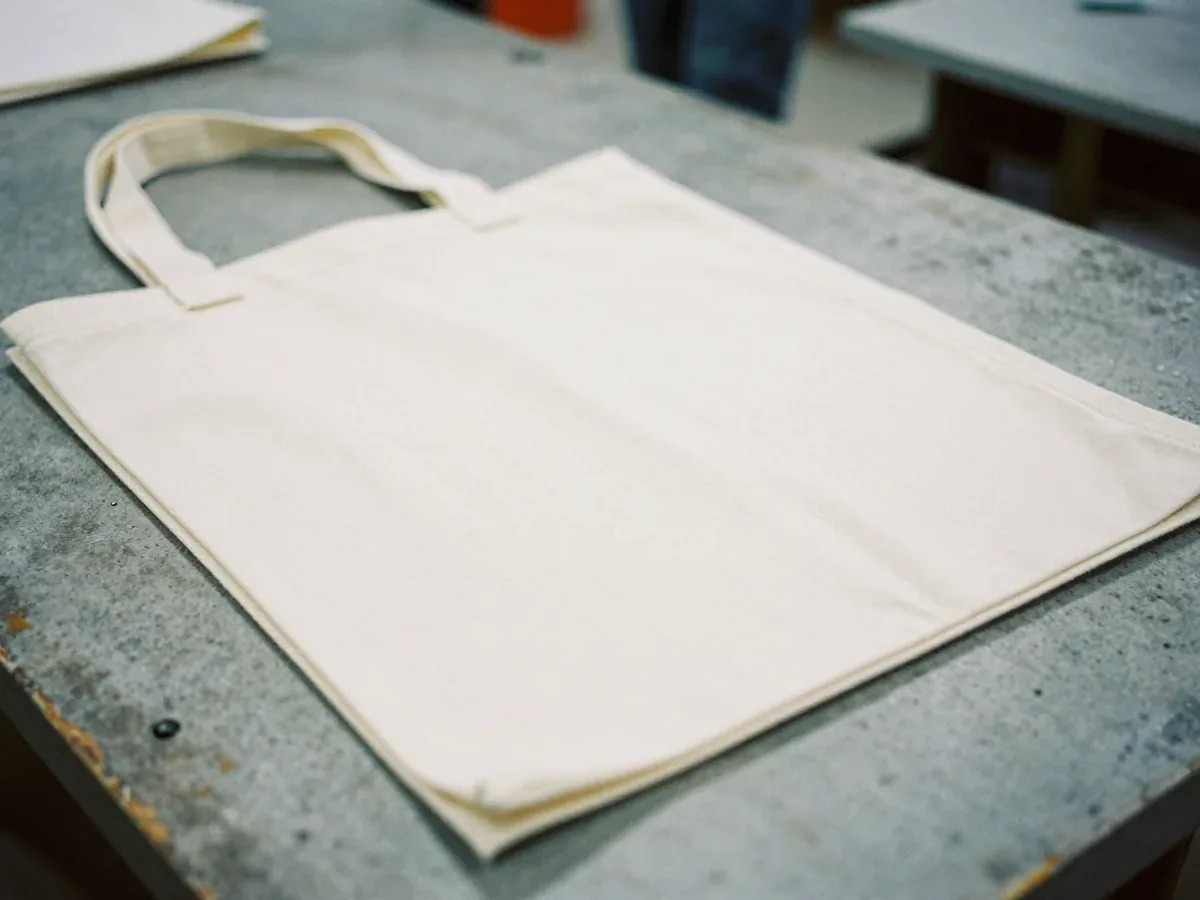
There is no universal number, and any supplier who quotes one without seeing the intended load is guessing. What matters is the relationship between fabric weight and the job the bag performs. A bag that carries a folded t-shirt at a trade show and a bag that carries six kilograms of groceries are not the same product, even when the drawings match.
The useful reference point is the top of the range. The heaviest woven shell in our range is 180 grams per square metre, about 5.3 oz per square yard. A buyer comparing a cheap offer should ask the supplier for the actual fabric weight of the quoted canvas and then hold that number against the load the bag will carry. A promotional bag that lives in a drawer and appears at one event can sit well below that ceiling. A retail bag that a customer reuses weekly for a year cannot.
The check is not complicated. Ask for the weight in writing, ask for a swatch, and ask what load the supplier tested the construction against. A supplier who can answer all three is quoting a product. A supplier who answers only the first is quoting a price.
Where Does the Saving Show Up First in Daily Use?
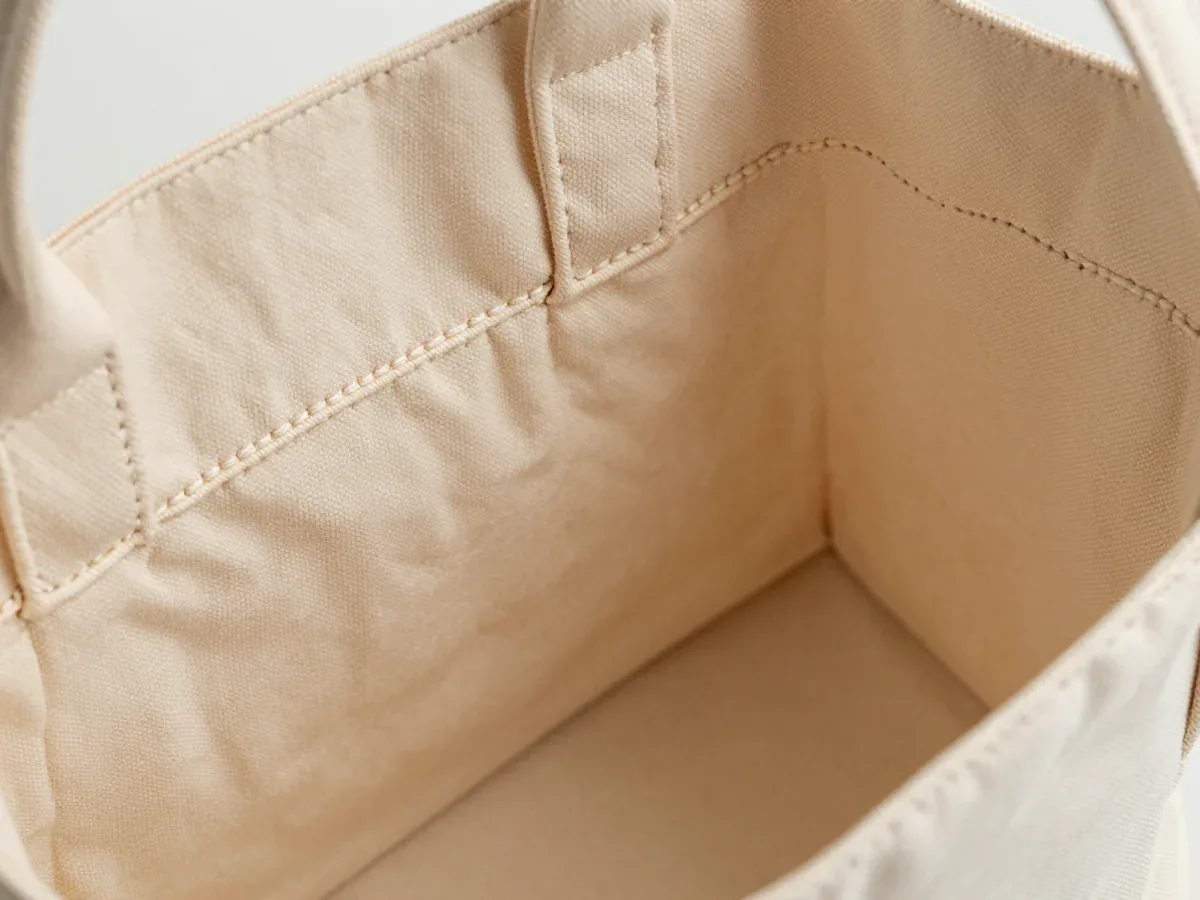
The buyer took two sample bags home and used them for a month. The saving showed up in three places, and none of them appeared on the quote sheet.
The first was the handle attachment. On a bag where the webbing runs the full length of the body, the load spreads down the side of the shell. On a cheaper construction where the handle is stitched only at the top edge, the same load concentrates on four small stitch clusters. The bag does not fail on day one. It fails on the fortieth trip, which is exactly when the customer has started to trust it.
The second was the seam allowance. A narrower allowance saves fabric across a bulk run, and it also leaves less material to hold the stitch. The third was the finishing step, where loose threads and raw edges get trimmed and sealed. Skip it and the bag looks fine in the carton and rough in the customer’s hand.
None of these are visible in a product photo. All of them are visible in a sample that has been loaded and carried for a week.
Can a Cheap Canvas Bag Still Carry a Logo Well?

Yes, and this is where the cheapest bag often performs better than buyers expect. A logo goes on by screen print, heat transfer, or a woven or embroidered label, and the print method is chosen for the artwork and the order size, not for the fabric price.
The risk is not the print itself. It is the registration between the print and the bag. A lighter canvas shifts slightly more under the screen, and a bag sewn with a wider tolerance moves the print area relative to the seam. On a one-colour logo the shift is invisible. On a multi-colour print with tight registration, or on a print that must sit a fixed distance from the top edge, the shift becomes a customer complaint.
The practical answer is to approve the print on the actual canvas being quoted, not on a standard sample from the supplier’s library. The buyer who did this caught a two millimetre drift on a three-colour logo before the bulk run started, and the fix cost nothing at that stage.
What Happens When a Cheap Canvas Bag Gets Wet or Washed?
Untreated canvas absorbs water, which makes the bag heavier and can leave stains as it dries. That is true of every untreated canvas bag at every price. What changes with a cheap bag is how much the customer notices.
A lighter canvas saturates faster and dries faster, so a light rain produces a visible wet patch sooner. A heavier canvas takes longer to soak through but holds more water when it does. Neither is waterproof unless the fabric is treated or the bag carries an additional lining, and both of those add cost.
Washing is the larger risk. Canvas can shrink if washed in hot water or dried with high heat, and cold water washing is the recommendation that should travel with every custom order. A cheap bag is not more likely to shrink than an expensive one made from the same cotton, but a cheap order is far more likely to ship without care instructions in the polybag. The buyer who includes a small care card is protecting the brand, not the factory.
Which Orders Should Never Use the Cheapest Canvas?
Some orders should not go near the bottom of the price range, and the pattern is consistent. Any bag that will carry a load above a few kilograms on a repeated basis belongs on a heavier shell with a full-length handle reinforcement. Any bag sold at retail with a brand promise attached to it belongs on a construction the buyer has physically tested. Any bag that will be washed by the end customer belongs with care instructions and a fabric that has been checked for shrinkage on the sample.
The orders that fit cheap canvas well are the ones with a short, defined life: event giveaways, conference bags, a promotional run tied to a single season. The bag does its job, the customer keeps it for a while, and nobody expects it to survive a decade.
The buyer in this story split her order in two. The event bags went to the lower quote. The retail line went to the heavier shell with the reinforced handle, and the price difference per unit was smaller than the cost of one returned batch.
What Should a Buyer Check on the Sample Before the Bulk Run?
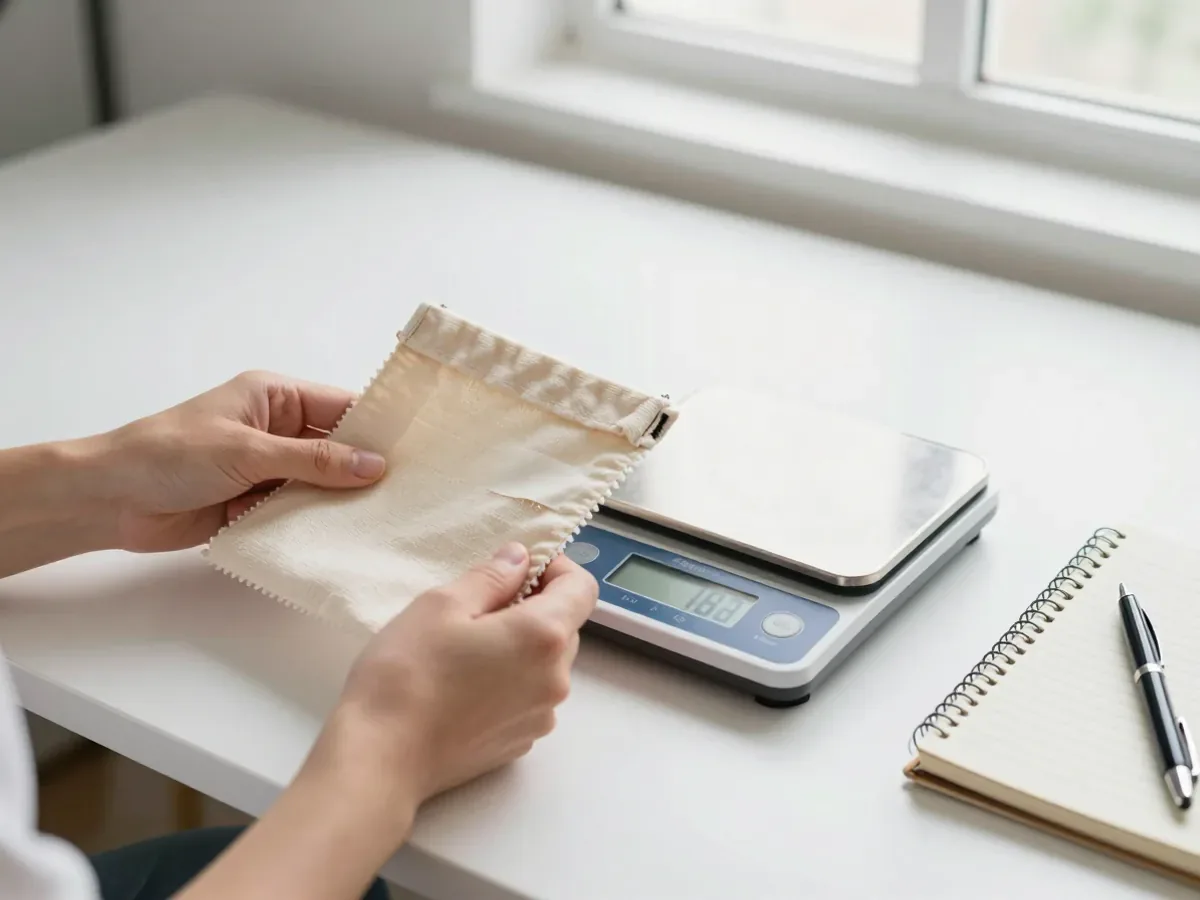
The sample is the only place where the tradeoffs become visible before money is committed. Four checks cover most of the risk, and they map to the four points where a canvas order usually goes wrong.
Check the fabric weight against the quoted number, using a swatch and a scale rather than the supplier’s word. Check the handle attachment by loading the bag and hanging it for a day, then looking at the stitch clusters for distortion. Check the print registration against the approved artwork, measured from a fixed seam rather than by eye. Check the seam allowance and the finishing on the inside of the bag, where the customer will eventually look.
Every order that runs through our line passes four checkpoints: incoming material, seams and zip, finished bag, and final count. A buyer can ask any supplier to describe their equivalent checkpoints and where in the process each one happens. The answer tells you whether the sample you approved is the sample the bulk run will match.
The Question the Buyer Had Not Asked Yet
Three weeks in, the buyer sent a final note. She had compared the two bags again and realised the cheaper one was not cheaper per use. The event bag would be handed out once and discarded within a season. The retail bag would be carried for a year or more, and the cost per trip to the shop was lower on the heavier bag even though the unit price was higher.
That is the question worth carrying into the next quote sheet. Not what the bag costs, but what it costs each time someone uses it. A cheap canvas bag is a sound purchase when the expected number of uses is small and the brand risk is low. It is a poor purchase when the bag is meant to represent the brand for months. The fabric weight, the handle construction, the print registration, and the care instructions are the four numbers that decide which case applies.