

Reorganised from the archived string backpack article, with fabric, print and QC details drawn from the product spec sheet.
Three samples sat on the buyer's desk for a week: a printed string backpack, a clear cello bag holding a folded shirt, and a zip backpack with padded straps. She had budget for one and a launch date that would not move. The string backpack was the cheapest per unit, but the cello bag showed the product better, and the zip backpack was the only one a customer would carry every day for a year. Choosing between them is not a matter of taste. It is a matter of matching the closure, the material and the print to the job the bag has to do.
Two Bags on the Same Table, Two Different Jobs
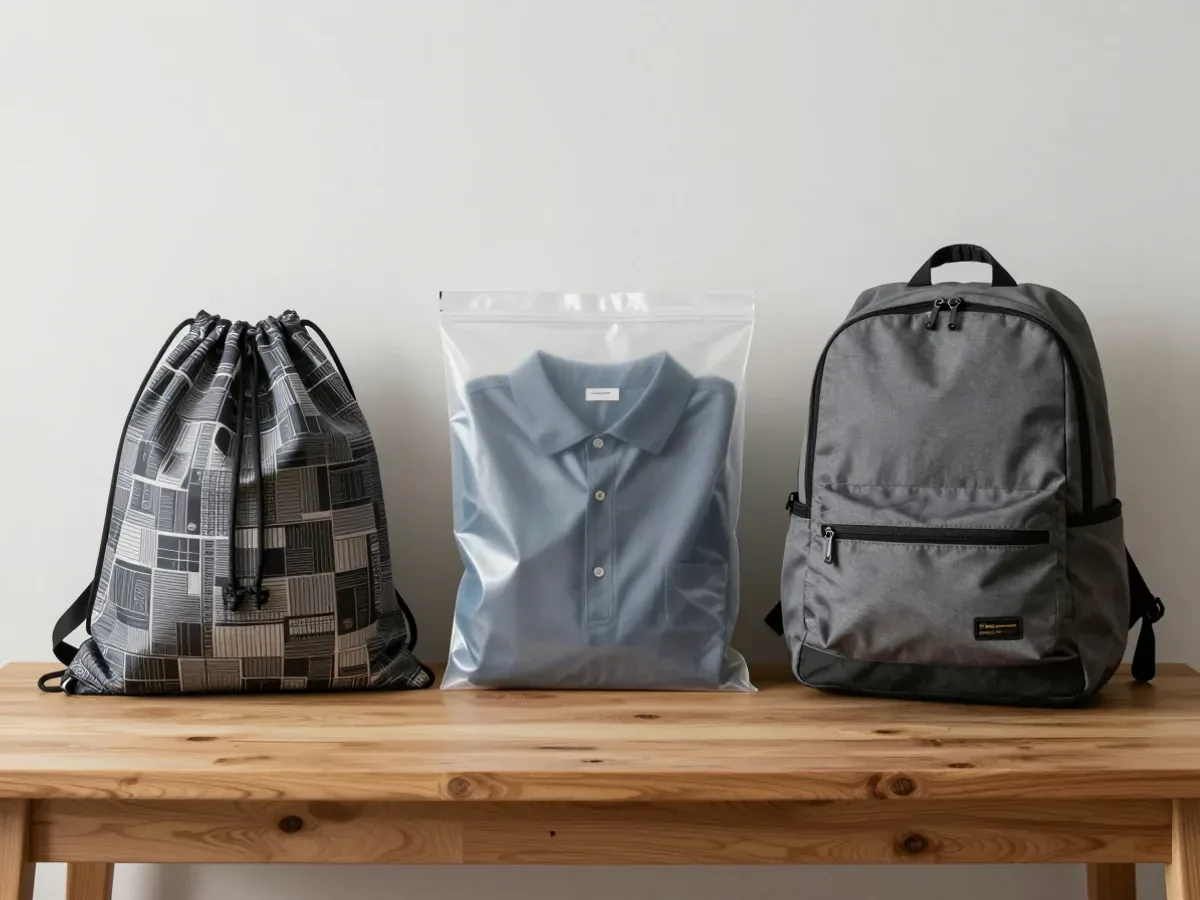
A string backpack closes with a cord that pulls tight and doubles as the shoulder straps. That single mechanism is the whole design. There is no zip, no flap, no hardware, and nothing to break. The bag collapses flat when empty and opens wide when full.
A cello bag does a different job. It is a clear, flexible plastic bag used for packaging and storing items, and it is often reached for in the same situations where a string backpack appears. The difference is that a cello bag protects and displays. A string backpack carries.
The third option, a traditional zip backpack, adds structure: a fixed shape, a zipped main compartment, and straps that stay on the shoulders. It costs more and weighs more, and it is built to be used daily rather than handed out once.
Put the three side by side and the decision narrows fast. The question is not which bag is best. It is which bag the end user will still be using on the second trip.
What the Cord Closure Changes About Daily Use
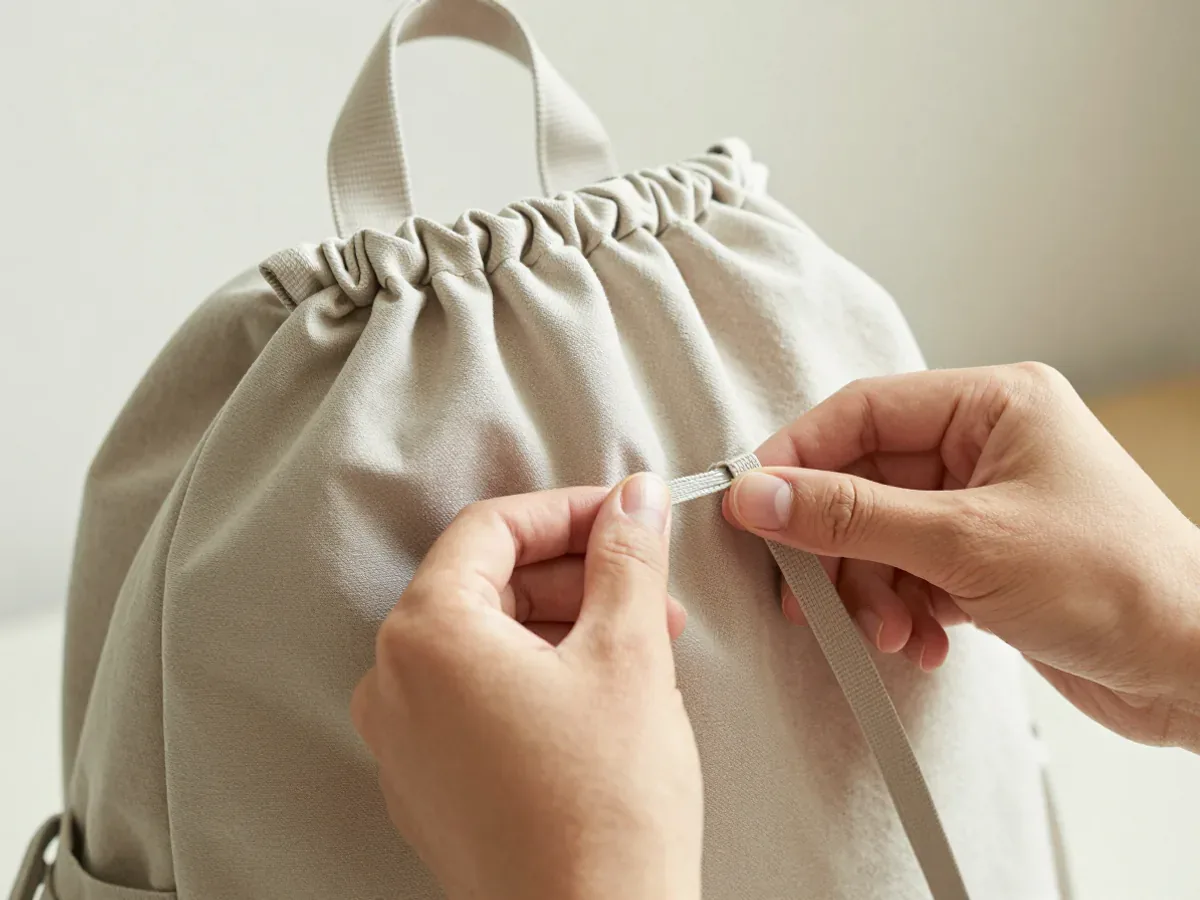
The cord is a closure and a handle at the same time. Pull it and the mouth of the bag gathers shut. Loosen it and the bag opens wide enough to drop in a pair of shoes or a stack of books. That adjustability is why the bag suits loads that change size from day to day.
The same cord becomes the shoulder straps. A drawstring bag is carried over the shoulders without the bulk of a padded harness, which keeps it light and easy to fold away. It also means the load hangs from two cords rather than from stitched straps, so weight distribution is simpler and less forgiving.
There is no zip to jam and no flap to align. Access is a single pull. For a gym kit, a promotional giveaway or a secondary bag inside a larger case, that speed matters more than structure.
The trade is protection. An open gather at the top lets rain and dust in, and small items can work their way toward the mouth. A zip backpack closes against the weather and holds small objects in place. A cello bag seals its contents completely but offers no way to carry them.
Print, Fabric and the Cost of Getting It Wrong
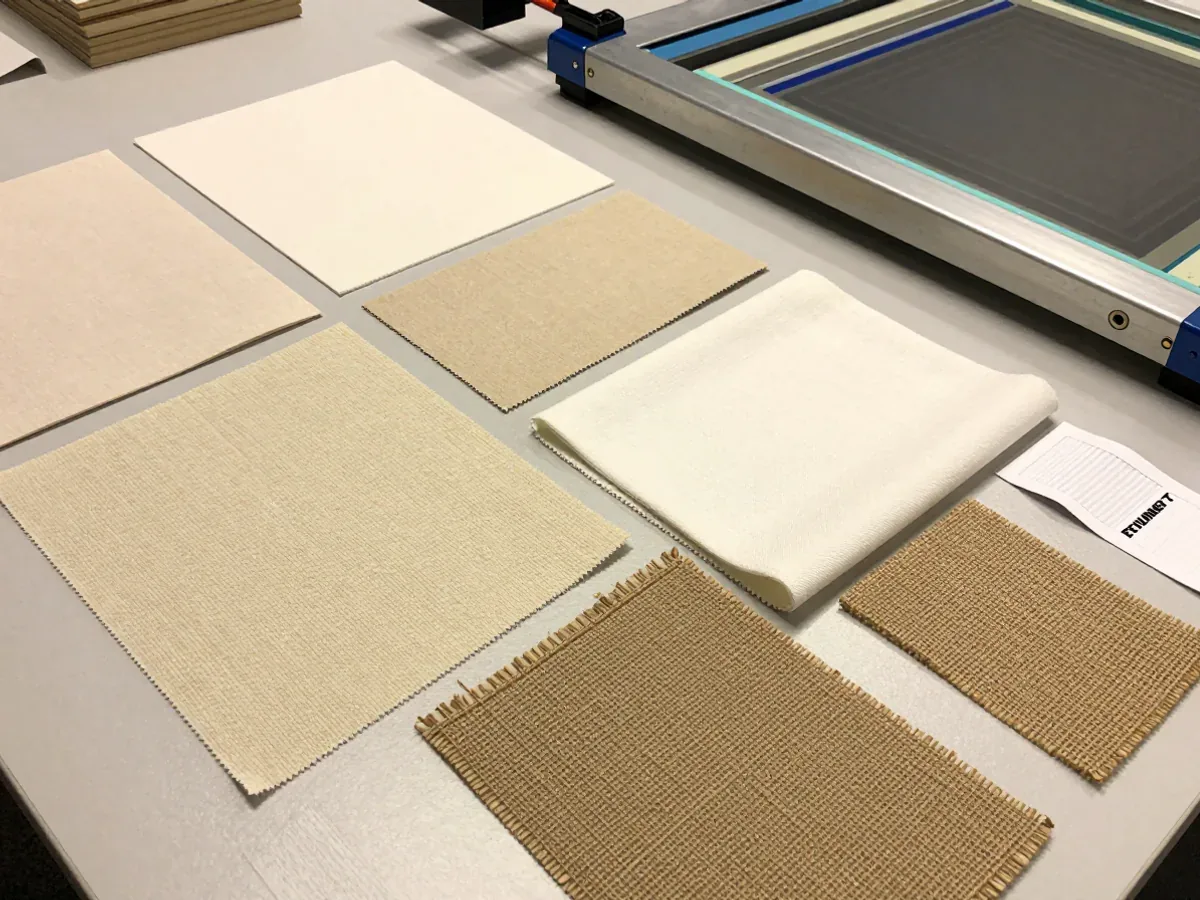
Fabric choice drives both the feel and the print result. The range runs PE, PP woven, non-woven, polyester, nylon, canvas, jute and rPET. Each behaves differently under ink and under load.
PE takes a screen print well, and artwork is proofed before a run. That makes it a practical base for a logo that has to stay sharp across a large area. PP woven resists splashes, but the seams are stitched rather than sealed, so a PP bag is not waterproof. A buyer who assumes otherwise will hear about it after the first rainy event.
Branding can run as a screen print, heat transfer, woven or embroidered label. The method changes the cost per unit and the look. A woven label reads as a brand mark; a heat transfer suits a detailed multicolour design; a screen print holds up on flat fabric.
Construction is where cheap bags show their age. Handles stitched to the body rather than tacked on, and a reinforced base, are the two details that decide whether the bag survives a loaded bottle. A clear label pocket on the face can hold a card that says what is inside, which helps at events and in retail.
Cello bags win on visibility and lose on durability. They show the product through clear plastic, which is useful for gift sets and retail display, but they are packaging rather than a carrying item. A buyer comparing unit prices across all three is comparing three different products.
Where the Cello Bag Still Wins

A cello bag is the right answer when the product needs to be seen before it is opened. Clear packaging lets a gift set, a folded garment or a small accessory show itself on a shelf while staying protected from handling.
It is also the cheaper path when the bag is packaging, not merchandise. If the bag goes into a box and never leaves the store, spending on cord, fabric and print is wasted. The cello bag does the job at a lower unit cost and a simpler spec.
The limit is reuse. A cello bag has no straps and no closure beyond its own seal, so it cannot be carried over a shoulder or filled and refilled. It is a display and protection layer, and it should be specified as one.
Buyers who want both functions sometimes pair them: the product travels in a cello bag inside a string backpack. That combination raises the unit cost and the packing time, so it only makes sense when the unboxing moment is part of the sale.
When a Zip Backpack Is the Honest Choice
A zip backpack earns its higher cost when the user carries the bag every day and expects it to protect what is inside. The zip closes against weather and keeps small items from escaping. Padded straps spread the load over a longer carry.
That matters for school bags, commuter bags and anything that holds a laptop or documents. A cord gather at the top cannot match a zip for security, and a flat string bag cannot match a structured back panel for comfort over hours.
The honest framing is that a zip backpack is a different product category. It costs more because it does more. A buyer who needs daily protection should not try to solve it with a string backpack and a lower price.
A string backpack beats the alternatives when the job is light, temporary and repeatable: a gym kit, a giveaway, a secondary bag, a school term of gym clothes. It loses when the job is protection, structure or daily load bearing.
The Decision Table a Buyer Can Actually Use
| Decision point | String backpack | Cello bag | Zip backpack |
|---|---|---|---|
| Primary job | Carry light loads hands free | Protect and display | Carry and protect daily |
| Closure | Cord pulled tight | Sealed or open top | Zip |
| Carrying method | Cord doubles as shoulder straps | None | Fixed padded straps |
| Visibility of contents | Low | High, clear plastic | Low |
| Weather resistance | Not waterproof when PP with stitched seams | Seals contents | Zips closed |
| Print options | Screen print, heat transfer, woven or embroidered label | Limited by film | Depends on panel |
| Reuse | Repeated | Usually single use | Repeated, long term |
| Best fit | Gym, promo, event, secondary bag | Retail display, gift set | School, commute, daily carry |
Read the table by column, not by row. A buyer who needs visibility should not be looking at fabric and print at all. A buyer who needs daily protection should not be comparing cord prices.
What to Check on the Sample Before the Run
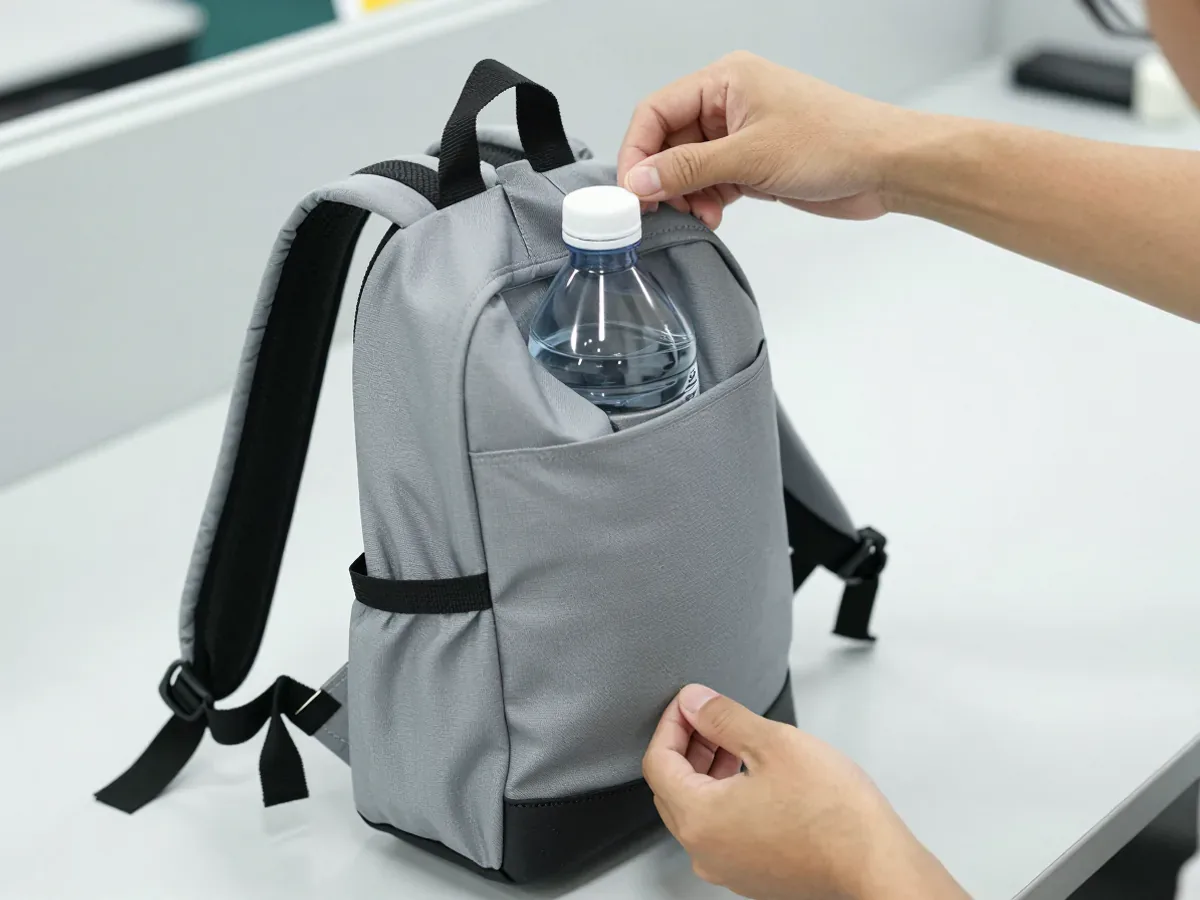
A bag is judged on the second trip: does the handle hold, does the base take a loaded bottle, does the print survive a wash. Put the sample through those three tests before approving anything.
Check the cord where it exits the channel. Pull it hard several times and look for fraying or a channel that opens at the seam. Check the base with a full bottle inside and lift the bag by one strap. Check the print after a wash cycle if the end user is likely to machine wash it.
Confirm the fabric against the spec, because PE, PP woven, non-woven, polyester, nylon, canvas, jute and rPET all print and wear differently. Confirm the branding method in writing, since a screen print and a heat transfer are not interchangeable on a detailed logo.
Every order passes four checks: incoming material, seams and zip, finished bag, final count. Ask how those checkpoints are recorded, and ask for the count check to happen before the cartons are sealed rather than after.
FAQ
Is a string backpack waterproof?
PP resists splashes, but the seams are stitched rather than sealed, so a PP bag is not waterproof. Treat it as splash resistant at best.
Can the whole bag be printed with our logo?
PE takes a screen print well, and artwork is proofed before a run. Large coverage is possible, but the proof decides how the design sits across seams and the cord channel.
Which fabrics can a string backpack be made from?
The range runs PE, PP woven, non-woven, polyester, nylon, canvas, jute and rPET. Each changes the hand feel, the print result and the price.
How is a string backpack order quality checked?
Four checks: incoming material, seams and zip, finished bag, final count. The finished bag check is where cord, channel and base are confirmed.