
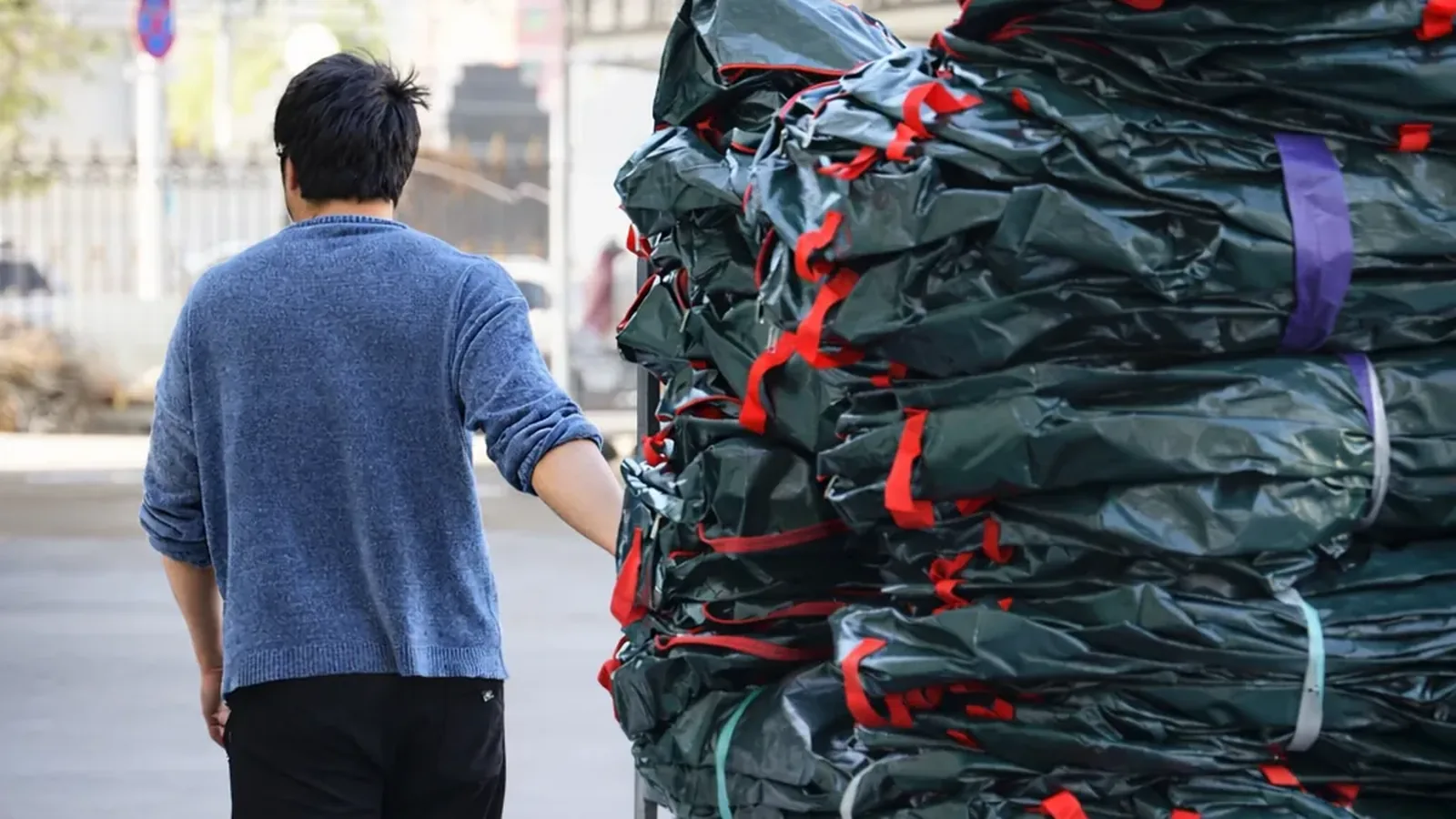
Based on legacy TIIOCTI notes on coated tarpaulin construction and our moving bag spec records.
A buyer replaced her old woven PP moving bags with a 500D PVC tarpaulin set and expected the upgrade to settle every complaint. Two months later, the new bags were still scuffing through at the bottom corners, and the returns sheet looked almost identical to the one from the old order. The denier number had changed. The failure point had not.
That pattern repeats often enough to be worth unpacking. A 500D label describes one layer of a composite material, and buyers who treat it as a durability grade end up approving samples for the wrong reasons. The number is real. What it promises is narrower than most spec sheets imply.
The label says 500D, so the bag must be tough
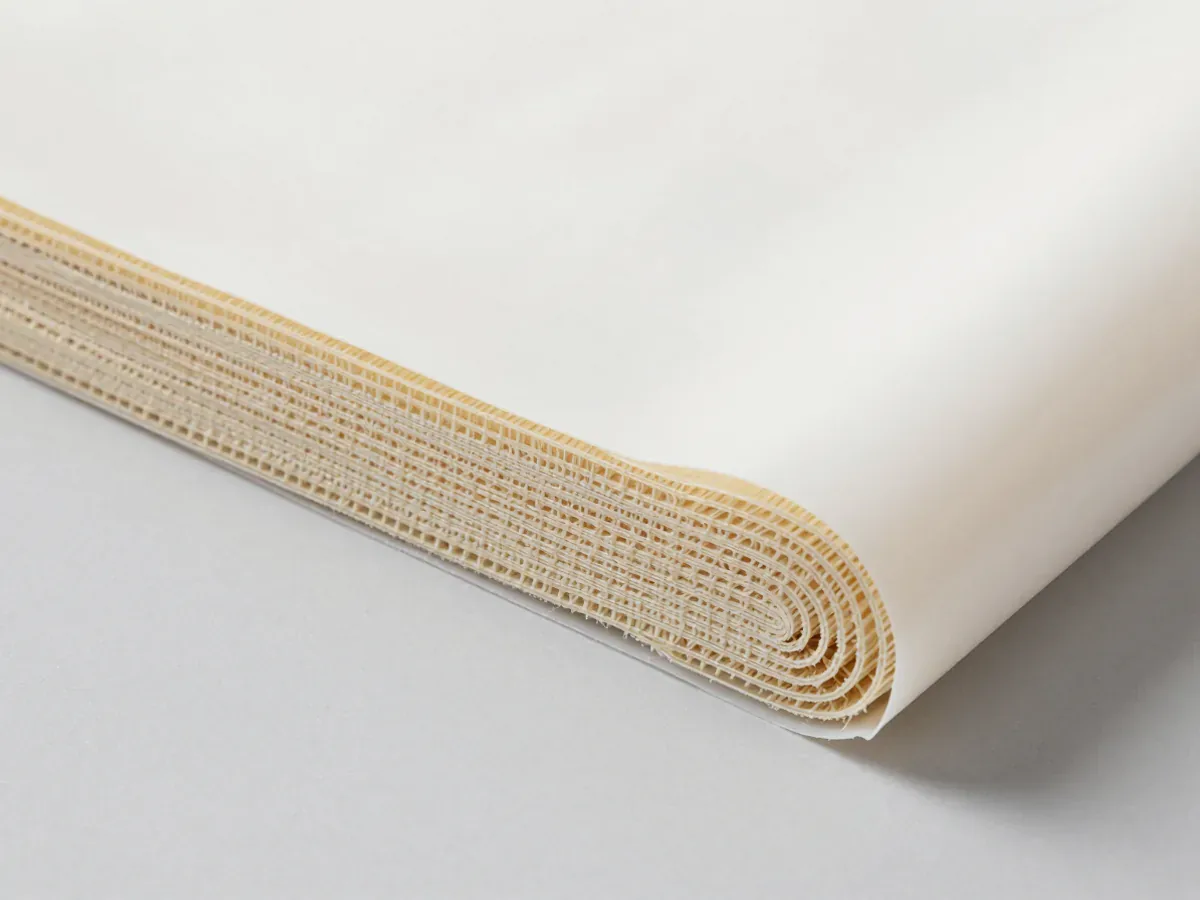
A 500D PVC tarpaulin is a three-ply composite. A woven polyester base fabric sits at the core, a PVC coating is bonded to it, and the finished sheet is built for industrial handling. The 500 denier figure describes the base yarn: how much mass one 9,000 meter length of that yarn carries. Coarser yarn, heavier number.
The base weave supplies tensile strength and tear resistance. The PVC layer supplies the impermeable barrier and much of the chemical resistance. Neither layer works alone, and the denier figure says nothing about the coating thickness, the adhesion between layers, or how the sheet is finished at the edges.
When a buyer reads 500D and hears "tough," the reading is half right. The core yarn is substantial. The bag's real performance depends on what was bonded to it and how the finished piece was assembled.
Why a denier number feels like a durability promise
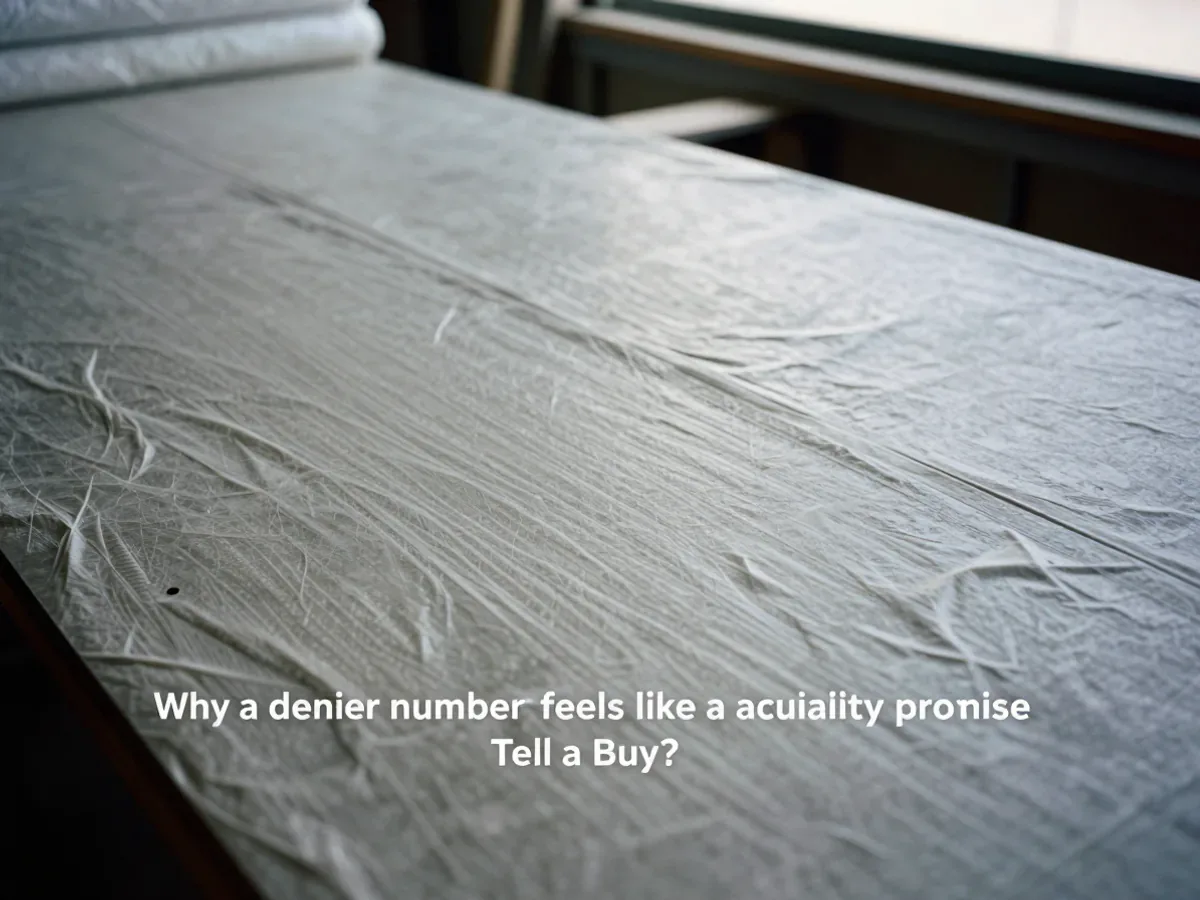
Denier is one of the few figures on a tarpaulin spec sheet that looks like a grade. It is a single number, it rises with heavier material, and it is easy to compare across suppliers. A 1000D sheet sounds twice as serious as a 500D sheet, and that arithmetic feels intuitive.
The intuition breaks because denier measures input, not output. Two sheets can share a 500D base and behave very differently once one carries a thin coating and the other a thick one. Add different stabiliser packages and different seam methods, and the gap widens further.
Buyers also inherit the habit from textile shopping, where a higher thread count or a heavier ounce weight often tracks with quality. Tarpaulin does not follow that curve cleanly. A heavier base with a poorly bonded coating can delaminate before a lighter, better coated sheet shows surface wear.
Where the 500D claim quietly breaks down
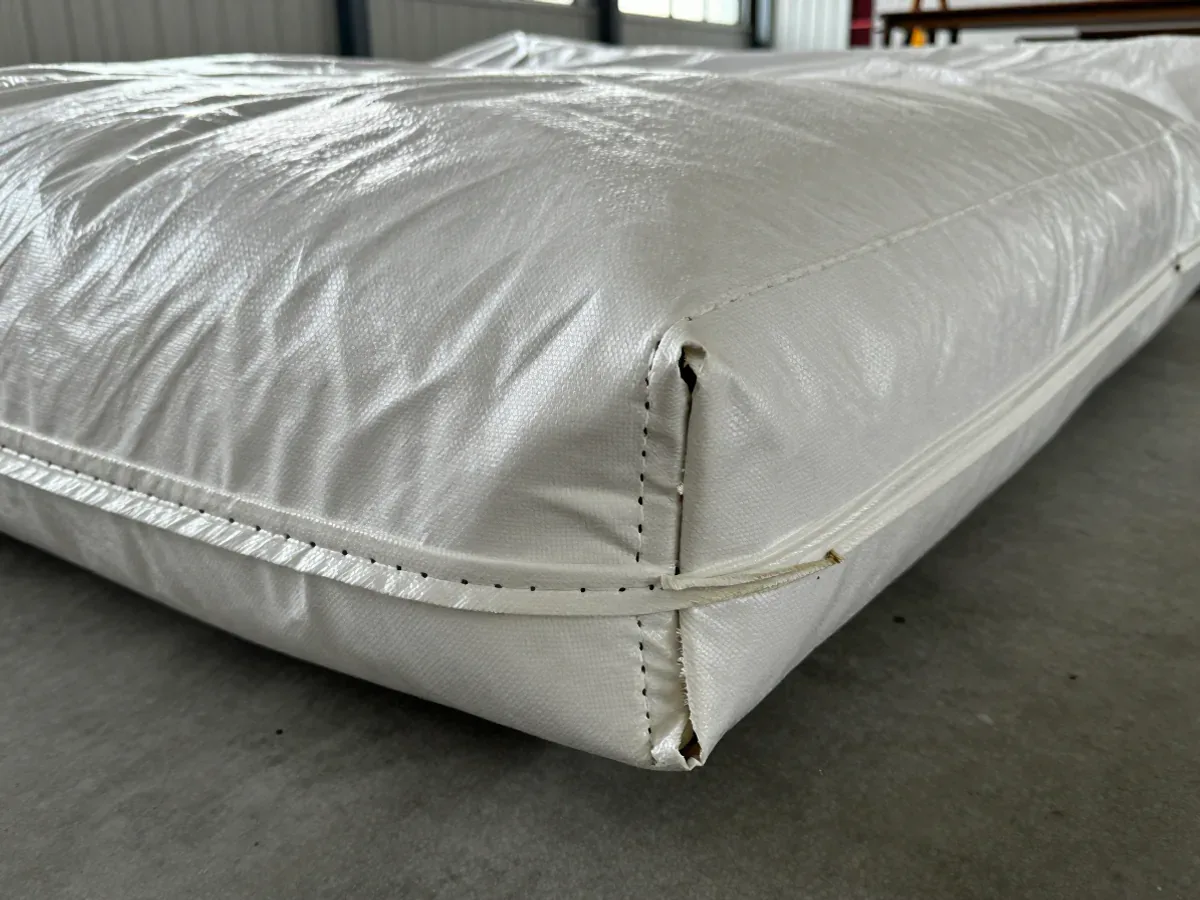
The first breakdown happens at the coating. PVC is bonded to the polyester base, and the bond quality decides whether the sheet survives flexing, folding, and repeated loading. A coating that separates from its base leaves a bag that still reads 500D on paper and leaks at the crease lines.
The second breakdown happens at the seams. A stitched seam on a coated shell creates a line of needle holes through the waterproof layer. Our own woven PP moving bags illustrate the limit clearly: the shell resists splashes, but the seams are stitched rather than sealed, so the bag is not waterproof. The same logic applies to any coated tarpaulin assembled with thread alone.
The third breakdown happens at UV exposure. Ultraviolet radiation attacks polymer chains in synthetic fabrics, causing fading, strength loss, and cracking over time. Budget sheets often carry minimal UV stabiliser, and the additive package is rarely printed on the spec sheet at all.
The fourth breakdown happens at the corners and high-stress zones. A bag that scuffs through at the bottom corner usually failed because of abrasion at a fold, not because the base yarn was too light. Reinforcement details decide that outcome more than denier does.
What a coated shell spec should name instead
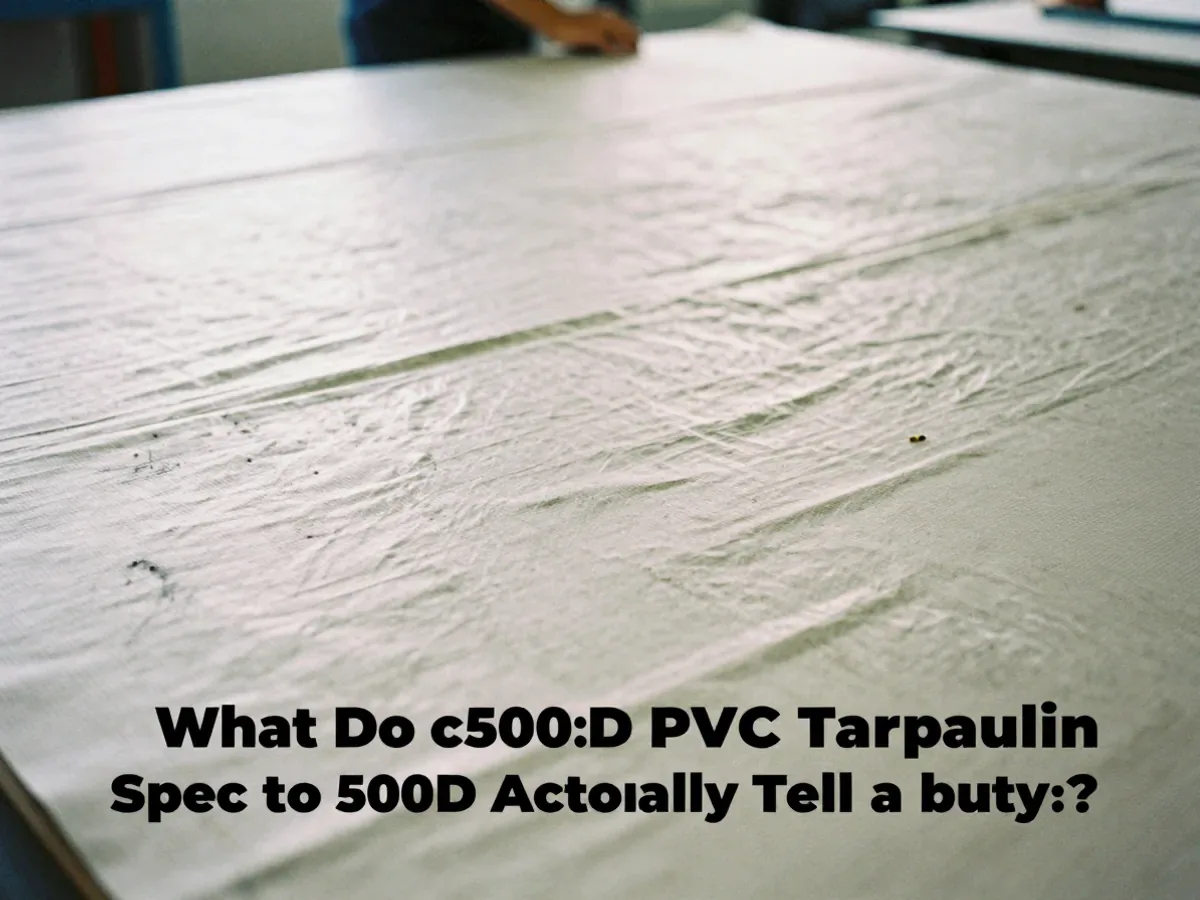
A useful tarpaulin spec names the coating and its weight per area, not just the base yarn. It states the total fabric weight, because that figure captures base plus coating together and is far harder to inflate than a denier number.
It names the test methods behind any abrasion or UV claim. It states the seam construction: welded, sealed, or stitched. It states the temperature range the sheet is rated for, since PVC behaviour shifts at temperature extremes. It states the maximum roll width, which determines whether a large cover can be made without a seam down the middle.
A spec that lists only 500D and the word waterproof has answered one question and skipped five. The buyer who approves a sample against that sheet is trusting the supplier's assembly discipline rather than a documented standard.
Reading a UV and abrasion report without a lab tour
A UV claim should point to a stabiliser package and a test standard, not to a colourfastness photo. Manufacturers can add UV stabilisers such as Hindered Amine Light Stabilizers to common base fabrics, and the quantity and consistency of that additive is where budget and premium sheets diverge. A report that names the standard and the exposure hours tells a buyer something. A marketing line about "UV treated" tells almost nothing.
Abrasion claims deserve the same scrutiny. Standardised methods exist for coatings and films, including the Taber abrasion test under ASTM D4060, which measures wear from a weighted rotating abrasive wheel. A supplier who cites a recognised method and a wear cycle count has given the buyer a comparable figure. A supplier who describes dragging bags across concrete has described an anecdote.
The report alone does not prove the production run matches the sample. Ask whether the tested sheet came from the same coating line and the same additive batch as the order. A test certificate for a different construction is a document about a different product.
The seam and repair details a spec sheet leaves out
Seam construction decides whether a coated bag earns the word waterproof. Welded or sealed seams close the coating across the join. Stitched seams leave a perforated line that water can follow under load or standing contact.
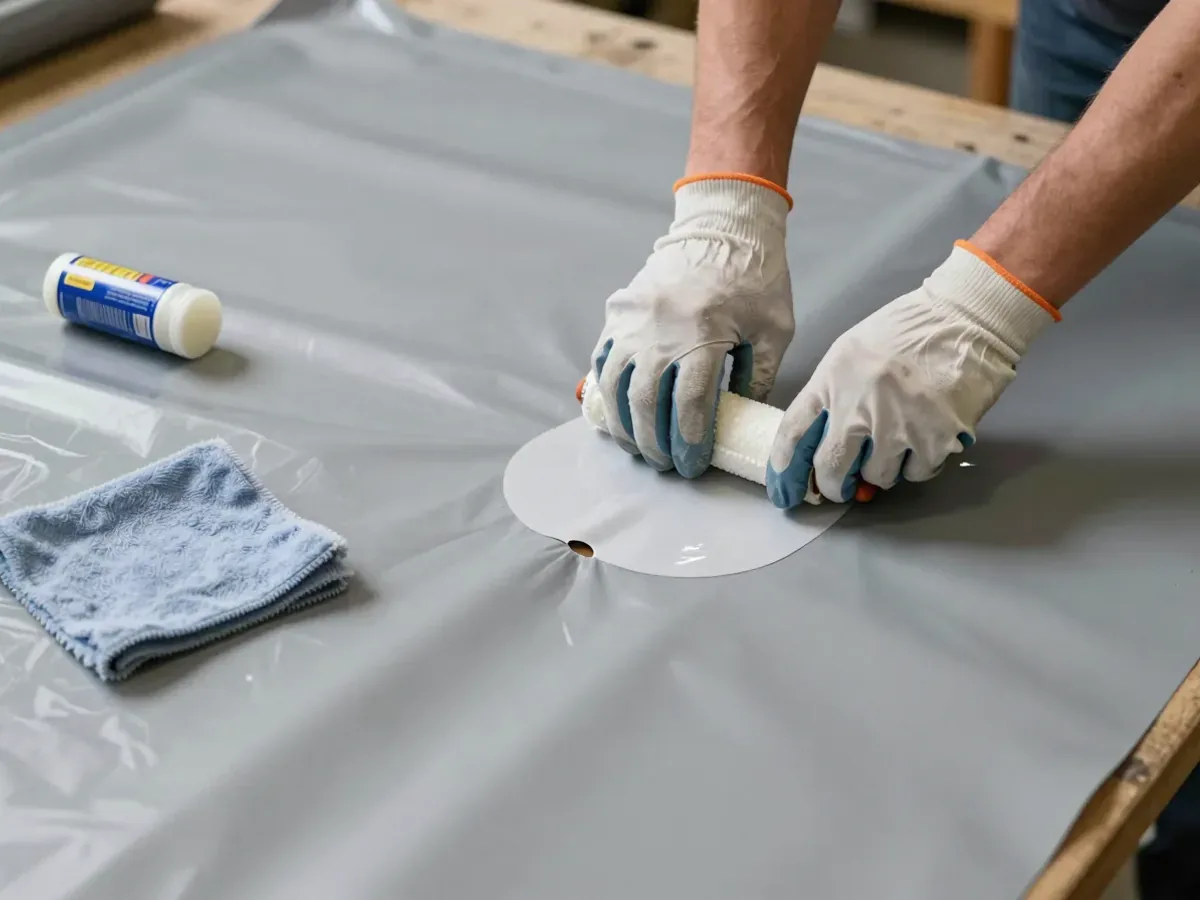
Repair instructions belong in the same conversation. PVC punctures are repaired with commercial grade vinyl patches and a PVC adhesive that forms a chemical bond with the surface. The process calls for cleaning and degreasing the area, scuffing it, cutting a patch larger than the damage with rounded corners, applying a thin even coat to both surfaces, and pressing from the centre outward to remove air bubbles.
Curing takes 24 to 48 hours before the repaired area carries load or moisture. A buyer who plans to keep bags in service for years should confirm that a repair route exists and that the shell accepts a patch bond. A shell that cannot be repaired economically turns every puncture into a replacement.
A short checklist before you approve the sample
- Confirm the spec states total fabric weight, not only the base denier.
- Ask for the coating type and the seam method in writing.
- Request the abrasion test method and the wear cycle count, not a description.
- Ask which UV stabiliser is used and whether the tested sheet matches the order construction.
- Check the corners, handle attachments, and any stitched stress points on the physical sample.
- Confirm the bag carries reinforcement at the base corners and along the carry handles.
- Ask for the repair procedure and the cure time in the handover documents.
- Verify the sample against the production sheet, not against a photo.
Quality control on a tarpaulin order typically runs through several checkpoints, and the fabric spec is only the first. The sample in a buyer's hands is the last chance to catch a seam that was stitched when it should have been sealed.
FAQ
Is 500D PVC automatically waterproof?
No. The PVC coating provides the waterproof barrier, and the base denier does not. A bag made from coated 500D sheet with stitched seams can still leak through the needle holes. Waterproof status depends on the coating and the seam construction together.
Does a higher denier always mean better abrasion resistance?
No. Abrasion resistance depends on the coating, its adhesion, the surface finish, and the reinforcement at wear points. A heavier base with a thin or poorly bonded coating can scuff through faster than a lighter sheet with a robust coating.
What test method should a PVC tarpaulin abrasion claim cite?
A recognised standardised method, such as the Taber abrasion test under ASTM D4060 for coatings and films. A claim built on an informal demonstration, such as dragging bags across concrete, is not a comparable measurement.
Can a stitched PVC bag be called waterproof?
Only with qualification. Stitched seams perforate the coating and create a path for water under load or standing contact. A stitched coated bag may resist splashes, but a sealed or welded seam is what supports an unqualified waterproof claim.






