
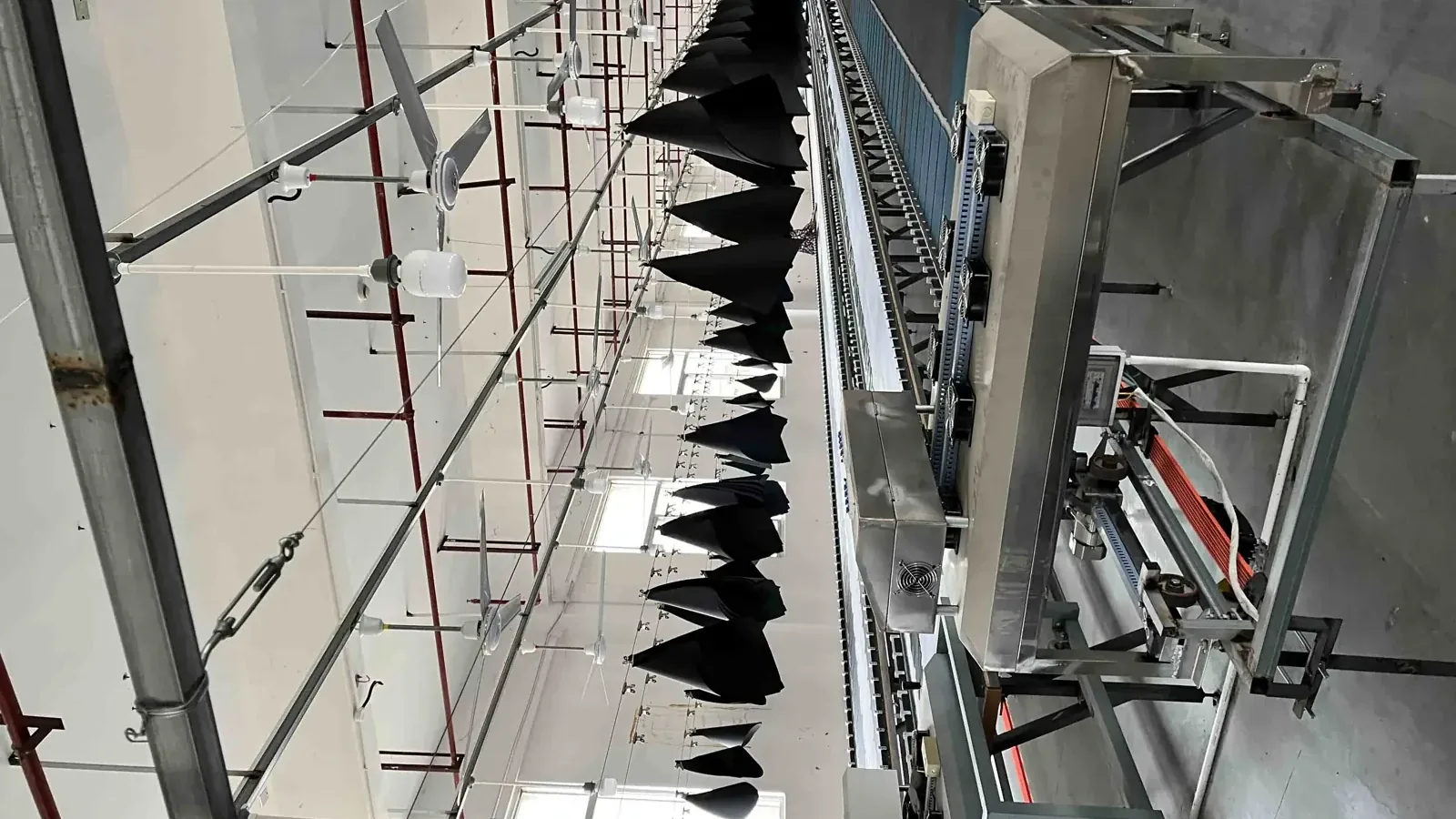
This piece follows one inspection line on a bag purchase order and separates the checks a camera can carry from the ones that stay with hands and lab equipment.
The inspection row on a purchase order read "100% visual check, print and seam." The buyer had signed it believing a camera would cover both. Six weeks later, a carton of tote bags arrived with a logo shifted 4 mm to the left, and the factory's reply was that the vision station had flagged it, but a human had overridden the flag. That single row, written in eleven words, had promised something the line could not deliver.
A spec sheet is where inspection promises get made. Most buyers treat the inspection section as boilerplate and spend their attention on fabric weight and zipper brand. The camera question is decided in that neglected block, one row at a time. Some rows a vision system can hold to a number. Others it can only watch, and a few it cannot touch at all.
The Inspection Line That Started the Argument

The order in question was a printed cotton tote, 38 by 16.5 in, with a two colour logo on the front panel. The inspection block listed four items: print quality, dimensions, seam strength and zipper function. All four sat under one heading, "Final inspection," with no indication of who or what performed each check.
When the logo drift surfaced, the factory produced its vision log. The station had flagged the bag at 03:14 on a Tuesday shift. A line supervisor had cleared it because the shift target was behind and the drift looked minor at arm's length. The camera did its job. The spec sheet never said what happens after a flag.
That is the first lesson hidden in the row. A camera check is only as strong as the disposition rule written beside it. If the spec says "flagged bags reviewed by supervisor," the buyer has authorized a human to overrule the machine at the worst possible moment, which is when the line is under pressure.
Print and Logo: What the Spec Should Name

Print inspection is the strongest case for a camera on a bag line. A system mounted at the printing or heat transfer station compares each bag against a golden reference image and flags colour drift, missing screen layers, smears and misaligned logos at line speed. It records every flagged image, which turns inspection from sampling into full coverage.
A spec sheet that says "print quality: good" gives the station nothing to compare against. The row needs a reference file, a tolerance and a disposition. Name the approved artwork file and its version. State the allowed shift in millimetres for logo position and the allowed colour difference against the reference. Then state what the camera does with a flag.
Artwork is checked before the fabric is cut, and that early check is the one that saves the most money. A camera at the print station catches drift on bag two hundred. A pre cut artwork check catches a wrong file before any fabric is wasted. Both belong in the spec, and they belong on different rows.
Dimensions and Stitch Count: Writing a Number the Camera Can Hold
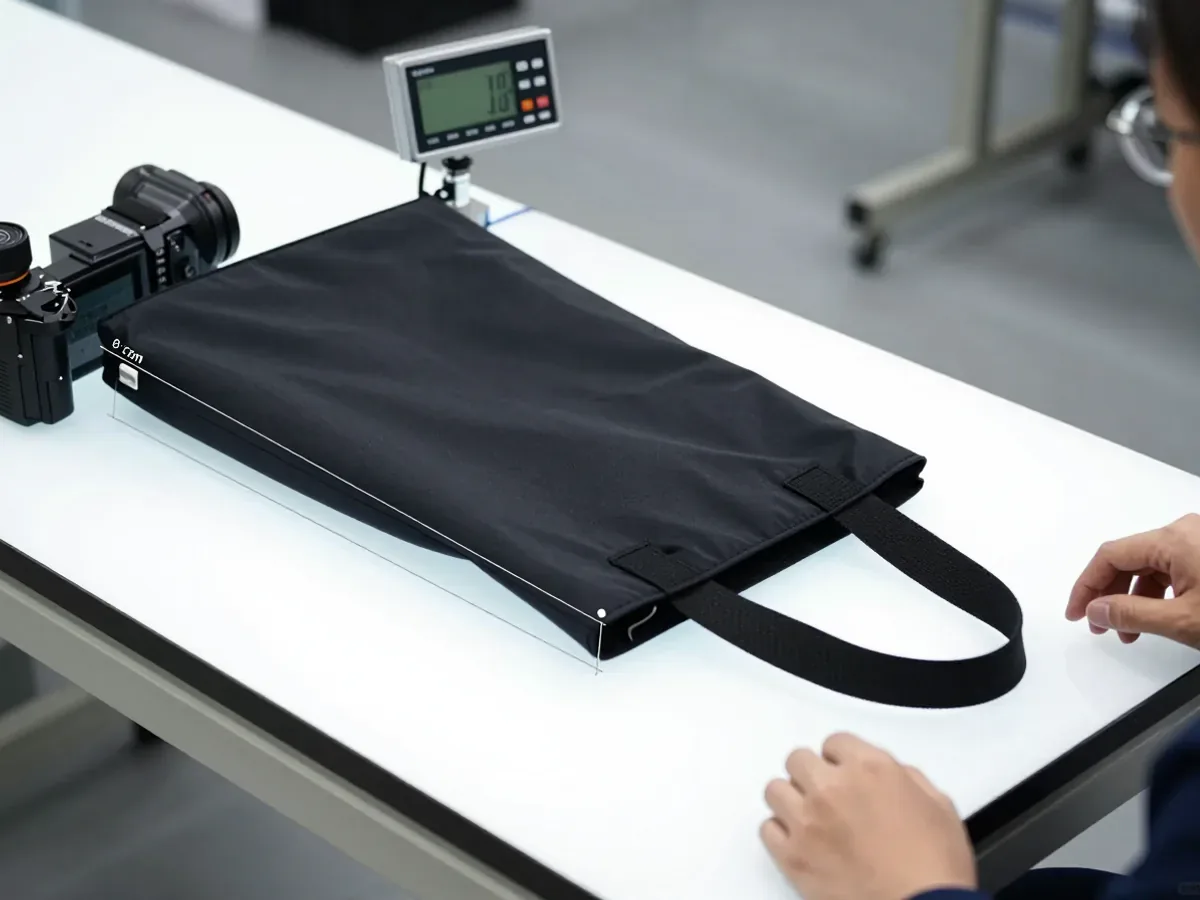
Dimensional checking is the second proven case. Bags are cut and sewn to tolerances of a few millimetres on critical seams, and a calibrated camera measures handle length, body width and seam placement on every piece or on a defined sample rate. The measurement is objective and repeatable, where manual measurement varies between inspectors and between shifts.
The spec row has to carry three numbers: the nominal dimension, the tolerance and the sample rate. "Handle length 23.6 in" is not a specification a camera can enforce. "Handle length 23.6 in plus or minus 5 mm, measured on every piece at the handle attach point" is. The measurement point matters as much as the number, because a camera measures where it is told to look.
Stitch density and thread breaks round out the working set. A camera with enough resolution counts stitches per centimetre and flags skipped stitches and broken threads along the seam line. Write the stitch count per centimetre, the acceptable number of consecutive skipped stitches, and the seam lines the camera must cover. A bag has six or eight seam lines and most stations watch two.
Seam Strength and Zipper Feel: The Rows a Camera Cannot Fill

Seam strength is a destructive test. The only way to verify a seam holds its rated load is to pull it until it fails or passes, and a camera cannot do that. Pull, seam strength and bar tack are tested on every batch, and each handle takes a static pull recorded per batch. Those records come from a tensile rig and a person, not from a lens.
Zipper function is a tactile test. The feel of a zipper running smoothly, the resistance at the pull and the seating of the slider sit in human hands. The zip is opened and closed repeatedly on a loaded bag, and no current vision system grades that motion. A loaded bag dropped on a corner and inspected is another check that lives with a person.
Fabric hand and drape are subjective properties that buyers specify in words, and no vision system grades them. Incoming fabric, webbing, zips and thread are checked against the approved spec by hand and by lab. The practical boundary is simple: vision systems inspect what light reflects, and destructive, tactile and subjective properties do not reflect.
A factory that claims camera based seam strength testing is marketing, not inspection. The buyer should ask for the pull test certificate instead, and should expect it per batch rather than per order.
False Positives: The Row Buyers Forget to Write

A system tuned too tight flags 5 to 10 percent of good bags, and every flag stops the line for a human review that erases the speed benefit. Factories tune the threshold so the false positive rate lands near 2 to 3 percent. At that setting the system catches gross defects automatically and routes borderline cases to the inspector already standing at the end of the line.
The spec sheet almost never mentions this number, and it should. Write the acceptable false positive rate and the review rule in the same row as the defect class. A 3 percent flag rate on a 20,000 bag order means 600 reviews. If the buyer has not agreed to that workload, the factory will quietly loosen the threshold and the camera becomes decoration.
There is a second cost the row should acknowledge. A single station print inspection system runs USD 8,000 to USD 25,000 depending on camera grade and software licence, which prices it into factories running continuous lines rather than batch job shops. The bigger cost is training data. The system needs hundreds of labelled defect images per defect class before it reaches production accuracy, and a factory that just bought the hardware is still months from reliable detection.
The Log Row: What the Factory Should Hand Back
The last row on the inspection block is the one that makes the others auditable. Ask what the factory will hand back at shipment: the inspection log for the order, with the flagged images attached. A vision system records every flagged image, so the export exists. Whether it reaches the buyer is a commercial decision written into the spec.
Four questions separate deployed systems from brochure claims. What defects does the system detect, and what is the per class detection rate at what false positive rate? How many labelled samples trained the current model? Which inspection points run under the camera, and which remain manual? Can the factory export the inspection log for the order, with the flagged images?
A factory that answers all four with numbers is running a real system. A factory that answers with the word "AI" is running a website. Cartons counted and photographed before the container seals is a related habit worth writing down, because it closes the loop between what the camera saw and what actually shipped.
Reading the Finished Spec Sheet Before You Sign
The revised sheet for that tote order ran to two pages instead of one. Print and logo sat under camera inspection with a named artwork file, a position tolerance and a rule that flagged bags could not be cleared by a supervisor without a written reason. Dimensions and stitch count carried nominal values, tolerances and sample rates.
Seam strength, zipper function and fabric hand moved to a separate block headed "manual and lab," with the test method and the record named for each. A false positive row set the flag rate and the review workload. A final row required the inspection log and flagged images at shipment. The buyer signed it and the next order shipped without a single override.
That is the test for any inspection block. Every row should name the method, the number, the disposition and the record. Rows that cannot name a method belong to people and labs, and saying so on paper is stronger than letting a camera take credit for work it never did.
FAQ
Can a camera station replace the pull test on seams?
No. Seam strength is destructive, and the only verification is a pull until pass or fail. Keep the pull test on every batch and keep the certificate.
What false positive rate should a buyer accept on a vision line?
Well tuned systems run 2 to 3 percent. Anything tighter flags 5 to 10 percent of good bags and slows the line with reviews. Agree the number and the review rule before production starts.
Does a vision system need training images before it works on a new bag?
Yes. The model needs hundreds of labelled defect images per defect class before it reaches production accuracy. A new bag style with new artwork starts that cycle again.
Should the inspection log be part of the purchase order?
It should be a named deliverable. The log and the flagged images are what let a buyer verify the camera ran and see what it caught.






