
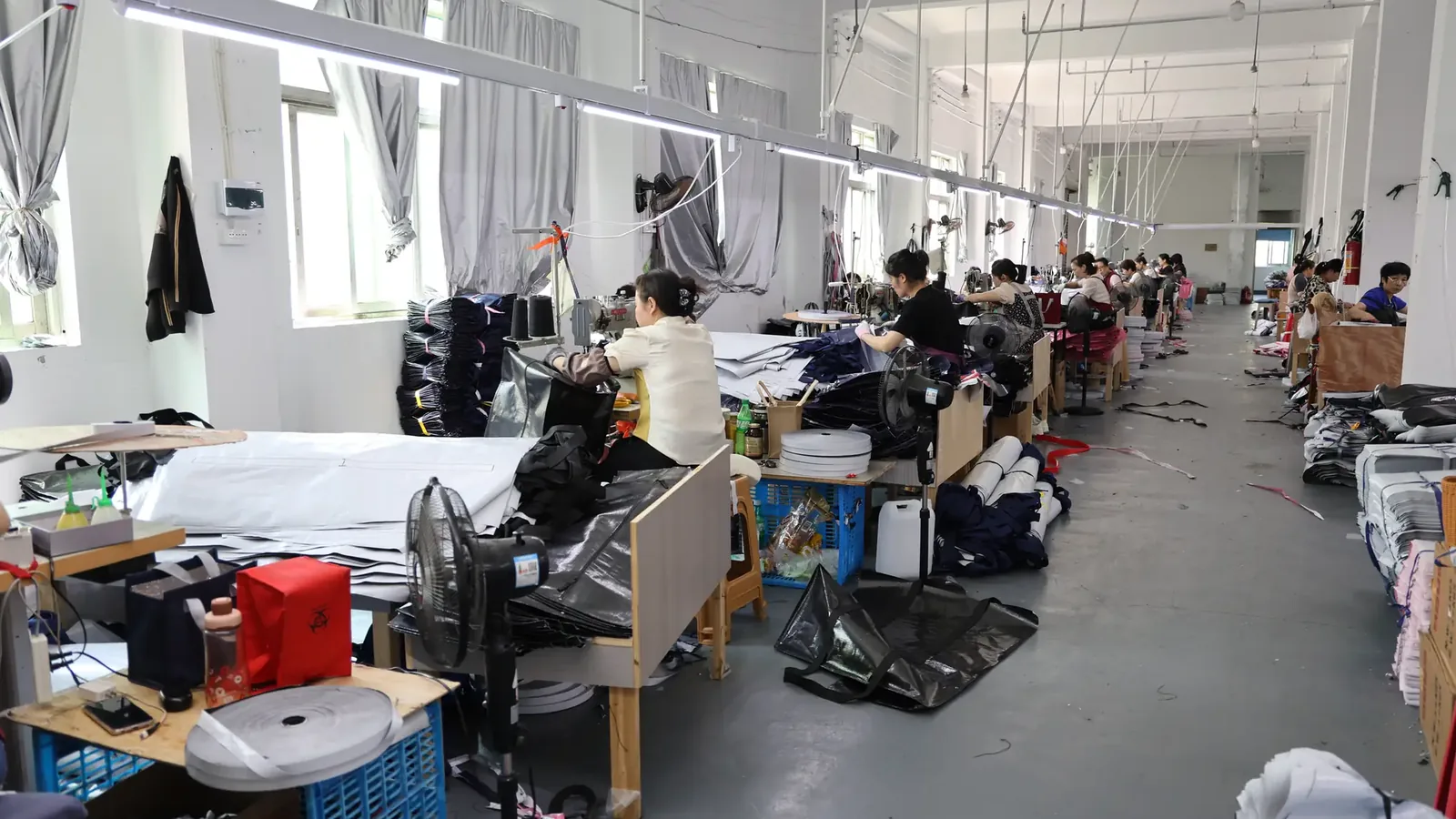
This walk follows a single cotton canvas tote order through six stations, using the spec sheet and inspection points behind the bags we make.
The quote for a cotton canvas tote sat on the buyer's desk in four lines, and the cheapest line was the handle. That single line explained why one bag in her kitchen drawer had lasted three years and another had split at the seam in six weeks. She asked for a walk through the order, from the sheet that starts it to the container that ends it, to see where daily use is actually decided.
A tote that carries groceries, a laptop, a water bottle and a folded jacket every day is not tested by one hard pull. It is tested by hundreds of small ones, in the same places, until something gives. The walk below follows one bulk order of cotton canvas totes through the factory floor and notes what gets checked at each station, and why that check matters to the person who will use the bag on a Tuesday.
The Order Sheet That Starts the Walk
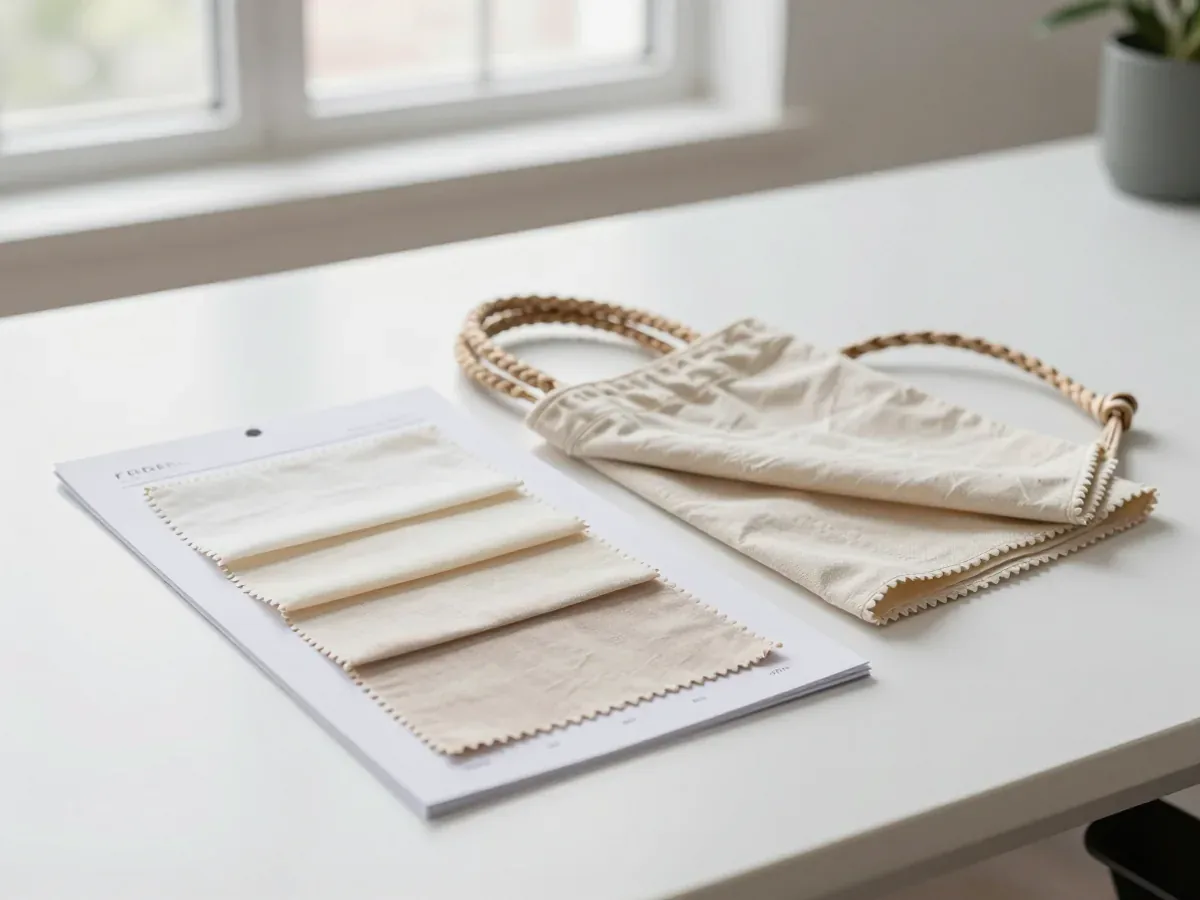
Before any fabric is cut, the order sheet has to answer a question most buyers skip: what will this bag carry? Canvas weight is chosen from the load, not from a catalogue default. A bag built for a light giveaway and a bag built for a weekly grocery run can look identical on paper and behave nothing alike in a kitchen.
The sheet also fixes the shell as cotton canvas in natural or dyed colour, and names the handle type: woven, webbing or rope. Each choice moves the cost and the feel of the bag. Rope handles read casual and soft in the hand; webbing reads utilitarian; woven tape sits between them.
Print method belongs on the same sheet. Screen print and heat transfer are the two routes, and both are proofed before the bulk run starts. A buyer who approves artwork on a screen and never sees it on actual canvas is approving a colour, not a bag.
The last line on the sheet is the one that decides whether the order is right for daily use at all: the packed quantity and the size. Those two numbers get checked by hand at the end of the line, so they need to be correct at the start.
At the Fabric Table: Weighing What Arrived
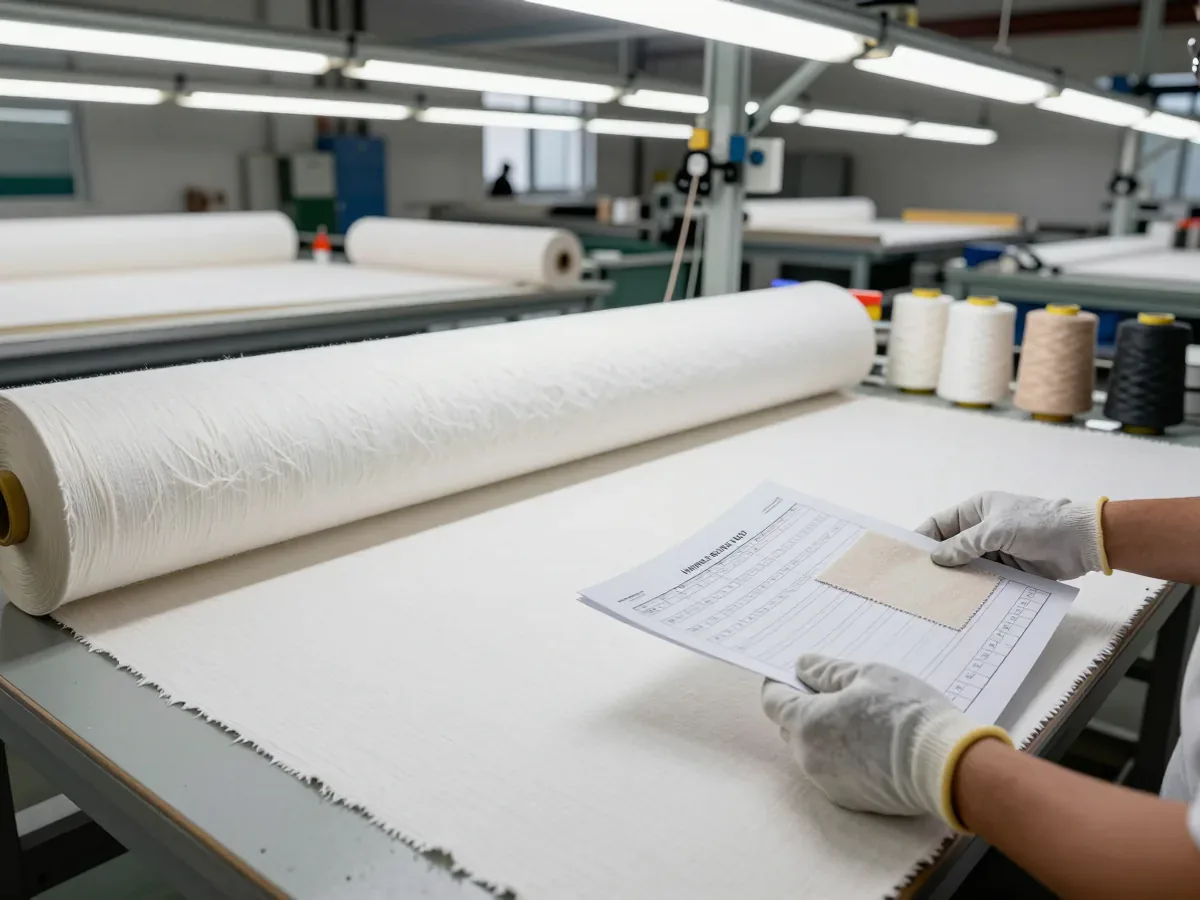
The fabric table is where an order either holds its promise or quietly drifts. Rolls of canvas arrive in natural or dyed colour, and the first check is against the approved spec: fabric, webbing, zips and thread, all compared to what was signed off. A shade that is two steps off in daylight will be two steps off on the shelf.
Weight gets attention here too. Canvas is spoken about in ounces per square yard, and a mid weight of 10 to 12 oz is the usual balance for a tote that has to be strong, usable and printable. Lighter canvas folds more easily and prints cleanly, but it sags under a bottle and a bag of apples. Heavier canvas holds its shape and takes more abrasion, and it also feels stiffer to carry folded under an arm.
The table check is not only about the roll. Thread and webbing are matched to the same standard, because a strong shell sewn with weak thread fails at the seam, not at the cloth. A buyer who only looks at the canvas has checked half the bag.
The Cutting Table Decides the Shape of Daily Use
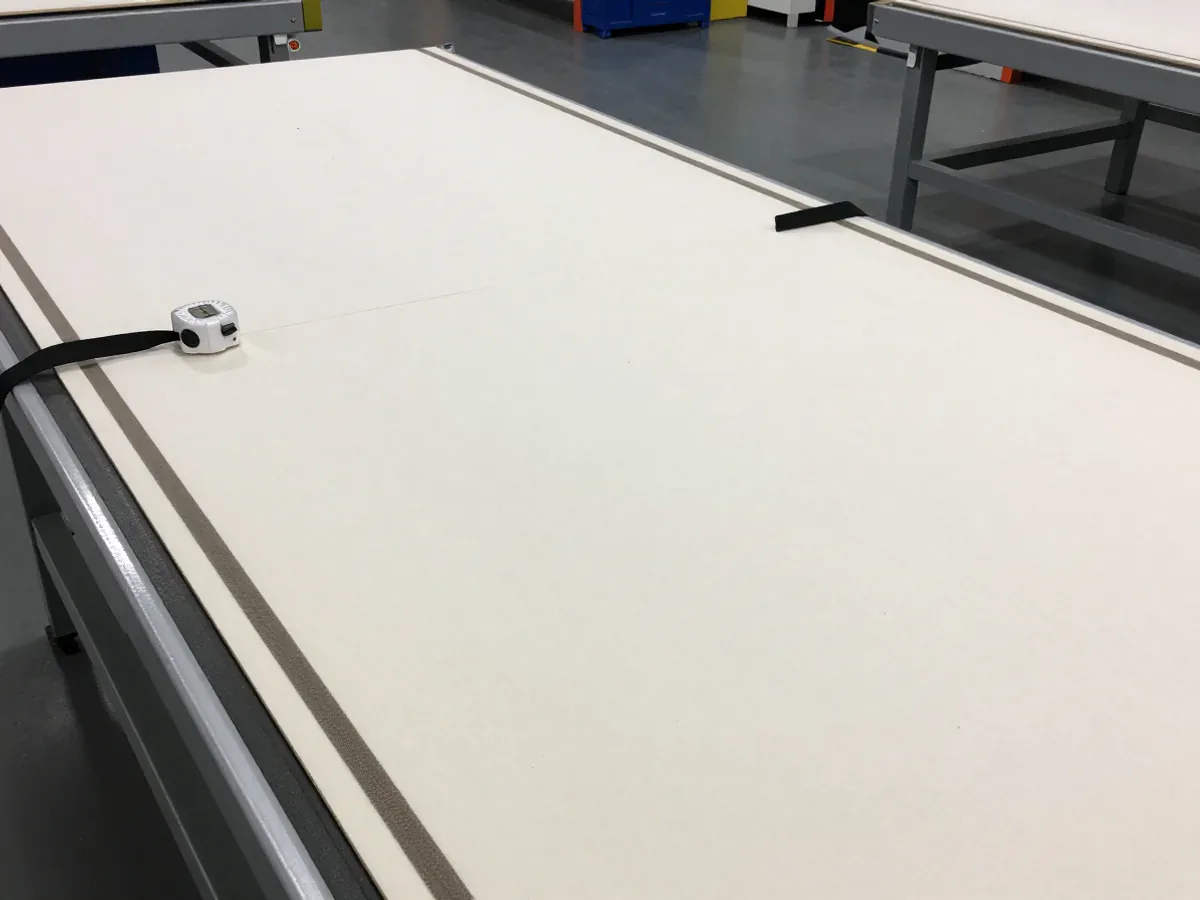
Cutting looks like the least interesting station and it is where fit gets fixed. Dimensions are cut to the approved size, and a centimetre of drift here shows up as a bag that will not sit flat in a shopping basket or swallow a standard laptop sleeve. The base matters as much as the panel: a reinforced base is what lets a bottle stand upright instead of rolling into a corner.
Handle length is cut at the same time, and this is a daily use decision disguised as a measurement. Short handles carry in the hand and clear the ground; long handles go over a shoulder and change how the load sits against the body. Neither is better in the abstract. The order sheet should already say which one the buyer wants.
The cutting table also sets the print area. A print that runs too close to a seam will distort when the bag is sewn, and a print placed low on the panel will disappear behind a coat. Custom printed canvas bags are inspected later for size and print quality, but the placement is decided here, before ink touches cloth.
Sewing Floor: Where the Handle Earns Its Trust
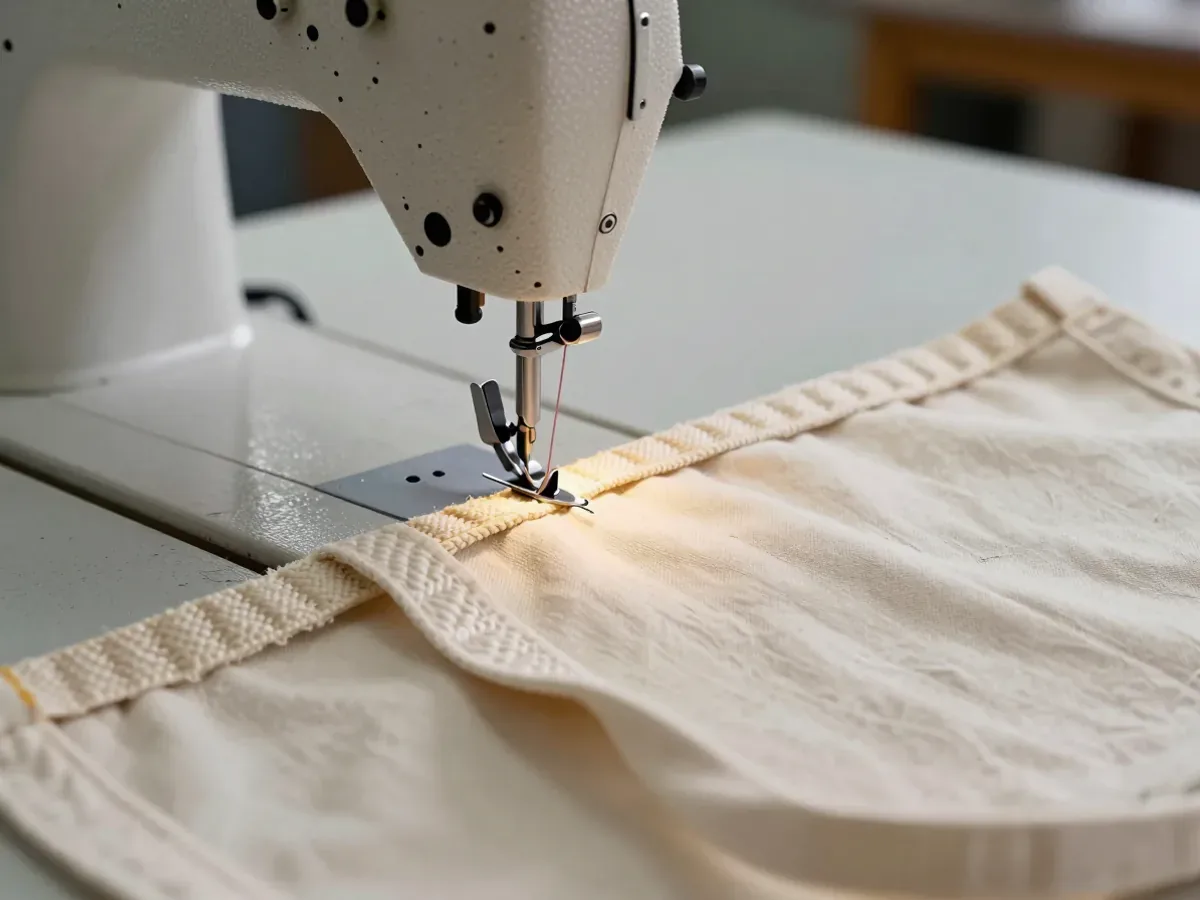
On the sewing floor, the handle is the part that decides whether the bag survives a year of daily use. Handles are stitched to the body rather than tacked on, and the stitching runs through the canvas instead of sitting on the surface. A tacked handle looks fine on a shelf and separates under load, usually at the worst moment.
Bar tacks sit at the stress points where the handle meets the body. They are small, they are easy to skip under time pressure, and they are the difference between a bag that carries a full load and one that tears at the top corner. Pull, seam strength and bar tack are tested on every batch, not sampled once at the start.
The base gets its own attention. A reinforcement where a bottle sits keeps the bottom panel from stretching into a sagging pouch. On the floor, the slowest station is usually the handle channel, and that slowness is a design signal rather than a scheduling problem.
Final Inspection: The Bag in Hand
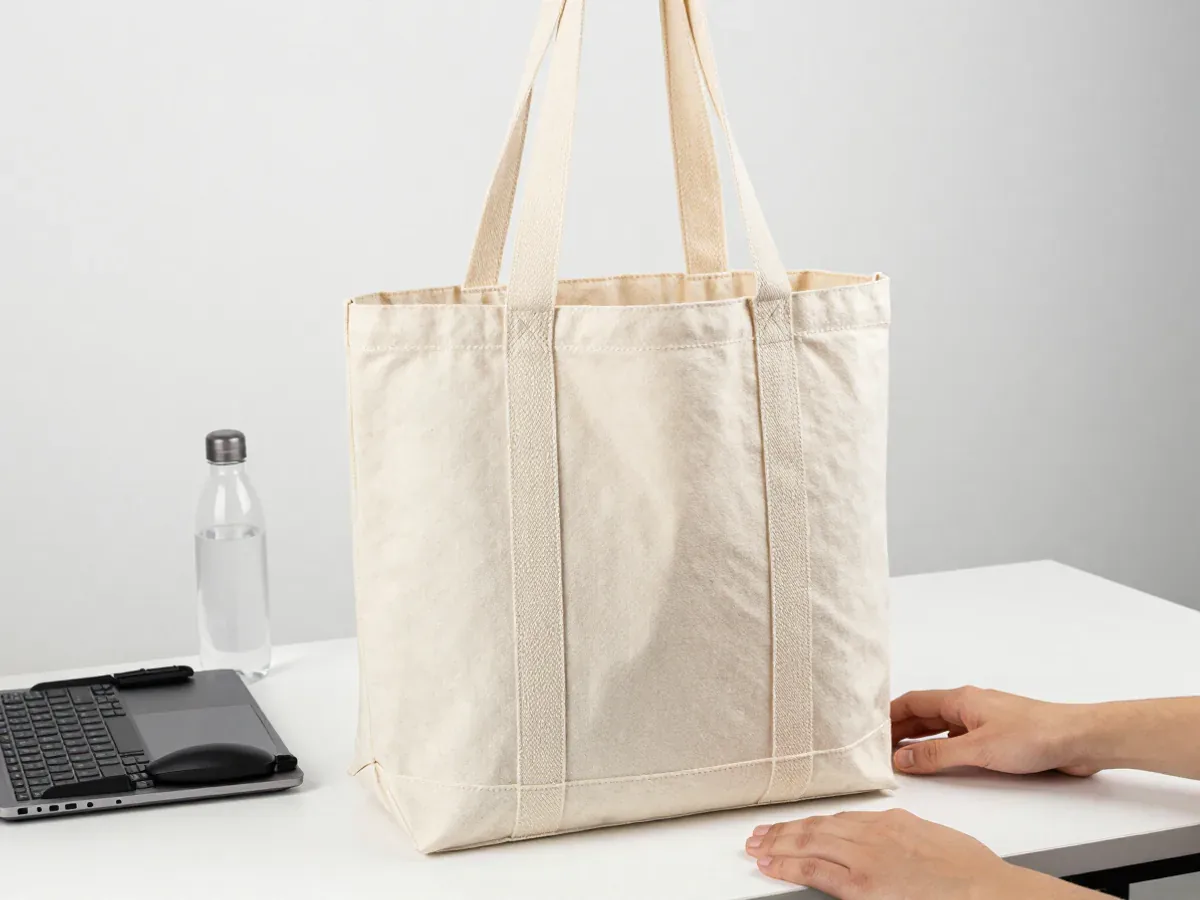
Final inspection happens before packing, and it is the first time anyone handles the finished bag as a customer would. Dimensions, handles, logo and packed quantity are checked by hand. The bag is opened, the base is pressed, the handles are pulled, and the print is read at arm’s length rather than under a loupe.
This is also where the daily use question gets answered in the body rather than on paper. A bag that stands up on its own when set down has enough structure for groceries. A bag that collapses into a flat sheet is a giveaway item, and no amount of good printing changes that.
Shrinkage belongs in this conversation. Untreated cotton canvas can shrink when washed in hot water or dried at high temperature, and the old questions about canvas care have not gone away. A buyer planning a bag that will be washed regularly should raise it before the run, not after the first home laundry cycle.
Before the Container Seals: Counting and Photographing
The last station is the least glamorous and the one that protects the buyer’s money. Cartons are counted and photographed before the container seals. The count confirms the packed quantity on the order sheet, and the photographs give a record of what left the building, in what condition, and in what configuration.
Bulk cartons stacked for shipment are also a final check on packing method. A bag compressed under too much weight in a carton arrives creased, and a crease in canvas is not always a crease that hangs out. Photographs taken at this point settle arguments later without anyone having to reconstruct a loading bay from memory.
The seal is the end of the walk and the start of the bag’s real life. Everything that happens after it, the groceries, the commute, the wash, the fold into a drawer, tests decisions made at five earlier stations.
What the Walk Says About Everyday Use
A cotton canvas tote is a reasonable choice for daily use, and the walk shows why the answer depends on the build rather than the material name. Cotton canvas in natural or dyed colour is strong, printable and comfortable to carry, and with proper care a well made bag can last years rather than months. It is also bulkier than nylon, slower to fold, and prone to shrinking or staining if washed carelessly.
The bags that fail early usually fail at the handle, the base or the seam, and each of those is a station on this walk. A buyer who checks weight against load, confirms handle type and length, asks for stitched through handles with bar tacks, proofs the print on real canvas, and reviews the carton photographs before the seal has covered the decisions that matter.
None of those checks require a laboratory. They require a buyer who knows what the bag will carry and a factory willing to show the work at each station. The bag that survives every day is the one that was questioned before it was packed.