
Drawn from our own sewing floor and printing equipment records, plus the cost-curve notes kept in the factory archive.
A buyer sent back a quote last spring with one line highlighted in red: the unit price had dropped by nearly a third when she doubled the order from five thousand to ten thousand bags. She wanted to know whether the factory was padding the small order or quietly cutting corners on the large one. Neither explanation turned out to be right. The quote had crossed a cost curve, and the two halves of that curve behave very differently.
Her question is the one that sits underneath most automation debates in bag manufacturing. It is not really about robots replacing people. It is about which operations a factory automates, at what volume the automation pays back, and where manual skill still beats a machine. The five questions below are the ones buyers actually ask when they are trying to read a quote.
Why did the quote change when the quantity doubled?
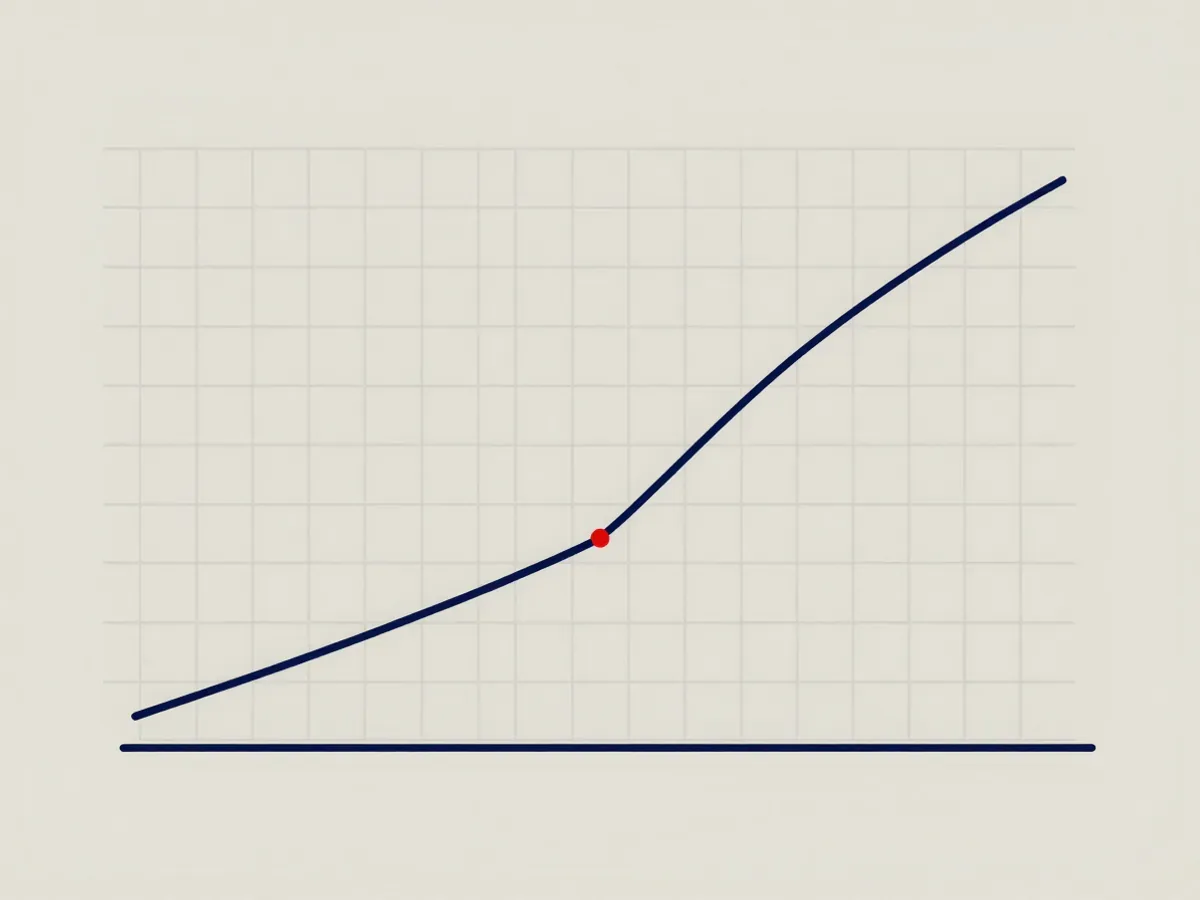
The buyer’s red highlight was pointing at the crossover point. Plot cost per unit against quantity and two curves appear. The manual curve starts low and rises gently, because labor per unit dominates and there is little fixed cost to spread. The automated curve starts high, loaded with equipment and programming, then falls toward material cost as volume absorbs the setup.
At five thousand units, her order sat on the manual side of that crossing. At ten thousand it had moved far enough along the automated curve that the programming cost was diluted across twice as many bags. The factory had not changed its margin. It had changed which line the order belonged on.
This is why a quote that jumps between volumes is worth interrogating rather than accepting. Ask which line the unit price assumes, and whether the same line is quoted at both quantities. A factory that quotes the automated rate at five thousand units is either absorbing a loss or planning to run the order manually and bill for the machine.
Does automation always mean better quality on a bag?
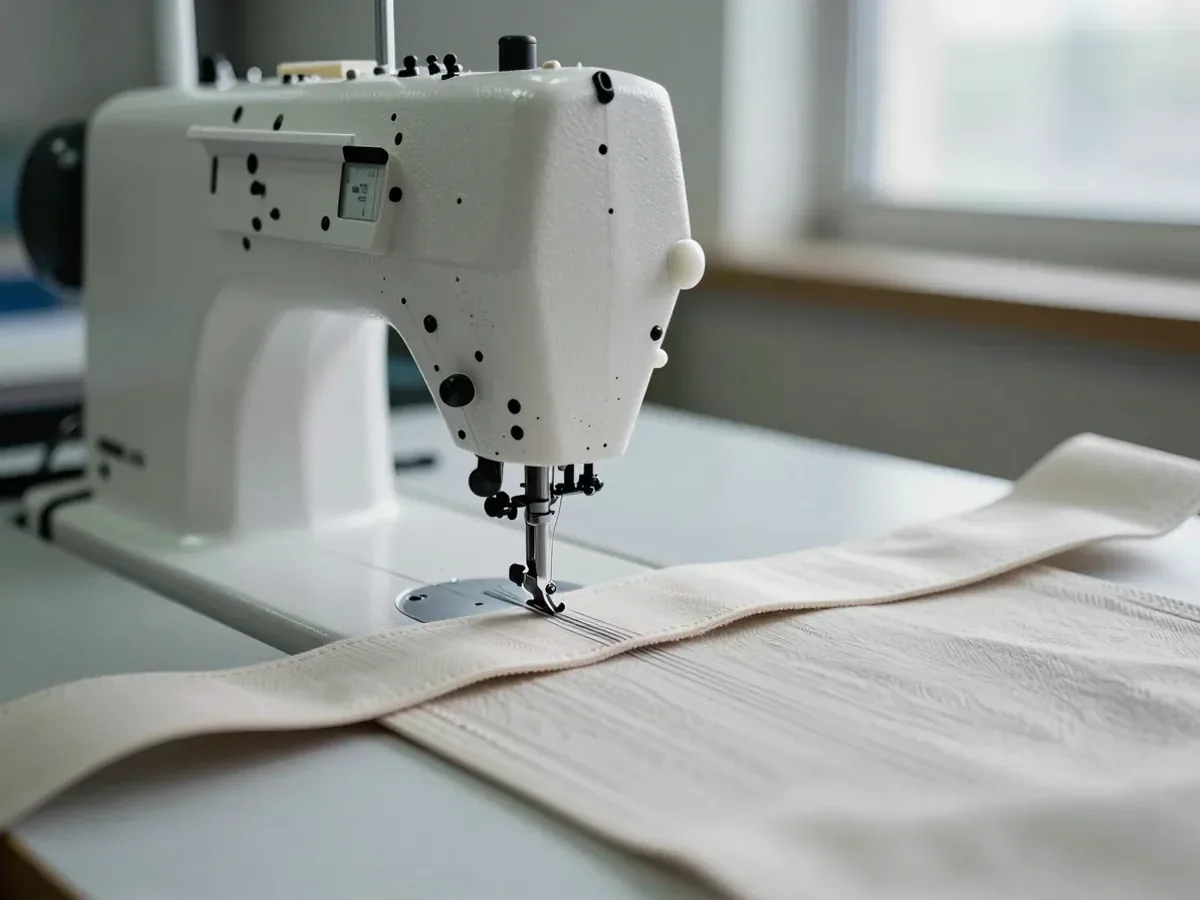
No, and the distinction matters more than the headline. Automation means more consistent quality on repeated operations. A programmable pattern sewer stitching the same handle reinforcement ten thousand times runs faster, tighter and with less variation than an operator doing the same motion by hand.
Programmed stitch counts and sensor-guarded stops also remove a class of defect rather than merely speeding production. Skipped stitches and tension drift, the failures a manual line inspects for after the fact, largely stop happening when the machine is counting for itself.
What automation does not do is judge. Complex three-dimensional assemblies, a cooler bag with curved panels and a lining that has to sit flat, still depend on an operator who can feel the fabric behaving badly under the needle. Reinforcement placement at stress points and the decision to double-stitch a load-bearing seam beyond spec are craft decisions. A machine executes the spec it was given. It does not improve a weak one.
At what quantity does the automated curve start to win?
There is no universal number, and any factory that offers one without seeing the design is guessing. The crossover depends on how many operations in the bag can be programmed, how long the fixture takes to build, and how much of the assembly is genuinely three-dimensional.
What can be said is directional. A ten-thousand-unit moving bag program with a repeated handle reinforcement belongs on the automated curve, and its quote should reflect that rather than a manual shop’s labor math. A five-hundred-unit custom run belongs on the manual side, where a skilled operator can adjust without waiting for a program rewrite.
The useful question for a buyer is not “what is your minimum for automation” but “which operations in my bag would you program, and which would stay on a bench.” The answer tells you where the factory thinks the crossover sits for this specific design.
Why do small custom runs cost more per unit on either line?
On the manual line, small runs cost more because labor per unit stays high and there is no fixed cost to spread. Every bag carries its full share of operator time, and a custom run carries more because the operator is thinking as well as sewing.
On the automated line, small runs cost more for the opposite reason. Fixture and programming cost for a small batch can exceed the labor it saves. The machine has to be set up, the pattern loaded, the first articles checked, and all of that cost lands on a few hundred units instead of ten thousand.
So the small run is expensive on both curves, just for different reasons. A buyer comparing two quotes for a five-hundred-unit custom order should expect both to be high, and should be suspicious of one that is dramatically low. The saving usually comes from somewhere the quote does not show.
Can one factory run both lines without one dragging the other down?
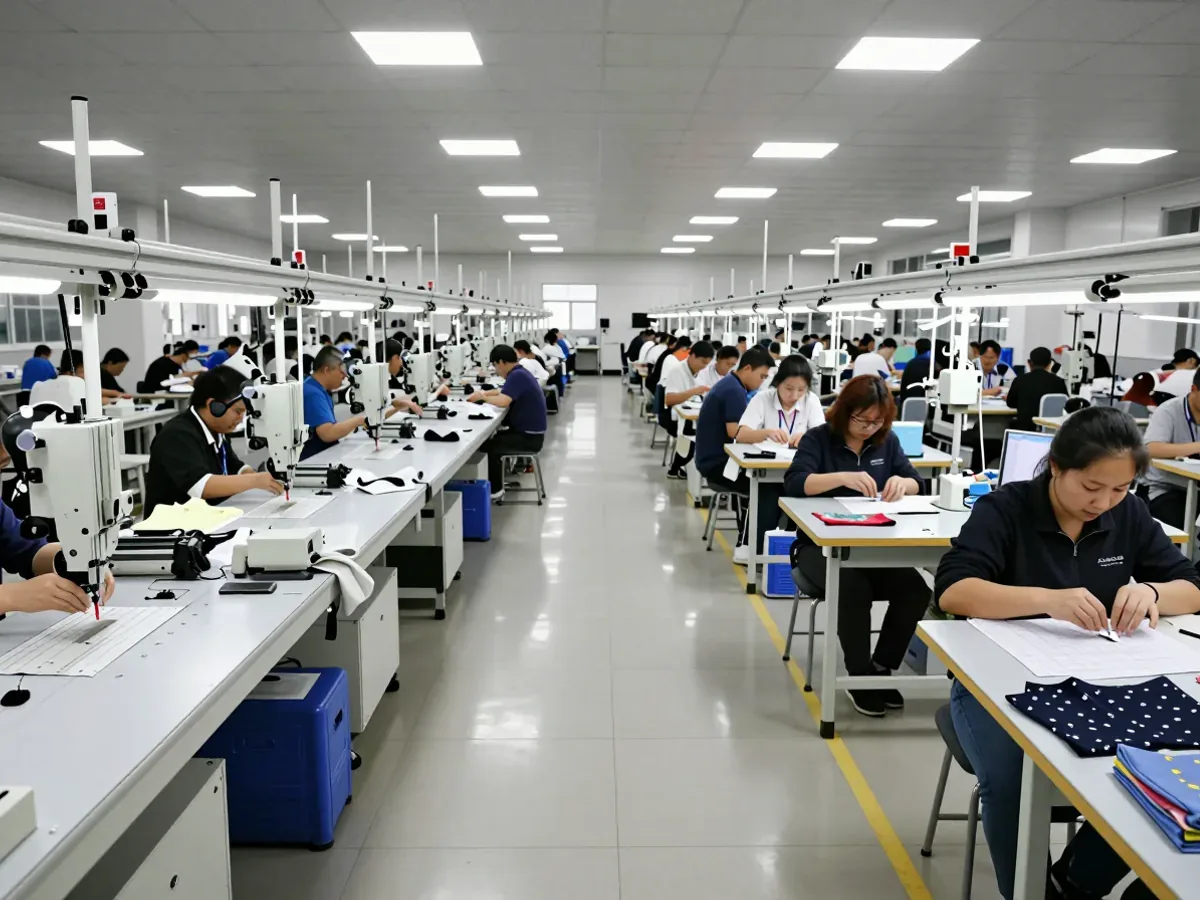
The best factories do exactly this: automated lines for standard SKUs at volume, skilled manual lines for customs and sampling, in one plant. The two do not compete for the same work, so they do not drag each other down.
The risk appears when a factory owns automated equipment but has not built the manual bench to match. Custom orders then get pushed onto machines that were programmed for something else, and the sampling room becomes a bottleneck nobody quoted for. A buyer with a mixed program, some repeat SKUs and some seasonal customs, should ask to see both areas rather than the one the sales team chooses to show.
What should be verified on an automated line before trusting the quote?
Volume justifies the price only if the factory’s execution matches the machine list. On an automated line, ask for the machine list and the program library, then ask which programs correspond to your bag’s operations. A factory that cannot map its programs to your spec is quoting a capability it may not use on your order.
Ask for the statistical process control records that show the machines holding tolerance across a run, not just at first article. Consistency is the entire promise of automation, and the records are where that promise is either documented or absent. An inspector measuring stitching with a tape measure at the end of the line is a good sign, but it is a check on the machine, not a substitute for its records.
What should be verified on a manual line before trusting the quote?
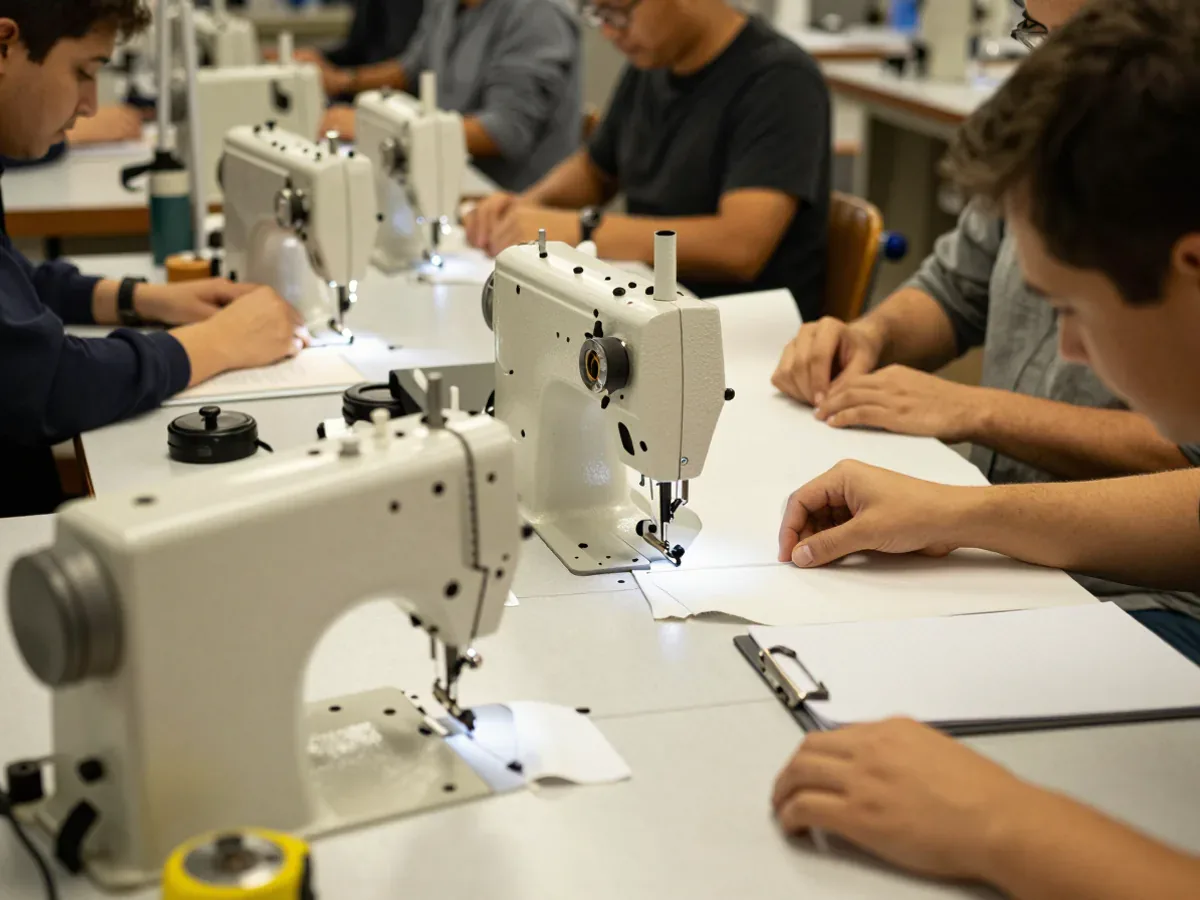
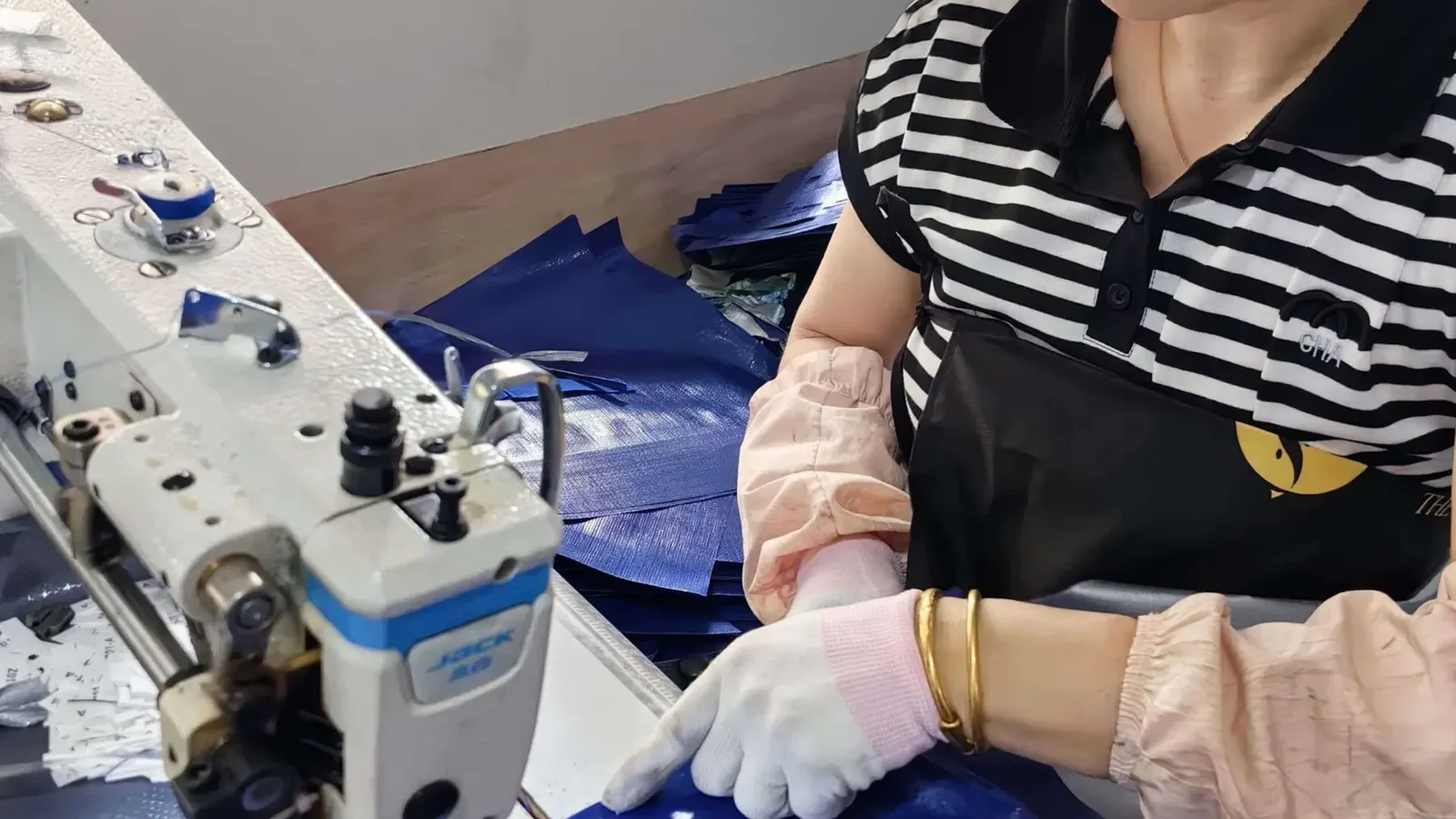
On a manual line, the evidence is people and stations. Look at how many operators are actually at the benches, whether the machines run side by side in a working workshop or sit idle for show, and whether a technician is guiding bag bodies under the needle by hand on work that resembles yours.
Then look at inspection. Every order passing four checkpoints is a process claim worth confirming on the floor, and a quality team inspecting bags under durability testing tells you the checks are real rather than paperwork. The manual line’s quality lives in the skill of the operator and the discipline of the inspection, so both need to be visible.
The question buyers forget to ask about changeover time
Almost every automation conversation covers cost per unit and quality consistency. Very few cover how long the line stops between designs. Long runs produce faster per unit on automated lines, but programming adds setup days before sewing starts, and a new design adds programming before the first stitch.
That setup time is a real cost, and it lands on the delivery schedule rather than the unit price. A buyer planning a launch with two colourways and a mid-season revision should ask how many changeovers the schedule allows and what each one costs in days. A factory that quotes the automated rate without mentioning changeover is quoting the best case.
The buyer who sent back the red-highlighted quote ended up ordering the larger volume on the automated side and keeping a small custom capsule on the manual benches. The two quotes had never been comparable in the first place. They described two different lines, and the only question worth asking was which one her order actually belonged on.
FAQ
Does automation always mean better quality on a bag?
No. It means more consistent quality on repeated operations. Skill and inspection still decide quality on complex assemblies and short runs.
Why do small custom runs cost more per unit?
Manual production dominates small runs, so labor per unit stays high, and no automation fixed cost exists to spread. The crossover volume decides where each curve wins.
Can a factory be both automated and manual?
Yes, and the strongest ones are: automated lines for standard SKUs at volume, skilled manual lines for customs and sampling, in one plant.