
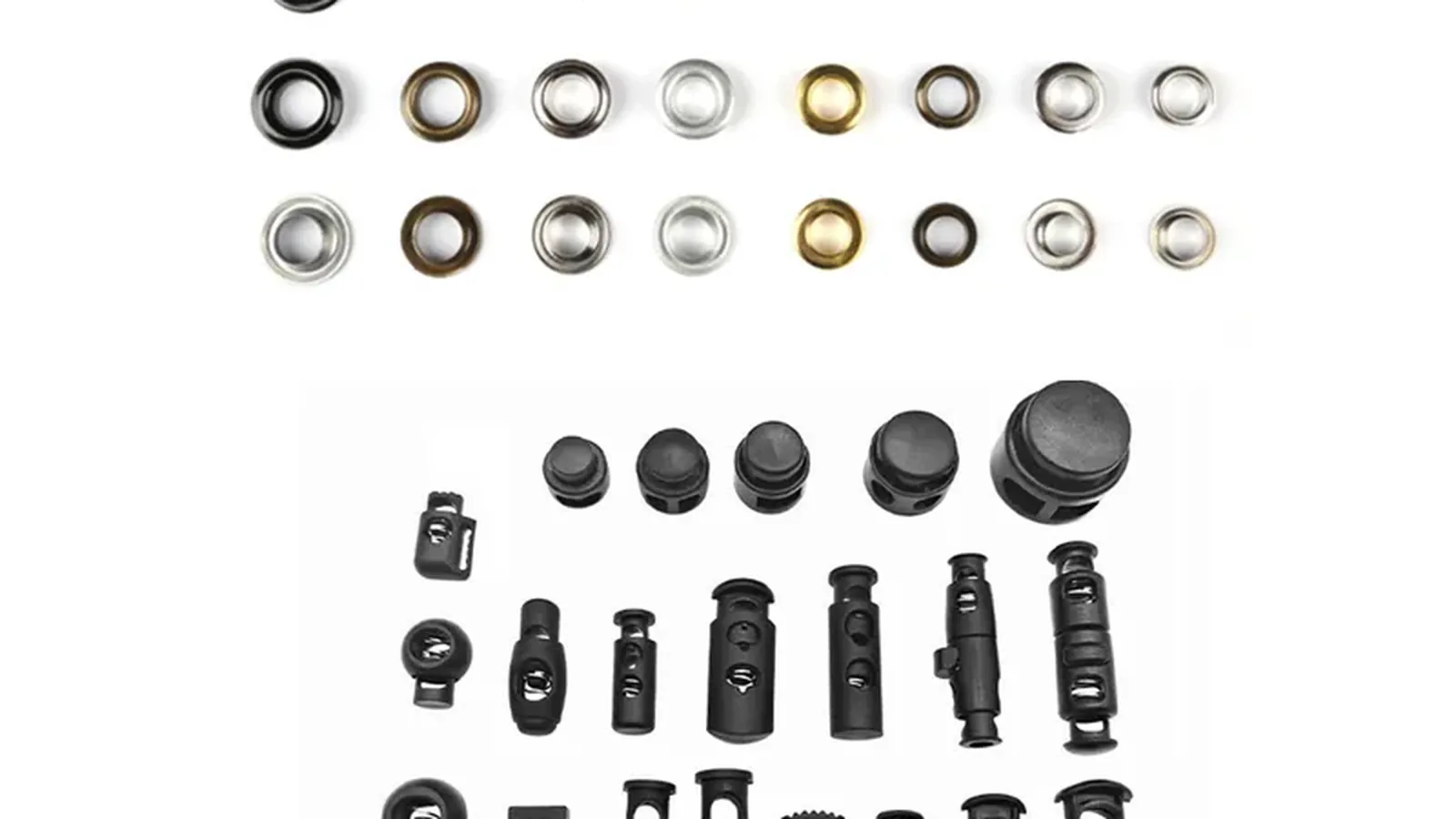
Drawn from archived closure comparison notes and current product spec records for zippers, drawstrings, hook and loop, snaps and buckles.
On dispatch day, a carton of totes sat sealed and strapped on the loading bay, and the closure line on the purchase order read "zipper, black." The factory had built exactly that. The buyer had meant something else, and nobody found out until the first carton was opened in a warehouse three weeks later.
That single line on an order hides more decisions than most buyers expect. A closure is not one choice but a stack of them: family, grade, size, small parts, and duty. Each one changes what the bag does in a user’s hands. The spec sheet is where those choices either get locked down or get left to whoever runs the line that day.
One Line on the Order, Five Decisions Hidden Inside

“Zipper, black” is a colour instruction, not a closure specification. Behind it sit five separate fields that a factory has to fill in one way or another. The zipper family has to be chosen, whether coil or molded tooth. A grade has to be set for the slider and the chain. A size and length have to be matched to the opening. The small parts, meaning slider, stopper and tape, need naming. And the expected cycle count has to be stated or assumed.
When a buyer leaves those fields blank, the factory does not stop. It fills them with whatever is already on the shelf, and the shelf stock is usually chosen for the previous order, not this one. The closure is where a bag’s daily experience is decided, so an unwritten field is a decision handed to someone who will never meet the end user.
The fix is not a longer document. It is a line on the order that names each field in a way a sample room can build and an inspector can check. Four fields make a closure spec buildable, and the fifth, duty, tells you whether the first four are right.
Type and Grade: The Field That Sets the Quality Ladder

The first field names the closure family and its grade. For zippers, that means the chain type and the slider class. Coil zippers flex with fabric and resist snagging, which suits everyday bags that get opened and closed constantly. Molded tooth zippers take heavier loads on duffels and tool bags, where the chain has to survive weight pressing against it.
Grade is the part buyers skip. Two zippers can look identical on a sample table and sit at opposite ends of the quality ladder. The slider’s spring and body determine how long the closure runs smoothly, and a cheap slider on a good chain still fails early. Naming a grade forces the factory to quote and build to a standard rather than to a price.
For drawstrings, the same field covers cord type and stopper. For snaps and buckles, it covers the hardware class. The question to ask is simple: if the sample room ordered this field from a supplier, would they know exactly what to buy? If the answer is no, the field is not written yet.
Size and Length: Where the Opening Meets the Hardware

A zipper size that suits one opening will fight another. Gauge has to match the fabric weight and the load the opening carries, and length has to match the opening itself, not the bag’s outer dimensions. A two pull zip closes the opening from either end and opens the full length of the bag, which changes how the length is specified. Two sliders mean two tape ends and a different measurement.
Drawstring bags show the same problem from another angle. The opening can run the length of the bag and close from either end, so cord length depends on the full opening path, not a single side. On a heavy duty moving bag, webbing runs the full length of the opening, and the cord or strap has to be sized to that run plus the cinch allowance.
The verification step here is physical. Lay the sample flat, measure the opening, then open and close it fully. If the slider stops short of the end or the cord will not cinch tight, the length field is wrong even if the number on paper looks right.
Slider, Stopper, Tape: The Small Parts That Fail First

Small parts carry most of the failure risk and get the least attention on a spec sheet. On a zipper, the slider wears before the chain does, which is why slider grade belongs in writing. A failed zipper is often a slider swap rather than a bag replacement, and that difference shows up in returns data long before it shows up in a sample review.
Stoppers on drawstrings do two jobs: they keep the cord ends from pulling through and they give the user something to grip. A stopper that is too loose slides during use; one that is too tight cracks at the seam. Tape, the fabric strip the chain is sewn to, has to match the shell in weight and colour fastness, or the closure will pucker after washing.
Hook and loop closures fail differently. Lint, hair and fabric fibers clog the hooks, and the loop face fatigues with cycle count. That makes hook and loop a poor fit for security closures on heavily used bags, though it works well for adjustable openings and light duty flaps. Naming the small parts, and their expected life, keeps the closure matched to the job.
Cycle Rating and Duty: Matching the Closure to Daily Use

The right closure follows the bag’s duty cycle. A commuter or work bag opens multiple times a day for years, which justifies a quality coil zipper with a documented cycle rating. A promotional bag that gets used a few times a month does not need that rating, and paying for it raises cost without improving the user’s experience.
Duty also decides whether a zipper belongs at all. Drawstring cinches deliver the function promo bags need at a fraction of the cost, and zippers earn their cost only when the bag’s duty includes security or repeated daily opening. An open top with no zip fills and empties faster than a zipped bag, which matters for moving bags and laundry bags where speed beats security.
Write the duty as a number the factory can test against: opens per day, expected years of use, load carried. A closure sample can then be cycled to that target rather than judged by feel. Without the number, the sample room builds to average use, and average use is a guess.
How to Verify Each Field on a Closure Sample
Verification starts with the spec sheet in hand, not with the bag. Read each field aloud and ask whether the sample in front of you could be checked against it. A field that cannot be checked is a field that was never specified.
For type and grade, confirm the chain family and slider class against the written grade, then run the slider the full length ten times and feel for catching. For size and length, measure the opening and confirm the closure covers it completely, including the two pull configuration if specified. For small parts, pull each stopper and check the tape seam for puckering.
For cycle and duty, ask for the test method the factory used and the number of cycles run. A zipper validation tester gives a repeatable figure; a hand test gives an opinion. The sample should also be checked after the wash cycle the bag will face, because tape shrinkage and stopper cracking often appear only after the first wash.
The Field Buyers Leave Blank Most Often
Duty is the field that goes missing. Buyers write the family, the colour, sometimes the size, and stop. The number of opens per day, the load the closure carries, and the expected service life stay unwritten, and those three numbers decide whether the other fields were chosen correctly.
A closure spec without duty cannot be judged, only compared on price. Two quotes for the same zipper line can differ because one factory assumed a promotional bag and the other assumed a daily commuter. Both followed the sheet. The sheet simply did not say which bag it was building.
The next order that goes out can carry one extra line: opens per day, years of use, load in kilograms. That line turns a colour instruction into a closure specification, and it gives the sample room and the inspector the same target to build and check against.
FAQ
Which zipper type should an everyday tote use?
A quality coil zipper in a size suited to the opening. Coil flexes with fabric, resists snagging and runs smoothly in daily use, while molded tooth is reserved for heavy duty loads.
What usually fails first on a bag zipper?
The slider. Its spring and body wear before the chain does, which is why slider grade belongs on the specification and why a failed zipper is often a slider swap rather than a bag replacement.
Do drawstring bags need a zipper at all?
Rarely. Drawstring cinches deliver the function promo bags need at a fraction of the cost, and zippers earn their cost only when the bag’s duty includes security or repeated daily opening.
Why does hook and loop lose grip over time?
Lint, hair and fabric fibers clog the hooks, and the loop face fatigues with cycle count. It suits adjustable openings and light duty flaps rather than security closures on heavily used bags.