
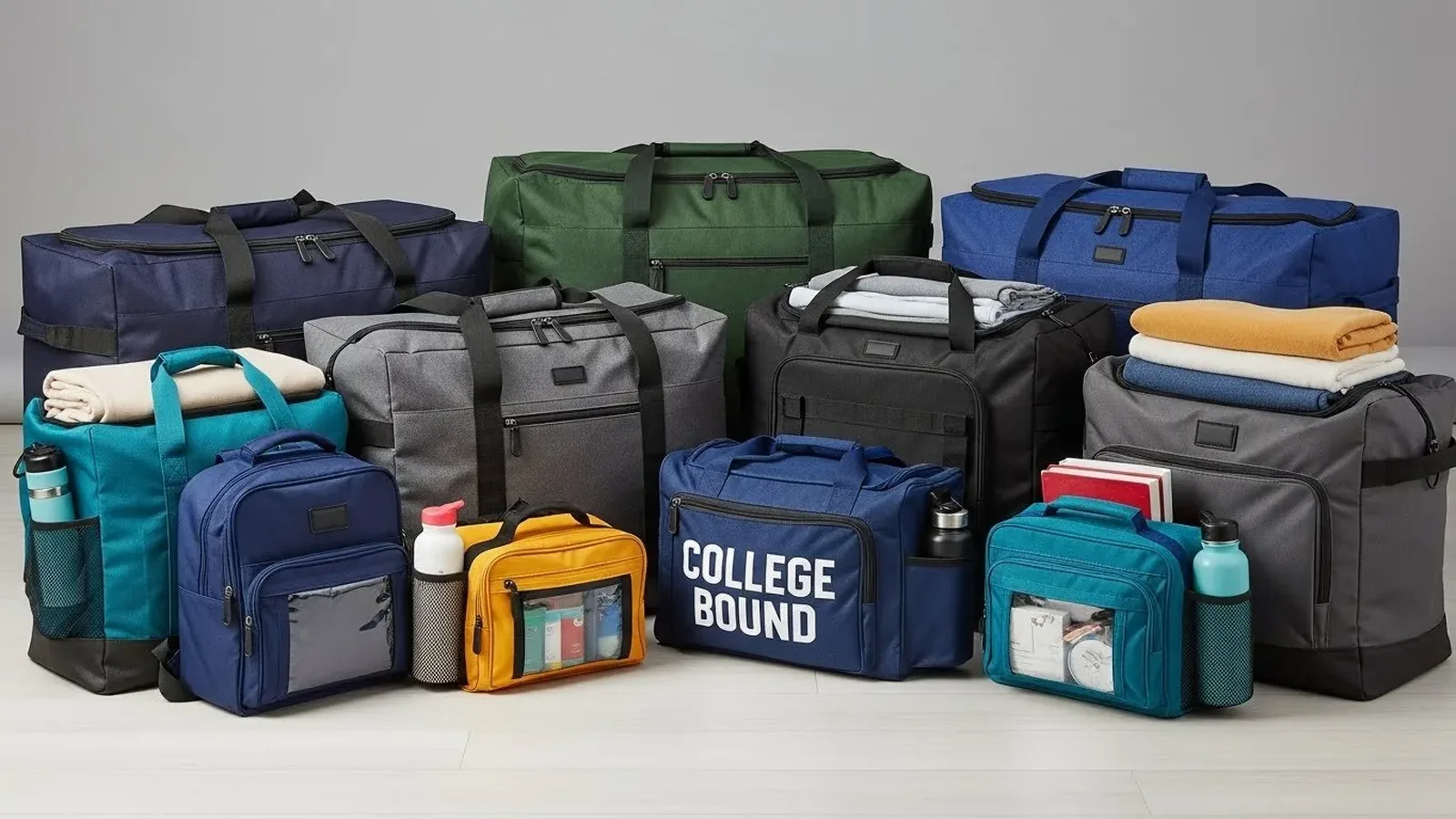
Drawn from the screening questions used on custom moving bags and tote orders, matched station by station against what a buyer can see on the floor.
The artwork was approved on a Tuesday, and the fabric roll arrived eleven days late, so the whole launch calendar had to be rebuilt around a cutting date nobody had confirmed. The buyer had sent a fourteen-question RFQ six weeks earlier and scored every answer. What she had not done was walk the answers onto the floor to see which ones the building would actually honour.
That gap is where most sourcing problems live. An RFQ is a written promise, and a factory floor is where promises get tested. The useful question is not how many items a template contains but which of them leave a paper trail you can stand next to and check. What follows is that walk, station by station, for one custom tote order moving from a sent RFQ to a sealed container.
The RFQ Leaves the Inbox and Enters the Building
The first thing a factory does with a structured inquiry is route it. Someone reads the material line, someone checks the loom schedule, and someone prices the freight. A trading company routes it differently: it forwards the spec to a partner mill and waits for numbers to come back. The response speed and the number of internal names attached to it are the earliest evidence of which kind of supplier received the document.
A good request arrives with a mini tech pack, because questions without specs produce vague answers. Attach a one-page drawing with dimensions, a material note with target GSM and weave, a colour reference, and the destination country. Include target quantity, since 500 bags and 50,000 bags produce different run-size math. Set a response deadline, and treat a missed one as information rather than an insult.
The buyer in this order sent the same inquiry to five candidates and scored the replies against one rubric. That discipline turns supplier selection from a gut call into a spreadsheet. It also produces a written record for the day a factory later disputes what it agreed to.
Incoming Fabric: The GSM Line on the Spec Sheet Meets the Roll
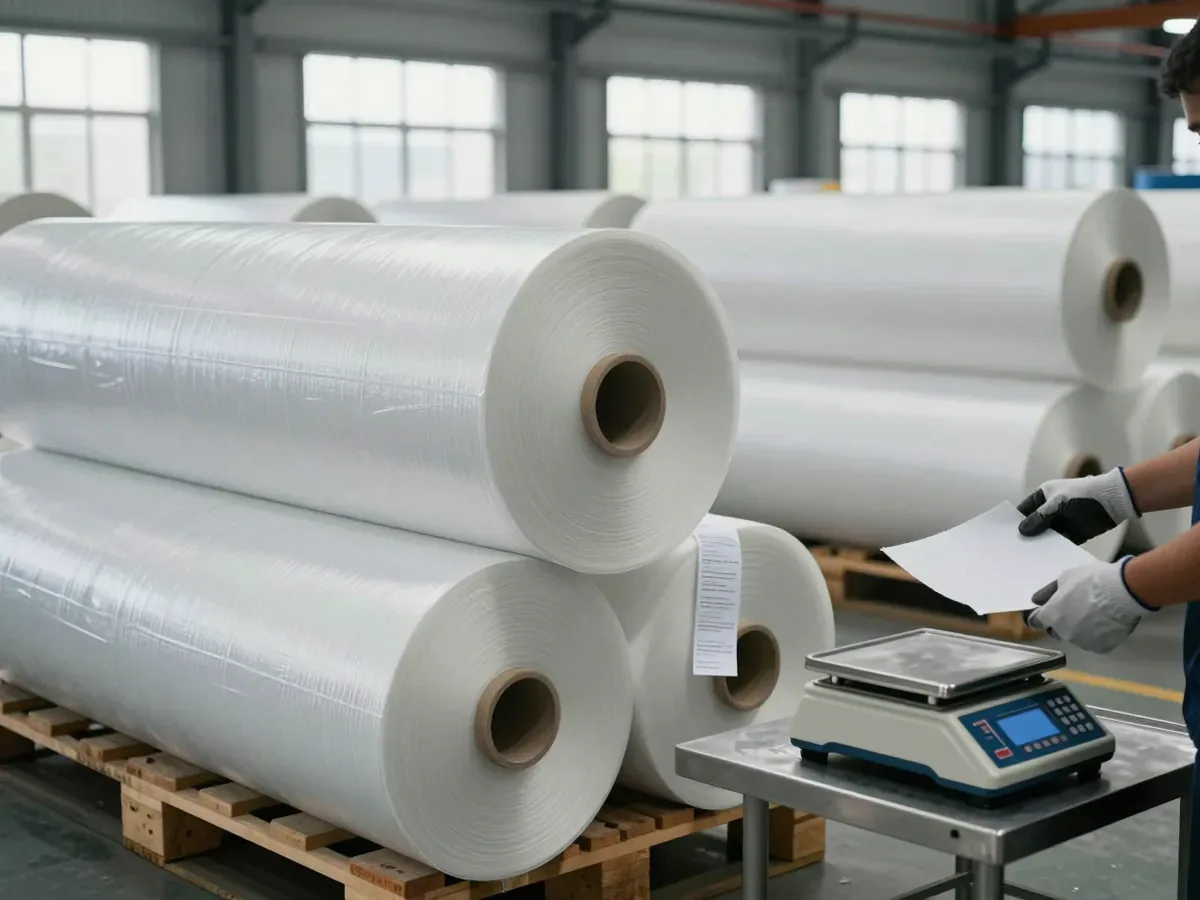
At the goods-in bay, the material question stops being a sentence and becomes a roll with a label. The RFQ asked for polymer type, weave construction, GSM, and denier where relevant. The answer that named numbers, such as 90 GSM woven PP with 1000D flat yarn or 12 oz cotton canvas, is the one the warehouse can now verify with a scale and a cutter.
What to check here is simple and unglamorous. Weigh a known area of fabric and compare it with the GSM on the spec sheet. Read the roll ticket against the dye lot the factory promised. Confirm whether the material is laminated or unlaminated, because lamination changes waterproofing and print hold, and a late substitution at this bay will surface as a print failure three stations downstream.
This is also where certification claims get their first physical test. If the RFQ asked for recycled content, the scope document should name the material and the chain of custody, not just carry a logo. A certificate that cannot be tied to this roll is a document, not a fact.
Cutting Table: Where Gusset Dimensions Stop Being a Drawing
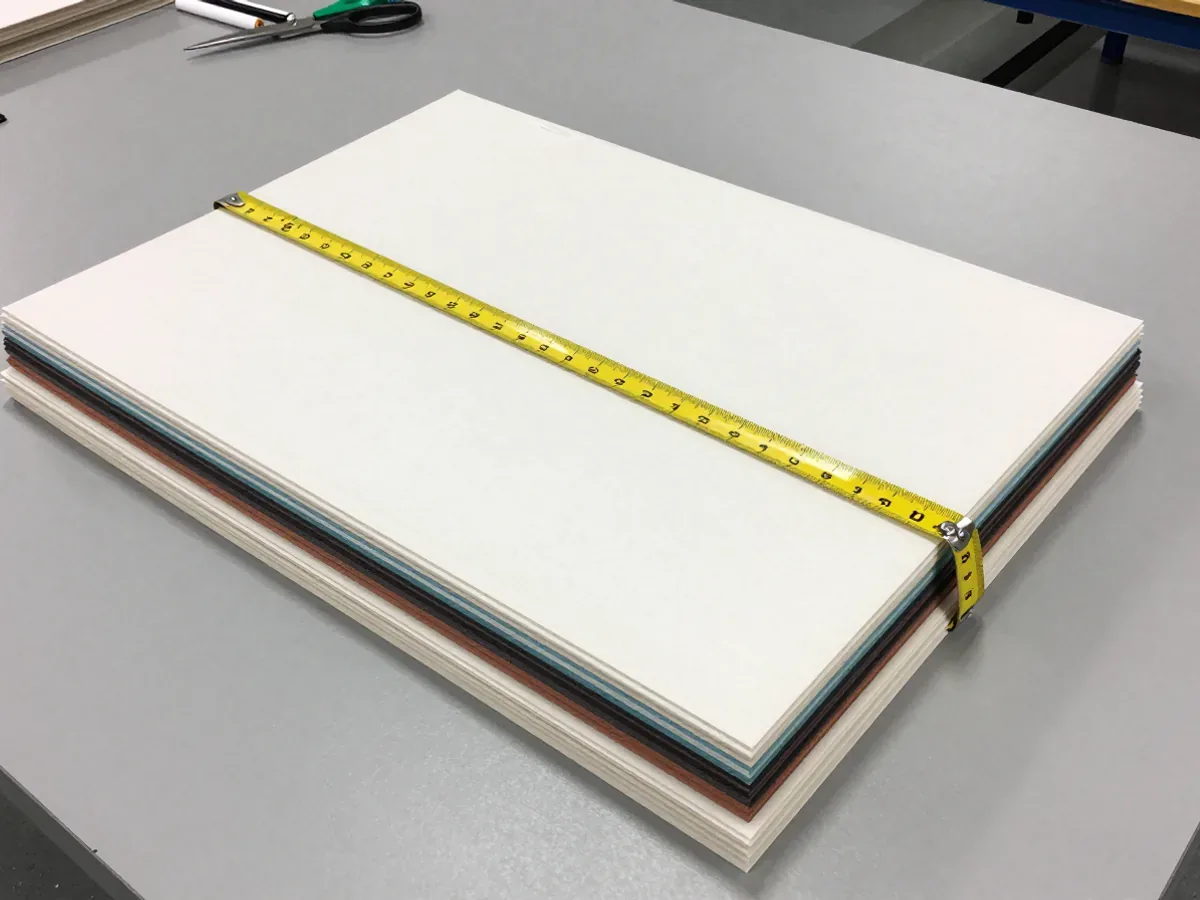
The cutting table is where a gusset stops being a number on a drawing and becomes a stack of panels. The RFQ asked for gusset dimensions, seam type, and stitch density. On the table, those answers show up as a marker layout and a cut stack, and any rounding in the drawing becomes a capacity difference in the finished bag.
Watch the first ply off the knife. Measure the gusset depth against the tech pack, not against the sample the factory keeps on the wall. Check whether the cut panels are bundled by size and colour, because mixed bundles at this station become mixed cartons at the loading bay.
A buyer who never visits can still ask for one photo of the first cut stack with a tape measure laid across the gusset. That single image answers more than a paragraph of assurance, and it costs the factory two minutes.
Sewing Line: Handle Attachment and the Stitch You Can Count
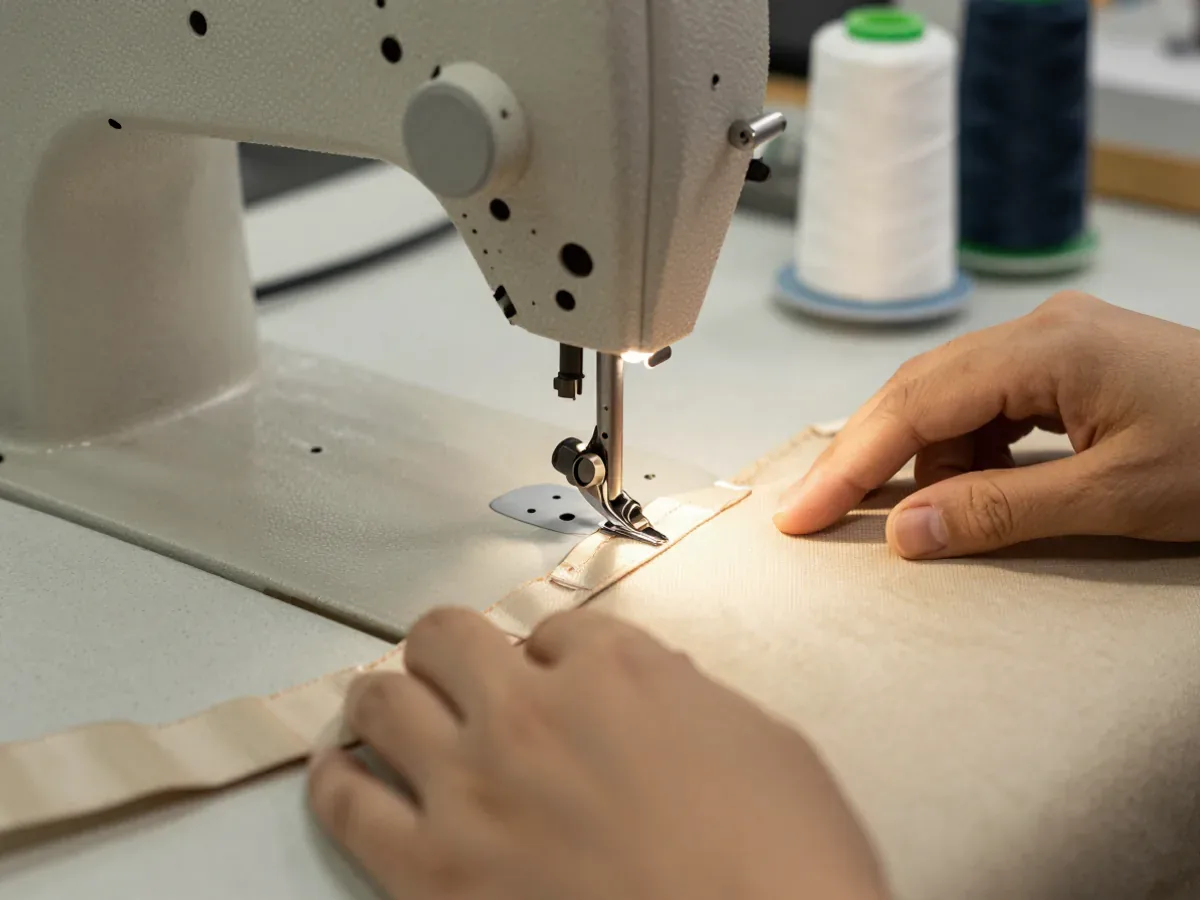
The handle station is the slowest on most bag lines, and it is where the RFQ's handle question earns its place. The document asked for the attachment method and its tested strength. On the floor, that means a stitch pattern you can count and a seam you can pull.
Our sample room measures the handle seam with a tape measure on a new sample, and the same habit belongs in the RFQ follow-up. Ask for the stitch count per inch on the handle join, the webbing width, and whether the join is box-stitched or single-row. Then ask for the tensile value from a named lab with the standard identified, because a strength claim without a method is a slogan.
Construction details belong here too. A bag with wrap-around webbing, a two-pull top zip, and long carry handles has four load paths, and each one is a seam. The RFQ answer that lists them separately is the one a line supervisor can actually build against.
Print and Lamination: The Swatch Question Comes Back
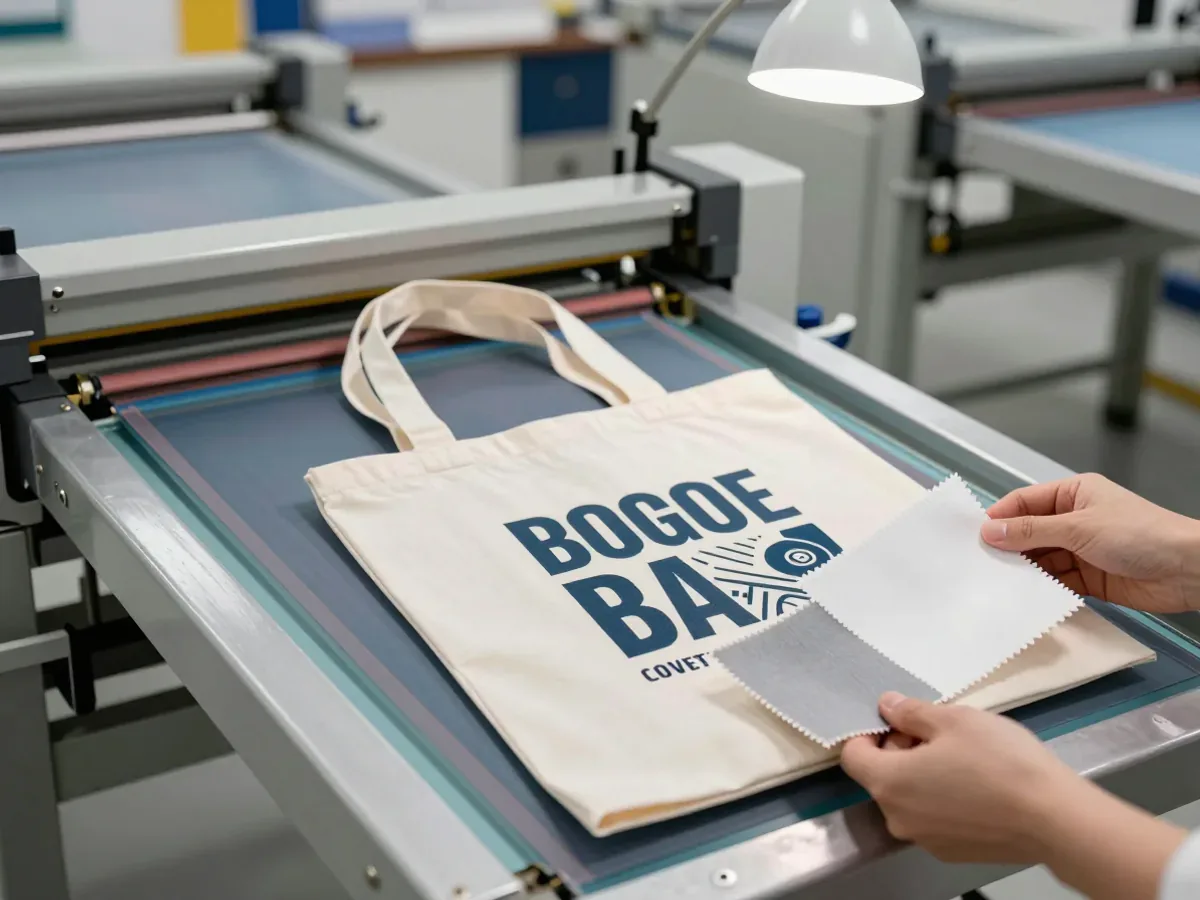
The print station is where the swatch question returns. The RFQ asked whether the factory could supply a physical swatch with the quote. Factories that own their process mail swatches or photos of lab-dipped samples within days. Traders stall, because they need to order the swatch from the mill that actually holds the fabric.
At the press, check the mesh and the ink against that swatch under the same light. Look at the first bag off the line, because it tells you whether the artwork survived the screen. If the material is laminated, confirm the print sits on the treated face and not on a surface that will craze after folding.
Registration is the quiet failure here. A print that is two millimetres off centre passes a casual glance and fails a retail shelf. Ask for the alignment tolerance in the RFQ response and then measure the first article against it.
Final Inspection: The AQL Number and the Four Checkpoints
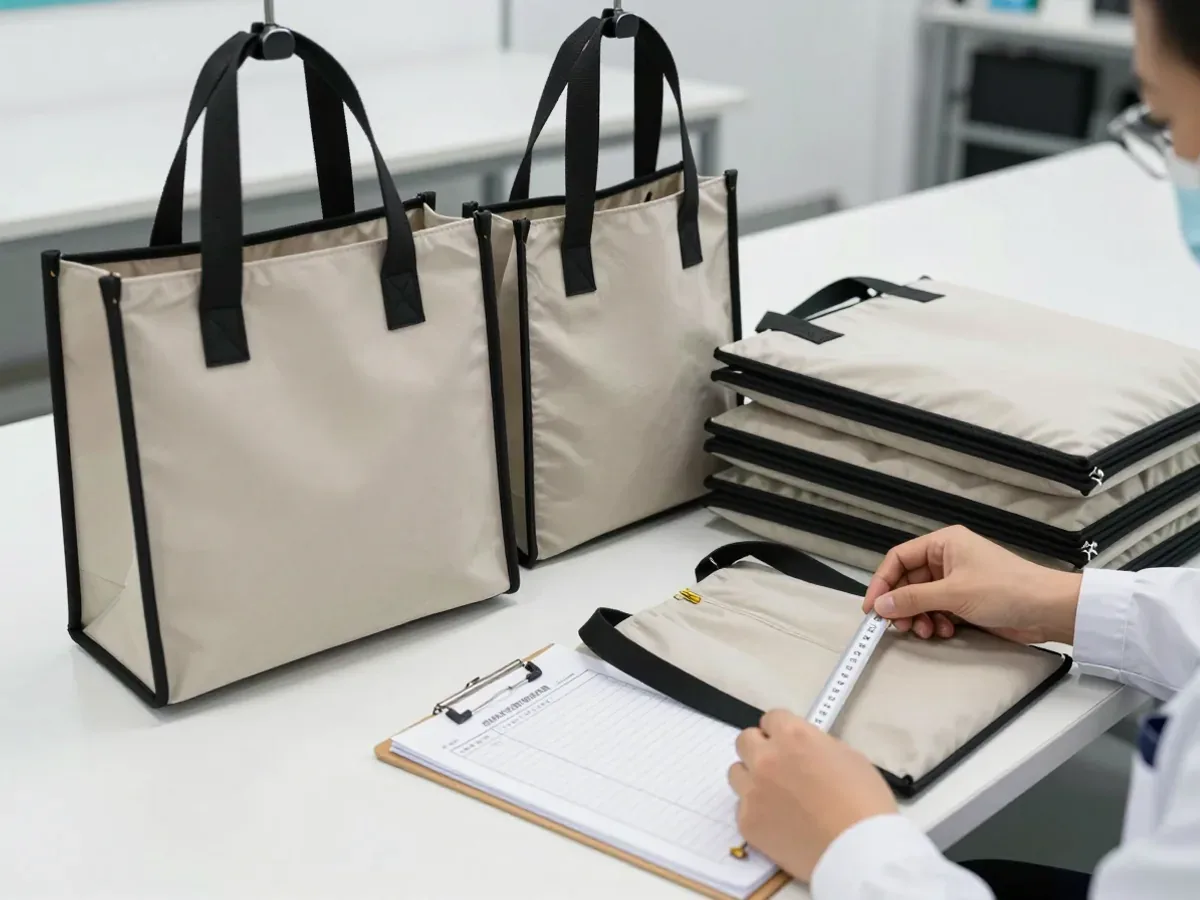
Final inspection is where the QC question becomes a checklist with names on it. The RFQ asked for the checkpoint list and the AQL level used at final inspection. A serious answer names incoming fabric check, in-line sewing inspection, print alignment check, and a final AQL pass. Our own sample room runs four quality checkpoints before a bag is packed, and the buyer can ask for the same list in writing.
At the inspection table, the AQL number decides how many units get pulled and how many defects are tolerated. Ask to see the sampling plan, not just the level. Watch whether the inspector measures the handle seam and pulls a finished bag under load, because the quality team here does exactly that before a pallet closes.
Defect handling belongs to this station as well. The RFQ asked how the factory treats defects and overruns, and the answer should state the allowed overrun percentage, the defect allowance, and the remedy, whether replacement or credit. An evasive answer here predicts an argument at the loading bay.
Loading Bay: Lead Time, Overruns and the Paper Trail
The loading bay is where the commercial questions get their audit. The RFQ asked for total lead time from artwork approval to port or door, broken into sample, production, and QC stages. On the floor, that becomes a carton count, a packing list, and a container booking that either matches the promised dates or does not.
Check the carton label against the polybag label and the spec sheet. Confirm the overrun against the allowance the factory stated. Confirm the incoterm on the shipping document matches the one quoted, because a price built on FOB terms and a booking made on DDP terms is a cost surprise waiting at the destination.
This is also where the paper trail earns its keep. Keep every RFQ response on file, including the evasive ones. Six months later, when a supplier misses a deadline or changes a spec, the original response is both leverage and record.
Scoring What You Saw, Not What You Read
Back at the desk, the fourteen answers get rescored against what the walk revealed. Score each item on a three-point scale: complete with documents, complete without documents, or evasive. Rank the factories by their weakest group rather than their average, because a supplier that is strong on price and weak on material will fail at the goods-in bay every time.
The four groups follow the buyer's own risk order. If the material is wrong, nothing else matters. If compliance is missing, the shipment can be stopped. If production is unreliable, the season is missed. If the commercial terms are unclear, the margin disappears after the container sails.
Two follow-up moves close the loop. Ask the shortlisted factories for a video walkthrough of the production floor, which confirms the building exists and shows the equipment that answered the RFQ. Then order the pre-production sample, run handle and print tests on it, and book a third-party inspection for mass production. Documents alone do not make a shipment.
FAQ
How many questions should a bag RFQ template include?
Fourteen questions across material, compliance, production, and commercial groups filter traders from factories without overwhelming suppliers. Fewer questions miss risk; more reduce response rates.
Should the RFQ state a target price?
No. Publish your target quantity and destination, but not your budget. A stated budget anchors quotes upward and invites inflated pricing.
What documents should come back with the quote?
Scope certificates for any social or recycled-content claim, test reports with the lab named, the standard named, and the batch identified, plus a physical swatch and a stage-by-stage lead time.
What is the next step after a strong RFQ response?
Order the pre-production sample, run handle and print tests, and book a third-party inspection for mass production. A strong response is a claim until the floor confirms it.






