
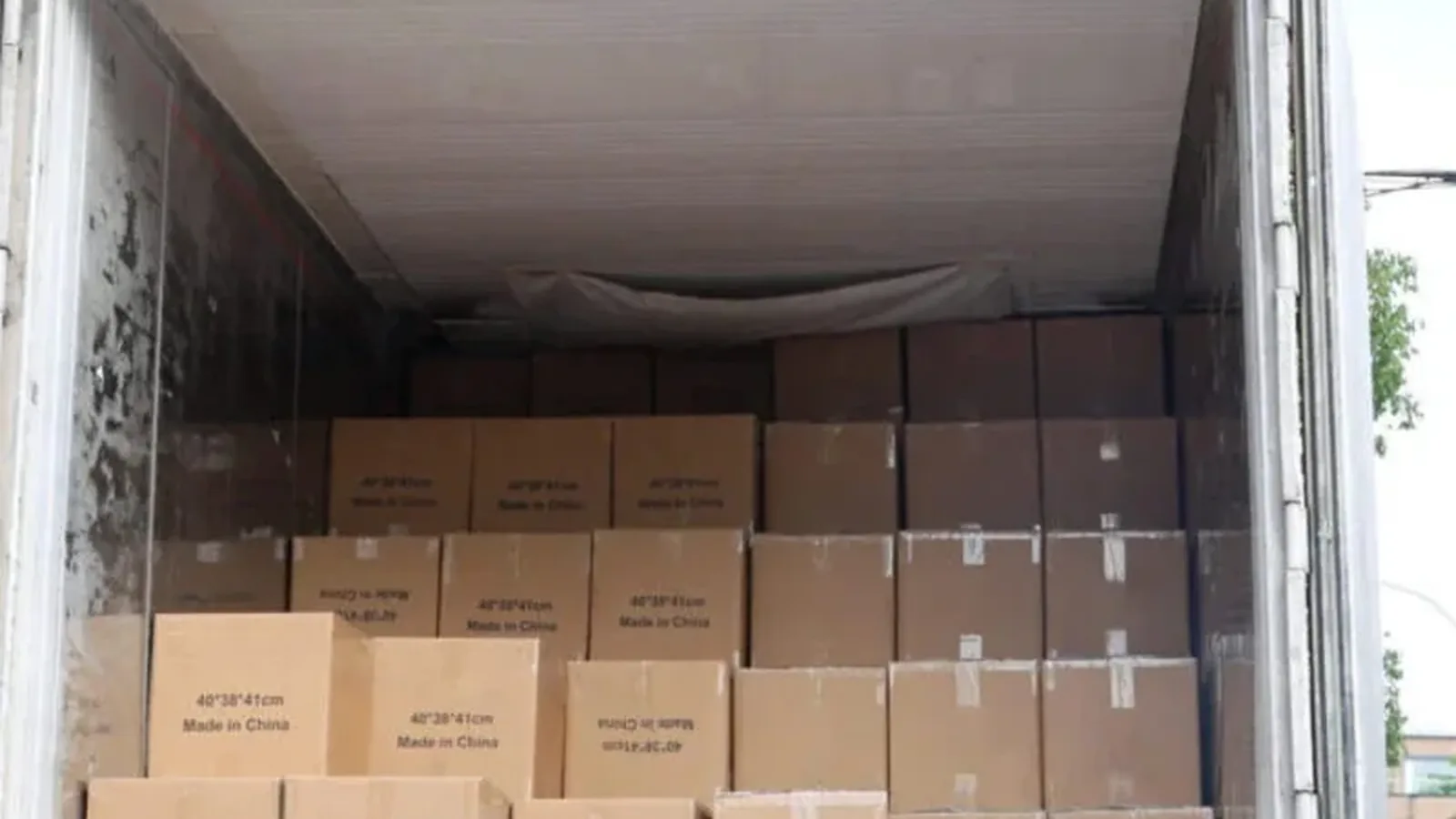
Cost lines drawn from a bag factory's export document practice and the standard five-document pack for textile bag orders.
Two years after a bag order cleared, the buyer still had the demurrage invoice pinned above her desk. The container had arrived on time and the bags were fine, but a packing list that said one carton count and a bill of lading that said another kept the shipment sitting at the terminal for six days. What she remembered was not the delay itself but the four separate costs that arrived afterward.
Most buyers price a bag order on fabric, labour, freight and duty. The document pack rarely gets its own line, so when something in it goes wrong the cost lands in places the budget never expected. Those places can be counted. This is a breakdown of the four cost lines buried in a document pack, how each one starts, and how to price them before the order confirms.
The Four Cost Lines Buried in a Document Pack
The first line is demurrage, the daily charge that accrues while a container sits in the terminal after its free time runs out. The second is the correction fee: a carrier or forwarder charges to amend a bill of lading, and the clock restarts while the amendment is verified. The third is a payment hold, where a buyer who receives fewer pieces than the packing list states withholds the balance until the supplier proves the invoice was right. The fourth is harder to invoice: the relationship cost of a buyer who now checks every document twice and questions every shipment.
None of these four shows up on a quotation. All four can be triggered by a single mismatched number, and they do not arrive in the same week. Demurrage and correction fees hit at the port; the payment hold hits thirty or sixty days later; the relationship cost lasts through the next order. A buyer who only budgets for the first two has priced half the exposure.
Demurrage Starts Counting Before Anyone Calls It a Problem

A container does not wait for a phone call. The terminal clock starts when the container is discharged, and free time is measured in days, not in how quickly anyone notices the error. A packing list that reports a different carton count from the bill of lading is enough to make customs treat the shipment as a discrepancy and hold it for verification.
The old assumption is that a hold is a customs problem. In practice the hold is often a paperwork problem that customs is correctly flagging. The packing list is the physical manifest of the shipment, stating pieces, gross and net weight per carton, and carton dimensions. The bill of lading, issued by the carrier, describes what was loaded. When those two disagree on carton count, gross weight or total value, the standard resolution is a correction request, and that request adds days to the transit.
Those days are the demurrage line. A correction request that adds three to seven days to the transit can push the container past its free time, and each additional day in the terminal adds another charge. The buyer pays it, not the factory, because the consignee is the party the terminal bills. That is why the demurrage line belongs in the buyer’s cost model even though the error may have started on the supplier’s side.
Correction Requests Bill You in Days, Not Dollars
A correction fee looks small on an invoice. The real cost is the days it consumes, because a corrected bill of lading has to be reissued and re-verified, and the shipment cannot move while that happens. If the correction lands during a peak season, the reissued document may queue behind other amendments, and the queue is measured in working days.
There is a second layer. A correction request creates a record. The carrier notes the amendment, the forwarder notes the amendment, and the next shipment from the same shipper may be reviewed more closely. A buyer who has had one correction on a lane often finds the second shipment on that lane inspected at a higher rate, which adds time even when the documents are clean.
The practical way to price this line is to ask the forwarder two questions before booking: what does an amendment cost, and how many working days does a reissued bill of lading take on this lane. Those two numbers, multiplied by the probability of an error, give a rough correction budget. Most buyers never ask, which is why the line surprises them.
The Payment Hold That Outlasts the Container

The container clears, the bags arrive, and the count is short. The packing list said a certain number of pieces; the receiving dock counts fewer. The buyer holds the balance, and the supplier spends weeks proving the invoice was right. During those weeks the supplier’s cash flow tightens, and the next order’s production schedule may slip while the dispute is resolved.
This is the cost line that outlasts the container because it moves from the port to the payment terms. A discrepancy between the invoice and the packing list is not only a customs issue; it is a commercial one. The invoice states the value and the HS code that customs taxes. The packing list states the physical contents. When the two disagree, the buyer has a legitimate reason to withhold payment until the physical count is reconciled.
The supplier’s cost here is financing: weeks of unpaid balance, sometimes a discount offered to close the dispute, sometimes a replacement shipment. The buyer’s cost is the reverse: a delayed launch if the short count was real, or a damaged relationship if the count was right and the hold was unnecessary. Either way, the payment hold is a document cost that arrives long after the terminal bill.
How to Price a Document Pack Before the Order Confirms
A document pack can be priced the same way as a material. List the five documents that make up the standard export pack for a textile bag order: the commercial invoice, the packing list, the bill of lading, a certificate of origin where one applies, and any inspection or testing certificate the destination market requires. Then assign each one a check and a cost if it fails.
The invoice check is the HS code and the declared value. The packing list check is carton count, gross weight and dimensions. The bill of lading check is agreement with the packing list on the three numbers that matter: carton count, gross weight and total value. The certificate of origin check is that it describes the goods in the same terms as the invoice and the packing list. The inspection certificate check is that it covers the batch actually shipped.
Once those checks are written down, the cost of a failure becomes visible. A buyer can decide in advance which documents are worth a pre-shipment review and which can be trusted to a template. The exercise takes an afternoon and replaces a budget line that otherwise appears only after something goes wrong.
Where the HS Code Line Quietly Changes the Duty
The commercial invoice is what the destination customs authority uses to assess duty, and the HS code on that invoice decides which duty rate applies. For a bag order the code is not always obvious. Woven polypropylene moving bags fall under a plastic or textile heading depending on material and construction, and the correct code is the one that matches the actual fabric and finish.
A code chosen to lower the duty is a customs violation and creates a permanent compliance record for the importer. A code chosen carelessly is a different problem: it may pass on the first shipment and be challenged on the third, when the importer’s profile has been reviewed. The duty difference between two headings can be large enough to change the landed cost of the whole order, which is why the code belongs in the cost model rather than in the shipping clerk’s inbox.
The check is simple. Confirm the code against the destination tariff schedule, and confirm that the certificate of origin uses the same description as the invoice. A certificate that names a different product line will fail origin verification, and the tariff preference the buyer was counting on disappears.
What a Standing Template Saves on the Second Shipment
Every bag program that ships repeatedly benefits from a standing document template. The first shipment pays the cost of building it; the second shipment collects the saving. A template fixes the product description, the HS code, the carton marking format and the units used for weight and dimensions, so the packing list and the invoice are generated from the same source rather than typed twice.
The saving is not only clerical. A template removes the most common cause of customs holds, which is misalignment between documents. When the invoice, the packing list and the certificate are built from one record, the carton count cannot disagree with itself. The correction request that would have added days to the transit never gets raised.
A template also makes the pre-seal check faster. The cartons are counted and photographed before the container seals, and the count is compared against the template’s carton line rather than against a memory. A mismatch found at that point costs an hour. The same mismatch found at the destination costs the demurrage line.
The Pre-Seal Check That Costs Fifteen Minutes

The last cost control is the cheapest. Before the container seals, someone counts the cartons, photographs them, and reads the packing list against the physical load. Dimensions, handles, logo and packed quantity are checked by hand at the same stop. The whole check takes fifteen minutes and catches the errors that would otherwise become demurrage, correction fees and payment holds.
The check works because it happens before the documents are finalised. A carton count that changed during packing can still be corrected on the packing list. A label that says one size while the carton says another can still be caught. Once the container seals, the documents travel with it, and any line item that disagrees can hold the whole shipment.
For a buyer, the pre-seal check is the one document control that can be written into the purchase order without adding cost. It does not replace the template or the HS code review. It closes the gap between what was packed and what the paperwork says, and that gap is where all four cost lines begin.
FAQ
What documents are needed to export bags from China?
The standard five are the commercial invoice, the packing list, the bill of lading, a certificate of origin where a tariff preference applies, and any inspection or testing certificate the destination market requires.
What is the difference between a packing list and a commercial invoice?
The invoice states the value and the HS code that customs taxes; the packing list states the physical contents, including carton count, weights and dimensions.
How long can a documentary error delay a shipment?
A packing list or certificate mismatch can hold a container for several days to a week while it is verified, and each additional day in the terminal adds demurrage.