
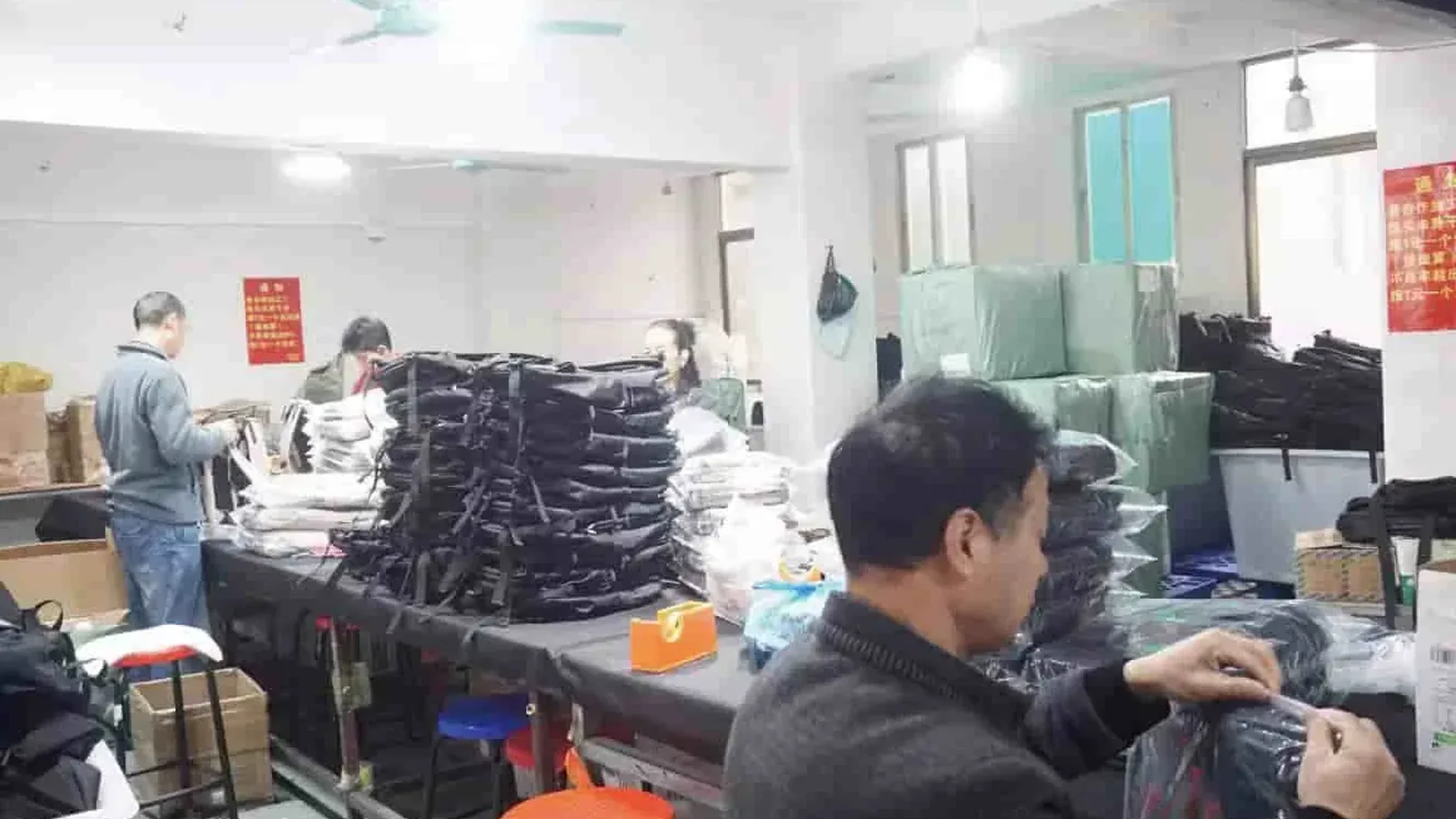
Drawn from archived order notes on specification freezes and the factory checkpoints that follow a signed field from material intake to final count.
The cartons arrived at the buyer's warehouse in early March, and the first bag lifted out of the top layer was two sizes short of the sample on her desk. The label matched the purchase order. The bag did not match the label. By the time she called, the fabric had already been cut, sewn, packed and shipped, and the correction would run as a new order rather than a fix.
The buyer's question was narrow: how did a dimension that everyone had discussed in January end up wrong in March? The answer did not sit with one careless person. It ran back through a chain of small, reasonable decisions that nobody had written down and signed.
The cartons that came back two sizes short

The order was for a soft-sided tote with a reinforced base, a stitched handle and a single-colour print on the front panel. The buyer had approved a sample in December. She had approved a colour in January from a photo on her phone. She had given dimensions in a message that read "about 38 by 42" without saying whether that meant the flat cut panel or the space inside the finished bag.
Each of those steps felt finished at the time. None of them was a freeze. When the factory cut the fabric, the cutting table worked from the flat panel size, which is how a cutting table reads a number. The buyer had been picturing the internal space after filling. The two readings were a few centimetres apart, and a few centimetres is enough to make a bag that will not take the item it was designed to carry.
The cartons were correct. The count was correct. The print was correct. The dimension line was the one field that had never been pinned to a single meaning, and it was the field that decided whether the order worked.
Tracing the change back to an unsigned dimension line
The dimension line in the order file had three versions. The first came from the buyer's brief, written as a rough target. The second came from the factory's quotation, converted into a flat cut size so the material could be estimated. The third came from a message where the buyer confirmed "yes, that size is fine" without restating which size she meant.
None of the three carried a signature, a date or a version number. The purchase order referenced the quotation, the quotation referenced the brief, and the brief was never updated. A supervisor on the cutting floor had no reason to doubt the number in front of him. He cut to it.
This is how a freeze fails quietly. The document exists, but it does not decide anything, because the field that matters most is still open in three places at once. A specification freeze is the point at which every field is confirmed in writing and no further change is accepted without a change order. Where a field is still open, the order is not frozen and the delivery date is provisional.
Seven fields that decide whether an order holds
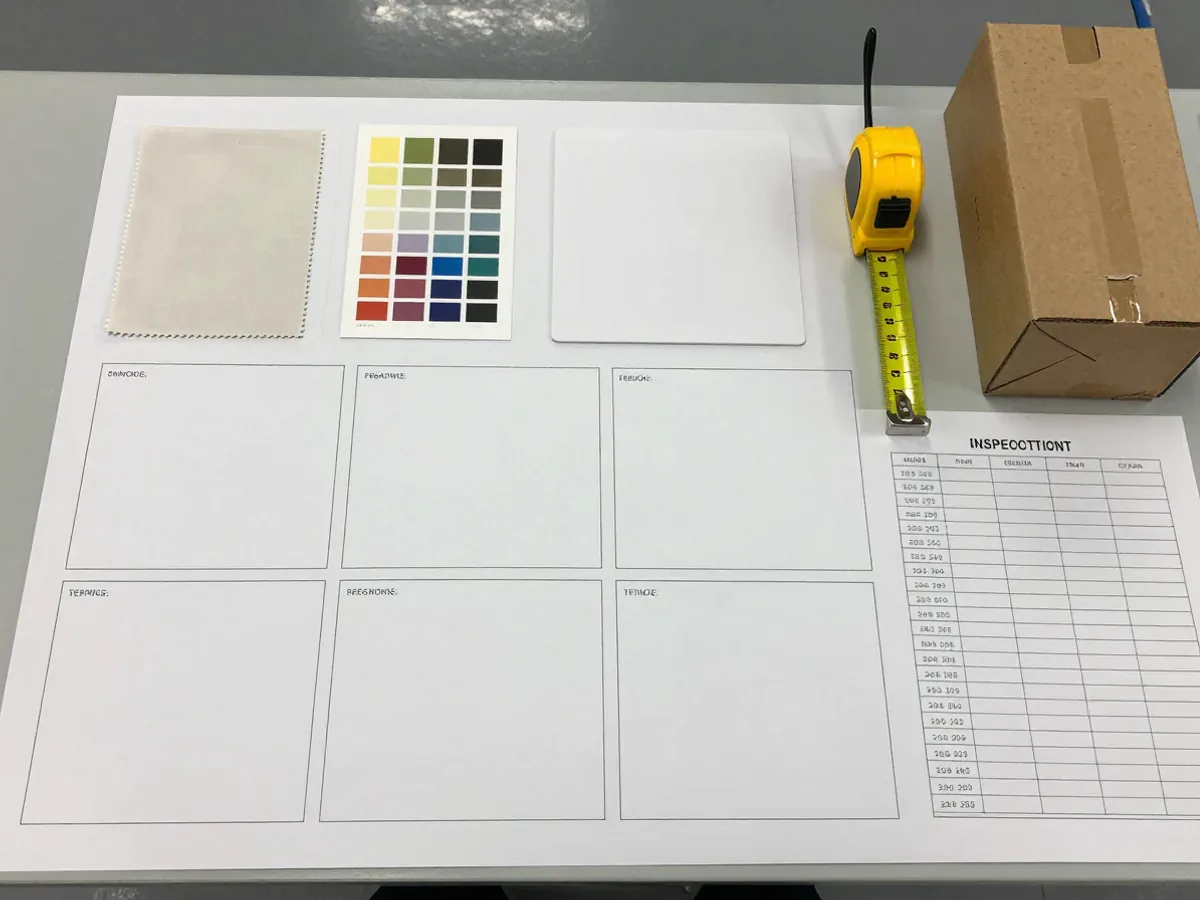
Most disputes on bag orders cluster around a small set of fields. Seven of them cover the majority of what goes wrong, and each one has a way of being confirmed that leaves no room for a second reading.
Material specification, with the fabric weight and composition written out. Colour, approved against a physical sample rather than a screen. Dimensions, stated as internal dimensions after filling, not as flat cut sizes. Handle type and attachment, described by construction rather than by adjective. Print or decoration, with artwork files and ink colours named. Packing method, including carton dimensions and quantity per carton. And the inspection standard that will apply at the end.
Each field should be confirmed in one document with a date and a version, and that document should be referenced in the purchase order. The point is not paperwork for its own sake. It is that a signed field can be checked against a physical thing on the floor, and an unsigned field cannot.
Two of the seven are left ambiguous more often than the rest. Colour approved from a screen is not approval, because screen colours vary from device to device and from one lighting condition to another. Dimensions quoted as flat sizes rather than internal dimensions produce a product that arrives smaller than expected, exactly as happened in the March cartons. Both are cheap to settle at the freeze stage. Both are impossible to correct once the fabric is cut.
How each signed field is proved on the line

A signature on a document means little unless someone on the production floor can test the field against something real. The freeze earns its value at the checkpoints, and each of the seven fields has a place where it is either proved or quietly skipped.
Material is proved at incoming inspection, where fabric, webbing, zips and thread are checked against the approved specification before anything is cut. Colour is proved against the retained physical sample, held under the same light as the production run. Dimensions are proved on the finished bag, where the internal space is measured after filling rather than on the flat panel.
Handle attachment is proved by construction and by test. Handles are stitched to the body rather than tacked on, and pull, seam strength and bar-tack are tested on every batch. Print is proved against the approved sample carrying the actual print, not a digital image. Packing is proved against the agreed method, whether polybag, retail or per-store, settled before production starts. Inspection is proved by checking the finished bag against the same fields the buyer signed, so the final inspection is a verification step rather than a negotiation.
Where a freeze quietly breaks after the fabric is cut
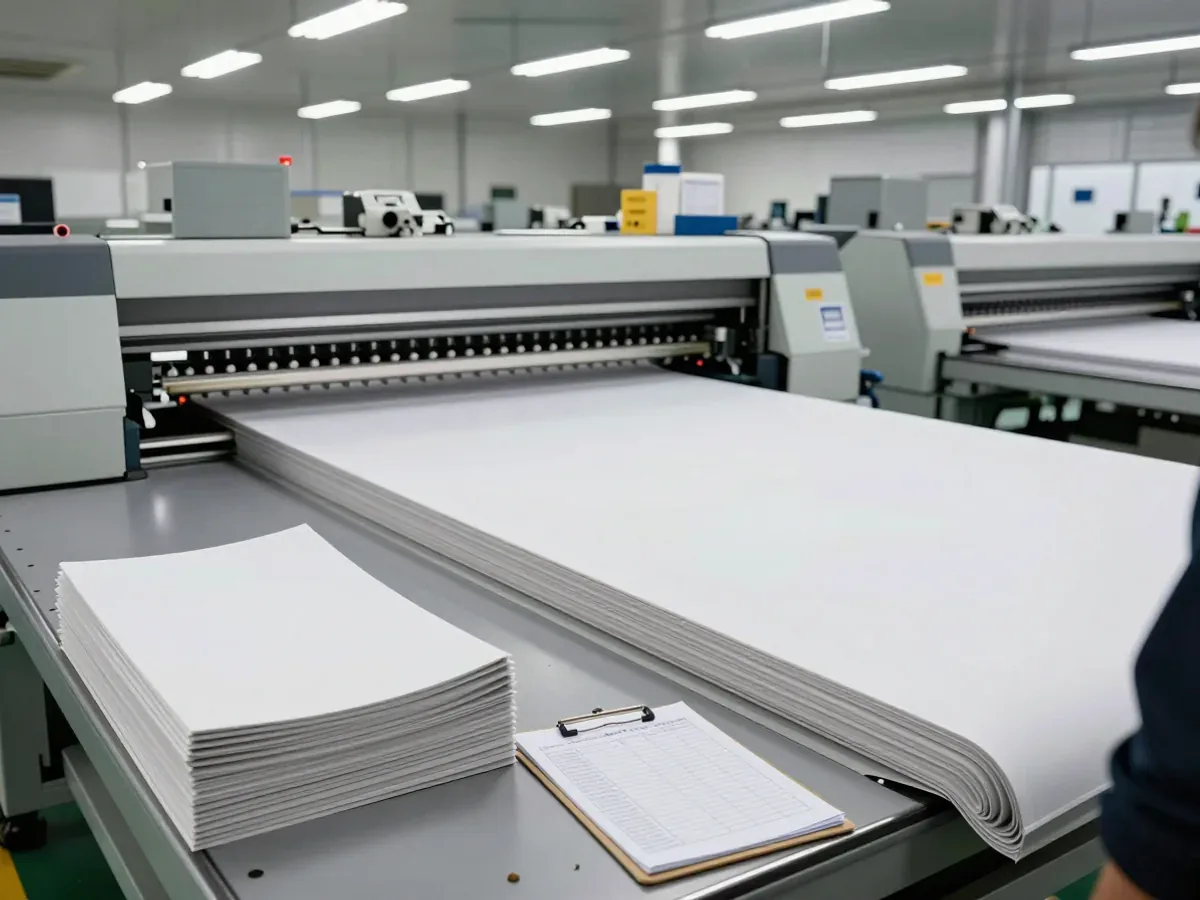
The cutting table is where a freeze either holds or dissolves. Fabric is relaxed, cut and bundled by size before sewing, and once those bundles exist, every downstream station inherits the number that was cut. A dimension change after cutting is not an edit. It is a rebuild.
The same is true of material. A fabric change after cutting means the cut panels are scrap, and the honest answer may be a new order rather than a modification. Artwork changes before the print plates are made, and packing changes before cartons are ordered, are usually routine by comparison. The cost of a change is decided less by the change itself than by how far the order has travelled when the change arrives.
This is why the freeze has to travel with the order through documentation, inspection and shipping. If the inspector checks against a different version of the specification than the buyer approved, the freeze has already broken, even if every document looks complete. Keeping the frozen specification as the reference throughout production is what makes the final check meaningful.
What the change log should show a buyer
Changes will happen, and the point of a freeze is to make them visible rather than to forbid them. A change after the freeze should be raised in writing, costed, dated and approved, with an explicit statement of the effect on the delivery date. The change log attached to the order file becomes the record of what was agreed and when.
That record is what makes a later claim or a reorder straightforward rather than archaeological. Without it, a buyer and a factory reconstruct a January conversation in March, and both sides remember it differently. With it, the question shifts from who said what to whether the change was approved before or after the cut.
A useful change log shows four things for every entry: the field that changed, the date the change was raised, the date it was approved, and the stage the order had reached at approval. The last column is the one that predicts cost. A change approved before cutting is a note. A change approved after cutting is a rebuild.
Reading a freeze document the way a supervisor would
A freeze document should fit on a few pages and be readable by both the buyer and the factory floor. Where it is written in a format the factory cannot use, it becomes an administrative artefact and the real specification reverts to email. The practical test is whether a factory supervisor could work from it: material, colour reference, dimensions, construction, print, packing and inspection.
If any of those fields requires a phone call to interpret, the document is incomplete. A supervisor should be able to read the dimension line and know whether it means the flat panel or the internal space. He should be able to read the colour line and know which physical sample to match. He should be able to read the handle line and know the attachment method without asking.
The quickest test of whether a freeze document is complete is to hand it to someone who has not been part of the conversation and ask them to describe the bag. If their description matches the bag the buyer is picturing, the freeze is doing its job. If it does not, the gap they describe is the field that still needs a signature.
FAQ
Why is a colour approved on a screen not a real approval?
Screen colours vary between devices and change with brightness and ambient light. A colour approved from a photo has no physical reference to compare against production, so the factory and the buyer can both be honest and still disagree. Approval needs a physical sample held under agreed light.
Why does the approved sample have to be kept by both sides?
The approved sample becomes the physical reference for production. A sample approved verbally, or approved and not retained, cannot be compared with anything, which leaves the finished bag with nothing to be measured against. Both parties holding a signed, dated sample keeps the comparison possible months later.
How should a change after the freeze be handled?
Raised in writing, costed, dated and approved, with an explicit statement of the effect on the delivery date. The change log records the field, the dates and the stage the order had reached, so the cost of the change is visible rather than absorbed silently.
What is the quickest test of whether a freeze document is complete?
Whether a factory supervisor could work from it without calling to interpret any field. If material, colour reference, dimensions, construction, print, packing and inspection all read cleanly to someone outside the conversation, the document is complete enough to cut against.






