
Based on archived TIIOCTI articles on retail sustainability reporting and on our own recycled-fibre bag production records.
At the packing station, two folders sit beside a carton of woven totes: one holds a fabric certificate and a purchase order, the other adds a usage log and a replacement calculation. The buyer's sustainability lead opens both, reads for four minutes, and puts the thinner one down. What separated them was not the fabric. It was whether the numbers could survive a second look from someone who did not order the bags.
Retail bag programs now appear in sustainability reports, and the report line is where a sourcing decision becomes a public claim. Two evidence packs are common. One reports material and procurement data: recycled content, fibre source, order volume, supplier certificate. The other reports the same material data plus reuse count and avoided single-use bags. Both are honest formats. They answer different questions, and only one of them answers the question a report reviewer usually asks.
Two folders on the table, and only one survives a second look

The first folder is easy to assemble. A mill certificate for recycled rPET fabric, a purchase order showing quantity, a supplier declaration naming the fibre source. A procurement team can close that folder in a week because every page comes from a transaction.
The second folder takes longer. It needs a number for how many times each bag is carried, a baseline for the disposable bag it replaces, and a method for turning those two figures into an avoided-plastic line. That number does not come from the factory floor. It comes from the field, and someone has to own it after launch.
A reviewer reading the first folder learns what the bags are made of. A reviewer reading the second learns what the bags did. A retail ESG report usually needs the second, because a bag program moves a score through reuse and avoided single-use bags, not through the act of switching material. The material sits inside the footprint. The reuse count sits at the centre of the claim.
What each pack contains, line by line

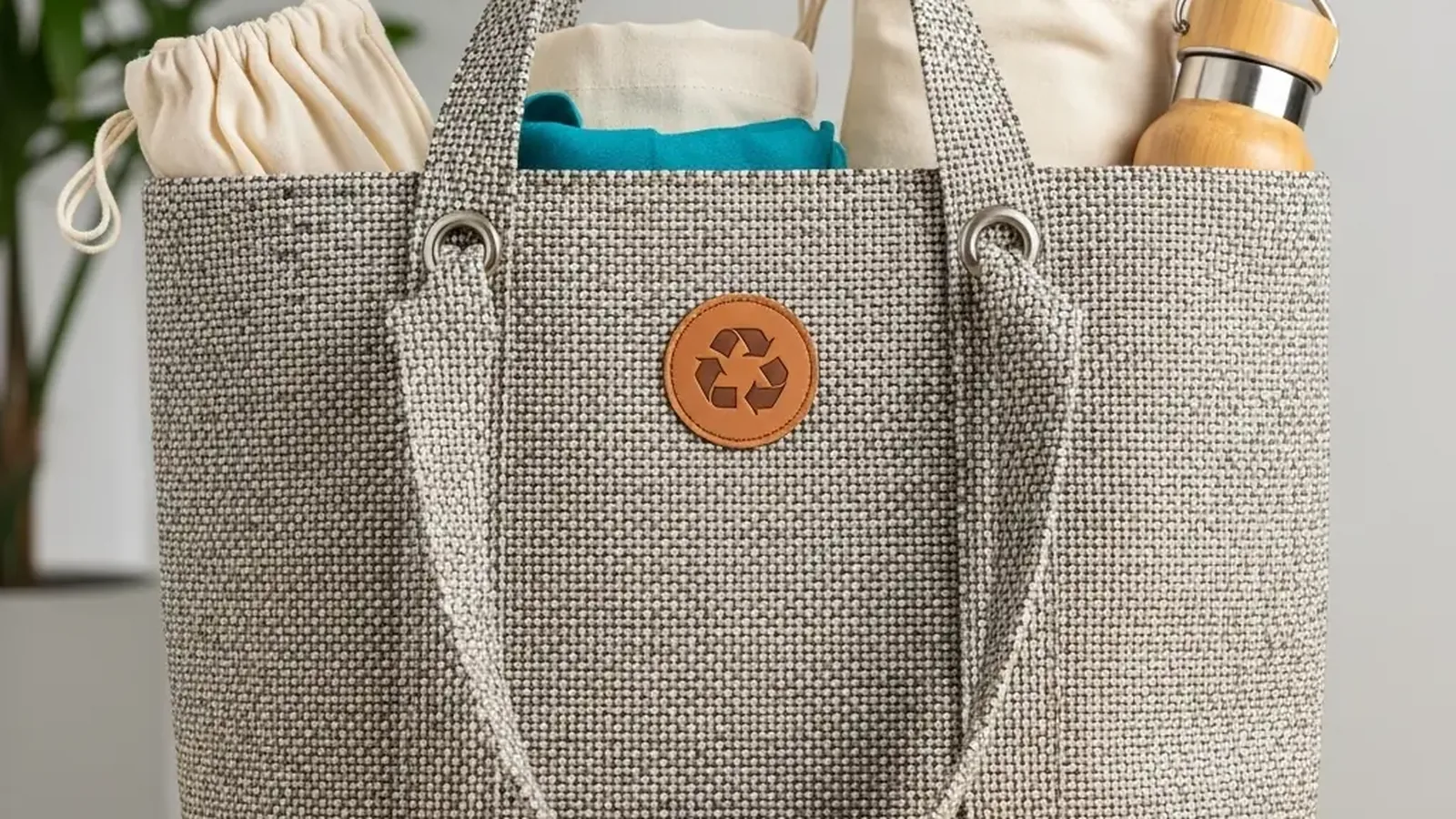
The material-only pack has a short contents list. Fibre type, recycled content declaration, supplier certificate, order quantity, delivery dates, and a description of the bag construction. For a woven tote with a sewn recycling patch, that pack also records the patch application and the print method if a buyer logo goes on the body.
The combined pack keeps all of that and adds four lines. Reuse count per bag, the disposable bag used as the comparison, the avoided bag total across the program, and the method used to collect the usage figure. Each added line needs a source, and the source is usually a survey, a return log, or a retailer-side tracking system.
The difference in effort is not small. Material data is produced during manufacturing and filed at shipment. Usage data is produced after the customer walks out of the store, which means the factory cannot generate it alone. A bag maker can supply the material half and the physical durability that makes reuse plausible. The count itself belongs to the retailer or the program operator.
Audit trail: which numbers a reviewer can trace back

Traceability favours the material pack on paper. A certificate has a number, an issuer, and a date. An order has a quantity and a shipping record. A reviewer can follow each line back to a document without leaving the procurement file.
The combined pack is harder to trace, and that difficulty is the point. A reuse count of, say, forty uses per bag needs a basis. If the figure comes from a consumer survey of two hundred households, the reviewer can read the survey. If it comes from a return-and-replace log, the reviewer can read the log. If it comes from an assumption typed into a spreadsheet, the reviewer will ask, and the claim will stall at that question.
An auditable combined pack therefore carries its method beside its number. The method does not need to be elaborate. It needs to be written down, dated, and repeatable next year. A material-only pack avoids that burden entirely, but it also gives a reviewer nothing to verify about impact.
Report fit: where reuse count and material footprint each land

Sustainability frameworks treat these two data types differently. Material footprint belongs in the procurement and product section, where recycled content and fibre sourcing are reported. Reuse count and avoided single-use bags belong in the use-phase and consumer-impact section, where behaviour change is measured.
A retail report that claims an ESG improvement from a bag program is making a use-phase statement. The bag has to be carried often enough to replace the disposable bags it is measured against. A bag that sits in a drawer replaces one disposable bag. A bag carried forty times replaces forty. The score follows the second number.
This is why a material-only pack tends to underwrite a weaker claim. It supports a statement about what the bag is made from, which is a real and reportable fact. It does not support a statement about avoided plastic, because avoided plastic depends on use. A buyer who submits the material pack and writes a reuse claim in the report has connected two documents that do not touch.
Decision value: what each pack tells you before the next order
The material pack informs the next purchase order. It tells a buyer whether the recycled content meets the brief, whether the supplier can repeat the specification, and whether the certificate will still be valid at the next shipment. That is useful for sourcing and weak for reporting.
The combined pack informs the next program design. A low reuse count in the field points to a bag that is too heavy to carry daily, too small for a weekly shop, or too easy to leave at home. Those are design signals that reach the factory as a specification change. A high count supports expanding the program to another store or another region.
For a buyer deciding what to request, the question is which decision comes next. If the next decision is a purchase order, the material pack is enough. If the next decision is a public claim or a program expansion, the combined pack is the one that carries weight.
Upkeep: who keeps the numbers current after launch
Material data ages slowly. A certificate has a validity period, and a specification stays stable across repeat orders. Updating the material pack is a filing task that happens at each shipment.
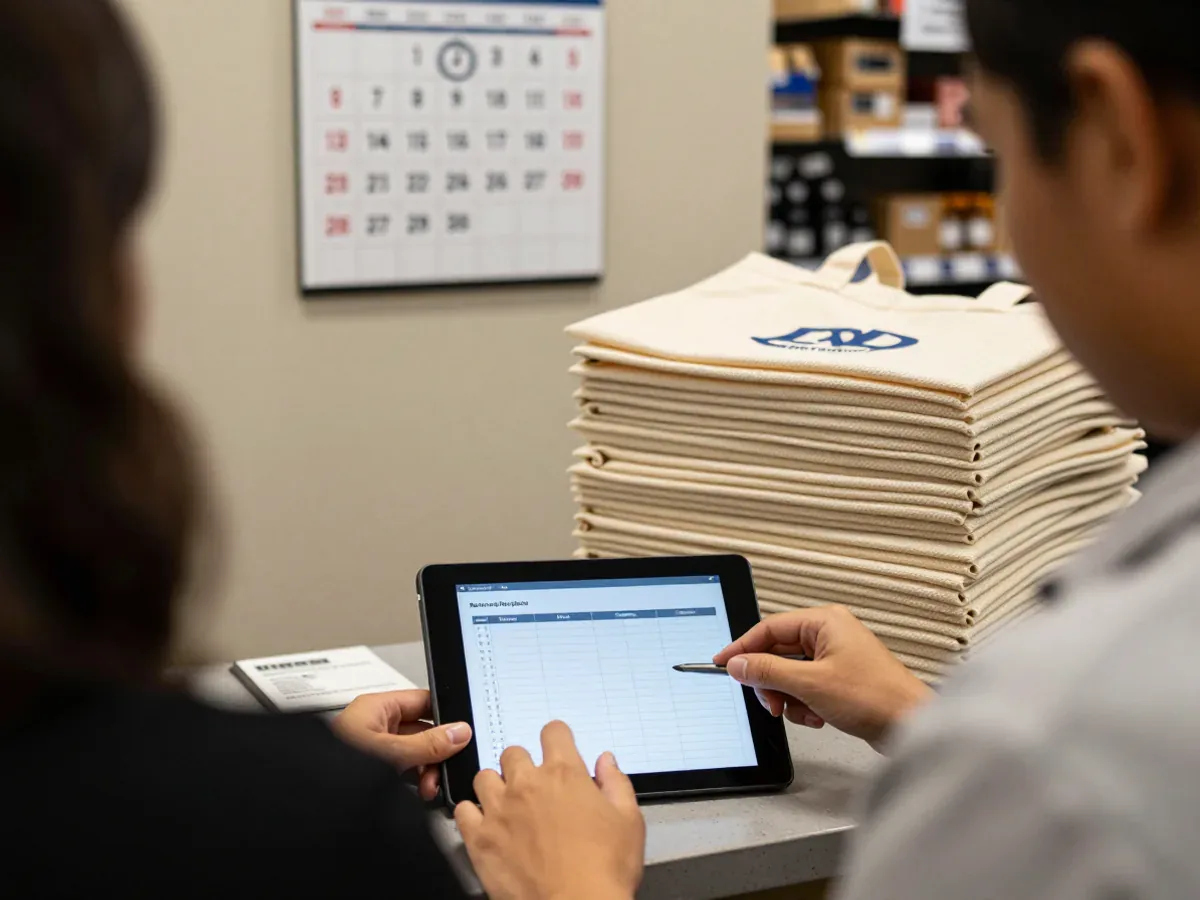
Usage data ages quickly. Reuse behaviour shifts with store layout, bag design, customer mix, and season. A count collected in the first three months may not hold in year two. Someone has to re-run the survey or re-read the return log, and that someone is rarely the factory.
This is the practical reason many bag programs stop at the material pack. The combined pack requires an owner on the retail side with time to maintain a field dataset. Without that owner, the reuse number is collected once, quoted for three years, and quietly becomes stale. A reviewer who notices the date will ask why the figure has not moved.
Which pack fits which buyer
A retailer running a first bag program, with no field data and no reporting deadline, fits the material pack. It establishes the recycled content, the supplier, and the specification. It is a foundation, not a claim.
A retailer with a published sustainability report, a use-phase section, and an analyst asking about avoided plastic fits the combined pack. The material data still belongs inside it, but the reuse count and the avoided bag total are what the report needs.
A retailer in between, with a report but no usage study, has a third option: request the material pack now and commission the usage study before the claim goes into print. That sequence keeps the specification moving while the field data catches up.
A side-by-side decision table
| Dimension | Material and procurement pack | Material plus reuse and avoided bags |
|---|---|---|
| Contents | Fibre type, recycled content, certificate, order quantity, construction | Same, plus reuse count per bag, comparison bag, avoided total, collection method |
| Audit trail | Each line traces to a certificate or order document | Each line traces to a document plus a dated method for the usage figure |
| Report fit | Procurement and product section | Use-phase and consumer-impact section |
| Decision value | Confirms the next purchase order | Signals program design changes and supports expansion |
| Upkeep | Filing at each shipment | Field data refreshed on a schedule by a retail-side owner |
| Main risk | A reuse claim written on top of material data alone | A stale count quoted beyond its collection date |
The table does not rank the packs. It shows where each one stops. The material pack stops at the specification. The combined pack stops wherever the usage method stops being maintained.
What to request from the factory before the report goes out
The factory side of this request is narrower than buyers expect. A bag maker can supply the recycled fibre declaration, the construction record, the patch and print details, and the durability evidence that makes repeated use realistic. Those pages support the material footprint line and the physical case for reuse.
The factory cannot supply the reuse count. That figure comes from the field, and any supplier who offers one without a study is offering an assumption. When the report deadline approaches, the request to the factory should name the material lines precisely and leave the usage lines to the retail side.
For the material footprint line, ask for the fibre type, the recycled content declaration, the supplier certificate with its validity date, and the order quantity that ties the certificate to the shipment. For the reuse line, ask the retail team for the collection method, the sample size, and the date. A claim that holds up is one where both halves arrive with a document behind them, and the reviewer can follow each line back to its source without calling anyone.