A stage-by-stage walk through the sample room, using the checks a factory runs before bulk.
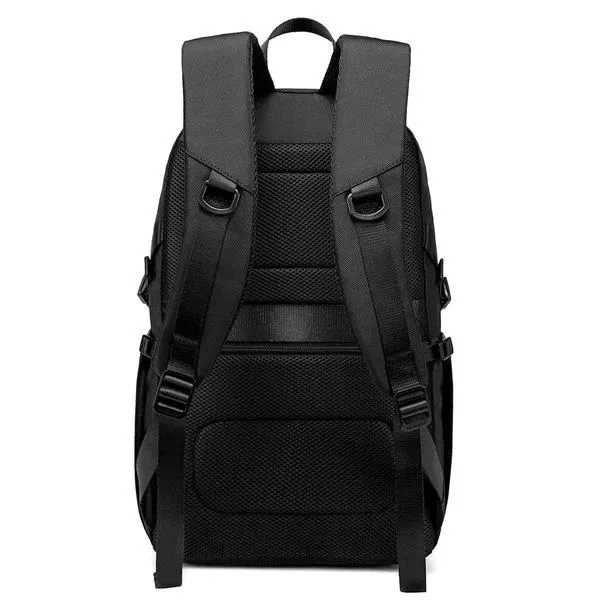
The carton on the sample room bench held a bag nobody had asked for. It was the old model, the one the buyer had been running for three seasons, and it had come back from a store with a note pinned to the handle: the zip had gone at the corner where the webbing wraps around. The buyer was replacing it with a new custom order, and that note travelled with the file from the first email onward. What followed was not one sample but four, each answering a narrower question than the last.
The order lands and the first sample is a square of cloth
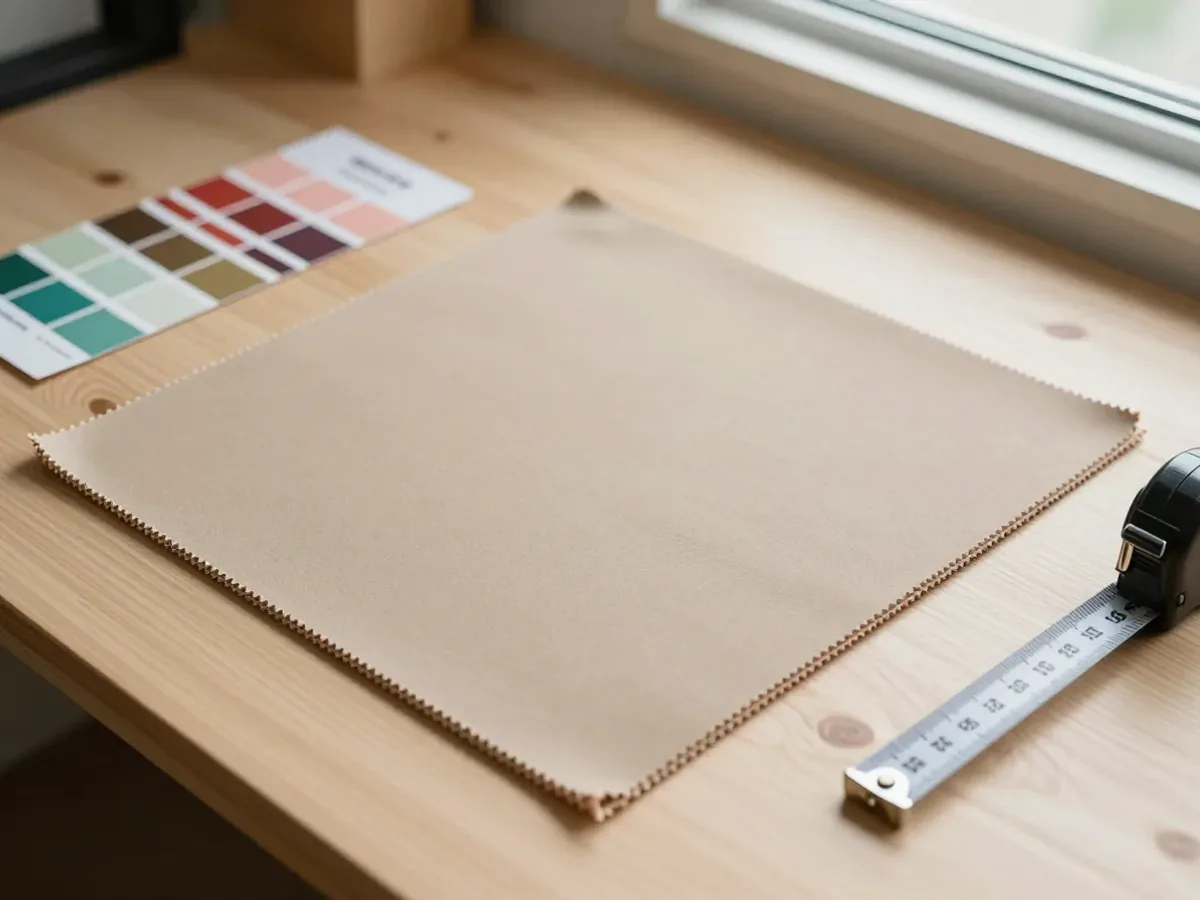
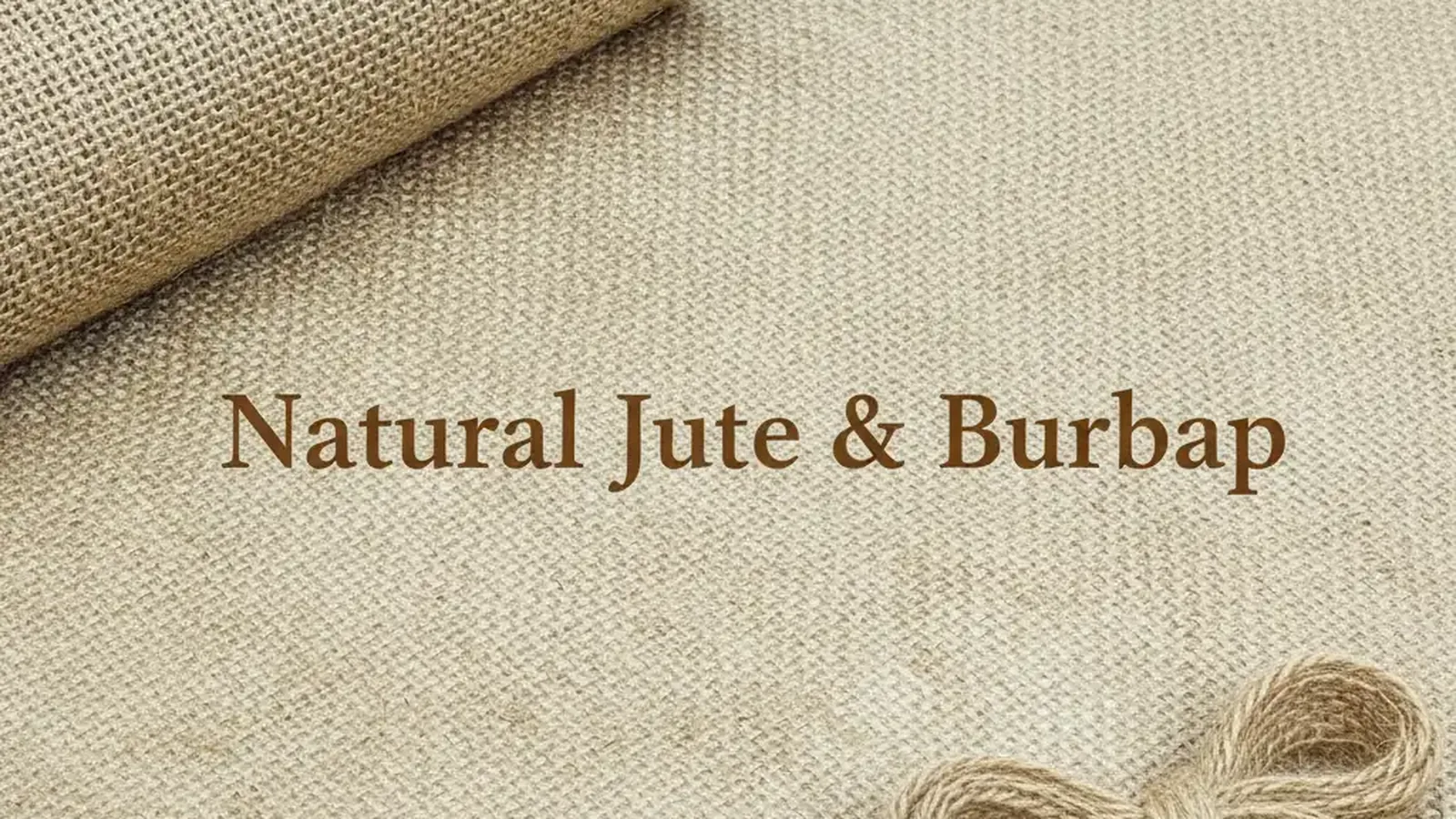
Before any bag exists, the factory cuts fabric to size and sends it. A cutting sample is exactly that: the cloth cut to the dimensions of the panel, with nothing sewn, nothing printed, nothing assembled. It confirms material, colour and GSM. It is fast and it is cheap, and its whole purpose is to catch a material mismatch before anyone invests in a full build.
On this order the cutting sample did its job quietly. The buyer had specified a coated fabric in a sand tone, and the swatch that came back sat next to the Pantone chip on her desk for two days before she approved it. What she was checking was not the shade alone. She wanted to feel whether the coating had the slight stiffness her old bag lacked, the stiffness that keeps a base panel from sagging when the bag is loaded.
A cutting sample cannot tell you whether a seam will hold or whether a handle will sit straight. It checks the cloth, not the construction. Buyers who treat it as a formality often discover at the prototype stage that the fabric they approved on a screen behaves nothing like the fabric in their hand.
The prototype answers the build question the fabric could not
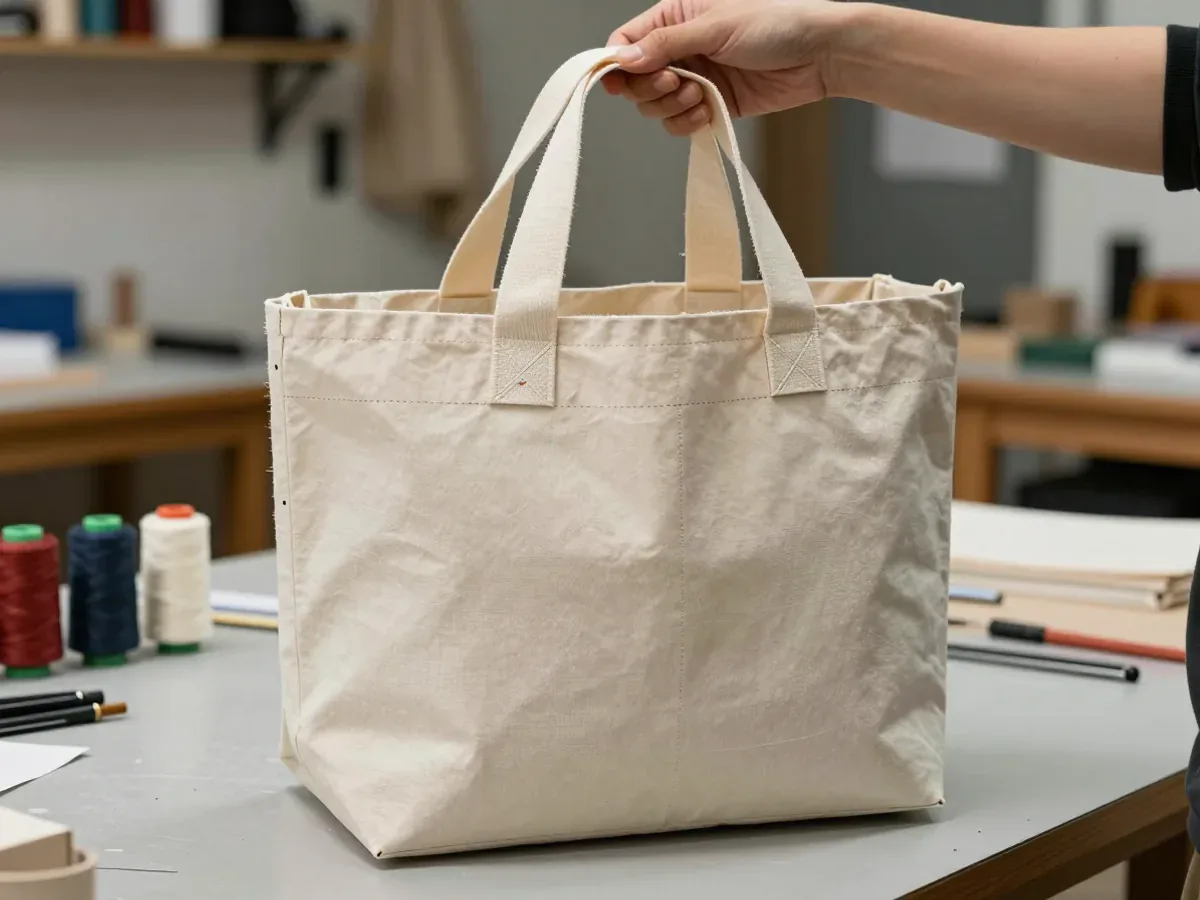
The first fully assembled bag is the prototype. Its job is construction: the seams, the base, the gussets, the handle attachment. It may be made in plain fabric rather than final colours, because colour is not the question at this stage. The question is whether the shape holds together when someone picks it up.
This is where the old bag's failure became useful. The note said the zip had gone at the corner where the webbing wraps around, so the prototype was built with wrap-around webbing and a two pull top zip, and the sample room put load into it before it went anywhere. A prototype that looks right on a table and twists at the handle root has told you something a photograph never will.
The prototype is also where a buyer learns whether the proportions in the drawing survive being made. A bag drawn at 30 by 15.7 in reads simply on a spec sheet. Sewn up, with long carry handles attached, it may hang differently against the body than the buyer imagined. That is not a defect. It is the prototype doing the one thing a cutting sample could not.
The pre-production sample arrives with the final print and trims
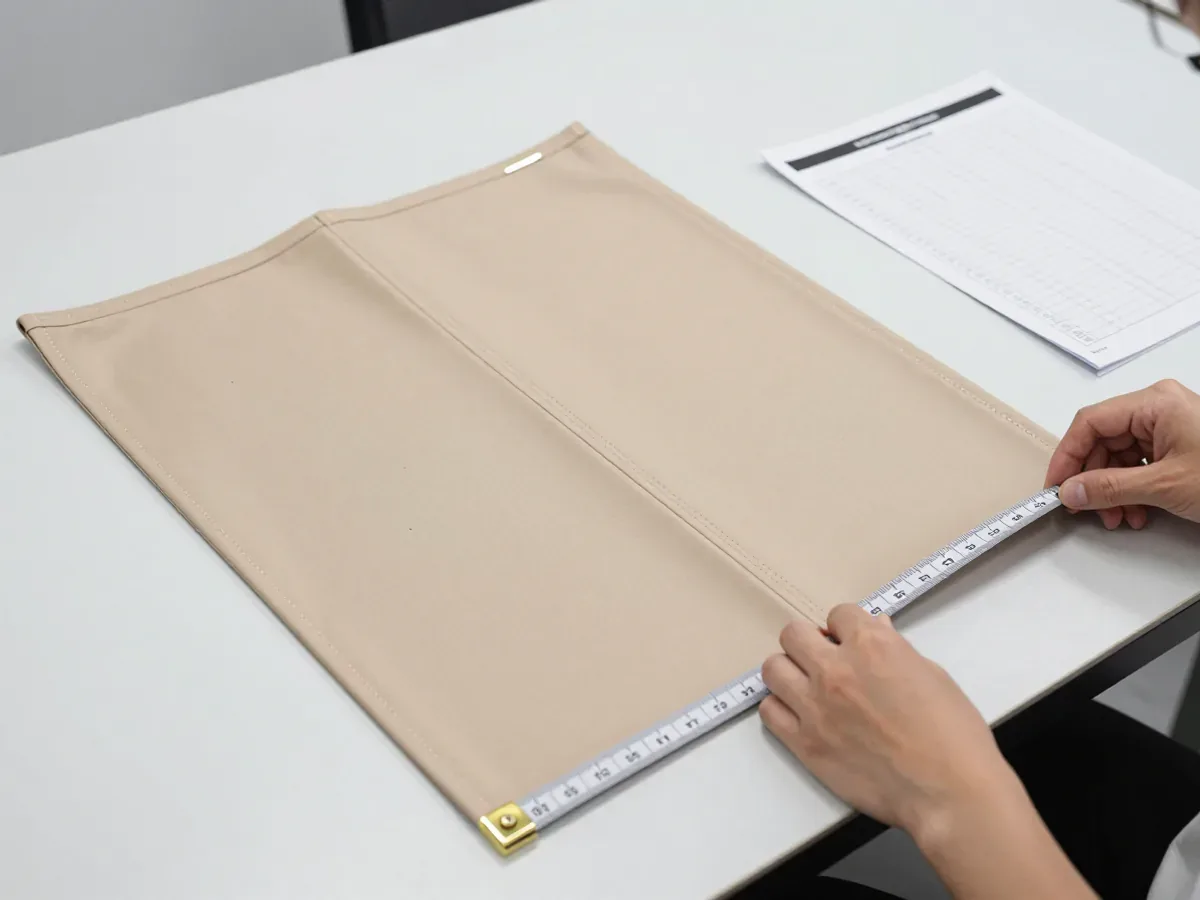
The pre-production sample is the one that matters most, and it is the stage where the file stops being a sketch and becomes a promise. It is made on the actual tooling with the final fabric, print and trims, so it is a faithful preview of the bulk run. Everything the buyer will see on the shelf is present here for the first time.
When it arrives, the check runs down the spec on every point that matters: fabric and GSM, colour match to Pantone, print placement and size, seam alignment, handle strength, and the final dimensions. Material verification comes first on the sample sheet, ahead of print and trim, because a beautiful print on the wrong cloth is still the wrong bag. Our team measures the stitching on a sample seam with a tape measure rather than judging it by eye, and the seam allowance either matches the sheet or it does not.
The pre-production sample is signed off and kept. It becomes the standard the bulk run is compared against, which is why the signing is not a rubber stamp. Once that bag is approved, every later argument about what was agreed has a physical answer sitting in the sample room.
The TOP sample is pulled from a running line
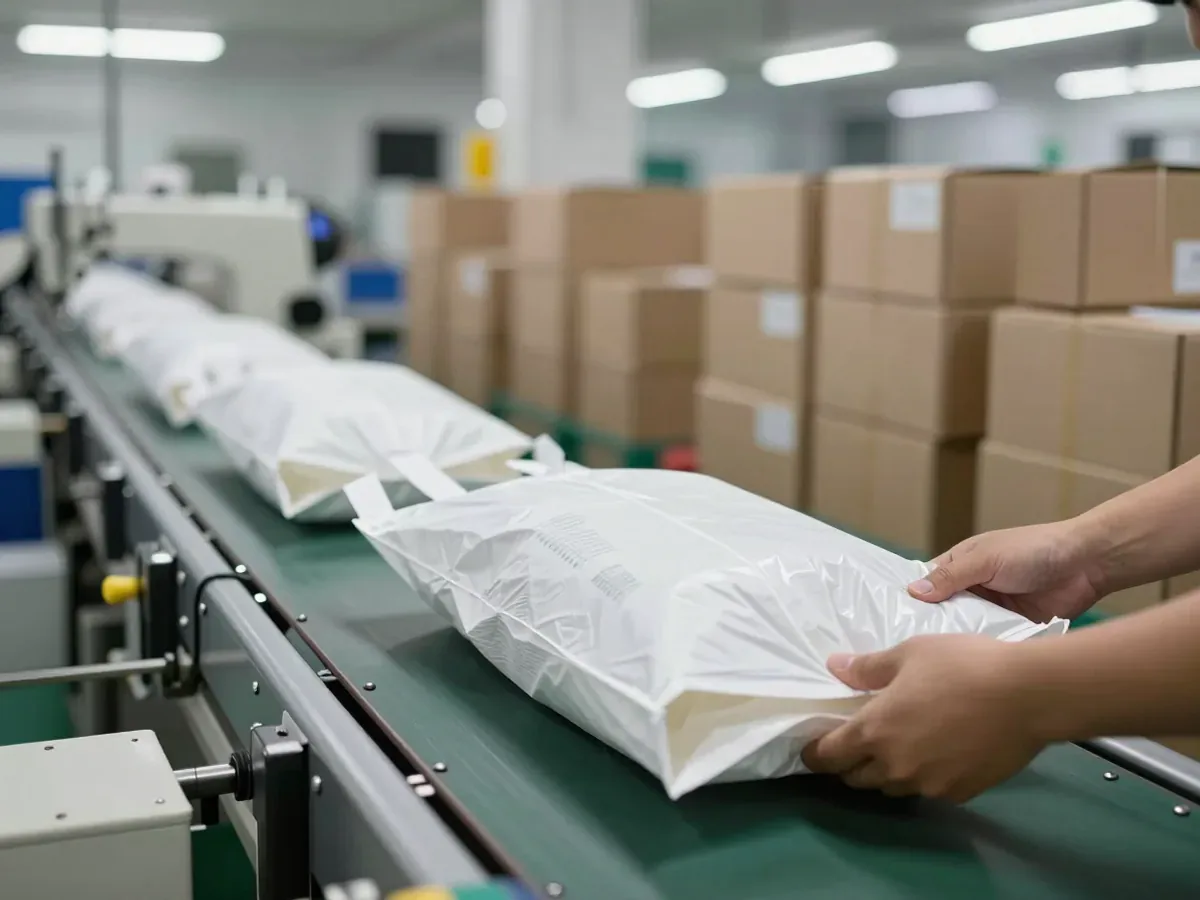
Production starts, and somewhere in the first part of the run a bag is pulled off the line and sent. That is the TOP sample, and its purpose is different from everything before it. It confirms that the bulk output matches the approved sample, catching drift before the whole batch is packed.
Drift is the quiet risk. A print screen clogs slightly by mid morning, a roll of fabric from a different dye lot arrives, a new operator sets a seam a few millimetres wider. None of these show up in a pre-production sample, because that bag was made before the line was running at speed. A TOP sample pulled from real output is the first object that carries the line's habits rather than the sample room's.
What it catches is the gap between approval and execution. If the run starts to wander, the TOP sample catches it while there is still time to correct the line rather than rework the cartons.
What the sample sheet holds before anyone signs
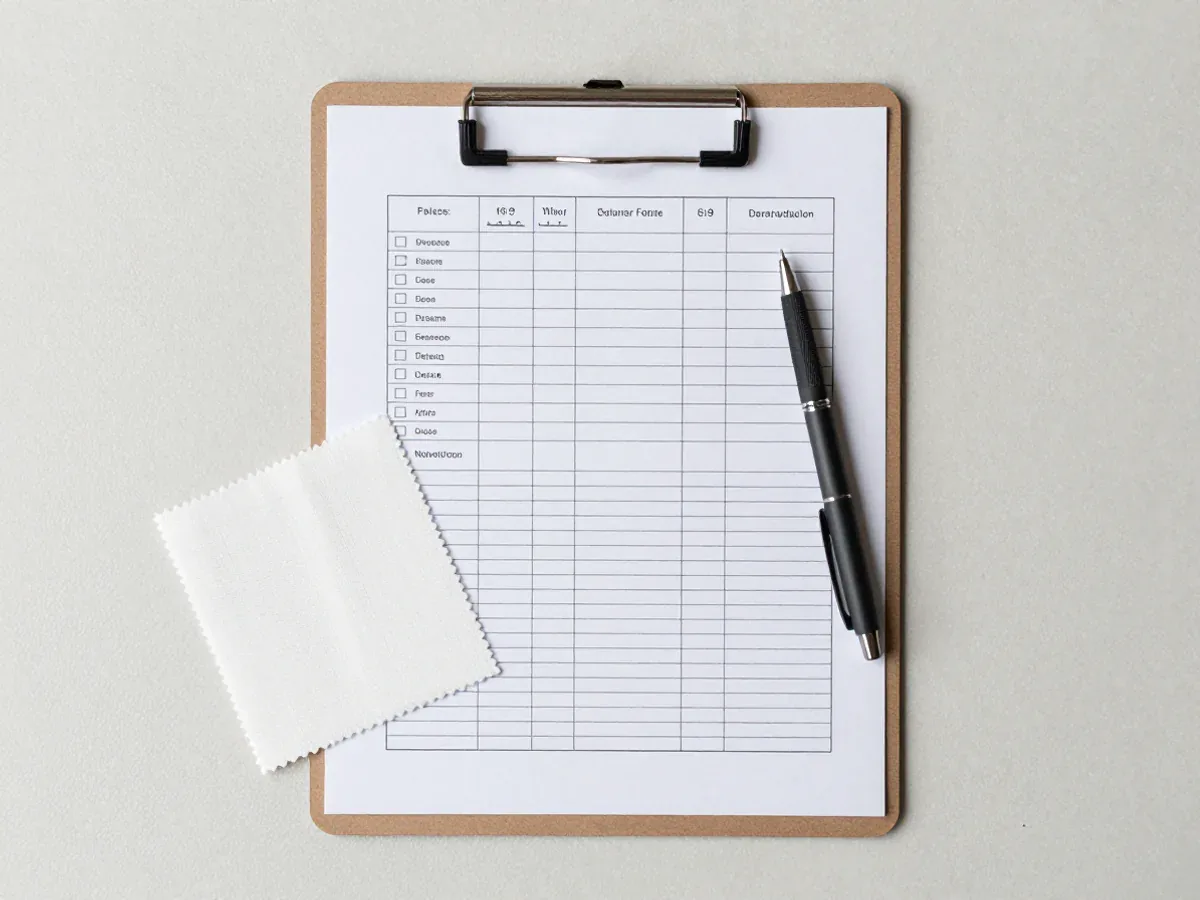
The sheet that travels with the samples is where the sequence becomes auditable. It carries the load and tear test parameters before the sample is signed, so the tests are agreed in advance rather than invented after a failure. It lists material verification first, then print, then trim, in the order the checks are performed.
The sheet also caps revision rounds. A sample is limited to three rounds instead of being allowed to loop, which forces the buyer and the factory to consolidate comments rather than sending them one at a time over weeks. Three rounds is enough to correct a print position, a seam, and a handle length. A fourth round usually means the brief was unclear at the start, not that the factory is slow.
Signing the sheet is the moment the sample stops being a proposal and becomes a reference. After that, the question in every conversation is not what the buyer meant but what the approved bag does.
Where the sequence breaks and what it costs
The sequence breaks in predictable places. A buyer skips the cutting sample because the fabric was approved on a screen, then discovers at the prototype that the hand feel is wrong and the whole build has to be rethought. Or the prototype is waved through because it looks right, and the pre-production sample arrives with a print placement that no one questioned earlier.
The most expensive break is skipping the pre-production sample and going straight from prototype to bulk. The prototype may be plain fabric with an unfinished print, so approving it approves a bag that does not yet exist in its final form. When the cartons arrive with a print sitting two centimetres off centre, there is no approved bag to compare against, and the argument has no referee.
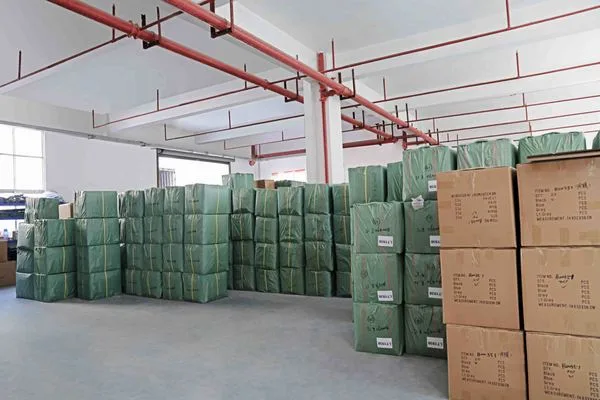
The TOP sample is the last cheap correction point. Once the batch is packed, a drift that a single pulled bag would have exposed becomes a sorting job across every carton. Four checkpoints before a bag is packed exist for this reason, and the TOP sample is the one that tests whether the line is still making the bag that was signed.
Questions that come up before the first cut
Can a cutting sample replace a prototype? No. The cutting sample confirms material, colour and GSM. It says nothing about seams, base structure or handle attachment, which are the prototype's entire subject.
Why does a pre-production sample matter more than the prototype? The prototype proves the build in whatever fabric is convenient. The pre-production sample is made on the actual tooling with final fabric, print and trims, so it is the first faithful preview of what will ship.
How many revision rounds should a sample get? Three is a working cap. Beyond that, the comments usually point back to an unclear brief rather than a factory problem, and the calendar pays for it.
What does a TOP sample catch that final inspection does not? Final inspection judges the finished batch. A TOP sample pulled from a running line catches drift while the line can still be corrected, before the whole run inherits the error.