

This comparison draws on archived TIIOCTI material notes and product spec records for PP woven and non-woven bags, reorganised around the end-of-life claim each material can honestly support.
The reference photo showed a matte white polypropylene bag with a small green leaf printed near the base and, directly under it, the word RECYCLABLE in the same size. The buyer had circled both marks and written one line in the margin: can we keep this? That margin note is where a surprising number of end-of-life problems begin, because the two words on that bag point to two different destinations, and the artwork had already been approved once before anyone checked whether either destination existed.
The label that says both, and why buyers approve it

The bag in the photo was not unusual. A sourcing team builds a tote or a retail carrier, the marketing side asks for a sustainability message, and the fastest route is to stack the words that sound greenest. Biodegradable goes on the front, recyclable goes on the back, and the artwork moves to print.
Approval happens quickly because nobody in the room is lying. The factory can produce a bag. The printer can set the leaf. The buyer can point to a supplier who said yes when asked whether the material is recyclable. Each person answers a narrow question, and the combined label never gets tested as a single claim.
The risk sits with whoever puts the bag into a market. In several jurisdictions the wording on a package is treated as an environmental marketing claim, and the buyer, not the printer, owns it. A leaf and a word cost almost nothing to add. Withdrawing them after a shipment lands costs considerably more.
Why the two words look like a safe pair
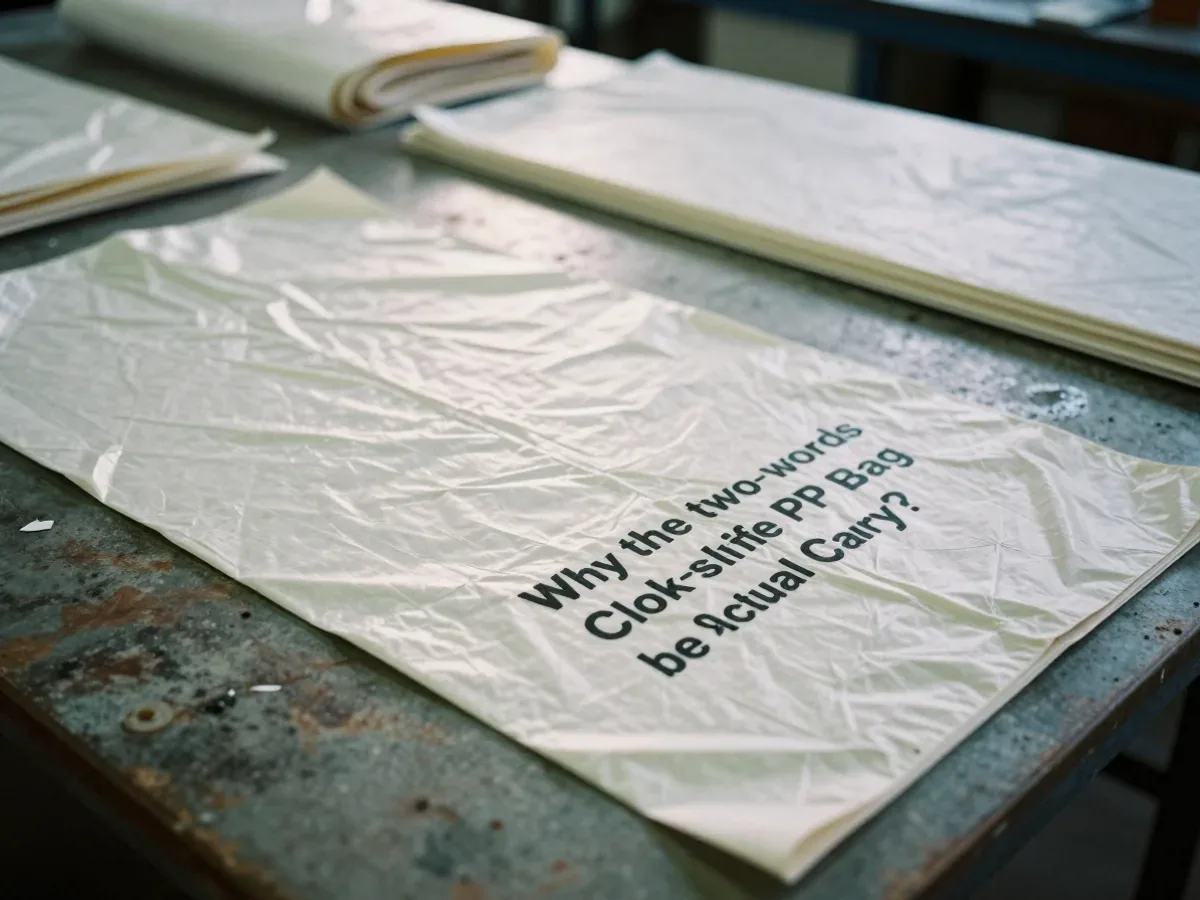
Both terms describe what happens after the bag is finished, so they read as two versions of the same good behaviour. A buyer who is unsure which one the market prefers can simply print both and cover the gap. That logic feels cautious rather than reckless.
The words also travel well. Neither requires a number, a test method or a footnote on the bag itself, so the artwork stays clean. A compostable standard reference would need a logo and a scheme name. "Biodegradable" needs nothing but space.
There is a third reason. Suppliers answer the question that was asked. Ask whether PP is recyclable and the honest answer is yes, in the right stream. Ask whether a biodegradable version exists and the honest answer is also yes, in the right grade. Two yes answers become one label, and the conditions attached to each answer drop out of the conversation.
Where the double claim breaks down at end-of-life

Picture the bag after use. One path leads to a recycling facility that sorts rigid containers and selected films. The other leads to an industrial composting line that takes certified feedstock and rejects contamination. These are separate systems with separate intake rules, and a single bag cannot be routed to both.
A biodegradable bag that reaches a landfill may sit there for a long time, because the conditions its claim depends on are absent. A recyclable bag that reaches a composting line is contamination, not feedstock. Printing both words does not create a third destination. It creates a bag whose label is correct in one setting and misleading in the other.
The buyer carries that mismatch. Retailers audit packaging claims. Consumer complaints about greenwashing are cheap to file and expensive to answer. A bag that says two things invites the question of which one the brand actually verified, and most files contain no answer.
What each word is really promising
Biodegradable is a statement about breakdown. It says the material will break into compounds within a set timeframe under specified conditions, often industrial composting and sometimes home composting. Without that environment the promise has no clock attached. The term also covers bio-based and fossil-based materials alike, so the word alone says nothing about the carbon story behind the resin.
Recyclable is a statement about recovery. It says the material can be collected and turned into a new product through a stream that accepts it. Polypropylene is a clean mono-material and qualifies where collection exists. A bag with a coating, a laminate or a mixed build cannot be processed the same way, so the claim depends on construction rather than on the resin name.
One more distinction gets lost on artwork. A recycled content figure describes how much of the bag was already recycled. It says nothing about whether this bag can be recycled again. Brands often print both ideas in one block, and the two numbers then stand in for each other in the customer's mind.
The build detail that decides whether recyclable holds
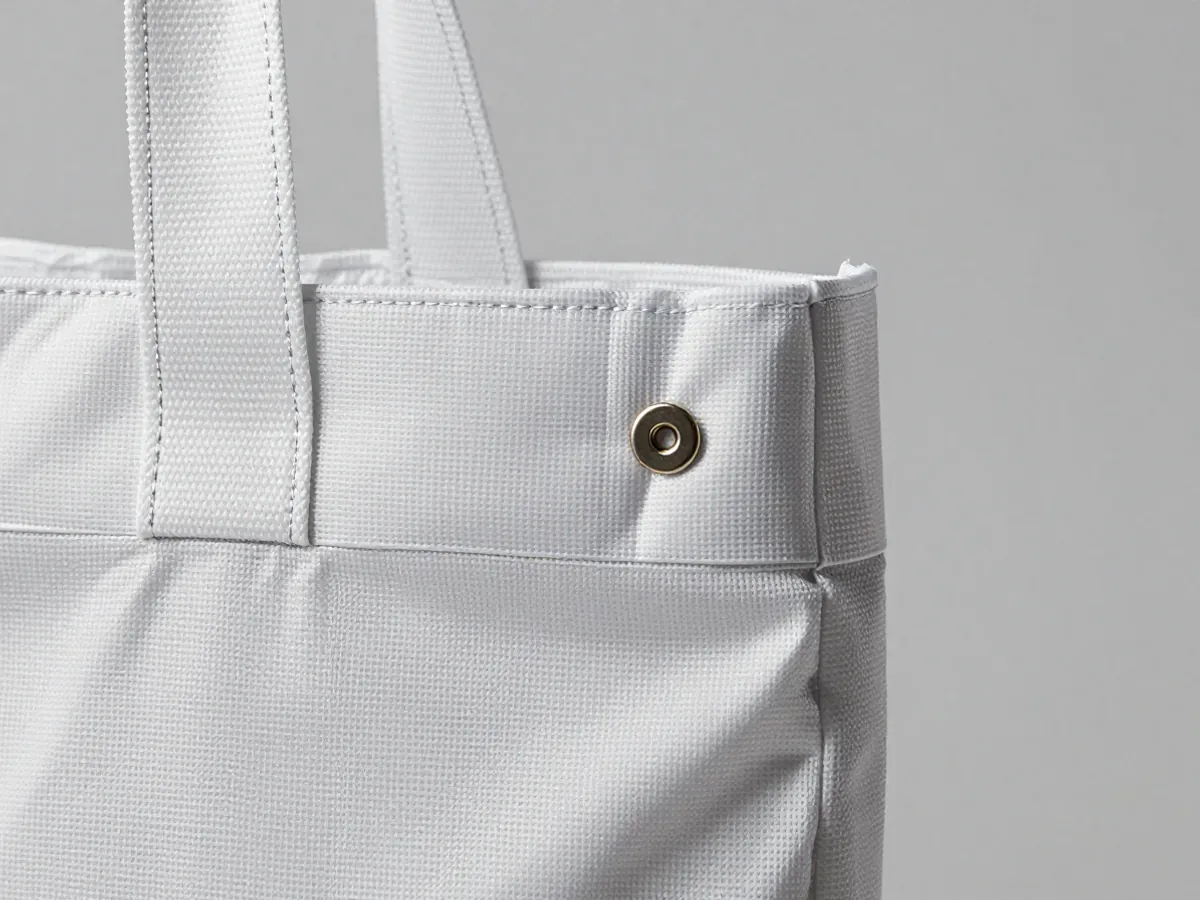
Open a PP bag and look at what sits on top of the woven or film surface. A soft-touch coating, a laminated print layer, a stitched handle of a different polymer, a metal snap: each addition changes what a recycling line can do with the item. The recyclable claim is strongest when the bag is single-material, labelled for the stream and collected separately. It is weakest when a blend is sent to a stream that does not take it.
This is a specification question, not a marketing one. Incoming fabric, webbing, zips and thread are checked against the approved spec, and the print method sits on that same spec with artwork checked before cutting. If the coating appears after the spec is signed, the claim was never tested against the real build.
Handles deserve their own line. A woven PP handle on a PP body keeps the bag in one material family. A polyester webbing handle on the same body introduces a second polymer that a sorter may treat as contamination. The difference is invisible in a photo and decisive at the sorting belt.
Matching the claim to the market that will read it
The choice is not which word is better. It is which end-of-life path the market actually offers. A compostable bag suits a single-use application where collection for industrial composting exists and the certification backs the wording. A recyclable PP bag suits a durable, reusable application where the customer keeps the bag and eventually puts it in a stream that accepts it.
Market rules differ enough that one artwork rarely serves two countries. Some regulators treat unqualified biodegradable wording as deceptive unless the conditions are stated. Others require a scheme logo before a compostable word may appear. A buyer shipping to three markets should expect three label versions, and should budget the artwork time for them.
Volume matters too. A reusable bag sold into a market with no film collection carries a recyclable claim that no facility will honour. A compostable mailer sold where composting is not available to households carries a claim that depends on infrastructure the customer cannot reach. The honest position matches the claim to the path and to the certification behind it.
A check order before the artwork goes to print
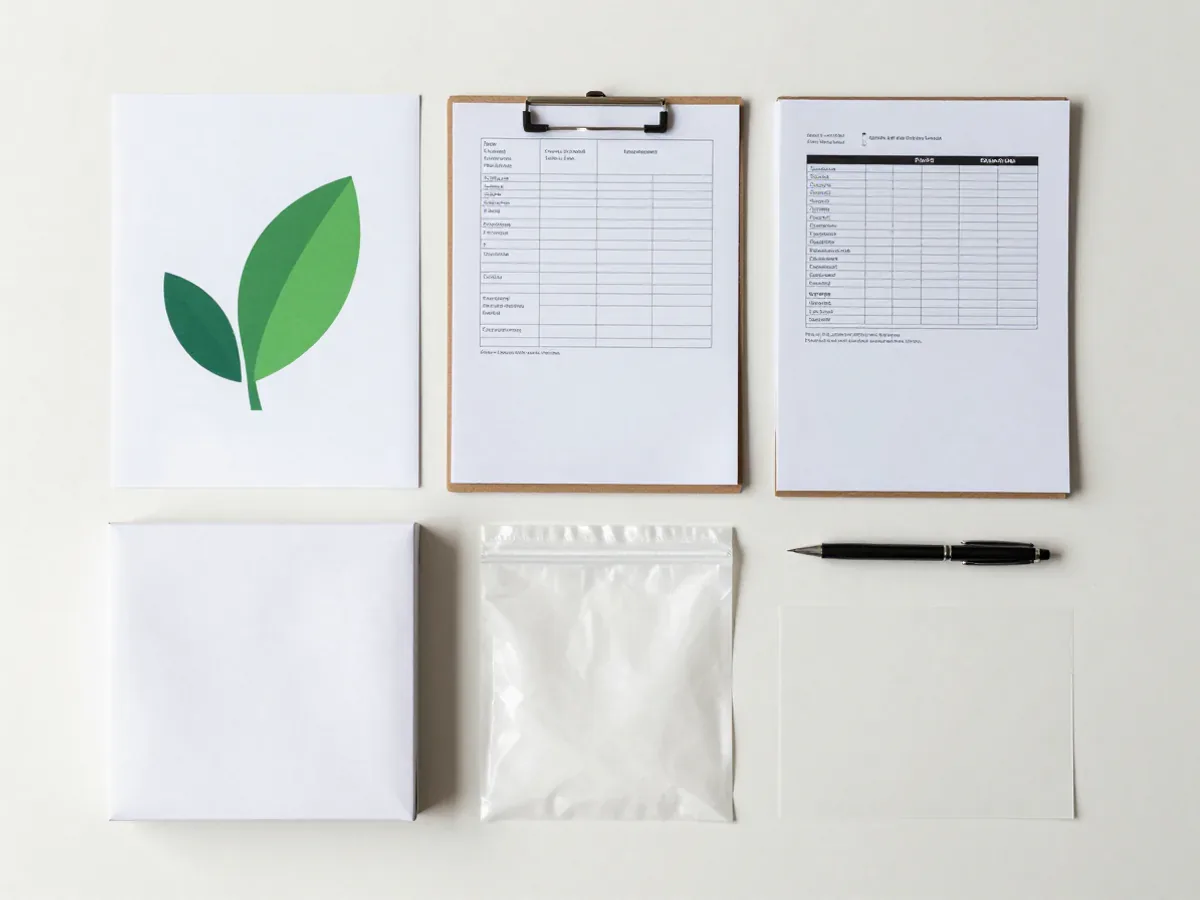
Start with the destination, not the design. Ask which country the bag ships to, then confirm what that market requires for each word the marketing team wants. Two words may become one, and one may become none.
Next, fix the build. Confirm the resin, the coating or laminate, the handle material and any metal trim, and write them into the spec before the print file is released. A recyclable claim should be checked against that list, not against the resin datasheet alone.
Then secure the paperwork. A compostable or biodegradable claim needs a certification that names the standard and the conditions, plus evidence that the bag can realistically reach that end-of-life path. Keep the certificate number in the file that the retailer will audit.
Finally, test the artwork against the bag. Print a single unit with the final marks and read it as a customer would, with no spec sheet in hand. If the label promises something the build or the market cannot deliver, the correction is cheaper now than after the container seals.
FAQ
Is a biodegradable bag also recyclable?
Not by default. Biodegradable describes breakdown under specific conditions, while recyclable describes whether a stream can collect the material and make it into a new product. A bag can be one, the other, or neither, and the label should say only what has been verified.
Can a coated or laminated PP bag still carry a recyclable claim?
A clean mono-material PP bag qualifies where the stream accepts it. A coated, laminated or mixed build cannot be processed the same way, so the claim depends on the construction rather than the base resin.
Does recycled content mean the bag can be recycled again?
No. Recycled content states how much of the bag was already recycled. Whether this bag can be recycled again is a separate question about material and stream.
When is a biodegradable claim on a bag actually backed by something?
When the bag is certified to a recognised compostable or biodegradable standard and genuinely reaches that end-of-life path, rather than carrying the word alone on the print.






