Based on production records and spec data for bulk drawstring bag orders.
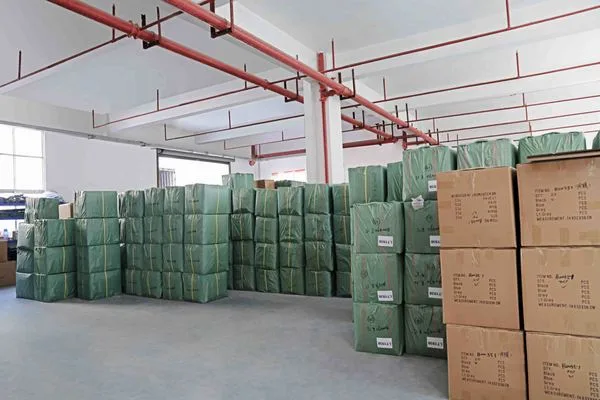
On the sewing floor, the drawstring channel is the slowest station, and it is the one most buyers never ask about. A run of 500 bags sat waiting behind it while the cutting table next door had already finished its stack for the day. The order was small, the spec was ordinary, and the quote that came back to the buyer was nearly three times the per-bag figure a competitor had advertised online.
That gap is not a mystery and it is not padding. It is arithmetic that most quotes never show. A 500-unit order and a 5,000-unit order can carry the same fabric, the same cord, the same print, and still land at very different unit prices, because a large share of what a factory charges has nothing to do with how many bags come out the door. The number of bags changes. The setup does not.
The Quote That Landed on the Wrong Desk
The buyer had done what most buyers do. She collected three quotes for the same drawstring bag, same size, same 80gsm non-woven polypropylene, same one-colour logo on one face. Two quotes came back close to each other. The third was dramatically lower, and it was the one she forwarded to her client.
The low quote had been written for a different quantity. When she asked for 500 units from that same supplier, a small-order surcharge appeared that had not been visible in the advertised figure. The advertised number assumed a run many times larger. Nothing dishonest had happened. The supplier had simply quoted its best-case tier, and the buyer had read it as a normal price.
By the time the mistake surfaced, the client had already anchored on the low number. Every subsequent quote looked expensive by comparison, even the honest ones. The order eventually shipped, but the relationship carried a bruise that had nothing to do with the bag.
Tracing the Gap Back to the Cutting Table
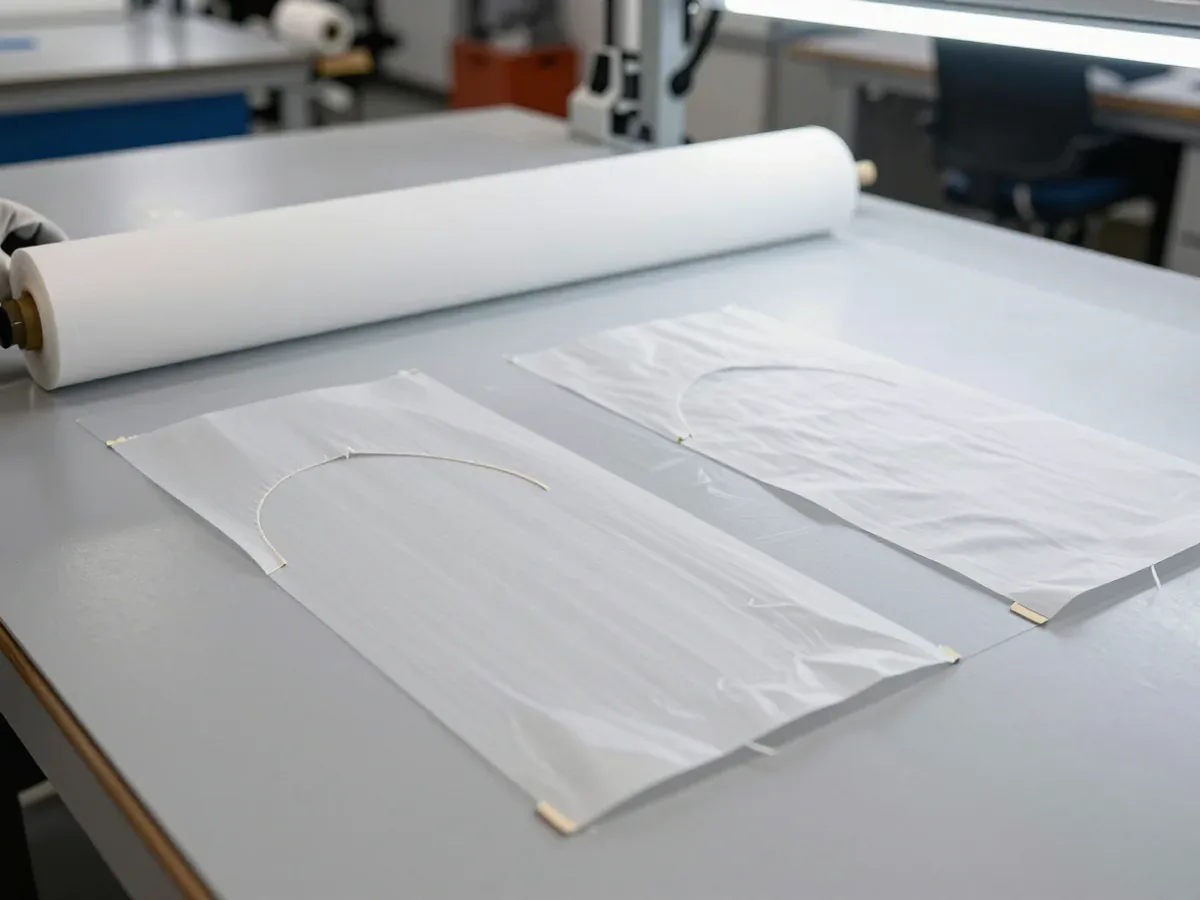
Walk the order backwards and the first place the money disappears is the cutting table. Non-woven polypropylene arrives on a roll, and the die-cutting process inherently produces edge waste. On a small run, the operator cannot justify laying out the most efficient pattern across the full width of the material. The layout gets constrained, and a larger share of every metre ends up as offcut.
Fabric waste is the single largest hidden variable in drawstring bag bulk pricing. It is not a markup added on top. It is geometry. A bag panel that nests well against its neighbour costs less fabric than one that leaves a gap, and nesting improves when the run is long enough to plan the whole roll around it.
The same logic runs through the cord channel. A precision-stitched channel takes the same time to set up whether the run is 500 or 5,000. The operator still threads the braided cord, still checks the tension, still ties off the ends. What changes is how many bags absorb that fixed effort. At 500 units, the channel station is a visible bottleneck. At 5,000, it settles into rhythm and stops being the constraint.
The Setup Fee That Never Shrinks

Screen printing is not digital. Each colour needs a physical screen: mesh stretched over a frame, coated with emulsion, exposed to the artwork, then washed out to form the stencil. That work happens once per colour per order, and it costs the same at 500 units as at 5,000.
A three-colour logo means three screens. The total setup is fixed, so the per-bag share of it depends entirely on the run length. Spread across a small order, that setup becomes a meaningful line in the unit price. Spread across a large one, it nearly vanishes. The buyer sees a lower number and assumes the factory got cheaper. The factory did not get cheaper. The setup simply had more bags to hide behind.
Pantone matching adds a second fixed cost. Basic colour work is often included, but an exact brand match requires the ink to be mixed and proofed, and that fee is charged per colour regardless of quantity. On a short run it lands heavily on each bag. On a long run it becomes a rounding error.
Where the Fabric Goes Before It Becomes a Bag

Material cost is where small orders quietly lose the most ground, and the reason is dye lot management. A custom Pantone colour on a short run still triggers a minimum batch fee at the dye house. The mill dyes a full batch whether the order needs all of it or not, and the unused portion is not free.
Standard mill run colours avoid this entirely. They are already dyed, already in stock, and already priced for the quantity on hand. A buyer who insists on an exact custom shade for a 500-unit giveaway is paying for a dye batch that could have served several times the order.
There is a second layer. A jute drawstring bag holds its shape from the inside face even when empty, and that structure comes from the material and the panel cut, not from extra stitching. Getting that shape right on a short run means the cutting layout has less room to absorb error. A misjudged panel shows up as a bag that slumps, and slumping bags get rejected at inspection.
What the 5,000-Unit Run Does Differently
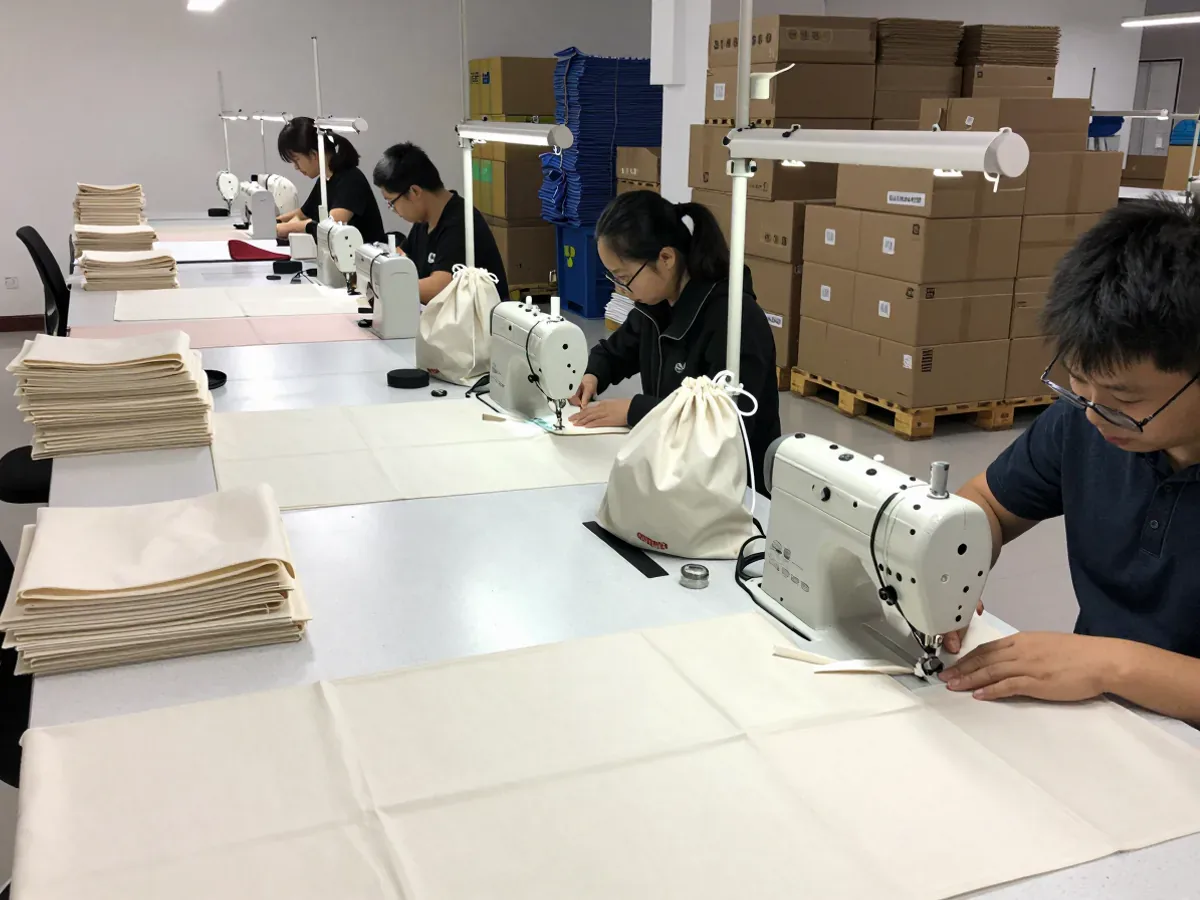
A 5,000-unit run does not use better materials. It uses the same materials with less waste around them. The cutting layout can be planned across the full roll, the screens are amortised across ten times the bags, and the dye batch is fully consumed rather than partly abandoned.
The print method also shifts. Heat transfer handles full-colour artwork at 500 units without a heavy screen bill, which is why short runs with complex logos often go that route. At 5,000 units, screen printing becomes the stronger choice: the ink is forced into the fabric fibres, the finish becomes part of the bag rather than a layer sitting on top, and the setup cost per bag collapses.
Logistics follow the same curve. A 500-unit carton ships as general cargo with no freight leverage. A 5,000-unit order fills a partial pallet and can qualify for consolidated rates, which changes the delivered cost even when the ex-works price looks similar.
The Reorder Trap Nobody Warns You About

Six months after the first delivery, the same buyer comes back for another 500 units and the price is higher than the original order. Nothing about the bag changed. The screens from the first run were discarded after production, so the full setup is charged again.
This is where a storage clause matters. A factory that keeps the screens for a defined period can reuse them on a repeat order, and the setup line drops or disappears. A factory that does not will quote the reorder as if it were a first order, and the buyer absorbs the difference without seeing it itemised.
The fix is contractual, not conversational. Ask for screen storage in writing before the first order ships, and confirm how long the screens will be held. A verbal assurance at quoting time is worth very little six months later.
How to Compare Two Runs on the Same Basis
Two quotes for the same drawstring bag are only comparable when they are built on the same quantity assumption. Before comparing, confirm the tier each number was written for, and ask what surcharge applies below that tier.
Then separate the quote into fixed and variable lines. Setup, screens, Pantone matching, and dye batch fees are fixed. Fabric, cord, stitching time, and packing are variable. A quote that hides the fixed lines inside a single unit price cannot be compared to one that shows them.
Ask which print method the price assumes. Heat transfer and screen printing produce different finishes and carry different setup structures, and a quote that does not name the method is not a quote yet.
Finally, ask what happens on a reorder. The answer tells you whether the first price was a one-time event or a repeatable basis for planning.
FAQ
Is a 500-unit drawstring bag order always more expensive per bag?
Per bag, almost always, because fixed setup costs are divided across fewer units. The total spend is lower, but the unit price carries a heavier share of screens, dye batches, and cutting layout inefficiency.
What is a good size for a bulk drawstring bag?
An 18 by 22 inch bag suits heavy-duty and retail use, with enough capacity for logistics or bulk goods without straining the structure. Smaller formats work for giveaways where the bag is a carrier for other items rather than the main product.
Can I get the same print quality at 500 units as at 5,000?
The finish can be close, but the method often differs. Heat transfer handles full-colour artwork at low volume without a large screen bill. Screen printing at high volume gives a softer hand and a more durable bond, and the setup cost per bag is far lower.