
Drawn from warehouse and production records for palletized woven tote orders.
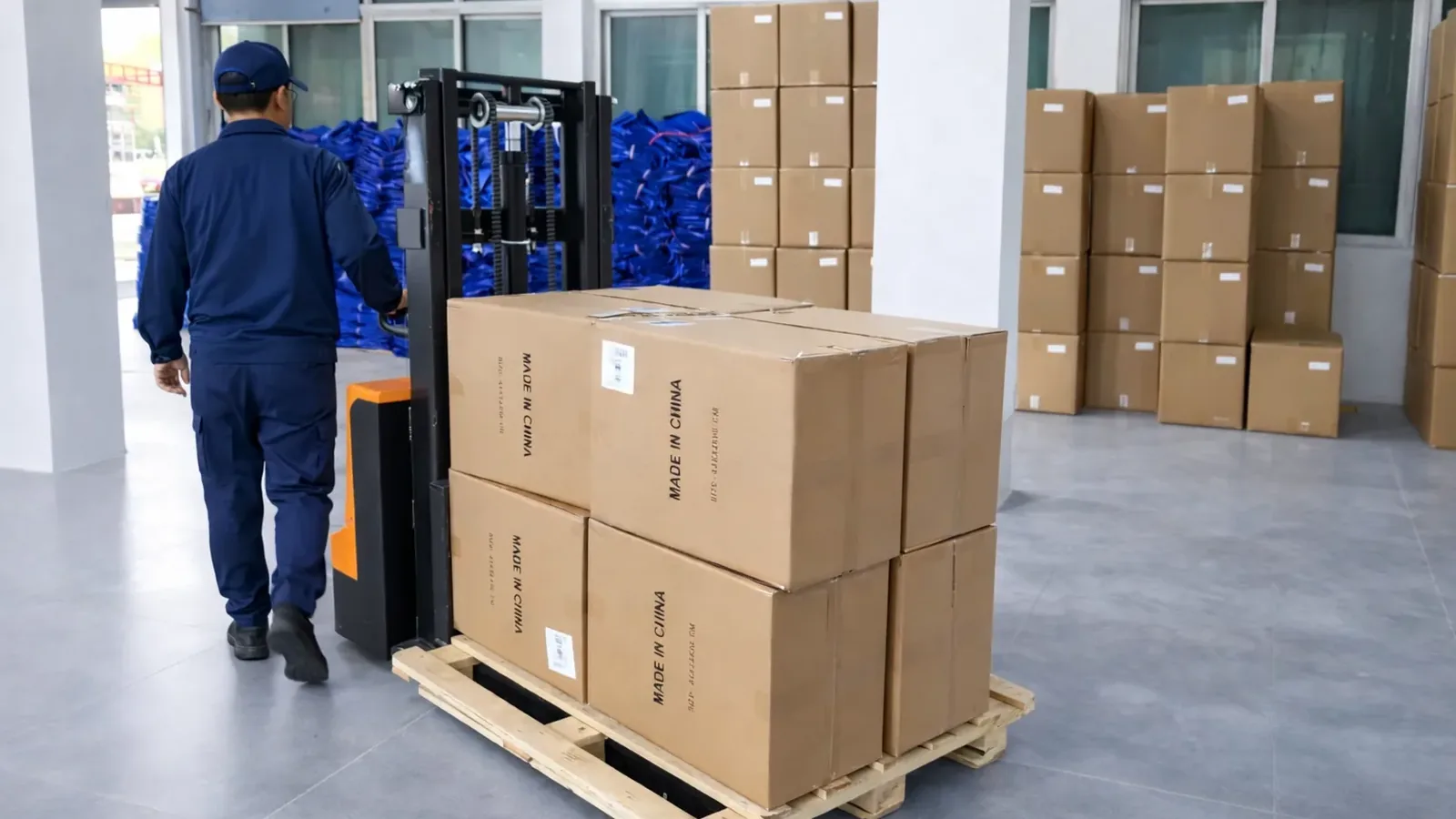
On dispatch day, a warehouse crew pulled a finished pallet toward the container door and the whole stack leaned six inches off vertical before the jack had moved ten feet. The stretch film held, the cartons did not shift, but the buyer watching the load had already started photographing it. That lean was not a shipping accident waiting to happen. It was the visible end of a decision made weeks earlier, when nobody asked how the bags would sit once they left the sewing floor.
The buyer had five questions ready that morning. Each one had a reasonable answer, and each answer pointed back to a step that had already passed. What follows is how those questions play out on a real dock, and the one question that should have come first.
The Question That Started This: Why Did the Pallet Arrive Leaning?

The lean came from the bottom layer. A brick pattern interlocks each layer against the one below, so weight spreads sideways instead of straight down. Column stacking puts every carton directly on the carton beneath it, which looks tidy in a photo and behaves badly on a moving floor. Once the jack lifts and turns, a column stack has nothing holding it square except the film.
The buyer's photo set showed the top layer only. Nobody had asked for a side view, so nobody saw that the corner protectors stopped two layers short of the top. The pallet was stable enough to survive a short forklift ride inside the factory. It was not built for an ocean crossing.
A 48x40 inch GMA pallet is the baseline most warehouses expect, and it is the right place to start the conversation. The size is not the problem. The problem is that pallet configuration gets treated as a packing detail rather than a production decision, so it is settled last, by whoever is free that afternoon.
Can You Build the Pallet Before the Bags Are Finished?
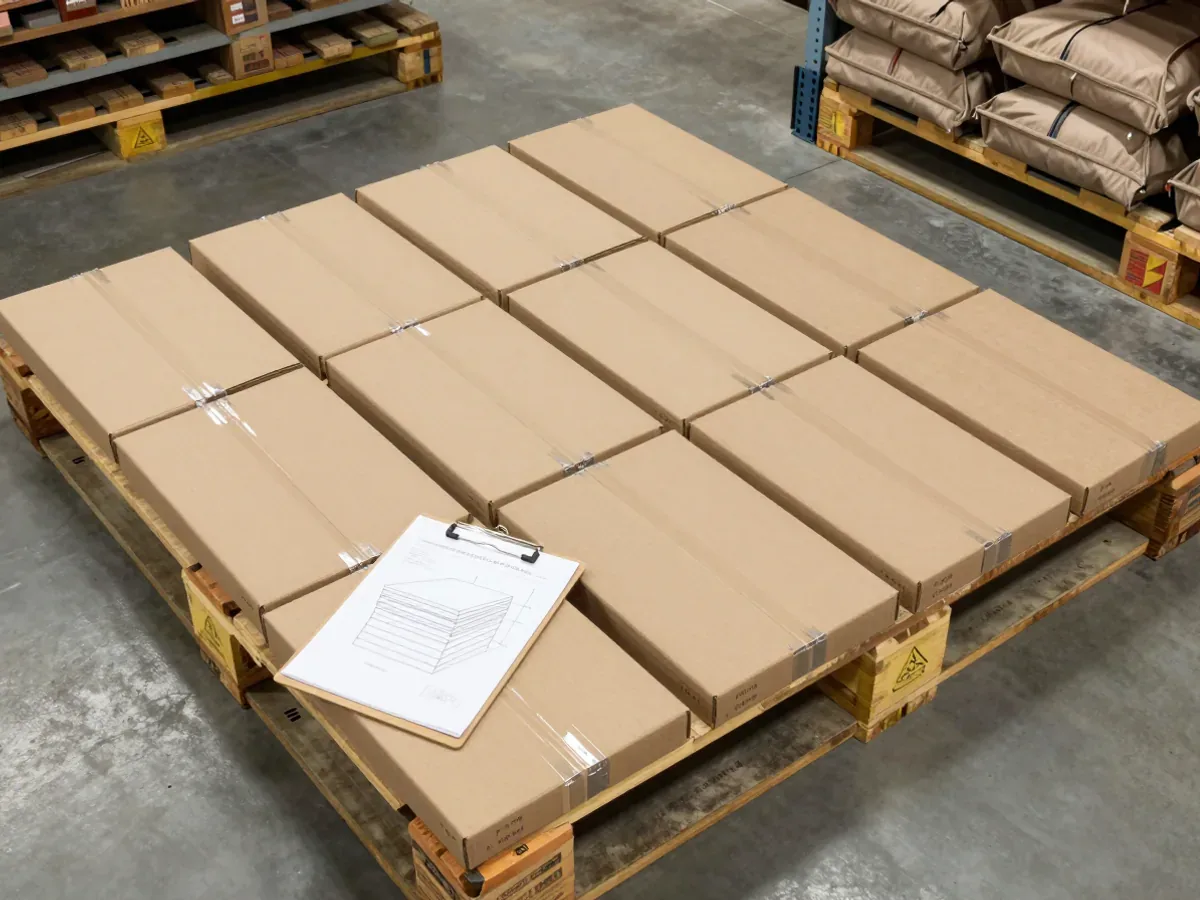
Not literally, but the build should be planned before the last stitch is sewn. Pallet planning is a layout exercise: how many bags per carton, how many cartons per layer, how many layers before the load reaches a safe height. Each of those numbers changes the carton spec, and the carton spec changes the packing station layout.
When the layout is decided after production, the packing crew improvises. Cartons get turned to fit, layers end up uneven, and the film does extra work that the pattern should be doing. A buyer who sends a one page pallet plan with the purchase order avoids most of this. The plan does not need to be elaborate. It needs a layer diagram, a carton count, and a note on which face carries the label.
The build also has a clock. Bags come off the line in batches, and the pallet fills over several days. If the first layers sit unwrapped while the rest are finished, they settle and compress. By the time the film goes on, the bottom is tighter than the top and the stack has a built in lean. Wrapping each completed layer, or at least keeping the partial pallet banded, keeps the geometry honest.
What Does a Buyer Actually Check at the Dock?
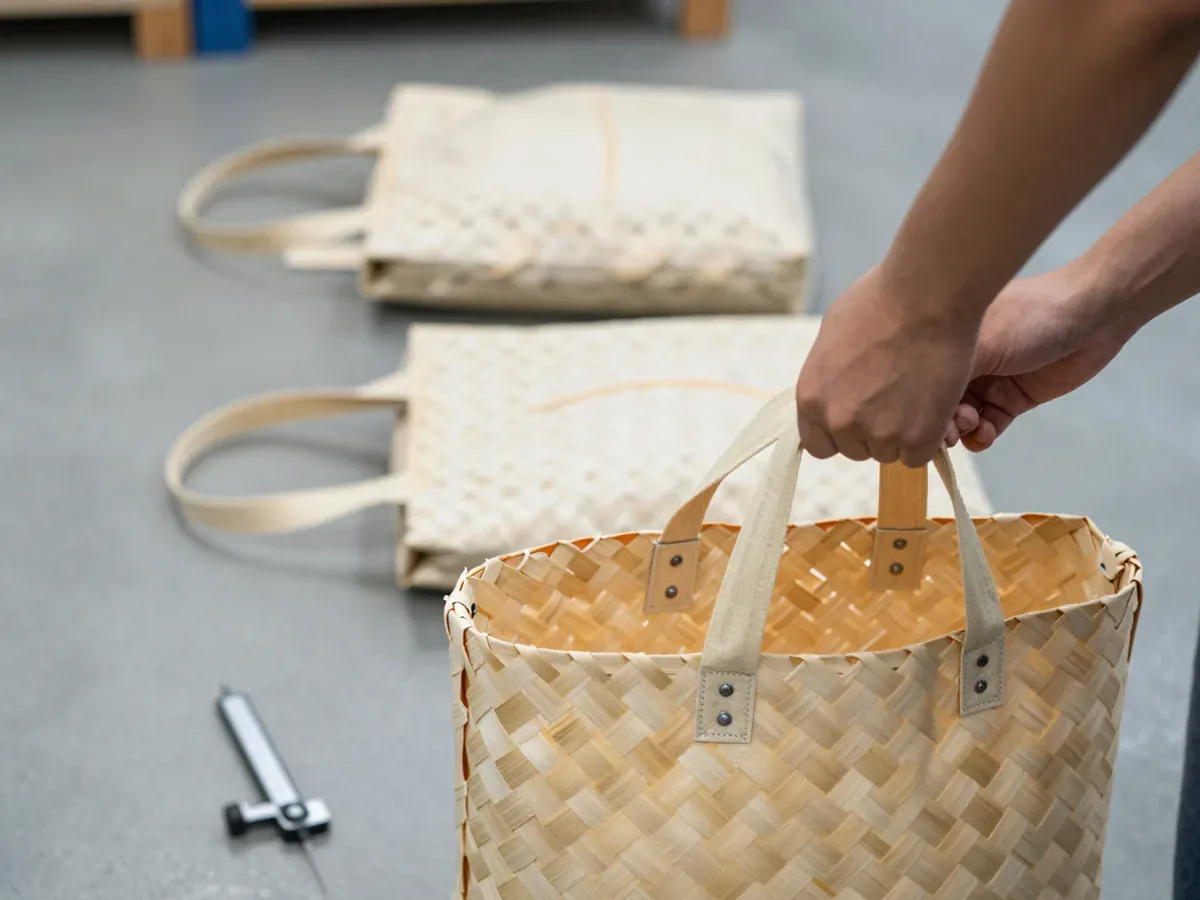
The dock check is short and physical. Three bags come off the pallet, pulled from the top, the middle, and the bottom layer, because compression shows up first at the base. Each bag gets a handle pull with a known weight held for about thirty seconds. A stitch that lets go under that load will let go in a customer's hands.
Then the pallet itself gets a look. The film should cover the full vertical face and wrap over the top, not just spiral around the middle. Corner protectors should reach the top layer. The label on the short side should be readable without moving the pallet, because that label is what gets the load through receiving without a phone call.
Stitch density belongs in this check too. Four stitches per inch at stress points is a working minimum, and a photo of the seam gauge against the bag settles it faster than a description. Bartack reinforcement where the handle meets the bag body matters more than the fabric weight for most warehouse use. A woven bag with a continuous stitch at the handle junction will fail long before the weave does.
Where Do Pallet Builds Usually Go Wrong?

Most failures start at the corner. Corner protectors are cheap and easy to skip when the packing crew is behind schedule, and their absence is invisible from above. A pallet without them takes crush damage at the edges, and the bags underneath the damage are the ones nobody inspects.
The second common failure is film gauge. A single layer of machine grade film looks adequate and is not. Two layers, one around the vertical faces and one over the top, is the working standard for a load that will be handled more than once. The difference shows up as a loose pallet at the destination port, not at the factory gate.
The third is labeling. A weatherproof label on the short side carrying the purchase order number, carton count, and SKU is what receiving needs. Labels on the long side get hidden when pallets are parked side by side, which is exactly how they are parked in most warehouses.
None of these are exotic. They are the details that get dropped when palletization is treated as a favor rather than a specification.
How Do You Read a Pallet Photo Set Before the Container Seals?

A useful photo set has four frames. One shows the full pallet from the side, floor to top, so the lean or lack of it is visible. One shows a single layer from above, which reveals the interlock pattern. One is a close up of a corner protector at the top layer. One shows the label on the short side, legible.
Ask for the set before the container doors close, not after. Once the pallet is inside and the doors are sealed, the only remaining inspection happens at the destination, and by then the fix is a claim. A photo set taken at the factory floor costs nothing and catches the leaning stack while it can still be rebuilt.
The photos also serve a second purpose. They become the reference for the next order. A buyer who keeps the set from a good shipment has a template to compare against, and the comparison is faster than reading a spec sheet.
What Is the One Question Buyers Forget to Ask?
The forgotten question is not about film or corners or stitch count. It is this: who owns the pallet build, and when does that person sign off? In many orders, palletization falls between production and shipping, owned by neither the line supervisor nor the logistics coordinator. Nobody signs, so nobody checks.
A buyer who names that owner in the purchase order, and asks for the photo set as that person's sign off, closes the gap. The question sounds administrative. It is the one that decides whether the pallet arrives warehouse ready or becomes a claim event, because a named owner is the difference between a plan and a hope.
FAQ
What is the minimum order for palletized tote bags?
It depends on whether the bags are stock or custom. Stock colors can start lower, while custom printing and material setup usually push the minimum higher. Ask for the minimum on your exact specification rather than the number on the website, since the two are rarely the same.
Which material holds up best for warehouse tote bags?
Woven polypropylene is the common choice for repeated warehouse loads because the weave resists tearing and holds its shape when stacked. Laminated woven PP adds water resistance for damp or cold chain environments. Non woven options look cheaper on the invoice and tend to be replaced sooner.
How do I keep a pallet from crushing bags in the container?
Specify an interlocked brick pattern rather than a column stack, require corner protectors that reach the top layer, and ask for two layers of stretch film covering the vertical faces and the top. Confirm all three in the photo set before the container seals.






