
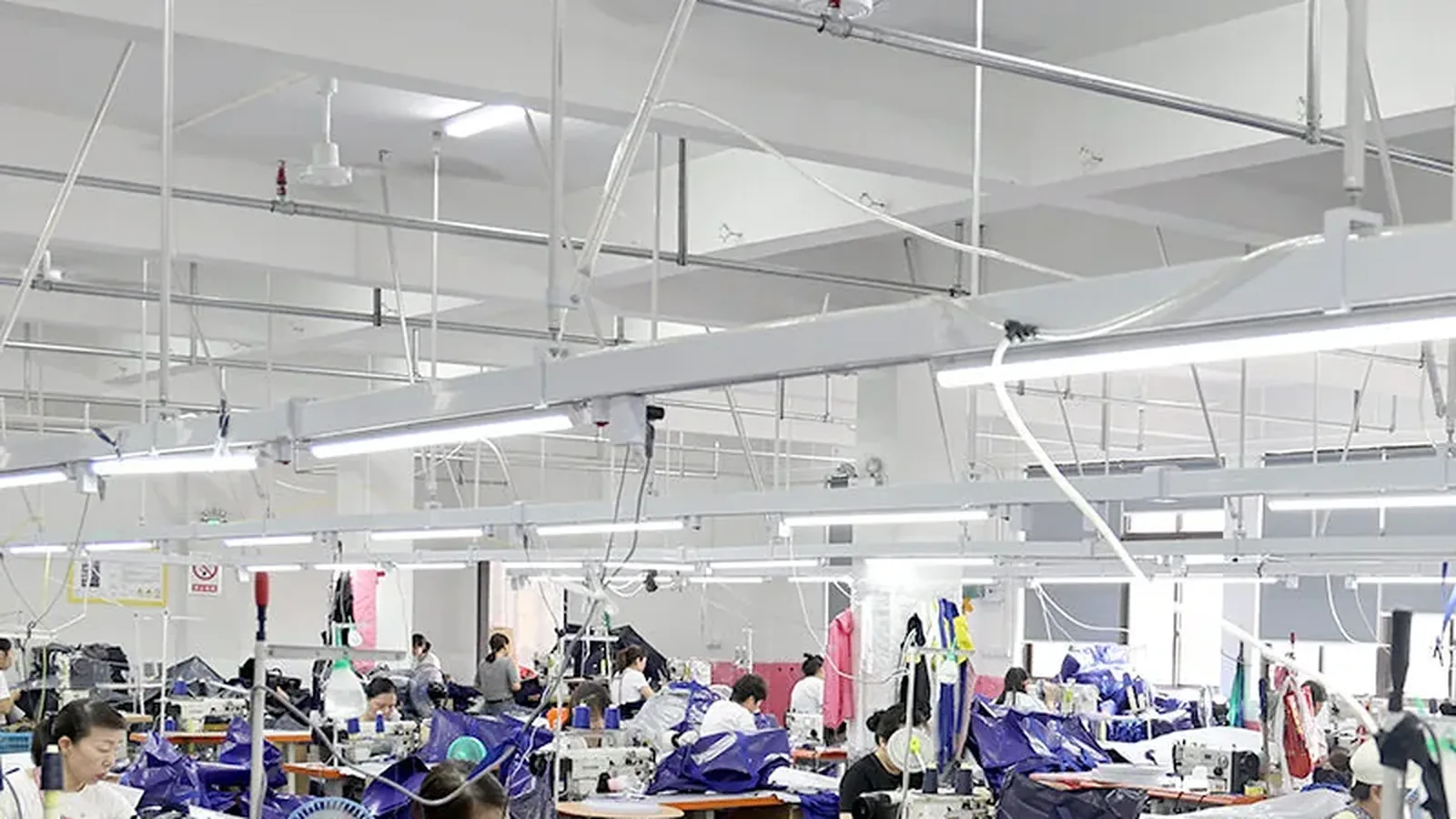
A station by station walk through one woven polypropylene moving bag order, using the burst strength figures and test methods recorded for this product line.
The sample came back with a note clipped to the handle: the buyer had filled it with books, lifted it by the webbing, and watched the base seam start to grin. Her comment was short. She wanted to know where, in a normal production run, anyone would have caught that before the container left.
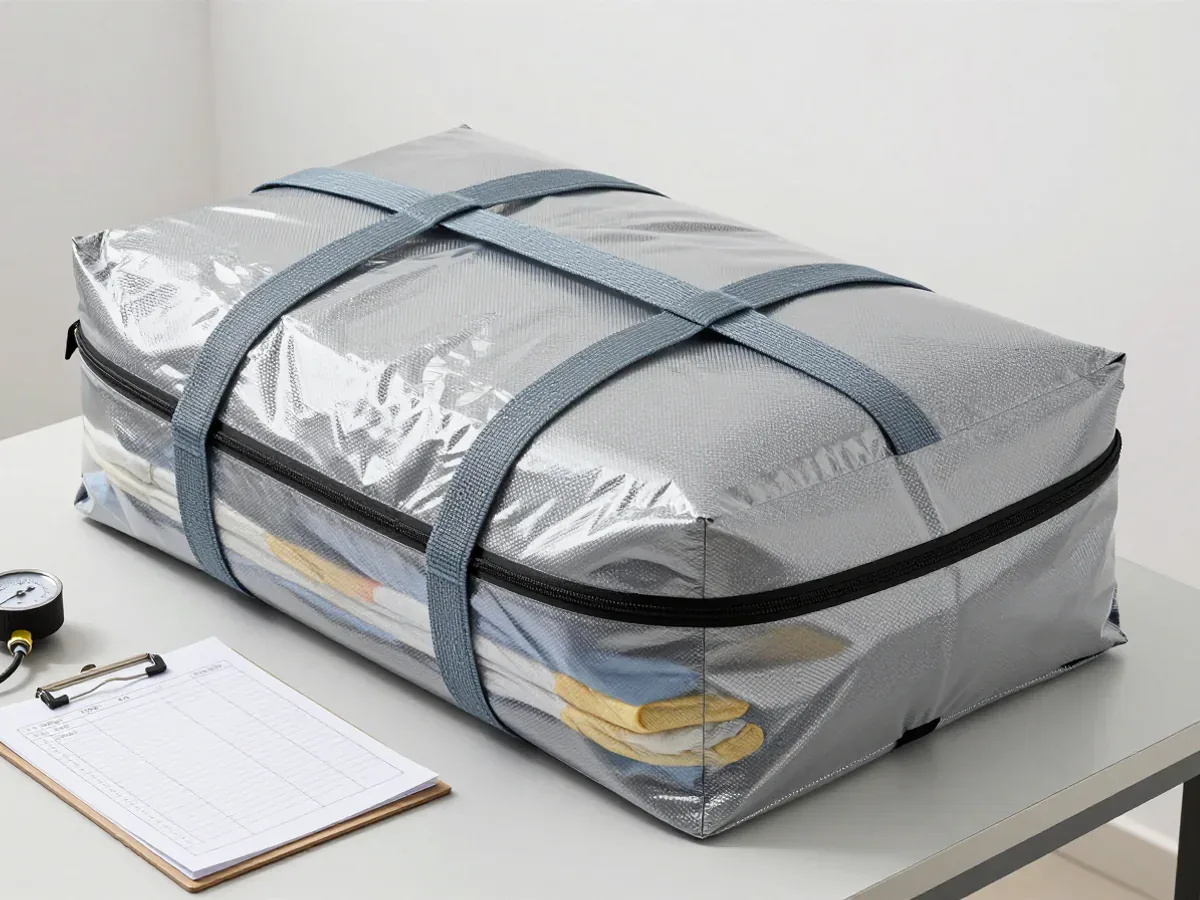
The order that followed was a heavy duty moving bag in woven polypropylene, 180 g shell, webbing running the full length of the bag rather than stopping at the handles. Six stations stood between the purchase order and the sealed carton. At each one, the burst strength number had a place to appear, and a question worth asking.
The PO Line That Starts the Paper Trail

The purchase order for this run carried a fabric specification and a test method on the same page. That pairing matters more than the price line above it. A burst strength figure without a method attached is a number floating free of its own meaning.
ASTM D3786 measures the maximum pressure a fabric withstands before it ruptures, reported in PSI. The test clamps a fabric sample over a rubber diaphragm and applies hydraulic pressure until the material gives way. What it records is the peak, not an average, and the peak is what tells a buyer whether a woven polypropylene bag will hold a stacked load or split at a weak point.
The order paperwork should name the standard, the PSI threshold, and the fabric roll or batch the report will come from. A certificate from a run six months earlier describes a different roll of fabric. It says nothing about the material cut for this order.
Before the first metre is cut, the buyer has one decision to make: does the PO require batch specific burst data, or does it accept whatever certificate the supplier keeps in a folder? The answer shapes every station that follows.
At Fabric Intake, the Roll Number Comes First
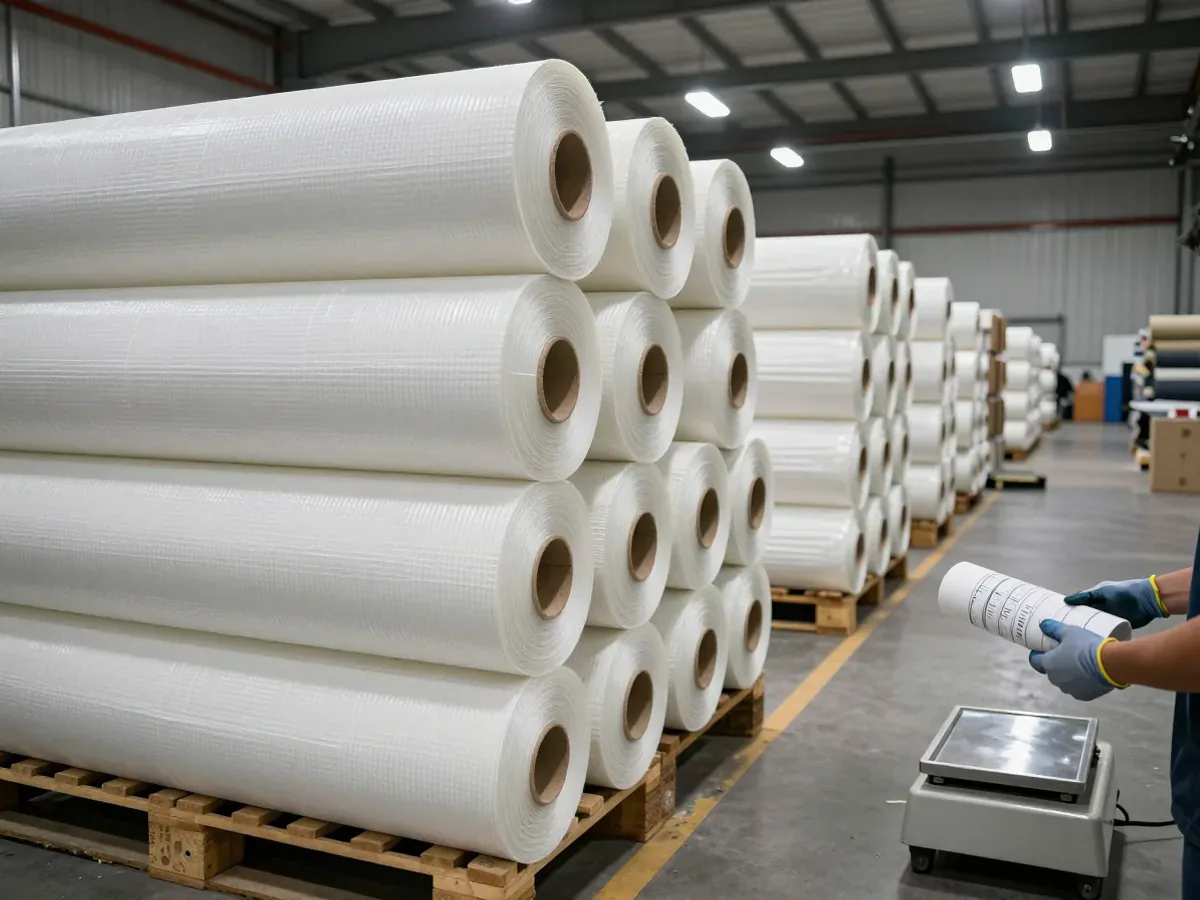
The rolls arrive wrapped and labelled, and the intake station is where the paper trail either holds or breaks. A roll number written on the receiving sheet should match the roll number on the test report. When those two numbers disagree, the PSI figure belongs to someone else's order.
Fabric weight is the first cross check. A 210 GSM woven polypropylene should clear 300 PSI without strain. If a roll measures lighter than the specification, the weave density is the likely reason, and burst strength will follow it down. The intake team can weigh a swatch and compare it to the PO before the roll ever reaches the cutting table.
This is also where the test method gets confirmed. ASTM D3786 uses hydraulic pressure through a diaphragm. ISO 13938-1 is functionally similar with a different clamp size, and results for heavy woven polypropylene land close enough to compare. ISO 13938-2 runs on compressed air instead, which is faster but less accurate on woven fabric because air compresses and produces a shock effect that can understate the true burst point.
A pneumatic report on a woven moving bag is a report about a different test. The intake sheet should say which method produced the number, not just the number.
Cutting and Weave: Where Weak Intersections Hide
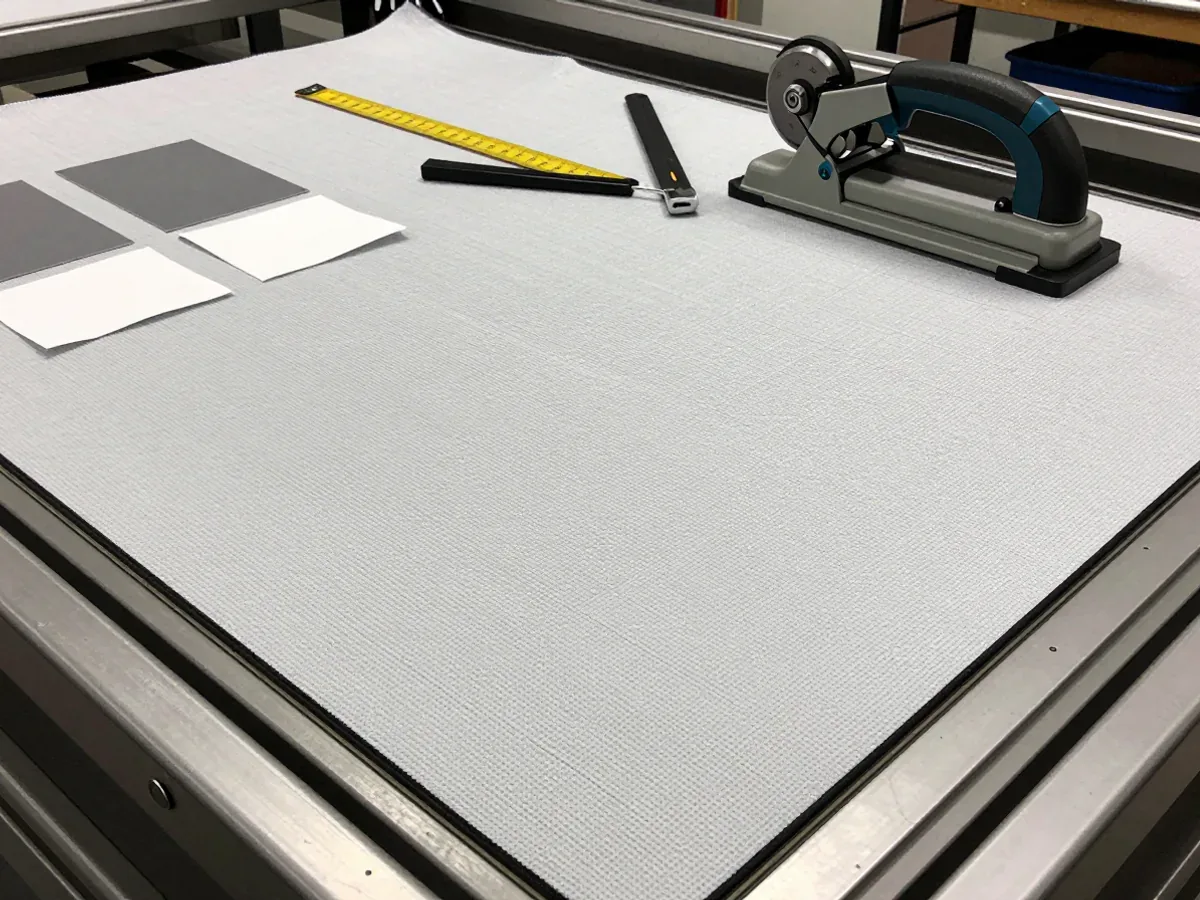
The cutting table looks like the least technical station in the building. It is also where the fabric's internal structure gets exposed to the most handling, and where weak weave intersections begin to matter.
Burst strength testing exists partly because tensile testing cannot see these points. A tensile test pulls a strip lengthwise until it snaps. It measures force along one axis and ignores what happens between the warp and weft threads at the crossing points. A bag can post an excellent tensile figure and still rupture at a thin intersection when pressure pushes evenly across the whole panel.
The cutter's job in this chain is traceability. Offcuts from each roll should stay labelled so that if a burst test later fails, the fabric can be traced back to a specific roll and a specific supplier delivery. Without that link, a failed result becomes a general complaint rather than a fixable defect.
Watch how the panels are stacked after cutting. Mixed rolls in one stack erase the traceability the intake station just built. The burst number on the final report has to belong to the fabric in the bag, and the cutting floor is where that connection is easiest to lose.
The Sewing Floor and the Seam That Burst Testing Finds
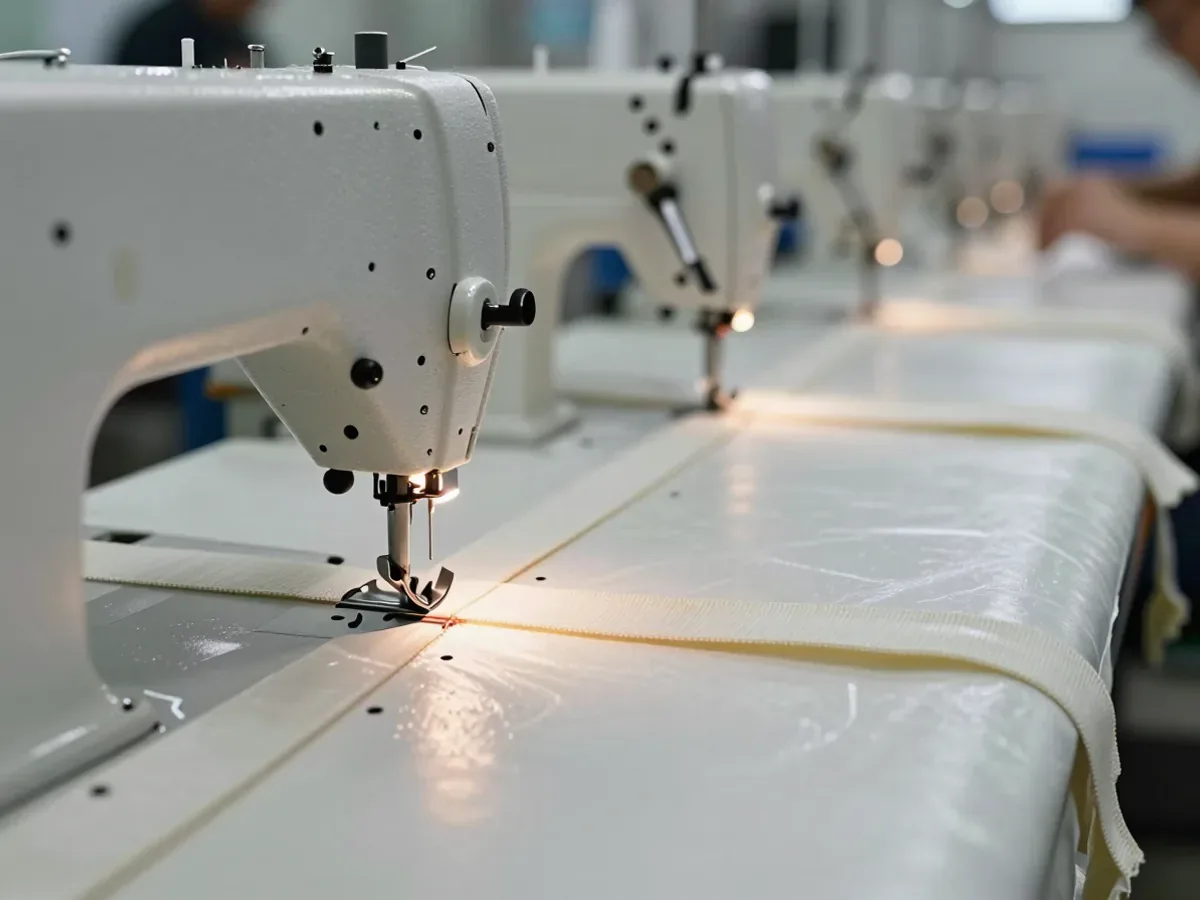
At the industrial machines, the bag takes its shape, and the seam becomes the part of the product most likely to fail under distributed load. A woven polypropylene bag with strong fabric and a misaligned seam will still burst, and it will burst at the seam.
The webbing on this bag runs the full length rather than stopping at the handle roots. That construction spreads lifting force down the body of the bag instead of concentrating it at two attachment points. It is a design choice that reduces the load on any single stitch line, and it is worth confirming on the floor rather than assuming from the drawing.
Seam misalignment is one of the defects burst strength testing is built to expose. Hydraulic pressure pushes uniformly across the panel, so a seam that sits off the fold line or carries uneven stitch density shows up as the first point of rupture. A tensile test on a strip cut from the middle of the panel would never touch that seam.
The station check here is simple. Inspect the seam alignment on the first bags off each machine and record which operator and which machine produced them. If a burst test later fails at a seam, that record turns a vague quality complaint into a specific machine to inspect.
Final Inspection: Reading the PSI Against the Load
By final inspection, the bags are finished and the question changes from how they were made to what the number means for the load they will carry. This is where the PSI figure meets the actual use case.
For light residential moving, 250 PSI is the common floor. For commercial logistics and dense item transport, 300 PSI and above is the working threshold, and heavy duty woven polypropylene moving bags typically need a minimum of 300 PSI (2068 kPa). The 180 g shell on this order is built to carry a full bedding load without the base sagging, and the burst rating should be read against that kind of load rather than against an abstract maximum.
The inspection team checks bags under durability testing on the factory floor, and the burst report should be read alongside those results rather than in isolation. A bag that passes the pressure test but shows seam stress in handling has told you something the PSI number did not.
Two readings matter at this station. First, does the report name the batch that produced these bags? Second, does the PSI figure sit above the threshold for the intended load, with margin? A report that clears 300 PSI by a wide margin on a commercial order is comfortable. One that scrapes the line is a question for the fabric supplier.
Before the Container Doors Close
The last station is the loading bay, and it is the point where all the earlier paperwork either travels with the goods or stays behind in an office. A burst test report that never reaches the shipping file is a report the buyer cannot use in a claim.
The cartons should carry the batch reference that matches the test report. If the report covers roll 4471 and the cartons say nothing, the link between the tested fabric and the shipped bags is broken at the final step. Labels on the polybag and the carton should agree on size and batch, because a mismatch caught here is cheap and a mismatch caught at the destination is not.
One more check belongs at this station. The report should state the test method, the PSI result, and the fabric weight together. A 300 PSI result on a 210 GSM woven polypropylene is coherent. A 300 PSI result on a fabric that weighed in light at intake is a number that needs explaining before the doors close.
The buyer's original note, clipped to a sample handle, asked a fair question. The answer runs through six stations, and at each one a burst strength figure has a specific place to be checked, matched, and carried forward. When the container leaves, the report should be able to follow the bags all the way to the destination.
FAQ
Does a passing tensile test tell me anything about burst strength?
It tells you the fabric resists a lengthwise pull. It says nothing about seam integrity or how the weave behaves under pressure applied evenly across a panel. A bag can pass tensile testing and still burst at a seam under a full load.
Should the burst test report match the fabric roll used for my order?
Yes. A certificate from an earlier run describes different fabric. The report should name the roll or batch that produced your bags so the PSI figure applies to the material you are actually shipping.
What burst strength should a heavy duty woven polypropylene moving bag reach?
Heavy duty moving bags typically require a minimum of 300 PSI (2068 kPa) for woven polypropylene. Light residential use is often specified at 250 PSI, while commercial logistics and dense loads sit at 300 PSI and above.
Is a pneumatic burst test acceptable for woven fabric?
Hydraulic testing under ASTM D3786 is the reliable method for woven polypropylene. Pneumatic testing compresses air and can produce a shock effect that understates the true burst point, so a pneumatic result on woven fabric is a weaker basis for a shipping decision.






