Based on the original canvas bag article and the product spec notes covering canvas weight, handle style, size, branding methods and the four order checks.
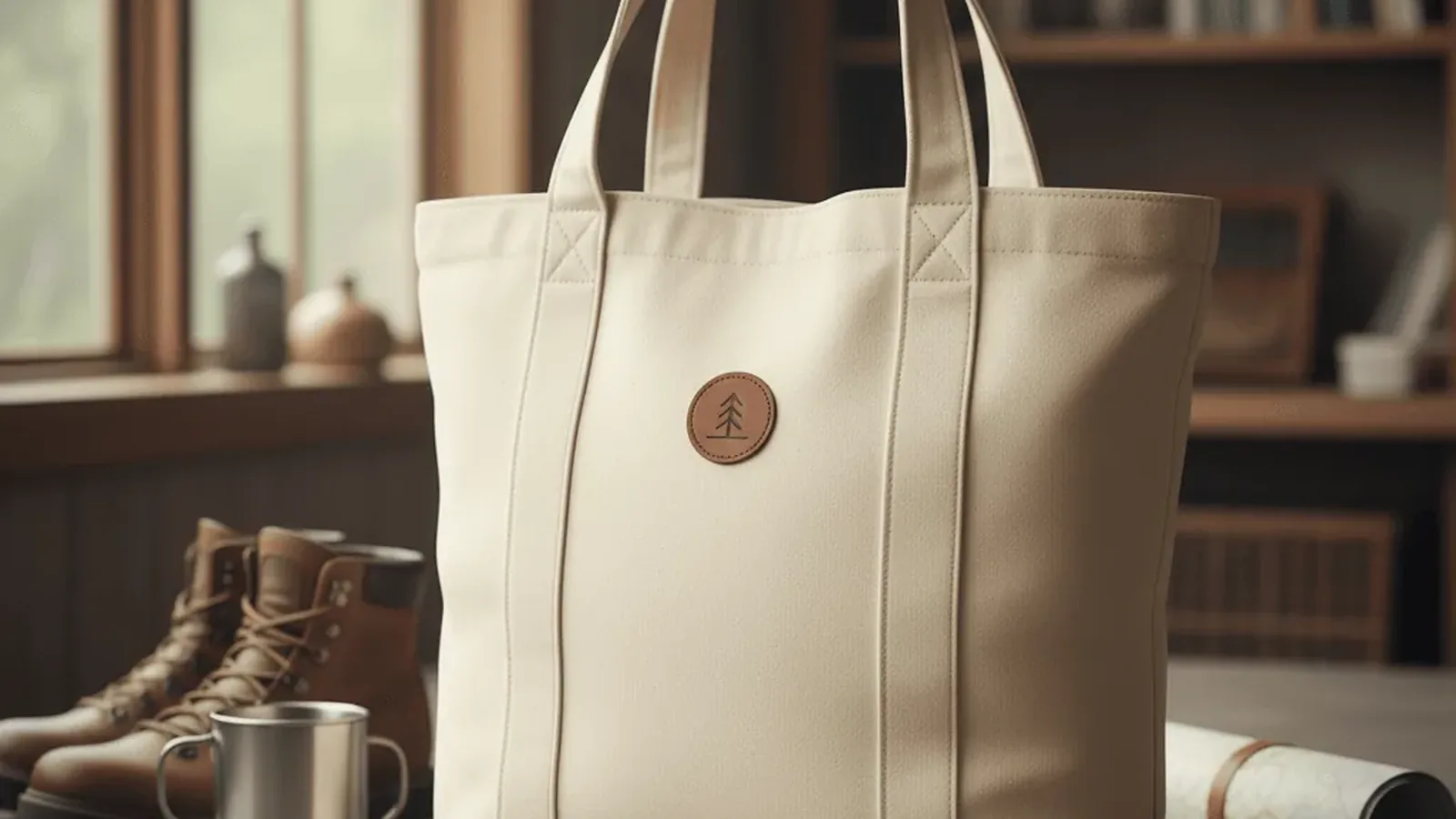
Two sample bags sat on the meeting table, both natural in colour, both with the same handle drop. One was standard cotton canvas, the other a recycled blend, and the buyer had already written the same question in the margin of her spec sheet twice: which one do we actually order? The two bags looked nearly identical under the conference room light. The difference only showed up when the conversation moved from appearance to weight, print, paperwork and price.
That question comes up in almost every sustainable canvas bag project, and it rarely gets a clean answer because the two builds solve different problems. A standard cotton canvas bag is a known material with a known behaviour. A recycled blend carries a story that can open doors with some buyers and raise questions with others. Neither is automatically the greener or the better choice. The right pick depends on what the bag has to do, who receives it, and how much paperwork the buyer can support.
Two sample bags on the table, two different bets

The standard cotton canvas bag is the safer bet on performance. Heavy-duty woven cotton resists tearing, holds more weight than plastic or paper, and takes daily wear without falling apart. Buyers who have been burned by bags that split at the seam tend to come back to cotton because the failure modes are familiar and the fixes are known.
The recycled blend is a different kind of bet. It puts recycled cotton and rPET blends into the body, which aligns with the green trends reshaping consumer habits and brand policies. The material story is stronger, and for some audiences that story is the product. The trade-off is that the buyer now has to explain what the recycled content is, where it came from, and why the bag behaves the way it does.
Both builds can be specified the same way at the order stage: canvas weight, handle style, size, natural or dyed body, with the print proofed and a sample made to the same spec as bulk. The specification discipline does not change. What changes is which questions the buyer will face after delivery.
How the cloth holds up after a season of use

A canvas bag earns its keep in the second year, not the first week. Standard cotton canvas is a tightly woven fabric that resists tearing and carries a weekly shop without stretching out of shape. Handles stitched to the body rather than tacked on, plus a reinforced base where a bottle sits, do more for real durability than the fibre label does.
Recycled blends behave differently because the fibre length varies more. A blend with recycled cotton can feel slightly softer or slightly more irregular in the hand, and that irregularity is part of its character rather than a defect. The practical question is whether the bag still holds its shape after repeated loading. That is a sampling question, not a datasheet question.
For both builds, the durability conversation should end at the sample stage. Load the sample the way the end user will load it, hang it by one handle, and check the seam and the base. A bag that passes that test in the sample room will usually survive the season. A bag that only looks right on a table will not.
What each surface does to a printed logo

Print behaviour separates the two builds more than most buyers expect. Standard cotton canvas has a stable, even surface, so a screen print lands with consistent coverage and a heat transfer bonds predictably. A woven label sits cleanly on the face and reads as a premium detail on a promotional bag.
Recycled blends can print well, but the surface is less uniform. A screen print may show slight variation across the run, and a heat transfer needs a tighter temperature window to bond evenly. None of this rules the blend out. It means the print proof matters more, and the buyer should approve the proof on the actual blend rather than on a cotton reference.
Branding options stay the same across both builds: screen print, heat transfer or woven label. The choice should follow the artwork. Fine line work and small type favour a woven label or a carefully proofed screen print. Large solid areas favour screen print on either surface. A clear label pocket on the face can also carry a card that says what is inside, which suits gift and retail bags on both materials.
Where the quote separates and where it hides

At bulk volume, standard cotton canvas usually quotes lower per unit because the material supply is broad and the production route is well worn. Recycled blends can quote higher, and the gap widens when the recycled content claim needs supporting documentation. The unit price is only the visible line.
The hidden cost sits in the sample and approval loop. A recycled blend may need an extra sample round to settle the hand feel and the print proof, and that round costs calendar time. Standard cotton canvas shortens that loop because the buyer already knows what to expect. For a launch with a fixed date, the shorter loop has real value.
Durability changes the lifetime math too. A bag that lasts several years means fewer replacements and better customer satisfaction, and that applies to both builds when the construction is right. The cheaper bag on the table is not always the cheaper order once reprints, resamples and replacement volumes are counted.
Paperwork, claims and the recycled story
The recycled story is where the two builds diverge most sharply. A standard cotton canvas bag makes a simple claim: reusable, durable, and a direct reduction in single-use plastic consumption. That claim is easy to defend and easy for a marketing team to repeat.
A recycled blend invites a more specific claim, and specific claims need evidence. The buyer has to know what percentage is recycled, which input stream it came from, and whether the supplier can document it. Without that paperwork, the green story becomes a liability the moment a customer or a regulator asks a follow-up question.
Compliance also touches the print. Water-based inks and recycled content are shaping the future of eco-conscious canvas bags, and both are worth asking about. The point is not to demand every green feature at once. It is to make sure every claim on the bag can be backed by a document in the buyer's file.
Which buyer should walk away with which bag

The standard cotton canvas bag suits buyers who need a reliable promotional or retail bag with a predictable print result and a short approval loop. Corporate gifting programmes, supermarket totes and event giveaways fit here, because the bag has to look right, carry weight and arrive on schedule. The sustainability claim is honest without being complicated.
The recycled blend suits buyers whose audience actively asks about recycled content. Brands with a published sustainability report, retailers with a green positioning, and companies whose customers read the label all gain from the stronger material story. These buyers should be ready to hold the supporting documents and to brief their own teams on what the blend contains.
A third group sits in between: buyers who want the recycled story but cannot support the paperwork yet. For them, the practical route is to start with standard cotton canvas, build the claim discipline internally, and move to a blend on the next cycle. The bag is not the bottleneck. The evidence trail is.
A short table to settle the choice
| Decision point | Standard cotton canvas | Recycled blend |
|---|---|---|
| Durability | Tight weave, resists tearing, holds weight | Varies with fibre length, test the sample under load |
| Print result | Even surface, predictable screen print and heat transfer | Less uniform, proof on the actual blend |
| Unit cost at volume | Usually lower | Usually higher, wider gap with documentation |
| Approval loop | Shorter, familiar material | Longer, may need an extra sample round |
| Sustainability claim | Simple and easy to defend | Specific, needs supporting evidence |
| Best fit | Promotional, retail, corporate gifting | Brands with a published green position |
The table settles the easy cases. The harder cases are the ones where the marketing team wants the recycled story and the operations team wants the shorter lead time. In those cases, the decision usually follows the launch date, not the material preference.
What to put in the spec before either bag is ordered
Whichever build the buyer chooses, the spec sheet should carry the same core lines. State the canvas weight, the size, and the handle style, choosing from woven, webbing or rope. State whether the body is natural or dyed, and confirm that the print will be proofed before the run and a sample made to the same spec as bulk.
For a recycled blend, add a line for the recycled content and the documentation the supplier will provide. For standard cotton, add a line for the care instructions so the end user knows how to wash and store the bag. Both builds benefit from a note on handle stitching and base reinforcement, because those two details decide how the bag feels after a season.
The final line belongs to quality control. Every order should pass four checks: incoming material, seams and zip, finished bag, and final count. Those checks apply equally to cotton and to recycled blends, and they are what turns a material choice into a bag the buyer can stand behind.
FAQ
Is recycled canvas as strong as standard cotton canvas?
It can be close, but the fibre length varies more in a recycled blend. Test the sample under real load rather than relying on the material name.
Can both builds take a screen print and a woven label?
Yes. Both accept screen print, heat transfer and woven label. The recycled surface needs the proof approved on the actual blend.
Which build is cheaper at bulk volume?
Standard cotton canvas usually quotes lower per unit. The recycled blend can close the gap, but documentation and extra sampling add cost.
Do recycled blends need different care instructions?
They can. Confirm the wash and storage guidance with the supplier and print it on the bag or the label so the end user knows.