

Drawn from a moving bag order that moved from a three tier supply chain to factory direct shipping, with the load plan rebuilt line by line.
At the packing station, a stack of moving bags sat compressed into bales while the buyer's purchase order lay open on the table. One line read "18,000 units per 40HQ," a number copied from a supplier email two seasons earlier. Nobody on the buying side had checked whether the bag on the table could fit more.
That single line, and five others like it, decided what the buyer actually paid per bag once the container reached Los Angeles. The order was for heavy-duty moving bags bought through a three-tier system: a US distributor, a domestic wholesaler, and a Chinese factory behind both. Each tier added a fee the spec sheet never mentioned. The review that followed did not start with a new supplier. It started with the order lines themselves.
The order line that started the whole review

The line read "standard heavy-duty moving bag, pre-formed, 50 kg capacity." It told the factory what to sew and told the buyer almost nothing about cost. Pre-formed bags occupied roughly 0.042 cubic meters each once stacked in a carton, which capped a 40HQ at about 18,000 units. The buyer had been comparing unit prices for two years without ever comparing that number.
When the same bag was redesigned into a flat-pack configuration, it collapsed to under 0.018 cubic meters per unit. Same material, same opened dimensions, same 50 kg load capacity. The container then held 22,400 units, a 24 percent gain that had nothing to do with the factory's price list.
A spec sheet that names the shape but not the packed volume leaves the buyer blind to the largest lever in the order. The fix is a line that states cubic meters per unit packed, not per unit opened.
Cubic meters per unit: the number that caps your container
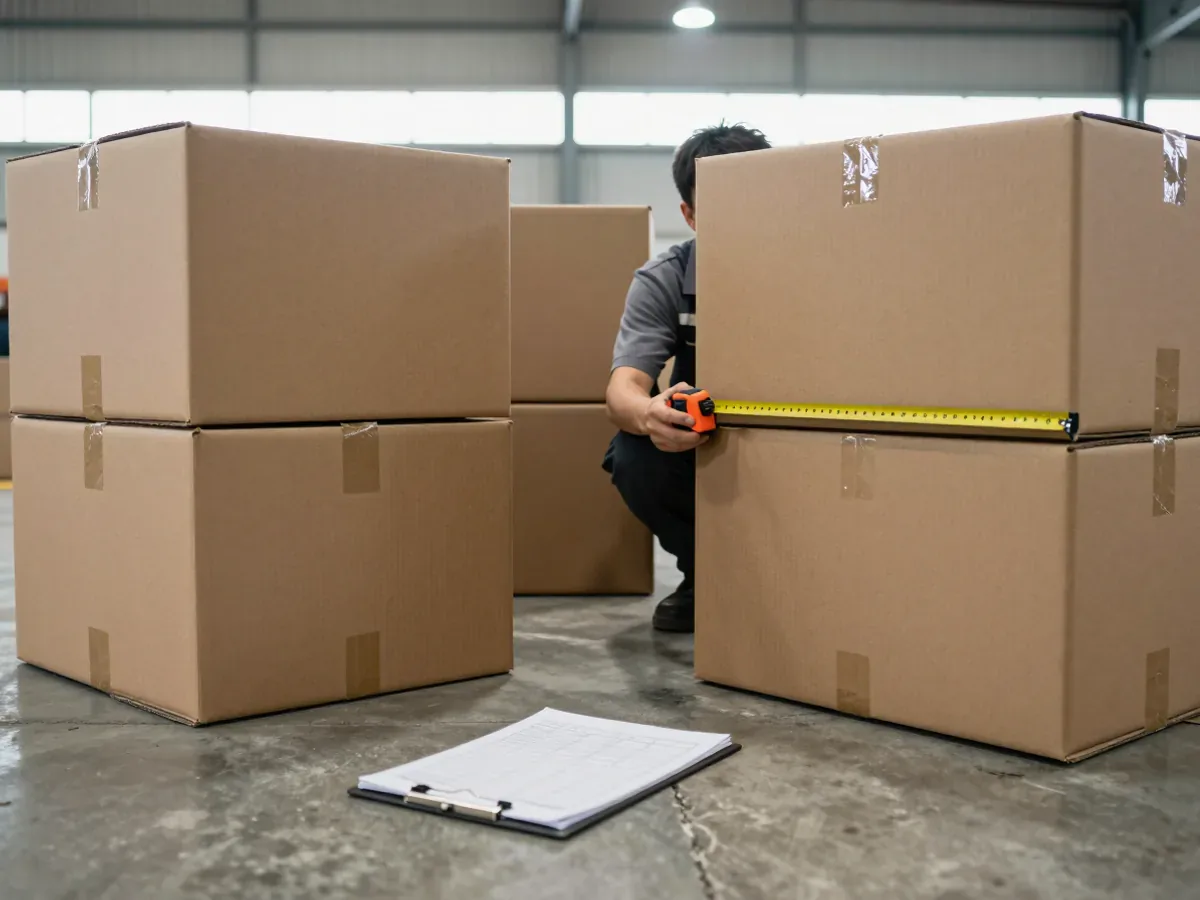
Most purchase orders describe the bag and stop. They list material weight, dimensions, handle type, and print, then leave the carton to the factory's discretion. That is where the container math quietly goes wrong. A bag that measures 60 by 40 by 11.8 in when open can pack to a fraction of that volume, or to nearly all of it, depending on how the panels fold.
The line to write is packed volume per unit, in cubic meters, measured from an actual packed carton rather than calculated from open dimensions. Ask for the carton's length, width, and height with the bags inside, then divide by the unit count in that carton. A factory that cannot supply this number has not packed the bag for export before.
Verification is simple and physical. Request one packed carton from the production run, measure it on the floor, and multiply out to a full container. If the result falls short of the quoted load plan, the quote was built on a bag nobody packed.
Incoterm and who owns each fee after FOB

The buyer's old FOB Shanghai quote looked clean. The bag price covered the factory gate and the loading, and everything after that arrived as separate invoices. Origin drayage came in at $320, customs brokerage at $95, destination port handling at $210, and last mile coordination at $180. None of these appeared on the spec sheet, and all of them landed on the buyer.
A DDP line changes the arithmetic because the factory owns those fees and prices them into one number. On the same lane, the FOB landed cost worked out to $4.62 per unit once the four hidden fees were added. The DDP landed cost came to $4.31 per unit, a reduction of $0.31, or 6.7 percent, before anyone negotiated the bag price.
The spec sheet line should name the Incoterm and list which fees sit inside it. If the answer is FOB, the buyer needs a second column for every cost between the factory gate and the warehouse dock. Comparing an FOB quote with a DDP quote without that column compares two different products.
Load plan in units, not pallets
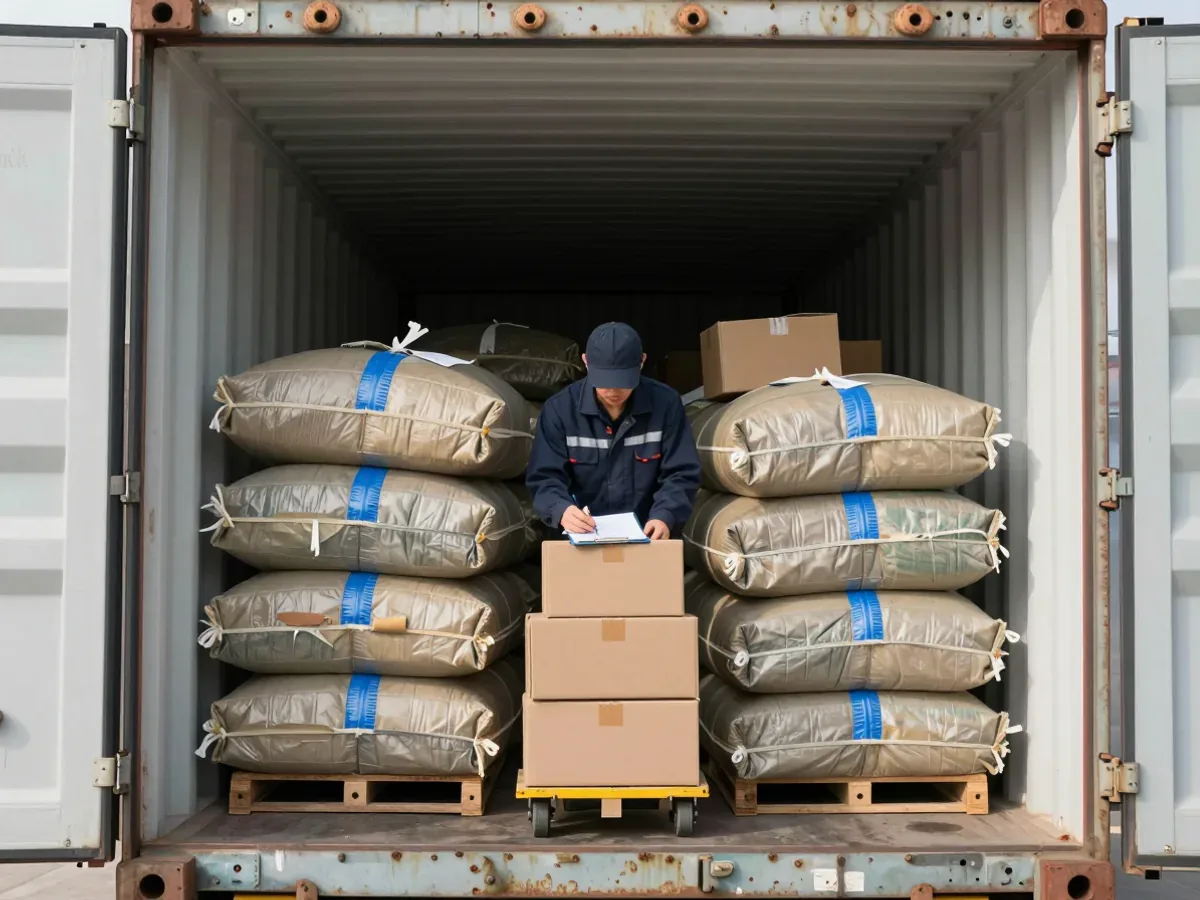
A pallet count tells the buyer how the freight forwarder will handle the container. It does not tell the buyer how many bags are inside. The old three-tier system re-palletized every inbound container to fit a warehouse racking system, and that step cut a 40HQ from 22,400 units to 19,800. The buyer paid freight on the higher number and received the lower one.
The spec sheet should carry a load plan expressed in units per container type, with the carton count and the units per carton that produce it. A 40HQ figure of 22,400 units is only meaningful next to the packing configuration that achieves it: compressed bales, edge protectors, no pre-formed inserts.
Verification happens at the loading bay. Ask for photographs of the container during loading, with the carton count visible, and compare against the plan. A factory that loads to a different count than it quoted has either changed the packing or never measured it.
Tear resistance and the test method behind the word heavy duty

"Heavy duty" appears on nearly every moving bag spec sheet and means whatever the writer wants it to mean. The word carries no test method, no material weight, and no pass threshold. A buyer who accepts it is trusting a marketing phrase to protect a 50 kg load through a stairwell.
The line should name the material weight and the test method. For the shell, that means a grams per square meter figure, typically in the 200 to 300 GSM range for industrial moving bags. For tear resistance, it means a documented protocol such as ASTM D3787 or an equivalent, with the result attached.
Verification is a document request, not a conversation. Ask for the test report tied to the material weight on the order, and check that the report's sample matches the shell being produced. A report for a different weight is a report for a different bag.
QC checkpoint count and where it sits on the line
The spec sheet usually says "QC before shipment" and leaves the rest to trust. That phrase can mean a final inspection after the container is packed, which is too late to fix anything without unpacking. The checkpoints that matter sit earlier, at the stations where defects are created.
On the moving bag line, the checkpoints run through fabric inspection, cutting, sewing, and final packing. A checkpoint at the sewing station catches a skipped stitch on the wrap-around webbing before the bag reaches the baler. A checkpoint at packing catches a missing label pocket before the carton closes.
The line should state how many checkpoints the factory runs and what each one checks. Verification comes from the inspection record for the order, not from a certificate on the wall. If the record shows only a final check, the earlier stations are unguarded.
The line most buyers leave blank: seasonal slot commitment
The last line on the order is often empty, and it is the one that decides whether the goods move in August. Peak season on the trans-Pacific lane runs from August to October, when spot rates climb and delays stretch out. A buyer with no committed slot competes for space against everyone else who also left the line blank.
A seasonal slot commitment is a volume figure tied to a sailing window, agreed before the peak. Factories and forwarders allocate space to buyers who commit to annual volume, because that volume lets them plan. The commitment does not need to be large. It needs to be written down with a date and a container count.
Verification is a booking confirmation with a named sailing, issued before the peak window opens. A verbal assurance in June is not a slot in September.
FAQ
Does a flat pack design change the bag itself?
No. The flat-pack configuration uses the same material, the same opened dimensions, and the same 50 kg load capacity. What changes is how the panels fold and how the cartons are packed, which is why the packed volume drops below 0.018 cubic meters per unit.
How do I compare an FOB quote with a DDP quote fairly?
Add every fee between the factory gate and the warehouse dock to the FOB number. Origin drayage, customs brokerage, destination port handling, and last mile coordination belong in that column. Once the FOB quote carries those costs, the two numbers describe the same delivery.
What load capacity should a heavy duty moving bag carry?
Industrial-grade moving bags typically support static loads in the range the order specifies, and 50 kg per bag is common for the heavy-duty tier. The capacity figure should sit next to the material weight and the tear test result, not stand alone.
Can a smaller trial order still ship factory direct?
Stock bags typically allow smaller trial orders, while custom sizes, colors, or printed logos require a higher threshold for material setup. A trial order can still move factory direct if the buyer accepts a stock specification for the first run.
What the order lines decide
The buyer in this review did not change factories to find the savings. The same production line, the same shell, and the same 50 kg capacity produced a lower landed cost once the order lines described the bag as it actually shipped. Packed volume, Incoterm, load plan in units, test method, checkpoint count, and slot commitment each moved a number that the unit price never touched.
A purchase order that carries those six lines gives the factory something to build against and gives the buyer something to check. The next step is to pull the current order and read it line by line. Any line that describes the bag but not the shipment is a line where cost is still hiding.






