

Based on airline checked-baggage limits, conveyor handling conditions, and our own moving bag construction records.
The relocation coordinator had replaced twelve rigid plastic totes with woven moving bags for a staff transfer, and the first invoice from the airline arrived before the first employee did. Four bags had crossed the counter at 54 to 57 pounds, and the excess weight charges alone wiped out what the totes had cost to buy. The savings the procurement team had presented in the budget meeting lasted exactly one flight.
That invoice is the honest starting point for any cost conversation about checking a moving bag as luggage. The purchase price on the PO is the smallest number in the file. The real cost per trip is spread across four lines that never appear on a supplier quote, and each one traces back to a decision made months earlier on a spec sheet.
The Four Lines on a Moving Bag Invoice Nobody Quotes

A moving bag that flies as checked baggage carries four cost lines. The first is the overweight counter, where a bag over the limit turns into a fee at the airport desk. The second is the repack, the twenty minutes on the terminal floor when a zipper gives and the contents have to be redistributed into whatever else is available.
The third is the claim and the replacement, the bag that arrives torn, empty, or not at all. The fourth is time, the hours a failed handle or a burst seam steals from a relocation schedule that has no slack in it. None of these four appear on a quotation, and all four are decided by specifications a buyer can read before ordering.
Line One: The Overweight Counter and the 62 Inch Gate
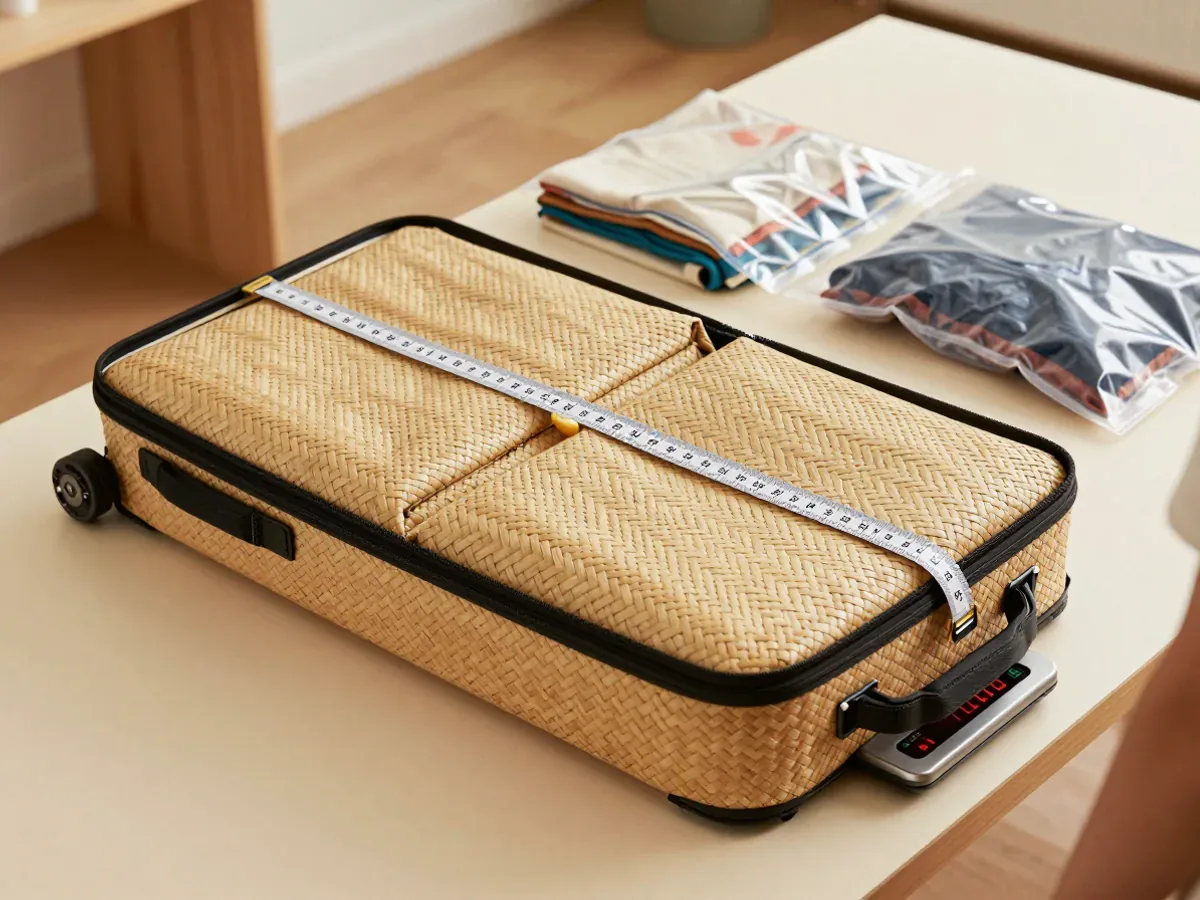
Domestic US airlines enforce a checked baggage limit of 62 linear inches, calculated as length plus width plus height, and a maximum weight of 50 pounds. Those two numbers are fixed and non negotiable. A 100L moving bag measuring 31 by 18 by 10 inches totals 59 linear inches, which sits inside the size gate with room to spare.
Weight is where the arithmetic gets expensive. A bag rated at 50 pounds of load capacity is rated at exactly the limit, not above it, so any packing that pushes past 50 pounds produces two costs at once. The airline charges for the excess, and the handle and zipper absorb stress they were not built for. A luggage scale at the packing table costs less than a single overweight fee and removes the guesswork entirely.
Deflating clothes before packing is the cheapest lever on this line. Rolled or vacuum compressed garments take up less volume, which keeps the bag under the weight limit and reduces the side pressure that later damages the closure.
Line Two: The Repack That Happens at the Airport Floor

A zipper does not usually fail because of weight pressing down. It fails from side pressure, the outward push that happens when a bag is packed past its comfortable volume and the teeth are forced apart along the curve. A number 8 zipper, common on budget moving bags, has less than half the tensile strength of a number 10, and the difference shows up at the worst possible moment.
The repack cost is easy to underestimate. A bag that opens on the terminal floor forces a traveler to move contents into a spare bag or a purchased one, in public, under a departure clock. Anything fragile in the load is now exposed. Anything small is now loose. The airline may refuse the bag outright if it cannot be closed securely.
Lockable zipper loops matter here for a second reason. A zip tie or a small TSA friendly padlock through the loops holds the slider in place under load, so the closure cannot creep open in transit. That single hardware detail converts a repack risk into a manageable one.
Line Three: Claims, Replacements and the Bag That Arrives Empty

Baggage handling is a violent process by design. Conveyor belts, chutes, and stackers apply sudden lateral and vertical forces that a budget moving bag was never engineered to survive. A bag that passes the size and weight checks can still be destroyed between the counter and the carousel.
The claim line has two halves. The first is the damaged bag itself, which has to be replaced before the next leg of the move. The second is the contents, and a bag that arrives with a split seam or an open closure may arrive with less than it left with. Black bags are especially hard to spot on a crowded carousel, which raises the odds of a pick up error on top of everything else.
A bright reinforced tag carrying a phone number and an email address reduces that risk and helps an airline return a misrouted bag. A clear label pocket on the face of the bag, holding a card that states what is inside, does the same job without opening anything. Neither costs much. Both shorten the recovery time when something goes wrong.
Line Four: The Hours a Failed Handle Steals From a Relocation

Handle failure is rarely the stitch itself. The anchor point, where the handle meets the bag body, fails about three times more often than the stitching does. Most cheap moving bags use a single line of stitching at that attachment, and under 40 pounds of dynamic load those stitches snap.
The cost of a snapped handle is measured in hours. A bag that cannot be carried has to be dragged, which damages the base, or abandoned, which means a second trip. On a corporate relocation with a fixed handover date, one failed handle can delay a whole van load.
Full wrap webbing sewn into the bag seam with four layer bartack stitching changes that equation. The webbing runs the length of the opening rather than stopping at the handles, so the load spreads across the bag body instead of concentrating at two points. Taping the handles down to the bag body before a flight is a cheap additional measure that moves stress away from the anchor.
What the Cheapest Bag Actually Saves You
The cheapest moving bag saves money on exactly one line, the purchase price, and it borrows against the other three. A single stitch handle and a number 8 zipper cost less at the factory and cost more at the airport, the carousel, and the claims desk.
Recycled polypropylene is the same trade in material form. It lowers the unit cost and it tears more easily and degrades faster under sunlight than virgin polypropylene. A bag built from virgin PP with UV stabilizers holds its strength through a move, a storage season, and a second move.
The comparison a procurement team should run is not bag against bag. It is bag against the four cost lines, priced per trip and multiplied by the number of bags in the shipment. Once the overweight fees, the repacks, the claims, and the lost hours are on the same page as the unit price, the cheap bag stops looking cheap.
Reading a Spec Sheet as a Cost Sheet
Three specifications separate a bag that survives baggage handling from one that is destroyed on the first conveyor belt. Each one maps directly onto a cost line, which is why a spec sheet read carefully is also a cost forecast.
The zipper gauge controls the repack line. A number 10 metal zipper has teeth twice as thick as the number 8 found on budget bags, and lockable loops keep the slider from creeping open. The handle reinforcement method controls the time line. Full wrap webbing with four layer bartack stitching, tested to hold beyond 80 pounds, removes the anchor failure that costs a relocation its schedule.
Fabric tear strength controls the claim line. A shell that resists snags on a conveyor belt is a shell that does not become a damage report. A waterproof inner coating is the final layer of insurance, keeping clothes dry if a bag sits on a wet tarmac and preventing mold during storage. A stitched PP seam resists splashes but is not sealed, so the coating and the seam need to be read together rather than assumed.
The First Bag You Should Weigh Before the Whole Order Flies
Before a bulk order ships, one bag should be packed the way an employee would pack it, weighed on a luggage scale, and measured against the 62 linear inch gate. That single test answers the question the invoice will ask later. If the packed bag crosses 50 pounds with normal contents, the order needs a different packing instruction or a different bag size, not a bigger overweight budget.
The second check is the handle anchor. Load the bag to its rated capacity and lift it by one handle, then the other, watching the attachment point rather than the stitch line. The third is the closure, loaded and locked, pushed from the inside to simulate side pressure.
A moving bag that clears the size and weight limits is still useless if the handles rip or the zippers burst on the conveyor. The four cost lines on the airline invoice are decided at the sample stage, months before anyone stands at a check in counter. Weigh the first bag properly and the other three lines stay close to zero.
FAQ
Can a 100L moving bag pass the 62 linear inch and 50 lb checked limits?
Most 100L moving bags fit within both limits. A bag measuring 31 by 18 by 10 inches totals 59 linear inches, inside the 62 inch gate, and a load capacity rated at 50 pounds sits exactly at the weight limit. The risk is packing past that rating, not the bag dimensions.
Can I check a cardboard moving box instead of a bag?
Technically yes, but cardboard boxes are not designed for baggage handling and tear or crush easily. Airlines may also reject them for lacking proper handles and structure. A purpose built heavy duty moving bag is the safer choice for anything that has to survive a conveyor.
What should never go inside a checked moving bag?
Lithium batteries, flammable liquids, aerosols, and valuable documents are prohibited in checked luggage. The current TSA prohibited items list should be checked before packing, since the rules are updated periodically.
Why do zippers burst on moving bags even when the weight is under 50 lbs?
Zipper failure comes from side pressure rather than vertical load. An overstuffed bag pushes the teeth apart along the curve even when the total weight is legal. A number 10 zipper with lockable loops and a packing routine that leaves some slack in the closure reduces that pressure.