This article draws on archived retail bag program notes and TIIOCTI product specifications to show where checkout bag models break and how to verify a counter bag before it reaches a till.
On a Saturday morning in early autumn, the registers at a three-store retail chain started turning customers away with hand gestures instead of bags. The paid-bag stock had run out at the busiest branch, the free-bag drawer at a second store was still full because nobody had told that manager the fee had started, and the third store was quietly handing out durable bags that were supposed to be sold. Three counters, three behaviours, one brand.
The head office had approved a new checkout bag strategy six weeks earlier. What reached the counters was a memo, a poster file and a carton count that did not match any of the three stores. Nobody had asked what the bag itself needed to become.
The Morning the Counter Ran Out of Bags

The first sign of trouble was not a complaint. It was a cashier at the flagship store asking a supervisor why the bag she was holding felt thinner than the one in the poster behind her. The poster showed a branded woven bag. The carton held a light single-use bag printed with the old logo, because the artwork file had been approved before the model changed.
By midday the flagship had no bags at all. The second store had a full drawer of free bags and a sign that said nothing about a fee. The third store had sold eleven durable bags and given away forty, because the cashier had not been told which was which. The chain had chosen a model on paper and was running three different ones in practice.
Tracing Back to the Model That Was Never Chosen

The memo described a hybrid: charge for basic bags, sell a premium branded durable at the counter. That is a legitimate structure, and it is not the same as a paid model, a free model or a quota model. Each of those carries its own customer expectation, its own margin logic and its own regulatory tail.
Paid bags work because the customer adjusts within weeks. Reuse rates climb, bag volumes drop, and the bag turns from a cost line into a small profit line. Free bags absorb the cost as a customer-experience expense, which holds while regulations allow it and erodes as fees spread. A quota model sells a durable bag once, often branded, and stops issuing single-use options entirely.
The chain had approved the hybrid language without deciding which of the three behaviours each store would actually run. The flagship behaved like a paid store. The second store behaved like a free store. The third behaved like a quota store with a paid store's signage. The model was never chosen at the level where bags are handed over.
The Spec Sheet That Stayed the Same Across Three Models

One specification had been carried forward from the previous year and used for all three stores. That single sheet specified a light bag with a stitched handle and a one-colour print. It was a reasonable disposable bag. It was the wrong bag for two of the three counters.
The specification has to follow the model, not the other way round. A paid single-use bag should be the lightest compliant material, because the customer pays the fee and the margin lives in the gap between cost and price. A branded durable given free above a threshold needs heavier woven or canvas construction that survives months of reuse, because the customer carries the brand for as long as the bag lives. A quota-model durable needs the thickest specification and a bold print, because the customer bought it as a statement and will use it as one.
Running one specification across all three models overpays on the disposable end and underdelivers on the durable end. The flagship store was handing out a bag too light to justify its fee. The third store was selling a bag too light to feel like a purchase. Neither problem was visible on the invoice. Both were visible in the customer's hand.
Where the Compliance Calendar Split the Stores

The three stores sat in three jurisdictions. Fee minimums differed, allowed materials differed, and signage requirements differed, and the dates those rules took effect did not line up. The chain had built its program around the loosest rule because that was the one the first store had to meet.
Multi-site retailers face a compliance version of the same problem everywhere. Bag fee and ban rules now vary by state, county and city, and the direction is one-way. The EU packaging rules are moving in the same direction. Building the program on the strictest jurisdiction you operate in lets one program cover every counter instead of ten programs fragmenting the brand.
That choice also simplifies the specification. If the strictest jurisdiction allows a given material and requires a given fee disclosure, the same bag and the same sign can travel to every store. The chain had done the opposite. It had built three local programs and called them one strategy.
The Counter Conversation Nobody Scripted

Signage does half the work, and the chain had printed a poster with a logo and a price. It did not explain why. Customers accept bag fees when the sign explains the reason in one sentence, whether that is the local rule, the environmental reason, or both. They resent silent fees at roughly double the rate.
The cashier conversation matters just as much. The stores with the smoothest transitions briefed cashiers with a script and posted the notice a month early. A quota-model launch needs a transition window where both options coexist, so the customer who forgot the durable bag is not stranded at the register.
At the flagship, the cashier had been told to charge and not to explain. At the second store, the cashier had been told nothing and charged nothing. At the third, the cashier had been told to sell and had not been told what to say when a customer asked why the free bag had disappeared. The bag program succeeded or failed at that counter before the bag specification mattered at all.
What the Bag Itself Should Have Told Them
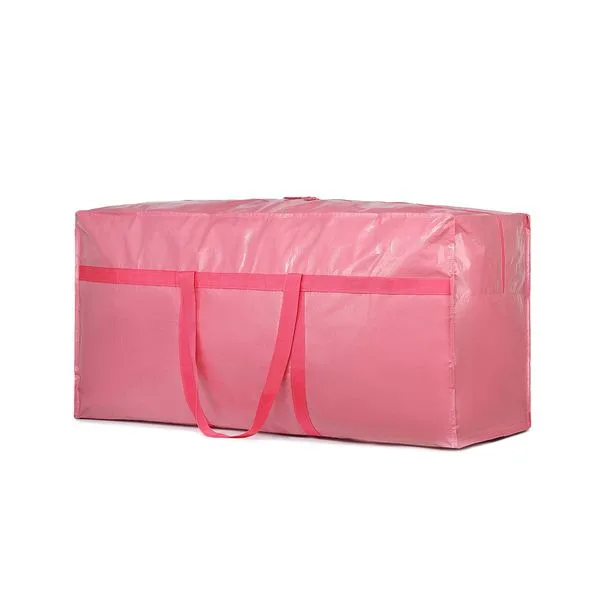
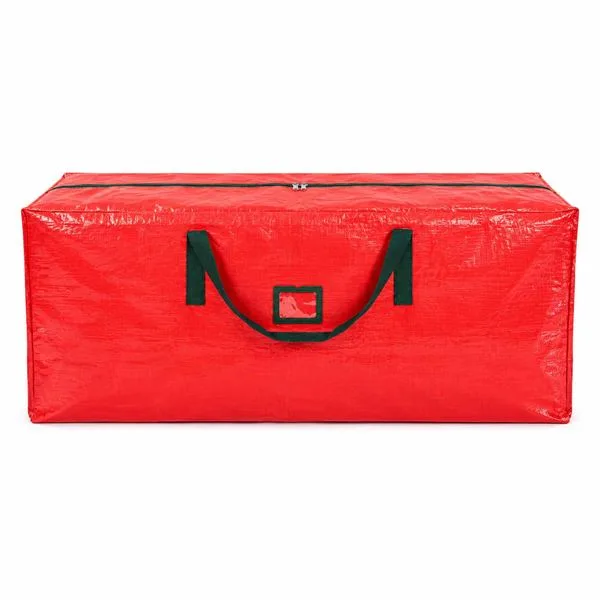
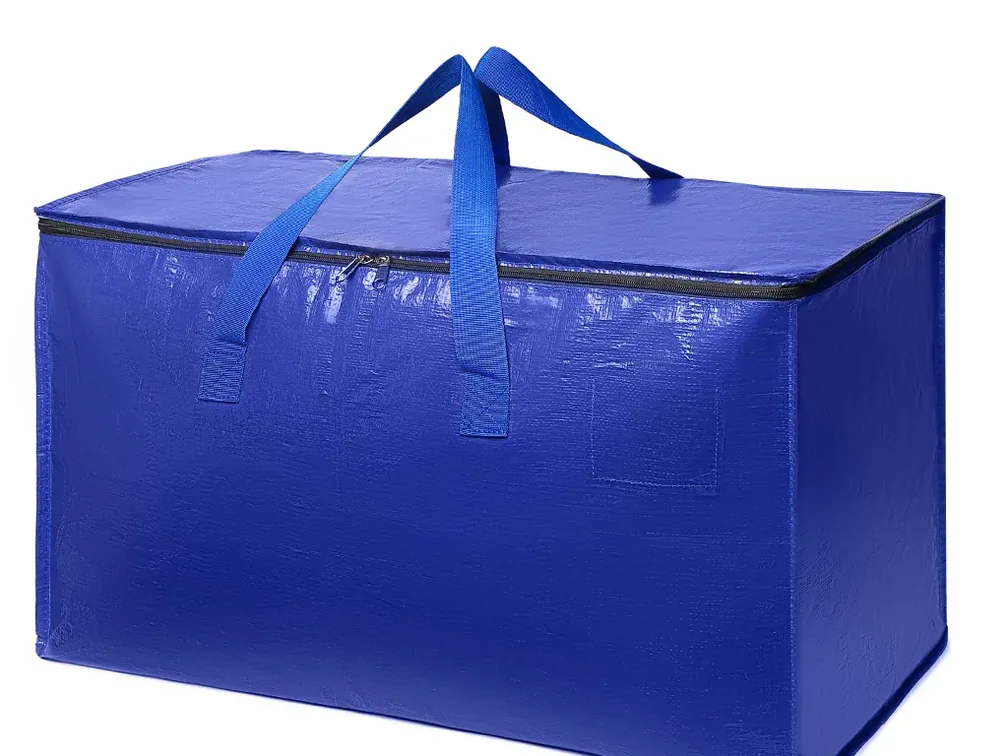
A bag carries information before anyone reads a sign. A clear PP face lets a checker read the contents without opening the bag, which matters at a counter where speed is the whole service. A woven shell resists a splash, though stitched seams mean it is not waterproof, and a customer who expects waterproof will bring it back.
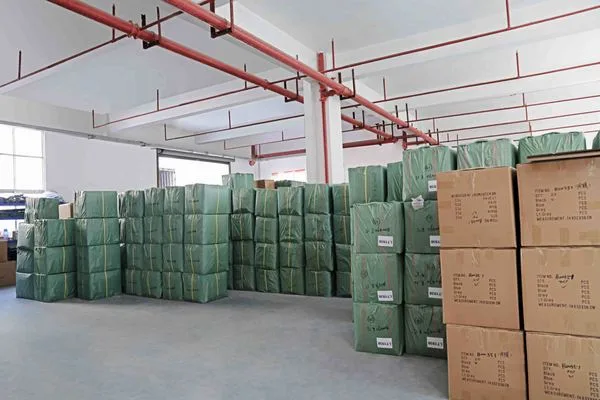
The finished bag is also a quality checkpoint. Dimensions, handles, logo and packed quantity can be checked by hand on the finished bag, and cartons can be counted and photographed before the container seals. Those checks catch the mismatch the chain lived through: a poster showing one bag and a carton holding another.
Packing can follow the store. Bags can be packed per store, with a barcode or in retail packing, so each branch receives the model it is meant to run rather than a mixed pallet and a memo. When cutting, sewing, checking and packing sit on one site, a change reaches the line the same day instead of waiting for a container cycle.
A Checklist for the Next Model Switch
The chain's fix took less time than the confusion. It picked one model per store type, rewrote the specification to match each model, rebuilt the program around the strictest jurisdiction, and printed a sign with one sentence of reason on it. Then it briefed every cashier with the same script and a transition window.
A retailer preparing the same switch can work through a short list before the first carton ships.
- Name the model per store, not per company. Paid, free and quota can coexist, but each counter needs one clear behaviour and one bag that matches it.
- Rewrite the specification against the model. Lightest compliant material for paid single-use, heavier woven or canvas for a branded durable, thickest specification for a quota durable.
- Pick the strictest jurisdiction you operate in and build one program on it. Local exceptions cost more than they save.
- Put the reason on the sign in one sentence. A fee with an explanation is accepted. A fee without one is resented.
- Script the cashier conversation and open a transition window where both options exist.
- Check the bag against the poster before the carton leaves. Dimensions, handles, logo and packed quantity, checked by hand.
- Pack per store so each branch receives the model it will actually run.
FAQ
Can a retailer run paid, free and quota models at the same time?
Yes, and many do. The common hybrid charges for basic bags while selling a premium branded durable at the counter. The condition is that each store knows which behaviour it is running and holds the bag that matches it.
How does a quota model change the bag specification?
It pushes the specification to the thickest end. The customer buys the bag as a statement, so it needs heavier construction and a bold print, and it has to survive months of reuse rather than one trip home.
What should a checkout bag sign say to reduce customer complaints?
One sentence of reason. Name the local rule, the environmental reason, or both, and state the price plainly. Customers accept a fee they understand and resent one they discover at the register.
How do multi-jurisdiction retailers keep one bag program compliant?
Build it on the strictest jurisdiction in the footprint. One bag and one sign then travel to every counter, and the compliance calendar stops splitting the stores into separate programs.