Based on legacy CPSIA guidance for children's drawstring bags and the drawstring bag specification used on our own line.
The carton sealer had already run tape across the first case when the inspector asked to see the tracking label. The bag inside carried a woven label with a city, a month, and a lot code, but the compliance folder on the table held a test report for a different print. That gap, between what ships and what the file proves, is where most CPSIA trouble begins.
A children's drawstring bag is not just a bag in the eyes of US regulators. Under the Consumer Product Safety Improvement Act, any product designed or intended primarily for children 12 years old or younger carries a set of obligations that follow it from order confirmation to the loading bay. Following one order through the factory shows where that evidence is created, checked, or quietly lost.
At Order Confirmation, the Compliance File Starts Empty

The purchase order lists fabric, handles, logo, and packing. It rarely lists a test scope, and that omission sets the tone for everything after. Before a single meter of polyester or nylon is cut, someone has to decide whether this bag is a children's product at all.
Marketing and labeling settle much of that question. A bag sold with cartoon characters, school motifs, or age-range language such as "for kids ages 3-8" is classified as a children's product. Physical design matters too: smaller dimensions, shorter drawstrings, and child-appealing decoration all point the same way. Even a bag that adults could carry falls under CPSIA if a reasonable consumer would consider it intended for children.
The confirmation stage is also where the file should be opened, not later. A folder with the product name, the SKU, the intended market, and a blank slot for the lab report costs nothing to create. Leaving it until final inspection is how orders end up with a certificate that describes a bag nobody is shipping.
At Fabric and Trim Intake, the Component List Decides the Test Scope

The receiving bay is where compliance is easiest to get wrong, because the bag arrives as a pile of parts. Fabric, cords, metal grommets, toggles, zippers, and printed panels each carry their own risk. CPSIA imposes two separate lead limits, and both apply across every component.
Total lead content is capped at 100 ppm for each substrate component, including fabric, cords, hardware, prints, zippers, and toggles. Lead in paint and surface coatings is capped at 90 ppm for any printed, coated, or painted surface. A bag with a printed design has to clear both, tested separately.
Sourcing decisions drive the outcome here. Recycled polyester fabrics, certain dyed cotton textiles, and metal hardware from unverified suppliers are the most common sources of lead exceedances in drawstring bags. Phthalates add a second layer: eight substances are restricted under Section 108, implemented at 16 CFR 1307, and they concentrate in plastic and PVC parts rather than the shell.
The practical move at intake is a component list written before the order, not after. Each line names the material, the supplier, and whether it needs lead testing, phthalate testing, or both. A cord supplier who cannot state whether the toggle is PVC leaves the whole bag's test scope uncertain.
At Cutting, the Print and Coating Question Surfaces

The cutting table is where the print meets the fabric, and where a specification can quietly change. A buyer approves a print on paper; the factory sources ink and a coating to make it survive handling. Neither appears on the original order.
This is the point to confirm that the ink and any surface coating sit inside the tested scope. A lab report that covers the fabric substrate but not the printed design does not prove the bag complies. The same logic applies to any coated panel or laminated trim added at this station.
Cutting also exposes material substitution. If the fabric roll on the table came from a different mill than the one named at intake, the earlier test evidence no longer describes this bag. A fabric mill's internal QC report is not a CPSIA test report, and it cannot stand in for one. The station supervisor should be able to say which lot is being cut and match it to the component list.
At Sewing, the Tracking Label and Cord Details Take Shape

The sewing floor is where the bag becomes traceable, or fails to. CPSIA Section 14(a)(5) requires a permanent, distinguishable tracking label on all children's products. For a drawstring bag, that usually means a woven label sewn into a seam.
The label needs three things at minimum: the production location by city and country, the date of production by month and year, and a batch, lot, or run number that lets the manufacturer trace the bag back to production records. A hang tag or removable sticker does not satisfy the requirement, and neither does a label printed only on the polybag.
Cord details belong to the same station. If the drawstring uses a toggle or cord lock, it should release under moderate tension, and the cord ends should stay short enough that they cannot form a loop. These are design decisions made at the sewing machine, not at final inspection, and correcting them later means rework.
At Final Inspection, the CPC Is Checked Against the Bag in Hand

By the time the order reaches inspection, the paperwork should already exist. CPSIA does not allow self-certification for children's products. The bag must be tested by a laboratory accepted by the CPSC, and the results form the basis of the Children's Product Certificate.
The certificate has to identify the product clearly enough to match it to the test report: name, SKU, and a description. It cites each regulation the product complies with, such as 15 U.S.C. 2056b for lead, 16 CFR 1303 for lead in paint, and 16 CFR 1307 for phthalates. It also names the CPSC-accepted lab that performed the testing and the report number that links certificate to results.
The inspection itself should compare three things side by side: the bag in hand, the component list, and the lab report. A report that gives only a composite result is not enough if a single component fails. Each tested component needs its own line and its own result. The lab's acceptance scope matters too, since a facility accepted only for toy testing may not cover every bag-specific method.
Small parts testing under 16 CFR 1501 enters here if the bag has detachable pieces such as small toggles, decorative buttons, or snap fasteners that could fit in a child's throat. The inspector checks the physical bag against the scope, not the other way around.
At Carton Sealing, the File Must Match What Ships
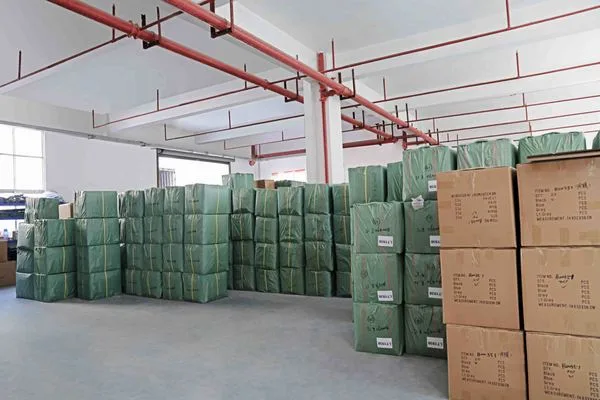
The last station is the least glamorous and the most decisive. Cartons are counted and photographed before dispatch, and the compliance file should be closed at the same moment. The CPC must accompany the product, which means the version in the folder has to describe the bags in the cases.
Three failures recur at this point. Testing only the fabric leaves cords, hardware, and prints unproven. Using a CPC from a different product attaches a valid document to the wrong bag. Skipping re-testing after a material change, whether a new fabric supplier or a new hardware vendor, leaves the file describing a bag that no longer exists.
A short check before the tape goes on catches all three. Does the SKU on the certificate match the carton label? Does the component list match the bag's actual parts? Has any supplier changed since the report date? If the answer to the last question is yes, the file needs a new test cycle, not a new signature.
FAQ
Does CPSIA apply to a drawstring bag sold as a school or gym accessory?
If the bag is designed for or intended primarily for children 12 or younger, it is classified as a children's product and CPSIA applies. School and gym marketing, child-sized dimensions, and cartoon or school motifs all support that classification. Adult use alongside children's use does not remove the obligation.
Can a factory self-certify a children's drawstring bag under CPSIA?
No. CPSIA does not allow self-certification for children's products. The bag must be tested by a laboratory accepted by the CPSC, and the results support the Children's Product Certificate issued by the manufacturer or importer.
What has to be on the tracking label, and can it be a hang tag?
The label needs the production location by city and country, the production date by month and year, and a batch or lot number for traceability. It must be permanent and attached to the product itself. A hang tag or removable sticker does not meet the requirement.
If the fabric supplier changes, does the bag need new testing?
Yes. A new fabric source means the earlier test evidence no longer describes the bag being produced. The component list and the lab report both need updating before the next shipment, and the CPC should reflect the new results.