

This walk follows a store rollout bag order through the factory floor, using the spec sheet, sample record and loading manifest as the only reference points.
The container was already sealed when the first carton label mismatch turned up at the distribution center. A buyer for a retail chain had approved the bag, signed the sample, and watched the loading photos arrive; the problem sat in a store code printed on a label that no one had checked against the manifest. The bag itself was fine. The program around it had drifted.
That drift rarely happens in one dramatic moment. It accumulates across the stations a logistics bag passes through, from the order desk to the loading bay, and each stop offers a chance to catch it or let it ride. Walking one multi store order through six stations shows where the gaps open and what a buyer can verify before the doors close.
The order lands, and the spec sheet gets read twice

The purchase order arrives with a store list attached, and the first reading is about quantity and delivery. The second reading is where the program is won or lost. A spec sheet that says "600D Oxford, black, logo on front" will produce a different bag at every factory that quotes it, because it leaves fabric weight, handle construction, label placement, and color reference open to interpretation.
Two buyers can read the same sheet and order two different bags. One assumes the handle is bar tacked at the stress points; the other assumes a single row of stitching is enough. Neither is wrong on paper, and both will be surprised at the loading bay.
The check at this station is simple and unglamorous. Read the sheet as if you were the person cutting fabric, and ask what you would still not know. Fabric, webbing, zips, and thread should each have a named reference, not a category. The store label needs a position, a material, and a rule for what happens when a store code changes mid run.
A standard bag blank with variable store labels is one way to keep a large program manageable. The blank stays the same across stores, and the label carries the store code, SKU, and barcode. That approach avoids retooling for every door, and it moves the risk from the sewing floor to the labeling step, where it is easier to control.
At incoming inspection, the fabric roll decides the rest
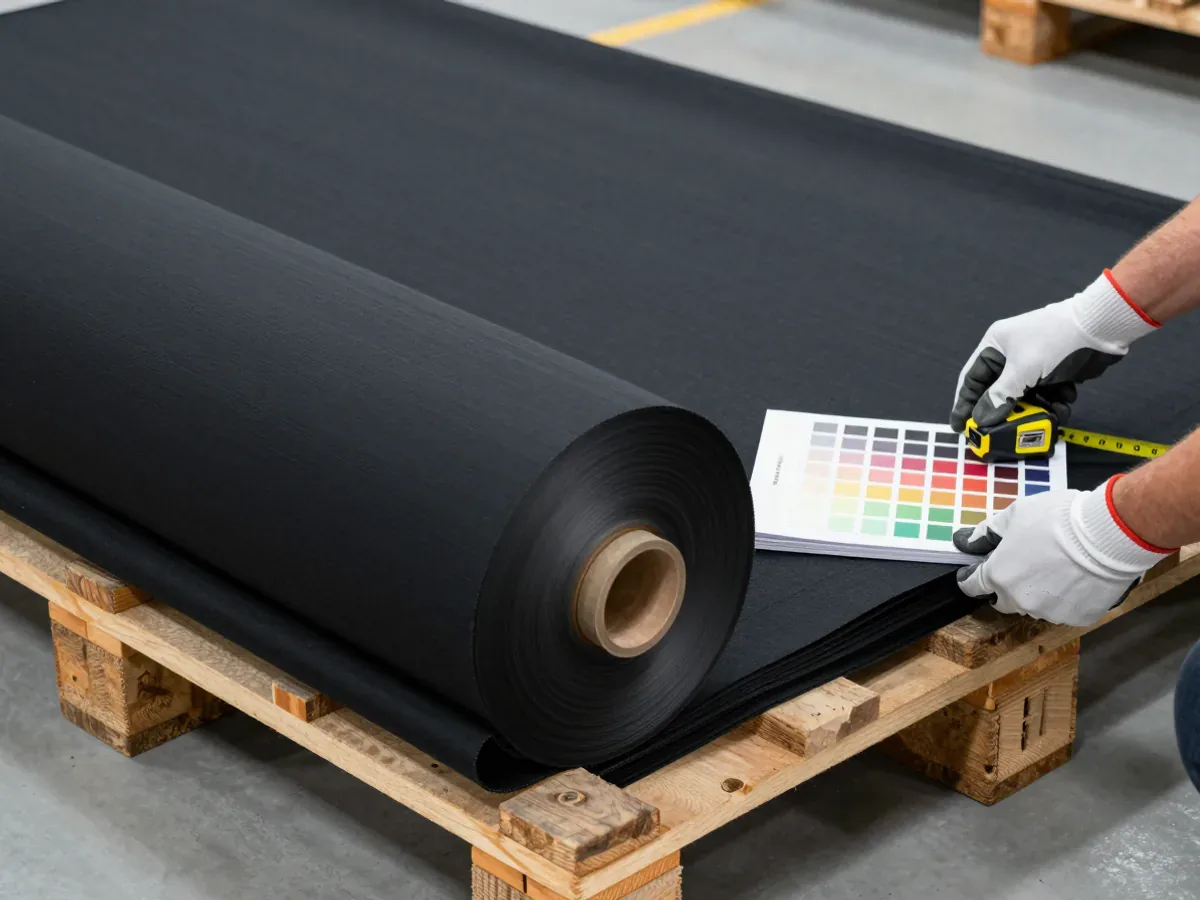
The fabric roll is the first physical thing that can contradict the paperwork. Off the shelf bags commonly use 600D Oxford, a weight that suits a consumer who carries the bag home once. A logistics bag moves between stores, gets dragged, stacked, and loaded again, and the same fabric shows its limits sooner.
A retail chain that started with 600D Oxford bags saw them fail after about fifteen cycles on average. Handles tore, seams split, and the replacement stream ate into the program. Moving to a 900D Oxford weave with reinforced double stitching changed the cycle count, and the replacement rate fell by half.
At incoming inspection, the roll should be checked against the approved spec before it reaches the cutting table. Weight, weave, coating, and shade all matter, and a roll that is close but not exact will produce a batch that is close but not exact. Color deserves its own reference, because a half shade deviation is easy to miss on a single roll and obvious across five hundred stores.
This is also where the label material gets verified. A tear resistant, water resistant label with store code, SKU, and barcode has to survive the same handling as the bag, and a cheap label will fail before the fabric does. Checking it at the roll stage costs minutes; discovering it at the store costs a sorting shift.
Cutting and the store label question
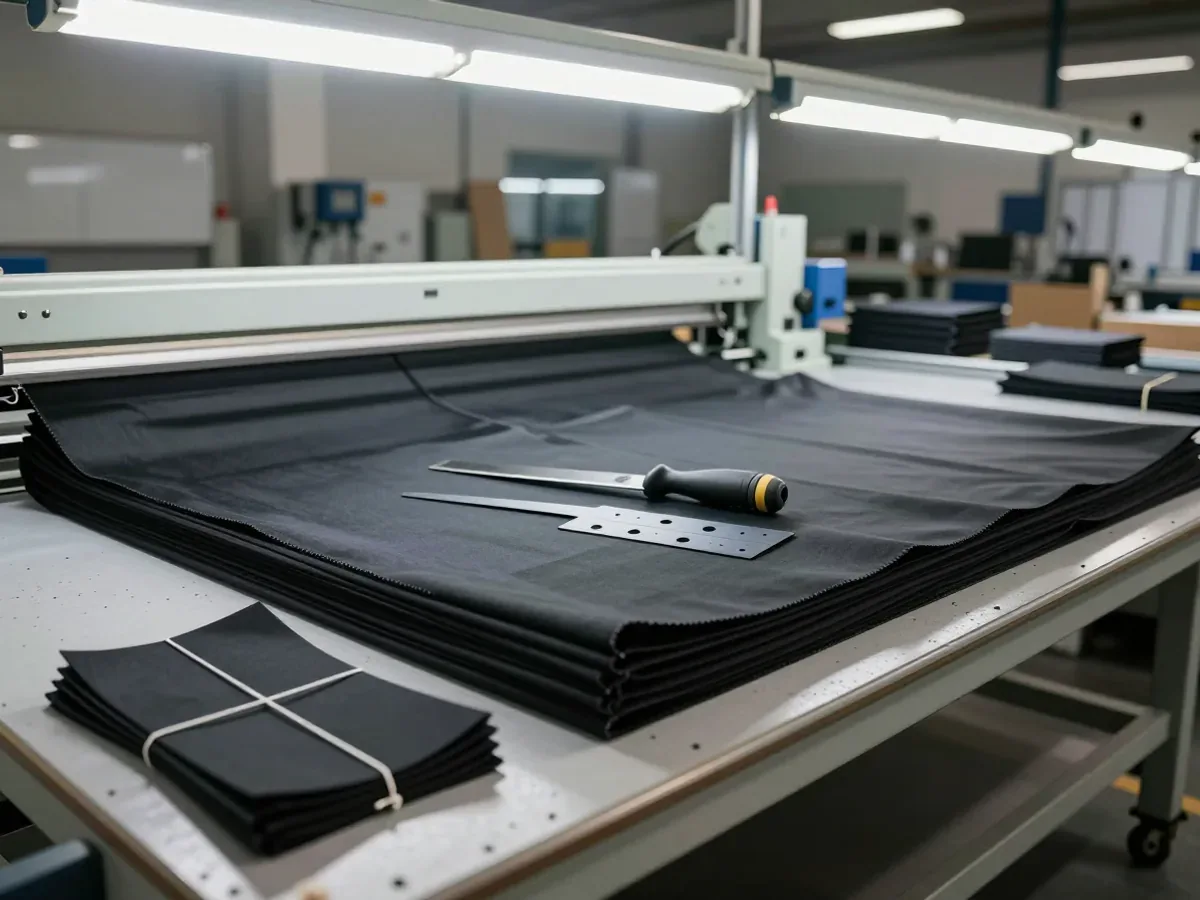
The cutting table is where a program's logic shows up in the pile count. If every store gets its own bag design, the cutter works through a set of patterns and the floor fills with bundles that must not be mixed. If the program uses one blank with store specific labels, the cutting is uniform and the differentiation happens later.
The second approach carries a quiet advantage. Seasonal branding can ride on the label without excess inventory, because the blank is common and only the label changes. That flexibility is worth naming in the spec, since it decides how the factory plans the cut.
The question buyers ask here is whether every store needs its own design. A chain with strong store level identity may want it, and a chain that treats the bag as internal equipment usually does not. The label can carry the store code and SKU while the bag stays standard, and the packing list becomes the map.
Cutting is also where dimensions get locked. A bag that is a centimeter off will still hold goods, and it will not stack the same way in a back room. The spec should state dimensions with a tolerance, and the cutter should have the measuring method written down, not assumed.
On the sewing floor, the handle tells you the load rating
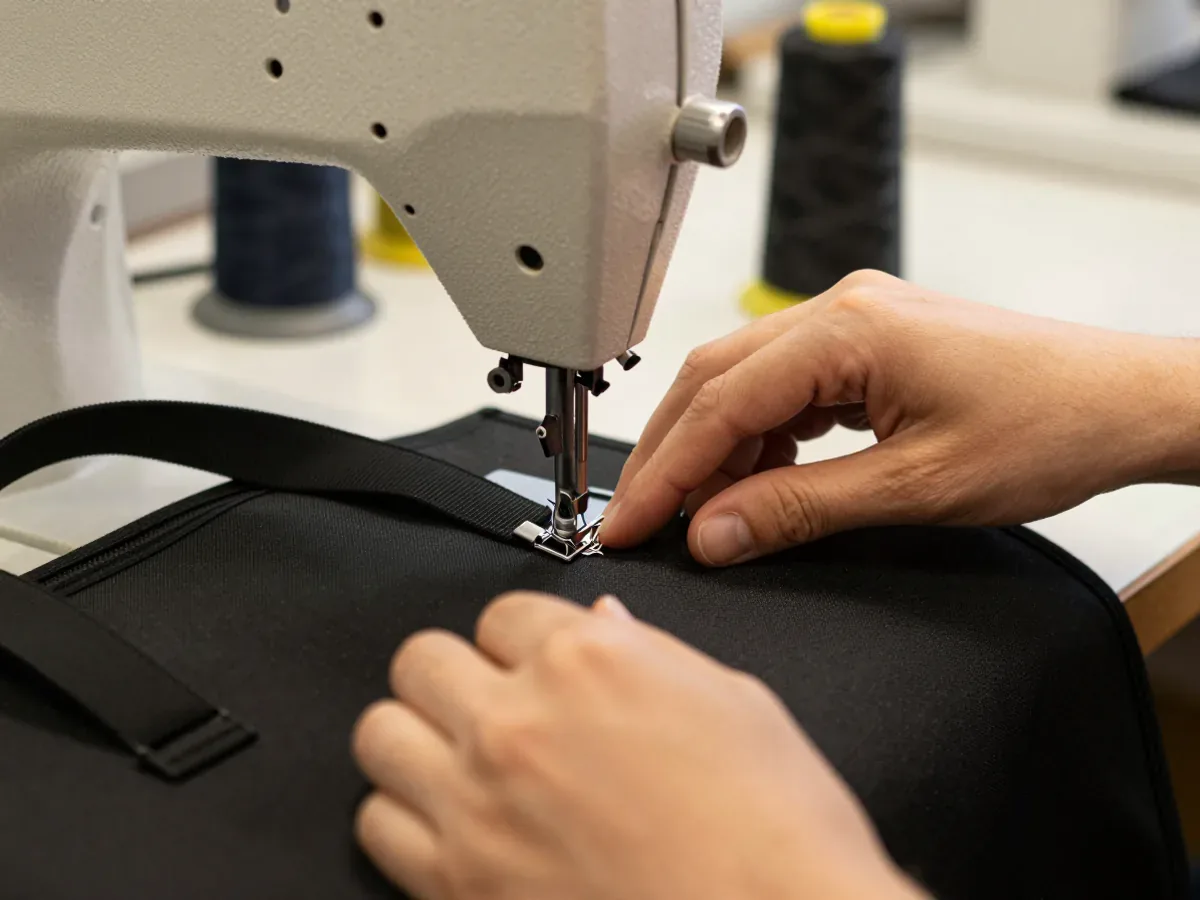
The handle is the part of a logistics bag that meets the most force and gets the least attention in a spec sheet. On the sewing floor, the handle station reveals whether the bag was designed for carrying or for show. A single row of stitching at the joint is a different promise than a bar tack, and the difference shows up at forty pounds, not at the sample table.
Pull, seam strength, and bar tack should be tested on every batch, not sampled once at approval. That testing belongs at the machine, where a tension change or a thread substitution can be caught before the bundle moves on. A factory that tests only the finished bag is testing too late to fix anything cheaply.
Seams burst under sustained weight, and zippers jam after repeated use. Both failures are predictable, and both trace back to choices made at this station. The buyer's check is to ask which tests run on every batch and to see the record, not the promise.
This is also where the print or embroidery decision becomes physical. Embroidery holds up well beyond a hundred wash cycles but is limited to simple designs, while screen print suits internal restocking bags where cost and speed matter. A hybrid approach, embroidery on visible store branded bags and print on internal ones, keeps both jobs in the right place.
Final inspection, where the sample photo comes back

Finished bag inspection is the third of four checks, and it is where the approved sample photo earns its keep. Dimensions, handles, and logo are checked by hand, one bag at a time, against the reference that was signed before bulk production. A bag that matches the drawing but not the photo is still a mismatch.
Color is the usual culprit. Even after three sample rounds, a half shade deviation can appear without strict monitoring, and it appears across a batch rather than in one bag. A standardized Pantone reference and a pre-production sample sign-off give the inspector something concrete to hold the bag against.
The label gets its own look here. Store code, SKU, and barcode should be legible, correctly placed, and matched to the packing list for that carton. A label applied at final packing adds no lead time, and it is the last moment when a wrong store code can be corrected without opening a container.
The check is to pull cartons from different points in the run, not just the top of the pile. A batch that starts clean and drifts by the end will pass a top layer inspection and fail in the stores. Hand checking a spread of bags takes longer and tells the truth.
At the loading bay, the manifest and the carton label meet
The loading bay is the last station and the one where a program either closes cleanly or ships its problems. Cartons are counted and photographed before the container seals, and the label on each carton is verified against the electronic manifest. This is a matching exercise, not a counting exercise, and it fails when the two records were built separately.
A carton that says one store code while the manifest says another will reach the wrong door, and the store will sort it by hand or send it back. The label system exists to prevent that, and it only works if the manifest is the single source both the factory and the buyer check against.
The photograph matters as much as the count. It creates a record of what was sealed, which carton carried which label, and how the load was built. When a discrepancy surfaces later, the photo answers the question faster than any email chain.
The check here is to confirm that the person sealing the container has the manifest in hand and the authority to stop. A loading crew measured on speed will seal a mismatch to keep the schedule. A crew measured on match accuracy will catch it.
What the walk leaves a buyer checking next time
The drift in a multi store program rarely comes from a bad bag. It comes from a spec that left room for interpretation, a fabric roll that was close enough, a handle that was never pull tested, a label that was applied without a manifest check, and a loading bay measured on speed. Each station had a check available, and each check was skippable.
A buyer preparing the next order can carry a short list into the factory. Name the fabric, webbing, zips, and thread by reference, and confirm they are checked on arrival. Require pull, seam, and bar tack tests on every batch, with records. Fix the color reference and sign the pre-production sample. Decide whether stores get their own design or a standard blank with store labels, and write the label rule down. Verify carton labels against the manifest before the seal, and photograph the load.
None of these steps is exotic. They are the ordinary checks that a program under schedule pressure tends to compress. The stations stay the same whether the order covers fifty stores or five hundred, and the drift starts wherever a check gets skipped.
FAQ
Should every store get its own bag design, or one blank with store labels?
The answer depends on how much store level identity the program needs. A standard blank with variable store specific SKU labels avoids retooling for each store and keeps the differentiation at the labeling step. A chain that wants visible store branding can put embroidery on the front facing bags and keep the internal restocking bags on a common blank.
How do I keep color consistent across a multi store order?
Use a standardized Pantone reference and require a pre-production sample sign-off before bulk production. Check the fabric roll shade at incoming inspection, and inspect finished bags against the signed sample rather than a screen image. Half shade deviations can still appear without strict monitoring, so the reference has to travel with the order.
What fabric weight suits a logistics bag that moves between stores?
The right weight depends on load capacity and handling frequency. Off the shelf bags commonly use 600D Oxford, which suits light consumer use. A program that cycles bags between stores repeatedly is better served by a 900D Oxford weave with reinforced double stitching, and the choice should be validated with a load test rather than assumed.
When should the store label be applied during production?
Applying store specific labels during final packing adds no extra lead time and keeps the blank common across stores. The label should be verified against the packing list and the electronic manifest before the container seals, so a wrong store code can still be corrected at the factory.






