

Drawn from an archived distributor case and our own moving bag production records, rewritten around what a factory must prove before a bulk run.
The cartons came off the container chassis in Houston and never went to the rack. A distributor opened the first case of custom moving bags, pulled a handle, and watched the bottom seam separate along eight inches of stitch line. The whole forty foot load sat on the warehouse floor while the returns math ran in the buyer's head.
Five figures of landed goods, a launch window already booked with retail accounts, and a sample that had passed every check the buyer knew to run. The gap between those two facts is the subject here. A moving bag that survives approval and a moving bag that survives a loaded truck are not the same object, and the distance between them is where a custom run quietly breaks.
The Cartons That Never Reached the Shelf

Picture the receiving bay on the morning after arrival. Pallets are staged, the paperwork is signed, and the first case is cut open for a spot check. That is the moment the failure shows itself, because the bottom seam gives before the bag is even filled to its rated load.
The distributor in this case had done the visible work. He had a sample on his desk, a signed approval sheet, and a factory that answered emails quickly. What he did not have was any evidence that the bag in the carton had been built on the same settings as the bag on his desk.
Returns on a moving bag are expensive in a way that is easy to underestimate. The product fails at the moment of maximum stress, which is when a household is mid move and the bag is full. A customer who loses a load of books to a torn seam does not reorder, and the retailer who sold it does not reorder either.
Tracing Back to the Sample That Passed
The sample had passed because it was built to pass. Sample rooms exist to produce the best possible version of a bag, often on a slower line, with an operator who knows the order is being watched. That is not dishonesty. It is how a sample room works.
The bulk run was built on a different line, at a different speed, with a different thread lot and a different operator. None of those differences shows up in a photo. All of them show up in a seam that carries load.
The approval sheet in this case listed fabric weight, dimensions, handle type and print position. It did not list stitch density, thread size, seam type at the base, or the number of stitch rows closing the bottom. The factory had no reason to volunteer those numbers, and the buyer had no reason to ask for them until the cartons were already open.
The Seam Nobody Opened at Approval
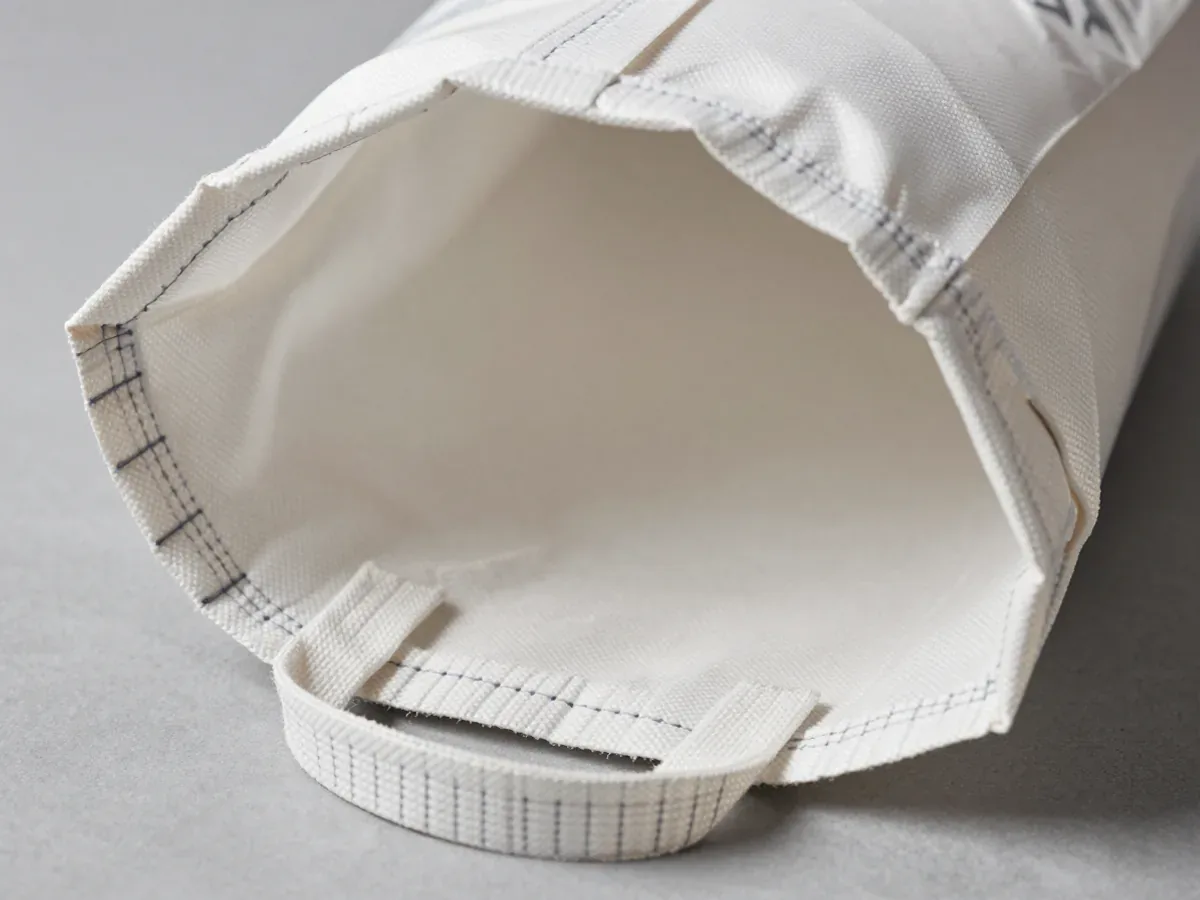
The base seam is the least photographed part of a moving bag. It sits on the floor, it is hidden under the load, and it is the first thing to fail when a bag is dragged rather than lifted. A buyer who inspects a sample from the outside will never see it.
On a durable bag the base is closed with more than one row, and the handle attachment carries a cross stitch or a back stitch rather than a single pass. A single row of plain stitching can pass a light pull test and still open under repeated dragging across a floor.
The sample in this case had a base seam that looked acceptable from the outside. Nobody turned it inside out. Nobody counted the rows. Nobody pulled the seam apart with both hands to see whether the thread broke before the fabric did.
What the Fabric Roll Label Told Us

Weeks later, a roll label from the same production window explained part of the story. The woven PP going into the bulk run came from a different supplier lot than the roll used for the sample, and the label showed it plainly to anyone who looked.
Fabric weight is not a fixed property across lots. A mill that runs close to a target weight on one order can drift on the next, and a bag built from a lighter roll will feel similar in the hand while carrying noticeably less. The seam is where that drift becomes visible, because the stitch has less material to grip.
Roll labels are the cheapest audit a buyer can run. Supplier name, lot number, incoming date, and weight per square meter should all be legible on the roll. A factory that cannot show a clean label on request is telling you something about how it buys material.
Reading a Stitch Sample Before You Sign

A stitch sample is a small piece of the actual bag, sewn on the actual line, that the buyer keeps. It is not a finished bag. It is a record of settings, and it is the only object that lets a buyer compare approval to production without opening a carton.
Ask for the base seam, the handle attachment, and the top closure on the same piece of material. Count the stitch rows. Measure the stitch length with a tape. Note the thread size against the label on the spool. Sign and date the piece, and keep a photo of it next to the approval sheet.
When the bulk order lands, the same three points get checked against that piece before the pallets are released. A seam that does not match the signed sample is a production question, not a customer complaint waiting to happen.
Where a Custom Run Quietly Breaks

Custom runs break at the handoffs. The sample room hands off to the cutting floor, the cutting floor hands off to the sewing line, and the sewing line hands off to packing. Each handoff is a chance for a setting to change without anyone writing it down.
The most common drift is at the sewing line, where a machine is rethreaded with a different spool or a seam is closed with one row instead of two to keep pace. Nobody decides to make a weaker bag. The line makes the decision by default when the specification is not written where the operator can see it.
A second drift sits in the fabric store, where a roll from a different lot gets pulled to fill a gap. A third sits in packing, where bags are compressed into a carton without a compression ratio agreed in advance, and the bottom layer takes a permanent set before it ever reaches a customer.
The Checks That Hold a Bulk Order Together
The checks that matter are the ones a distributor can run without a laboratory. They start before the order is placed and continue until the container is sealed.
- Ask for a signed stitch sample covering the base seam, handle attachment and top closure, and keep it as the acceptance reference.
- Request the fabric roll label for the lot going into your order, and compare supplier, lot and weight against the roll used for the sample.
- Ask for a grab test report on seam strength in both directions, and check the report date against the production window rather than the calendar year.
- Watch the line end quality table during a factory visit, whether in person or by video, and look at what is stacked there waiting for rework.
- Agree a compression ratio and a carton drop check before packing starts, so the bottom layer is not crushed in transit.
- Write the seam defect definition into the purchase contract, separating appearance faults from anything that reduces load capacity.
- Hold a pre shipment inspection against the signed sample, and release the container only after the base seam has been opened and counted.
None of these checks requires a testing lab on retainer. Each one closes a specific gap between the bag that passed and the bag that shipped.
FAQ
Should a distributor ask for a third party seam strength report before approving a moving bag sample?
Yes, and the report should be recent enough to describe the material in the order rather than a previous lot. A grab test on the seam in both directions gives a number the buyer can hold the factory to. A report older than the current production window describes a different bag.
How can a buyer tell whether a factory's fabric roll labels match the sample they approved?
Ask for the roll label from the lot reserved for the order and compare it with the label on the roll used for the sample. Supplier, lot number, incoming date and weight per square meter should all be readable. A missing or vague label is itself the answer.
Is a video factory visit enough for a first custom moving bag order?
For a small first order it can be, provided the camera goes to the sewing line end and the raw material store rather than the showroom. Ask to see the rework table and a roll label live. For a full container load, an in person visit answers questions a video cannot.
What should be written into the purchase contract about seam defects?
Separate appearance faults from functional ones, and state that any defect reducing load capacity below the rated value falls outside the appearance tolerance. Reference the signed stitch sample as the acceptance standard. That single clause changes how a claim conversation starts.






