

Reconstructed from a legacy retail bag case and current Oxford shell specifications, with commercial figures left out.
On dispatch day, a carton of Oxford retail bags sat open on the loading bay while the brand team compared three versions of the same bag under the dock lights. The flagship store version looked warm and deep. The web order version looked flat and slightly blue. The wholesale partner version looked close to the store bag but felt thinner in the hand. All three carried the same logo, the same size line, and the same approved artwork.
That photograph became the reference point for everything that followed. The brand had not changed its design. It had changed its shell, its coating, and the order in which it approved samples. The gap between channels was not a design failure. It was a specification failure that only appeared once the bags left the same factory and entered three different retail environments.
Three Channels, Three Bags, One Brand Promise

The brand ran three separate retail channels: flagship stores, e-commerce direct, and wholesale partner boutiques. Each channel had ordered its own bag from its own brief. Store orders used a heavier shell with a matte finish. Web orders used a lighter non-woven bag that could survive a parcel sort. Wholesale orders sat between the two, chosen by a partner who wanted a lower unit cost.
None of those decisions was unreasonable on its own. The problem was that no one had written a single shell specification across all three. The store bag felt premium. The web bag felt disposable. The wholesale bag felt like a compromise. A customer who bought in store and then ordered online received two different objects with the same logo.
The brand promise was consistency. The bags delivered inconsistency, and the inconsistency was visible in unboxing photos, in store displays, and in partner boutiques that placed the wholesale bag next to the store bag on the same shelf.
Why the Cheapest Shell Failed the Second Carry

The web channel had started with a standard non-woven bag because it was light, cheap, and easy to print. It survived the first carry. It failed the second. Handles pulled loose under a normal retail load, and the print looked patchy where the fabric had stretched.
That failure pushed the brand toward a heavier shell, but the first replacement was 600D Oxford. It felt soft in hand and printed well in the sample room. Loaded with a standard retail mix, it sagged in the middle and lost its shape before the customer reached the car park. Softness and load capacity are not the same property, and the sample room had only tested the first.
The shell decision moved again, this time to 900D Oxford. The heavier weave held the load, kept its shape, and gave the bag a hand feel that matched the store environment. The web bag and the store bag finally looked like relatives rather than strangers.
The Fabric Weight That Decided the Load
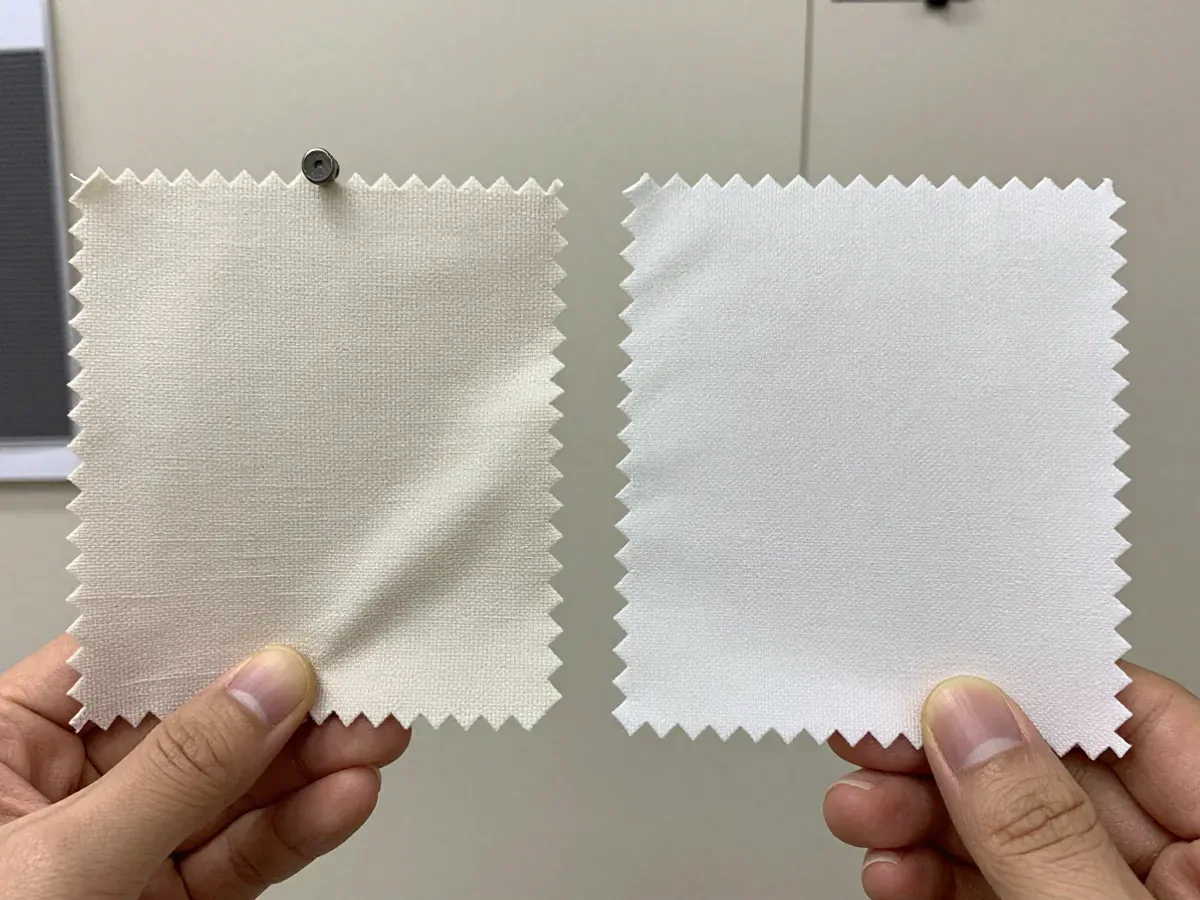
Fabric weight is the first number that decides whether a retail bag survives a real shopping trip. A 600D Oxford is a light duty shell. It works for small accessories, cosmetics, and light apparel. It does not work for a bag that carries shoes, home goods, or a mixed basket of products.
The brand learned this by loading samples rather than by reading a spec sheet. A bag that looks correct on a table can fold, sag, or distort once weight is added. The 900D shell held its structure under the same load, and the difference showed up in the second and third carry, not the first.
That is why the shell line in a brief should name the fabric weight and the expected load together. A weight without a load is a number. A load without a weight is a hope.
What the Coating Had to Do Without Adding Bulk

A standard Oxford shell absorbs moisture. On a doorstep in the rain, that means a damp bag, a damp print, and a damaged product inside. The brand needed a water repellent barrier that did not stiffen the fabric or add visible bulk.
The answer was a PU coating applied at a level that kept the hand feel soft while giving the surface a water repellent finish. The coating had to survive folding, printing, and the handle attachment without cracking at the seams. It also had to stay consistent across the three channels, because a coated store bag next to an uncoated web bag would recreate the same visual gap.
Coating is where a retail bag stops being a fabric sample and becomes a product. The brief should state the finish, the expected weather exposure, and whether the coating must remain identical across every channel.
Printing on Oxford Is Not Printing on Non-Woven
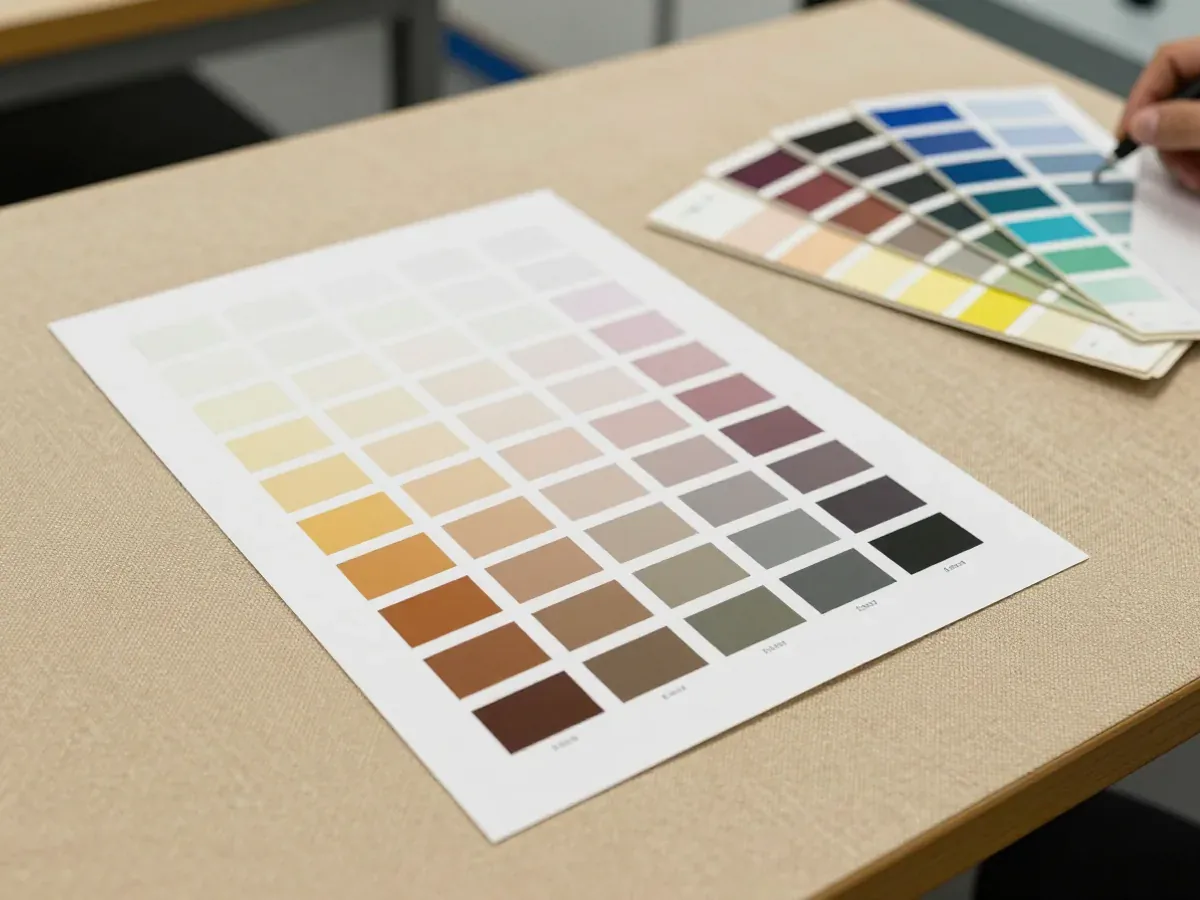
When the brand moved from non-woven to Oxford, the printing substrate changed entirely. Oxford has a tighter weave and a slight surface texture. Standard CMYK output can look washed out on that surface, especially in deep colours and fine logo details.
The factory ran colour proofing on the actual Oxford shell rather than on a paper proof. The brand approved a physical strike-off under standard lighting, not a digital rendering. Colour tolerance was described in words in the brief and checked against the physical sample, because a screen cannot show how ink sits on a woven surface.
Logo placement mattered just as much. Full colour prints on both sides turned the bag into a walking billboard, but only if the print stayed sharp after folding and handling. Handle reinforcement was the second critical point. Reinforced cross stitching kept the handles attached under load, and that detail had to be approved on the sample, not assumed from the artwork.
Three Sample Rounds and What Each One Had to Prove
The brand ran three sample rounds before the bulk order. Each round had a single job, and nothing moved forward until that job was signed off.
The first round proved colour accuracy and logo placement on the actual Oxford shell. The second round proved handle pull strength and seam inspection under load, including a loaded bag dropped on a corner and checked for damage. The third round proved final construction, including internal pockets and size variation across the product lines.
That sequence matters because each round answers a different question. A sample that looks right but has not been loaded has only proved the print. A sample that carries weight but has not been colour proofed has only proved the structure. The brand treated the three rounds as three separate approvals, and the loading bay photo stopped repeating itself.
What a Buyer Should Put in the Brief Before the First Channel Launch
The brief is where the three channels either converge or drift apart. A buyer who writes one shell specification, one coating specification, and one print standard for every channel removes the gap before the first order ships.
The brief should name the fabric and its weight, the expected load, the coating and its finish, the print method and the approved physical strike-off, the handle reinforcement, and the size range across product lines. It should also state that the same specification applies to store, web, and wholesale, with no channel specific substitutions unless the buyer approves them in writing.
A short sample run before the bulk order is the cheapest way to test that brief against reality. Colour matching, handle reinforcement, and load behaviour can all be checked on a small batch before the full run commits. Pull and seam strength are tested on every batch with results kept, and a loaded bag dropped on a corner is a routine check rather than a special request.
The order then moves through four stations, each with a named person responsible, and nothing goes to the next station until the stage is signed. That structure is what keeps the store bag, the web bag, and the wholesale bag looking like the same brand promise.
FAQ
Is 600D or 900D Oxford better for a retail shopping bag?
It depends on the load. 600D is lighter and suits low weight retail carry such as cosmetics or small accessories. 900D with a PU coating handles heavier loads and keeps its shape, which makes it the safer choice for a bag that carries a mixed basket of products.
Does an Oxford retail bag need a PU coating?
A coating is what keeps the shell from absorbing moisture on a doorstep delivery. It also protects the print and the product inside. The brief should state the finish and whether the coating must stay identical across every channel.
How many sample rounds should a custom Oxford bag go through?
Three rounds cover the main risks. One round for colour and logo placement, one for handle pull and seam strength under load, and one for final construction and size variation. Each round should be signed off before the next begins.
Can stock Oxford colours be matched to a Pantone reference?
Stock colours can be swapped for a Pantone match, and a new size takes one sample round. The match should be approved on a physical strike-off under standard lighting rather than on a screen, because ink behaves differently on a woven Oxford surface.