Based on legacy TIIOCTI product notes and first-hand bag samples.
A buyer opened a shoe bag quote last spring and found four lines: fabric, structure, decoration, testing. The unit price looked reasonable until the fastness report came back and the print had already been approved for bulk. That sequence, approval before testing, is where the money leaves the order.
Most footwear programs treat the shoe bag as packaging, so it gets priced like packaging. But the bag touches every pair in the carton, and a bag that scuffs, transfers ink or splits at the cord channel turns a cheap item into a claim. The quote has to be read as four cost lines plus the costs that never appear on it.
Four lines on a shoe bag quote, and the one buyers ignore
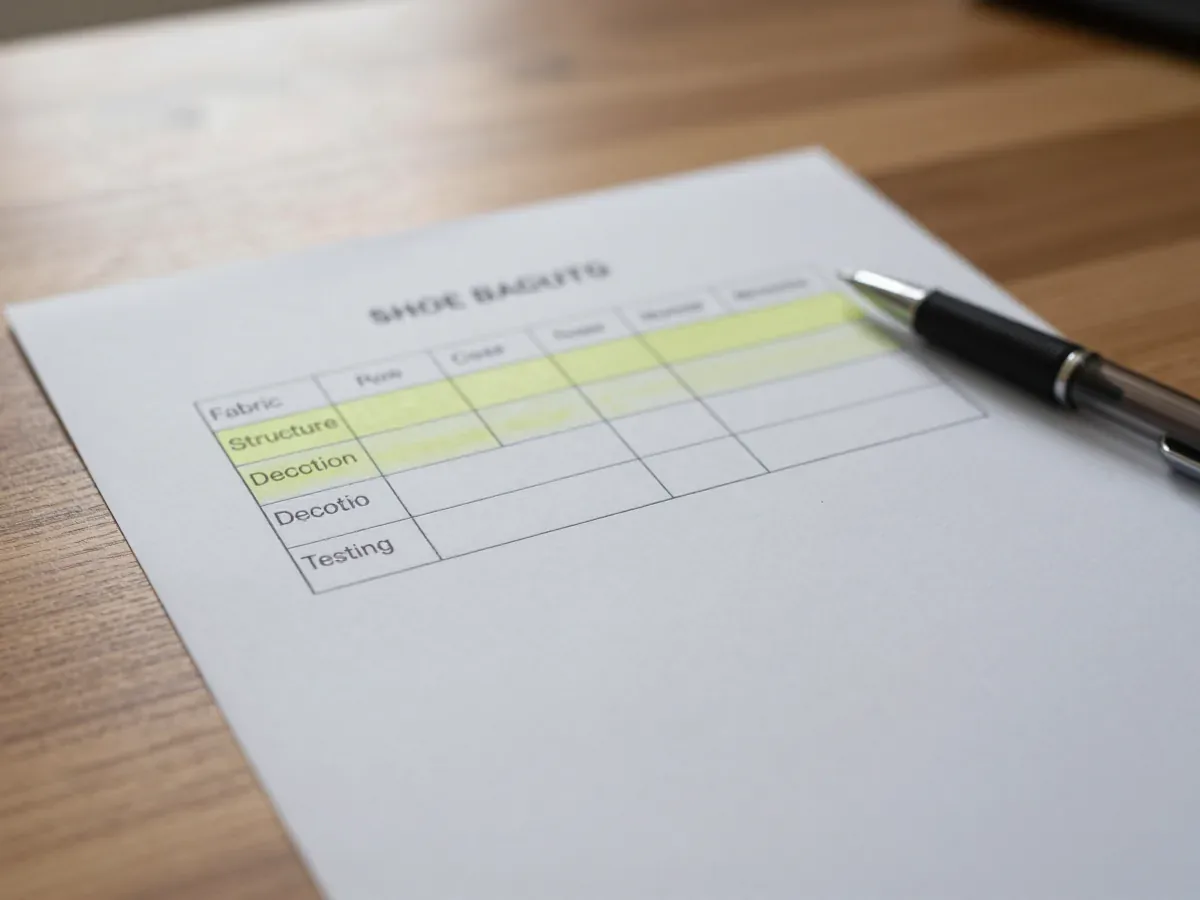
A standard quotation for custom shoe bags usually breaks into fabric, structure, decoration and testing. Fabric is the largest and most visible line. Structure covers the cut, the cord channel and any divider. Decoration covers printing, heat transfer or a woven label. Testing covers the fastness checks that decide whether the decoration stays where it was put.
The line buyers skim is testing. It is small, it is often quoted as a pass-through, and it is the only line that protects the other three. A bag with a beautiful print that migrates onto a leather toe has cost more than the whole order. The test line is not overhead; it is insurance priced per unit.
Fabric cost: why non-woven and cotton are not interchangeable
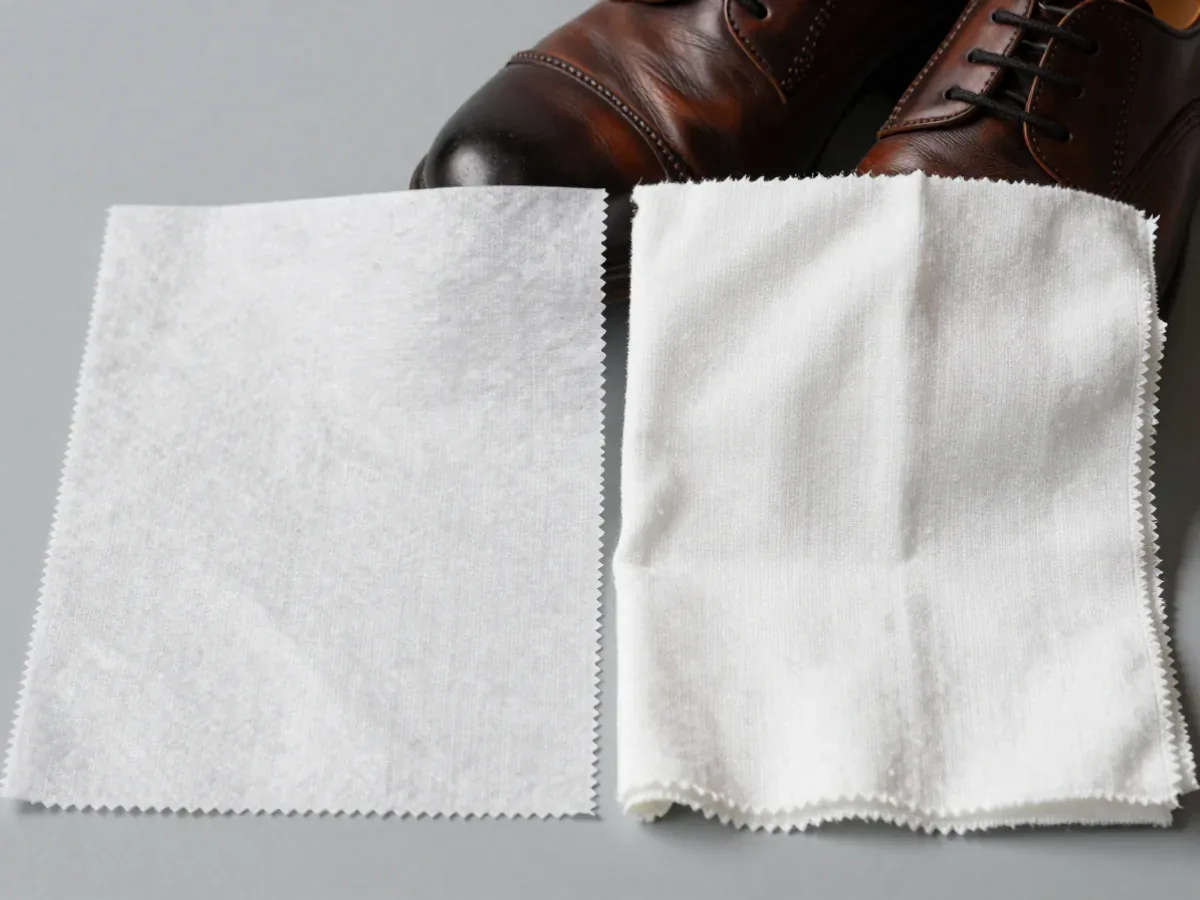
Non-woven polypropylene is the economy workhorse for bulk programs. It is light, printable and adequate for transit protection, which is why it dominates volume footwear packaging. Cotton and canvas flannels sit at the premium end, where the bag is part of the unboxing rather than a wrapper.
The two are not interchangeable because they do different jobs. Non-woven protects a pair on a pallet. Cotton flannel and microfiber protect a finished pair in storage, and their soft faces polish rather than scuff leather. Microfiber also draws storage moisture away. A buyer who swaps cotton for non-woven to save on the fabric line is not buying the same bag at a lower price; they are buying a different protection level.
Material selection is a protection decision before it is a cost decision. The fabric line should be read against the damage mode of the product inside: scuffing on finished leather, dust on display pairs, moisture in long storage. Each mode points to a different fabric, and the quote should name which one it is pricing.
Structure cost: what a divider adds and what it prevents
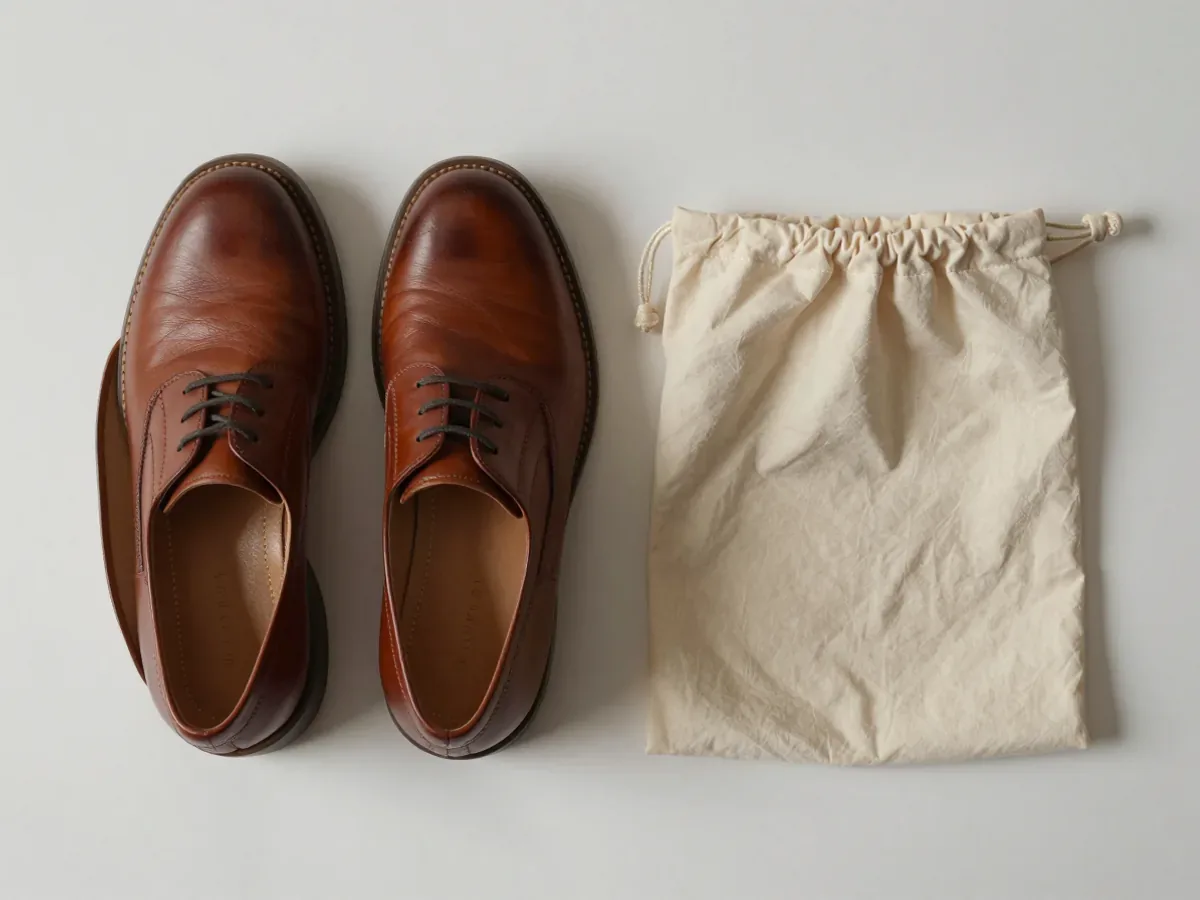
Three structures cover the shoe bag market. The classic drawstring sack is the volume leader: a simple tube with a cord channel, cheap at quantity and forgiving on fit because the fabric drapes around the pair. Flat pack styles sit closer to a folded pouch. Divided styles add an internal wall so each shoe sits in its own compartment.
The divider is the structure line that changes the cost most, and it is also the one that prevents the most expensive damage. Pair-on-pair scuffing is the failure mode premium leather and finished pairs are most sensitive to. A divider removes contact between the two shoes, so the bag stops being a container and starts being a handling system.
For canvas and casual lines, a single cavity usually suffices. The pair is not going to show a scuff from its partner, and the divider adds cost without removing a real risk. The decision point is the product, not the price list: finished leather and premium pairs justify the wall, casual and canvas lines rarely do.
Decoration cost: the print that faces the shoe
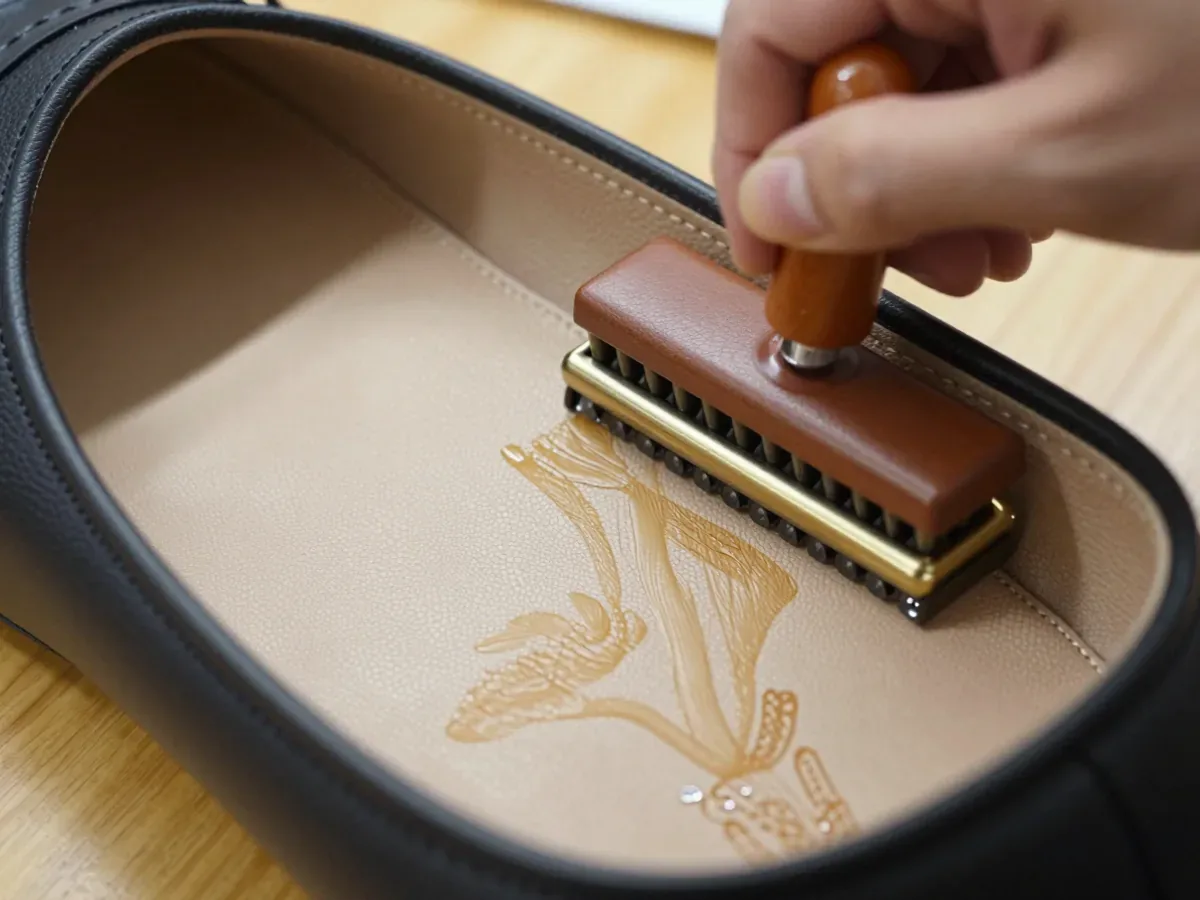
Shoe bag branding carries a constraint most bag programs never face: the decoration faces the product. Screen prints and heat transfers sit on the inside surface of the fold, and a heavy-handed application can transfer or abrade against the shoe under pressure and warmth in a closed bag.
That is why the decoration line is not just a print cost. It is a placement decision. Branding that belongs on outer faces, seams or woven labels keeps the ink away from the product. A logo pressed hard onto an inner panel may look sharp in the sample room and still migrate onto a leather toe after a season in a warehouse.
The decoration line should state where the mark goes, not only how big it is. A woven label on a seam costs differently from a heat transfer on the inner fold, and it carries a different risk. Buyers who compare two quotes on the print size alone are comparing the wrong number.
The hidden cost of a fastness test you skip
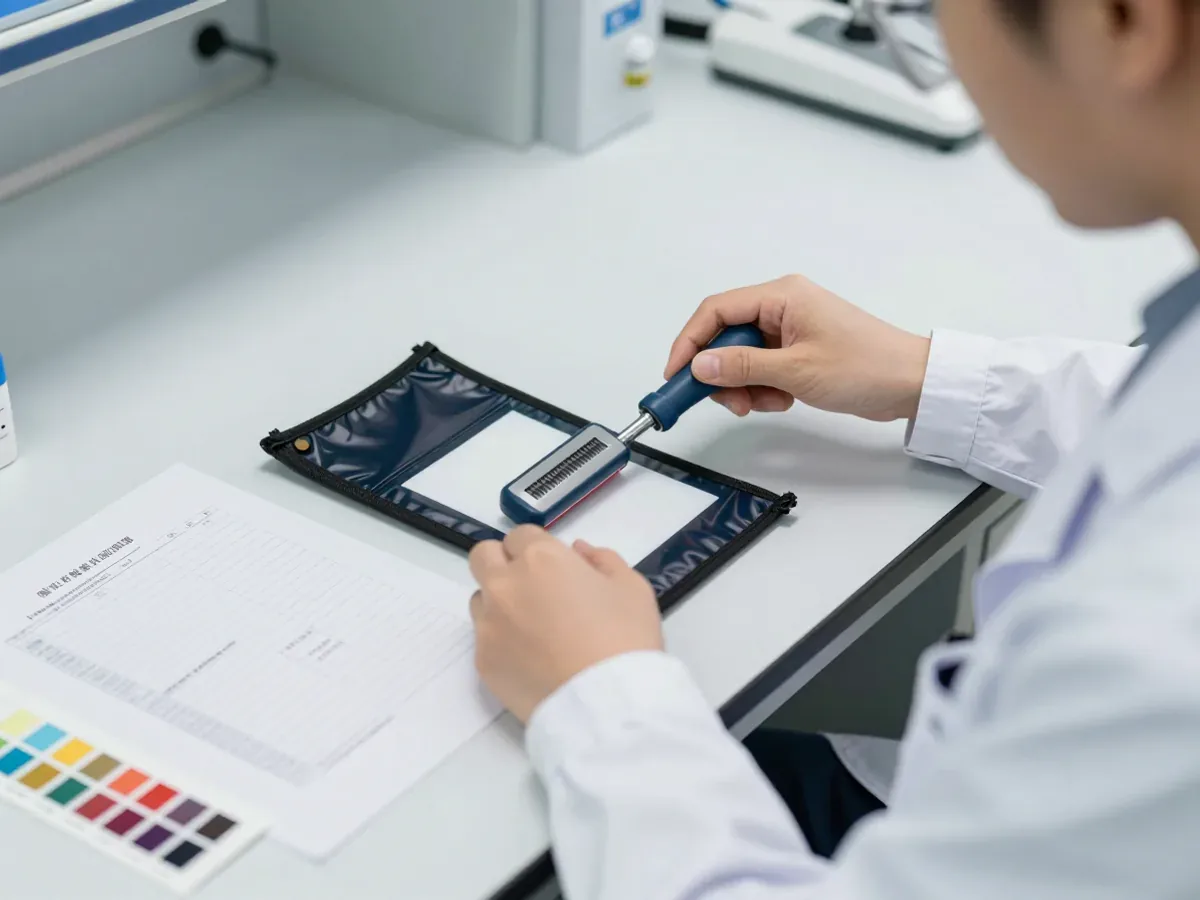
The test report can pass and still leave a question open: what happens to the bag after fifty washes, or after a summer in a hot container. Fastness testing exists because decoration applied with unfast inks can transfer under pressure and warmth. Skipping it does not remove the risk; it moves the risk to the retailer.
The hidden cost arrives in three forms. Rework is the first: printed bags pulled from a run and replaced. Claims are the second: a retailer returning pairs marked by their own packaging. The third is the quietest and often the largest, a launch that ships late because the decoration had to be redone after approval.
None of these appear on the quotation. They appear later, and they are priced per pair, per carton and per week of delay. A testing line that costs a fraction of the unit price is cheap against any one of them.
How to calculate the real cost per pair
The real cost per pair is the quoted unit price plus the expected cost of the failures the quote does not cover. Start with the four lines, then add a probability-weighted allowance for rework, claims and delay. A bag that fails fastness once in a large run can wipe out the saving from a cheaper fabric across the whole order.
A simple way to frame it: take the unit price, add the cost of one rework cycle divided by the run size, add the expected claim rate multiplied by the claim value, and add the retail margin lost on a delayed launch. The result is rarely the number on the quote, and it is the number the order actually carries.
This is also how two quotes should be compared. The cheaper bag is only cheaper if its fabric matches the product, its structure removes the real damage mode, its decoration sits away from the shoe and its testing line is funded. Strip any of those and the gap closes or reverses.
What to put in your next request for quotation
A request that produces a comparable quote names four things. First, the product inside the bag and its damage mode, so the fabric line can be priced against a real risk. Second, the structure, including whether a divider is needed and why. Third, the decoration placement, not just the artwork. Fourth, the fastness testing the decoration will need before bulk.
Add the largest pair in the range and the room needed to cinch, because size drives fabric consumption more than any other variable. A common drawstring bag runs roughly 35 by 45 centimeters for adult footwear, but the largest-pair rule beats any universal number. A mixed footwear range should be sized from its biggest item, not its average.
Ask the supplier to quote testing as a named line rather than a pass-through. A quote that shows the fastness check as its own cost is easier to compare and harder to quietly drop. The buyer who sees all four lines plus the test can decide where the money goes instead of discovering it after the cartons are sealed.
FAQ
Is a divided shoe bag worth the extra cost?
For premium leather and finished pairs, yes. Separate compartments prevent pair-on-pair scuffing, the damage mode those products are most sensitive to. For canvas and casual lines, a single cavity usually suffices.
Which material protects leather shoes best without adding much cost?
Cotton flannel and microfiber, whose soft faces polish rather than scuff leather. Microfiber also draws storage moisture away. Non-woven remains the transit-protection economy choice.
Why did my logo transfer onto the shoes?
Decoration applied too heavily or with unfast inks can transfer under pressure and warmth in a closed bag. Shoe bag branding belongs on outer faces, seams or woven labels, with fastness testing before bulk.
What size shoe bag should I order for a mixed footwear range?
Size from the largest pair in the range with room to cinch. Common drawstring bags run roughly 35 by 45 centimeters for adult footwear, but the largest-pair rule beats any universal number.