

Based on a legacy article about custom shopping bag dimensions plus our own product spec notes on paper bags, kraft stock and handle options.
The pallet held 840 bags, not the 960 the freight quote had assumed. A DTC apparel brand found out at the loading dock, three weeks before a seasonal launch, when the forwarder recalculated the container plan and the per-unit ocean cost moved up by a margin nobody had budgeted for. The bags themselves were fine. The cartons were fine. The problem was two inches.
Those two inches were width. The brand had ordered an 18x18x8 inch bag for a single hoodie, a size their previous supplier recommended after seeing a mockup. On screen the proportions looked generous and premium. On a pallet, the extra width pushed the folded bag past the carton footprint the freight quote was built around, and the whole downstream calculation shifted. This is the story of how a spec sheet line becomes a shipping bill, and where a buyer can still intervene before the die is cut.
The Pallet That Held Fewer Bags Than the Quote Assumed
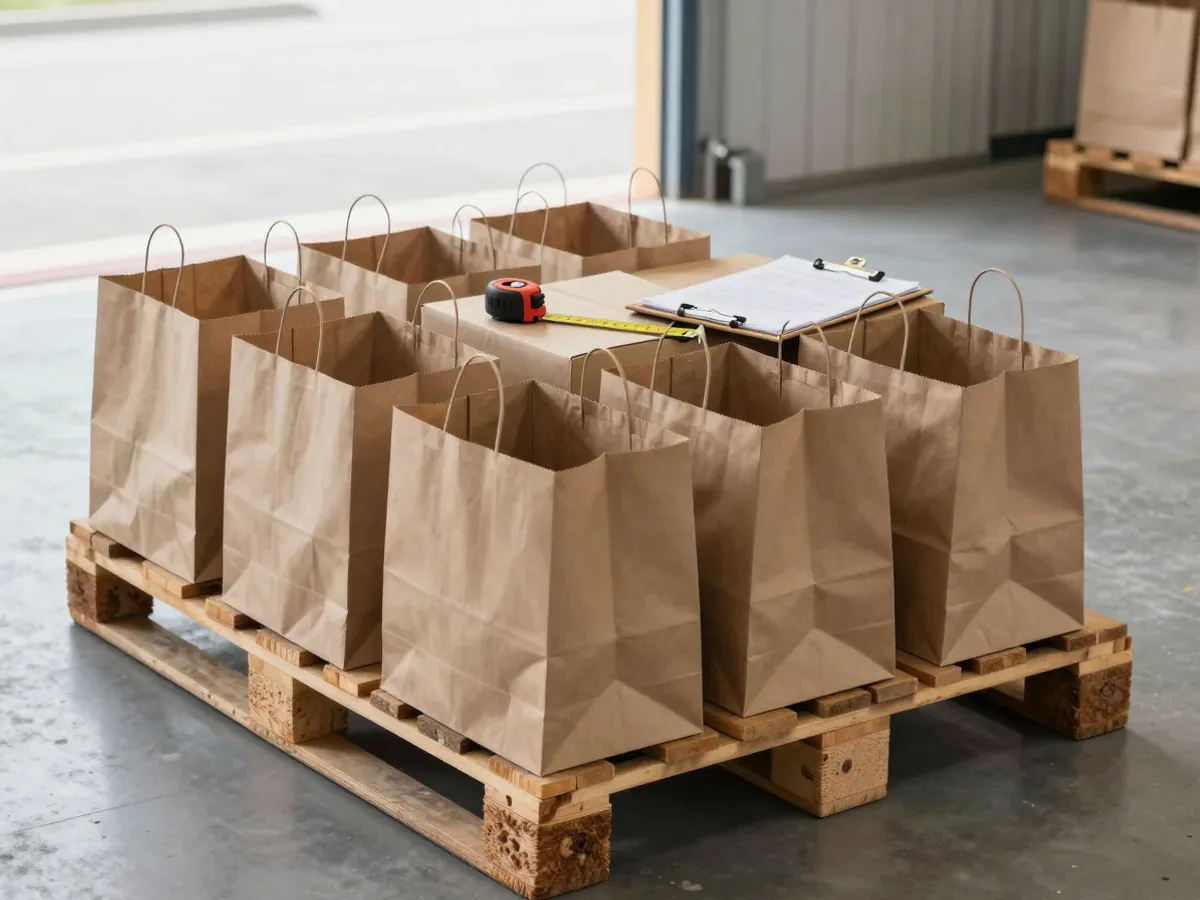
The carton was specified at a standard footprint. The bag, folded flat, was supposed to sit inside it with a small tolerance. When the width grew, the gusset ratio changed, and the bag no longer folded to the same flat profile. Cartons that once held 48 bags held 42. The pallet tier count stayed the same, so the loss compounded quietly across every layer.
Nobody caught it in the sample photo because a sample photo shows a bag standing up, not a bag compressed under twelve kilograms of cartons above it. The buyer approved the mockup on aesthetics. The forwarder approved the quote on an assumed carton count. Both approvals were correct in isolation and wrong together.
Freight is charged on volume or actual weight, whichever is greater, and paper bags almost always lose on volume. A bag that occupies more cubic space per unit does not need to weigh more to cost more to move. The width increase did not add much paper. It added air.
Tracing Back to the Line That Said 18x18x8
The purchase order listed three numbers in sequence: 18 wide, 18 high, 8 gusset. That format is common and it hides a decision. The buyer read 18x18 as a square face, which sounded balanced. The factory read it as a die-line instruction, which meant the fold path, the gusset angle, and the handle anchor points all had to be recalculated from the standard Medium and Large dies already in the queue.
Standard sizes carry no tooling cost because the dies exist. Small runs at 8x10x4 inches, Medium at 12x15x5, Large at 16x18x6. The moment a dimension departs from those, a new die enters the picture, and with it a minimum order quantity that has to amortize the setup. The brand in this case did not need a fully bespoke bag. It needed a bag that fit a hoodie box with a little breathing room, and it paid bespoke prices for a shape that a near-standard size could have covered.
The line on the PO was not wrong. It was under-specified. It gave the factory a target and no constraints.
Why Width Moves the Die-Line More Than Height
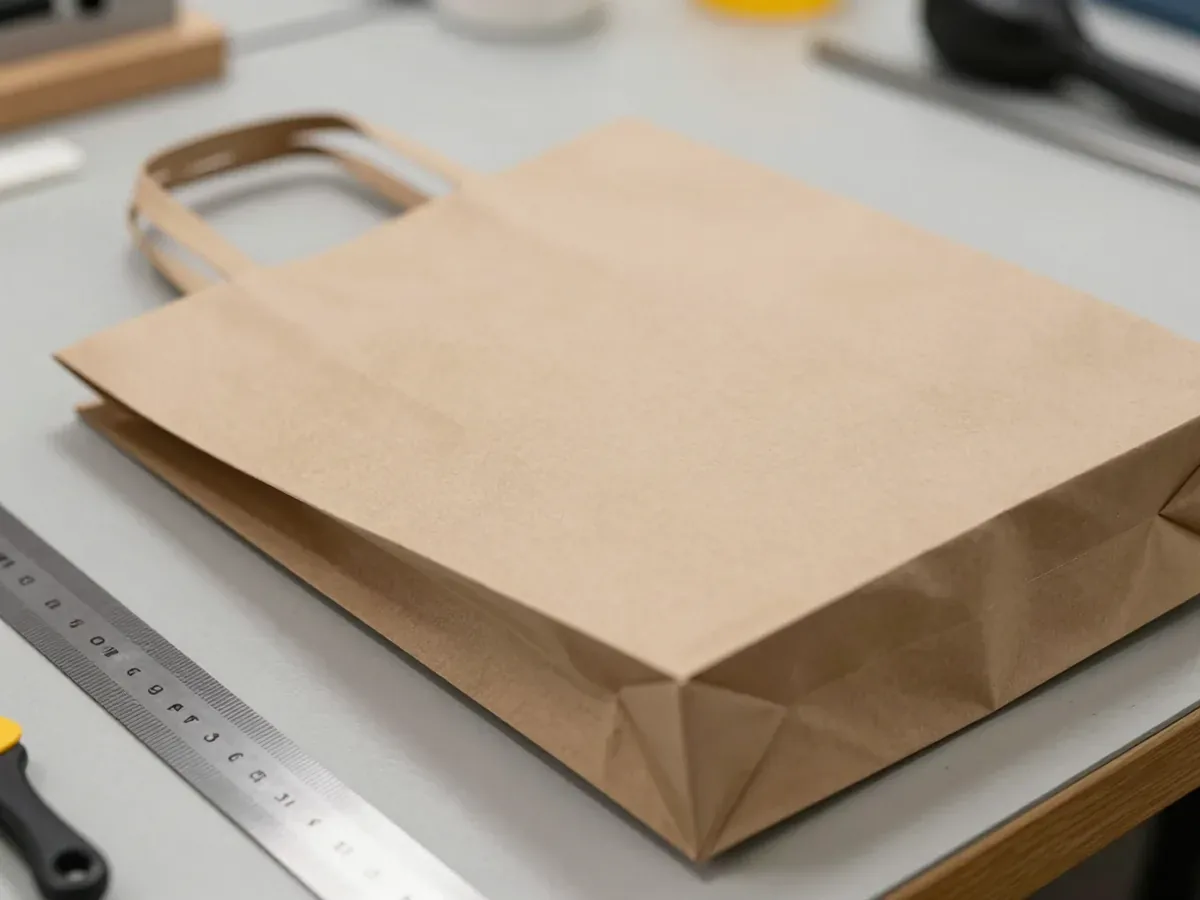
Height is the cheap dimension to change. Extending the vertical cut path adds material along a straight line, and the fold geometry above the gusset stays intact. Width is different. Widening a bag changes the relationship between the front panel, the side gusset, and the bottom fold. The die has to be redrawn, not stretched.
On a 16x18x6 bag, adding two inches of width does more than add two inches of paper. It alters the gusset ratio, which changes how the bag collapses flat, which changes how it stacks, which changes how many fit in a carton. A two-inch width increase has been observed to cut pallet packing density by roughly twelve percent. That number does not appear on any bag quote. It appears on the freight invoice.
There is a second effect. A wider bag presents a larger face to handling stress during transit. The paper absorbs more wind load and more abrasion against neighbouring cartons. A 120gsm stock that performs fine at 8x10x4 inches starts to look thin at 18x18x8, not because the paper changed but because the surface area did.
The Gusset Depth That Decides Cubic Volume
Gusset depth is the number that turns a flat bag into a container. A standard Medium uses a 5-inch gusset. Shrinking it to 3 inches saves material and looks like a cost win on the quote, but the geometry turns quickly. A shallow gusset forces the side panels to fold at a tighter angle under load, and the paper fibres along that crease take repeated compression.
With a 3-inch gusset on 120gsm stock, crease-line splitting shows up consistently after handling cycles. The bag does not fail dramatically. It develops a hairline crack along the fold, and then the crack becomes a tear. The minimum recommended gusset depth for any load-bearing retail bag is 4 inches, regardless of overall size. Below that, the bag is being asked to do something the paper was not engineered for.
Depth also drives freight. A 2-inch gusset increase adds roughly fourteen percent to freight cost per unit, because the folded bag is thicker and fewer units fit per carton. The buyer who shrinks the gusset to save paper often pays it back in breakage claims and reorders.
Handle Drop: The Number Missing From Most Spec Sheets
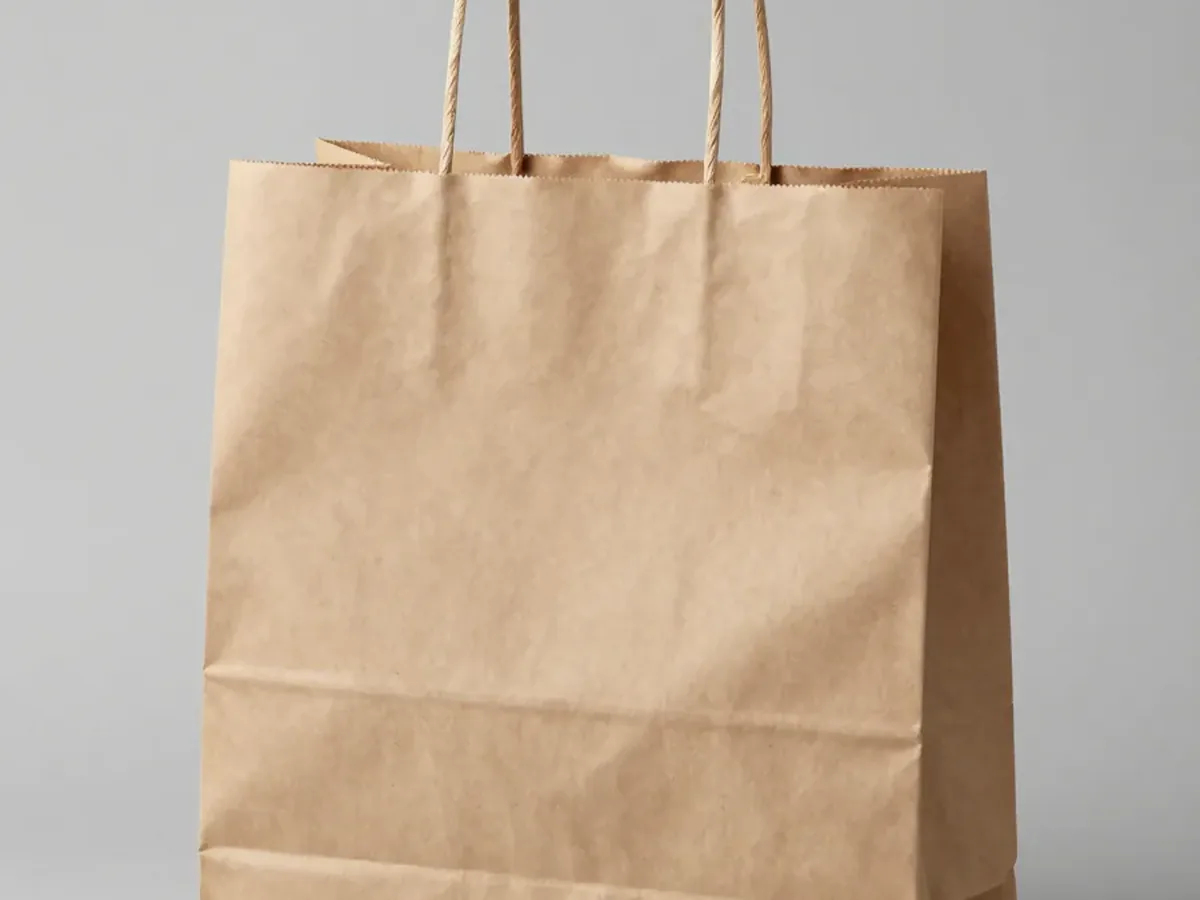
Handle drop is the distance from the bag's top edge to the highest point of the handle loop. Most dimension guides list height and width and leave handle geometry to the factory. That omission transfers a structural decision to someone who has never seen the product going inside.
The engineering standard here locks handle drop at one third of total bag height. For a Large 16x18x6 bag, that means a 6-inch drop. The physics is direct. A shorter drop concentrates pulling force closer to the handle-to-bag junction, right where the 25mm turn-back reinforcement ends. Cutting the drop by forty percent triples the tear rate at that point in observed runs.
At the 2.5kg to 5kg weight class, handle drop becomes the critical variable rather than a finishing detail. A shorter drop increases the pull angle and loads the anchor point at a worse vector. The bag may survive a light load and fail on a heavy one, which means the failure shows up in the customer's hands rather than in the factory.
Paper Weight and Burst Strength Behind the Size
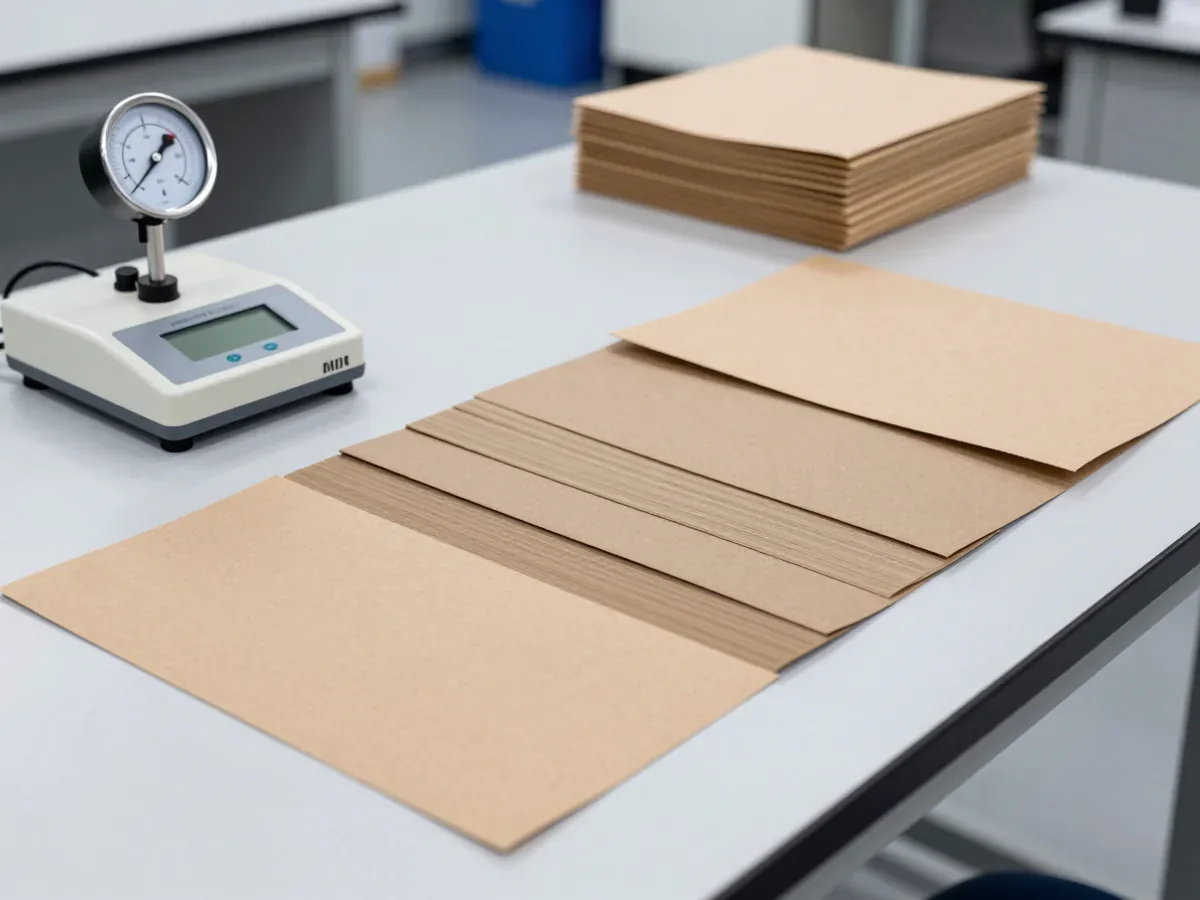
GSM is a density metric, not a strength guarantee. It tells you how much the paper weighs per square metre. Burst strength, measured in kilopascals, tells you how much outward pressure the sheet withstands before it ruptures. A spec sheet that lists only GSM is describing half the bag.
Internal thresholds from production runs are consistent. 120gsm kraft averages 185 to 210 kPa. 150gsm sits at 260 to 295 kPa. 180gsm crosses into 340 to 380 kPa. Those numbers assume standard handle reinforcement and correct bottom gusset folding, which is why they cannot be read in isolation from the die-line.
The weight tiers map to load ceilings. Under 1kg, 120gsm is the floor, and 150gsm is the safer choice once the bag exceeds 8x10x4 inches. Between 1kg and 2.5kg, 150gsm with a 25mm turn-back is the minimum. From 2.5kg to 5kg, the range moves to 180gsm through 250gsm, and above 180gsm the bag holds its shape when empty, which matters for the unboxing moment.
There is a brand impression cost that does not appear in any quote. A Large bag specced at 150gsm to save a few cents per unit looks acceptable flat and feels flimsy in hand. Clients who moved a flagship retail bag from 150gsm to 180gsm reported measurable improvement in unboxing survey scores, not because the print changed but because the bag kept its structure while being carried.
What the Reprint Taught the Trade About Standard Dies
The brand in this story did not reprint at 18x18x8. They moved to a near-standard footprint that fit the hoodie box with a small void, accepted a slightly larger gusset, and kept the existing die family. The per-unit tooling charge disappeared, the lead time shortened because no CAD-to-production translation was needed, and the carton count returned to the original freight assumption.
The lesson is not that custom sizes are bad. A bespoke die earns its cost when the product has an irregular footprint, like a 14x8x10 shoebox, where a standard bag leaves internal void space that lets the product shift. In that case the custom die removes movement and protects the product. The mistake is ordering bespoke geometry for a rectangular product that a near-standard size already covers.
Standard dies also remove a verification step. No first-article inspection for die accuracy, no tolerance check at plus or minus one millimetre. The die is pulled, mounted, and run. That compression of the timeline is worth more than the tooling fee on seasonal launches where every week of lead time carries a cost.
A Buyer's Check Before the Die Is Cut
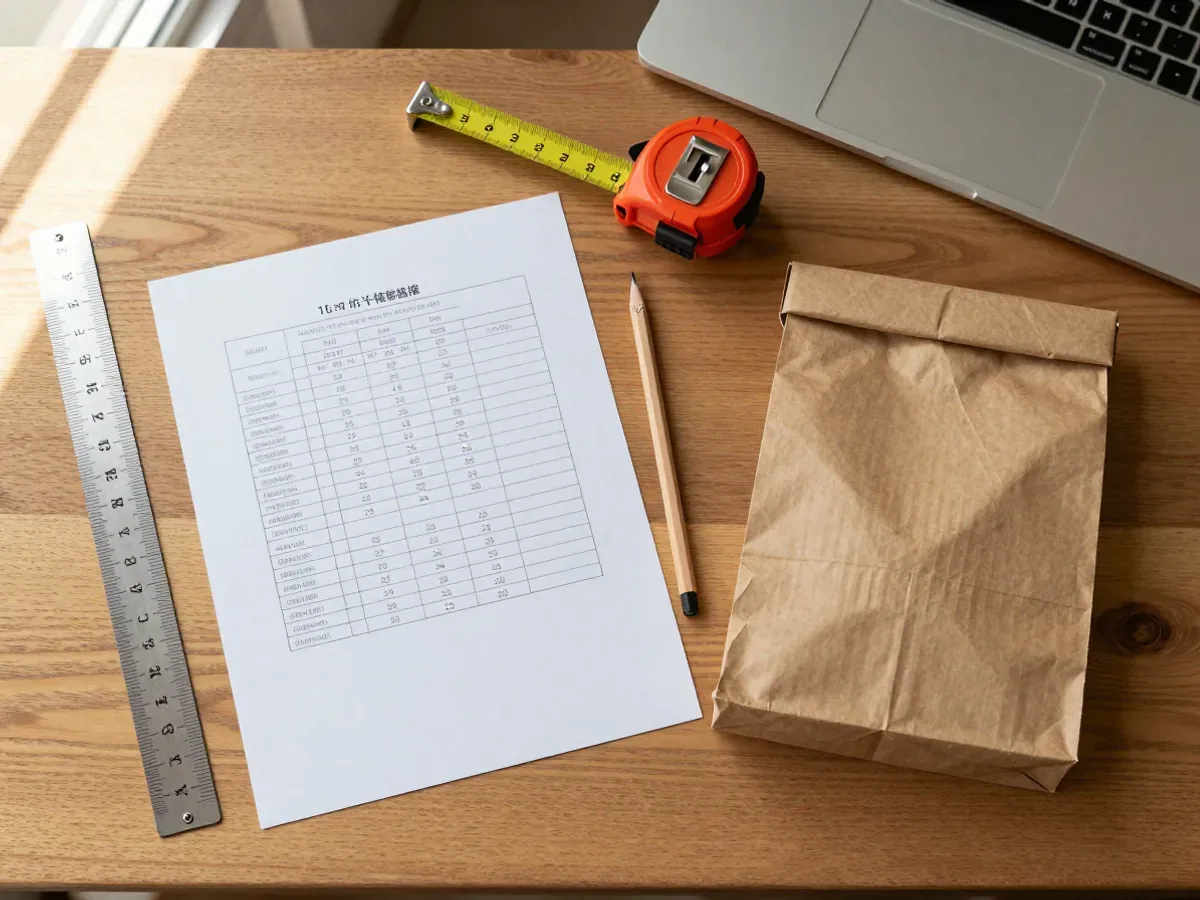
Before approving any custom dimension, a buyer can run a short set of checks that catch most of the cost traps described above.
- Convert every dimension to both centimetres and inches and confirm the factory is reading the same unit. A 30 by 15.7 in bag changes handle proportion when converted, and unit confusion is a common source of rework.
- Ask which dimension is being changed from the nearest standard die, and ask specifically what that does to the folded flat profile and the carton count per pallet.
- Request the gusset depth in writing and refuse anything below 4 inches on a load-bearing retail bag.
- Put handle drop on the purchase order as a number, expressed as a fraction of bag height, not as a note to the factory.
- Ask for burst strength in kPa alongside GSM, and match both against the actual product weight profile rather than the product category.
- Send the three highest-volume product dimensions and ask for a volume-weight versus actual-weight freight comparison before the die is approved.
None of these checks require a new sample. They require the spec sheet to carry the numbers that decide cost, not just the numbers that describe appearance. The bag that arrived on the pallet was the right colour, the right print, and the right shape. It was the wrong width, and the width was the only line nobody had questioned.
FAQ
Does a wider bag always cost more to ship than a taller one?
Not always, but width is the more expensive dimension to change on a die-line. Widening alters the gusset ratio and the folded flat profile, which changes pallet density. Height extends a straight cut path and usually leaves the fold geometry intact.
Can a buyer keep a standard die and still get a bag that fits the product?
Often yes. A near-standard size with a slightly deeper gusset covers many rectangular products that a buyer assumes need a bespoke die. The trade-off is a small internal void, which is acceptable when the product does not shift in transit.
How should handle drop be specified on a purchase order?
State it as a measurement from the bag's top edge to the highest point of the handle loop, and tie it to bag height. One third of total height is a workable standard. Leaving it unstated hands the decision to the factory.
Is GSM enough to judge whether a bag will hold the product?
No. GSM describes paper density, not rupture resistance. Ask for burst strength in kPa and cross-reference it against the load weight, handle reinforcement, and gusset depth the bag will actually carry.






