
Questions pulled from a relocation fleet's first custom run, answered with the stitching, webbing and sample checks behind each one.
A carton of returned bags sat by the loading bay with one handle torn loose and the shell still intact. The fleet buyer who opened it had spent three weeks approving a logo position and had never asked how the handle was attached. That single detail explained the whole return.
Relocation fleets order custom heavy duty moving bags in the thousands, and most of the specification conversation drifts toward artwork. The questions that decide whether the bag survives a season sit underneath the print. Five of them came up in a row during one order review, and a sixth surfaced only after the run had shipped.
Why Did the Handles Go First?

The buyer's first question was blunt: why do the handles fail when the fabric still looks new? A mover lifts a full bag by the webbing, swings it onto a truck bed, and sets it down hard. The shell sees compression. The handle attachment sees the entire load concentrated on a few square inches of stitching.
Most procurement managers spec fabric weight and ignore the handles, which is where the risk actually lives. A bag can hold a static load on a warehouse floor and still fail the moment it is lifted and swung. The difference is dynamic force, and it lands on the stitch row.
The answer to the buyer's question was not a thicker shell. It was a handle attachment built for lifting: a dense stitch row, webbing that spreads force across the fabric, and a reinforced bartack at each end. The bag that came back had none of those.
How Wide Should the Webbing Be Before the Load Matters?
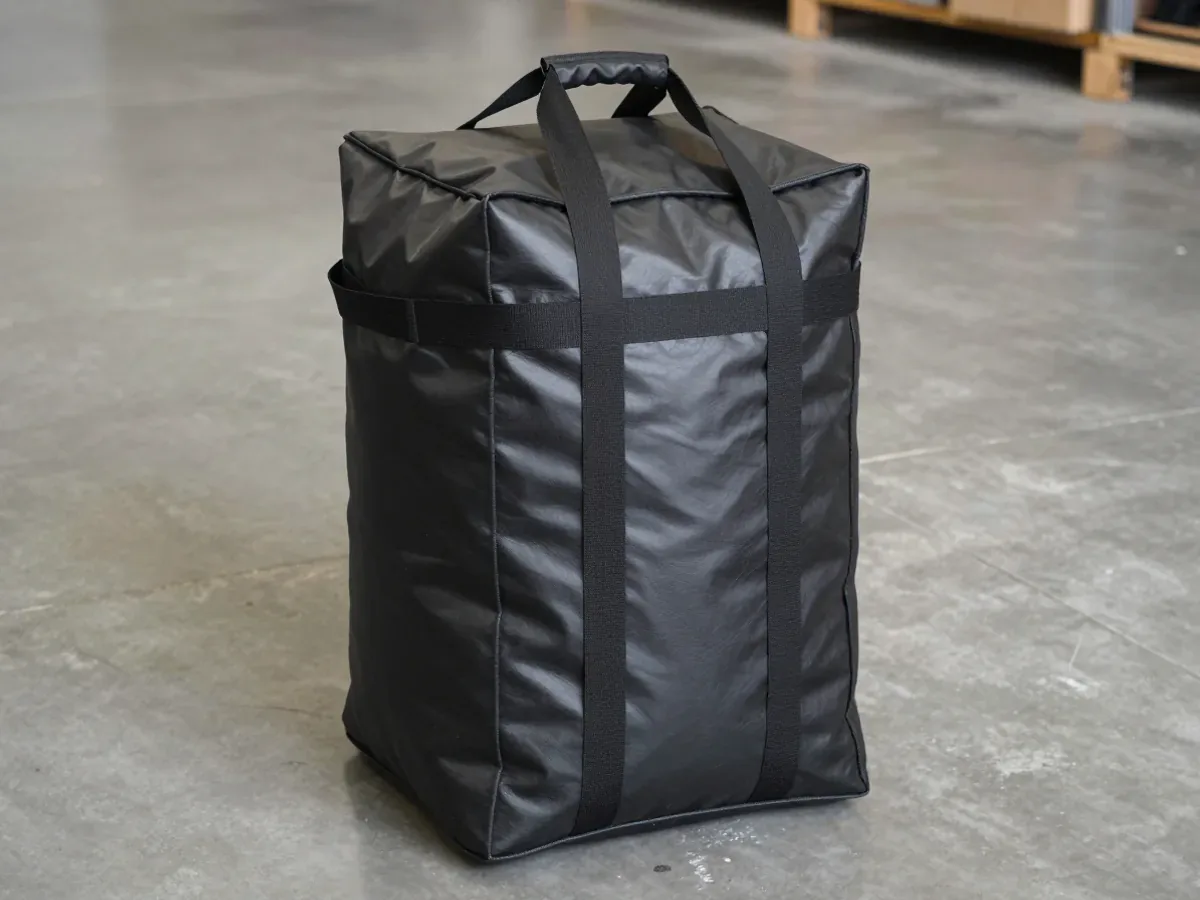
Narrow webbing concentrates force on a thin strip of fabric, and tear-out starts at the edges of that strip. Wider webbing spreads the same load across more woven surface, so each thread carries less. The buyer wanted a number, and the honest answer is that the number matters less than what the webbing does along its length.
On the long bag in the range, the webbing runs the full length of the body rather than stopping under the handles. That changes the failure mode. A short handle strap pulls against a small anchor patch. A full-length run distributes the lift along the bag, so the base and the handle share the work.
The buyer asked whether full-length webbing was worth the cost on a fleet order. The better question is what a torn handle costs in a customer's driveway, with a crew standing idle and a wardrobe half loaded. Webbing width and webbing length are separate decisions, and both belong on the spec sheet before the artwork.
What Does a Stitch Row Look Like When It Is Built for Lifting?
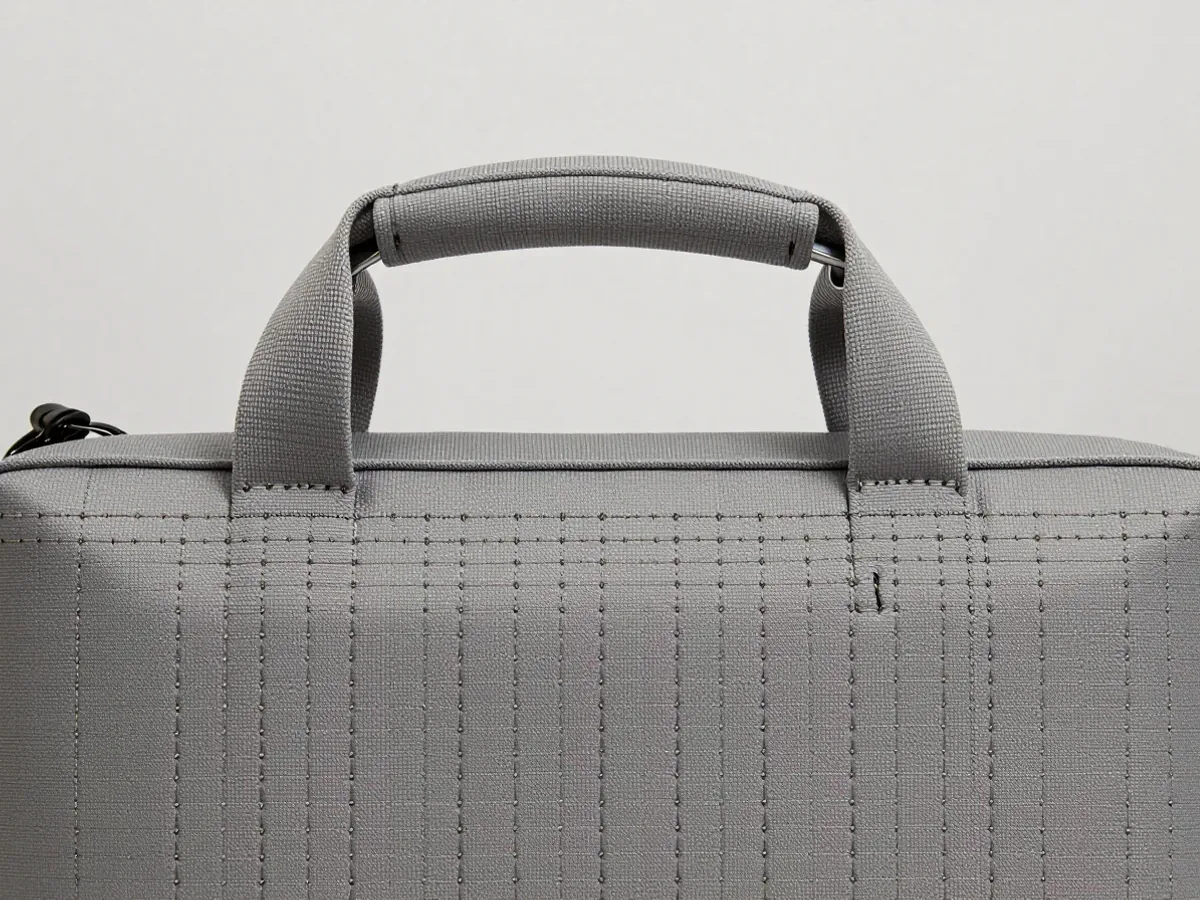
The buyer had seen stitch rows on samples and could not tell a strong one from a weak one by eye. The difference is visible once you know where to look. A single needle lock stitch gives one thread path, and one break ends the attachment. A multi-needle pattern gives each needle its own path, so a single failure leaves the rest holding.
Density matters as much as needle count. A dense row packs more stitches into the attachment zone, which spreads stress instead of letting it collect at one point. The handle attachment on the blue bag is stitched with a dense row for exactly this reason, and the reinforced handle sits on top of that row rather than beside it.
The buyer asked how to check this without a lab. A close photograph of the attachment, taken straight on and at an angle, shows needle count and stitch density. A supplier who cannot produce that photo of your exact sample is not ready for the run.
Where Does the Logo Sit Without Weakening the Bag?

Logo placement is where customization and structure collide. The most visible spot is the center of the front panel, a few inches below the top hem. That area flexes least, which is why it holds print well and does not interfere with the lift.
The buyer's draft artwork had the logo running up toward the handle stitching. That placement puts ink and heat where the bag bends under load, and it invites peeling at the worst possible moment. Moving the logo down and inward solved it without shrinking the mark.
Print method belongs in the same conversation. Direct screen printing sinks ink into the weave, which suits simple bold marks. A heat-transfer patch gives a smooth surface for full-color artwork and resists peeling better than direct print on a textured shell. The buyer chose a patch for a multi-color mark and kept the base bag's woven texture, which hides scuffs better than a smooth film.
Which Sample Actually Proves the Bag Before the Run?
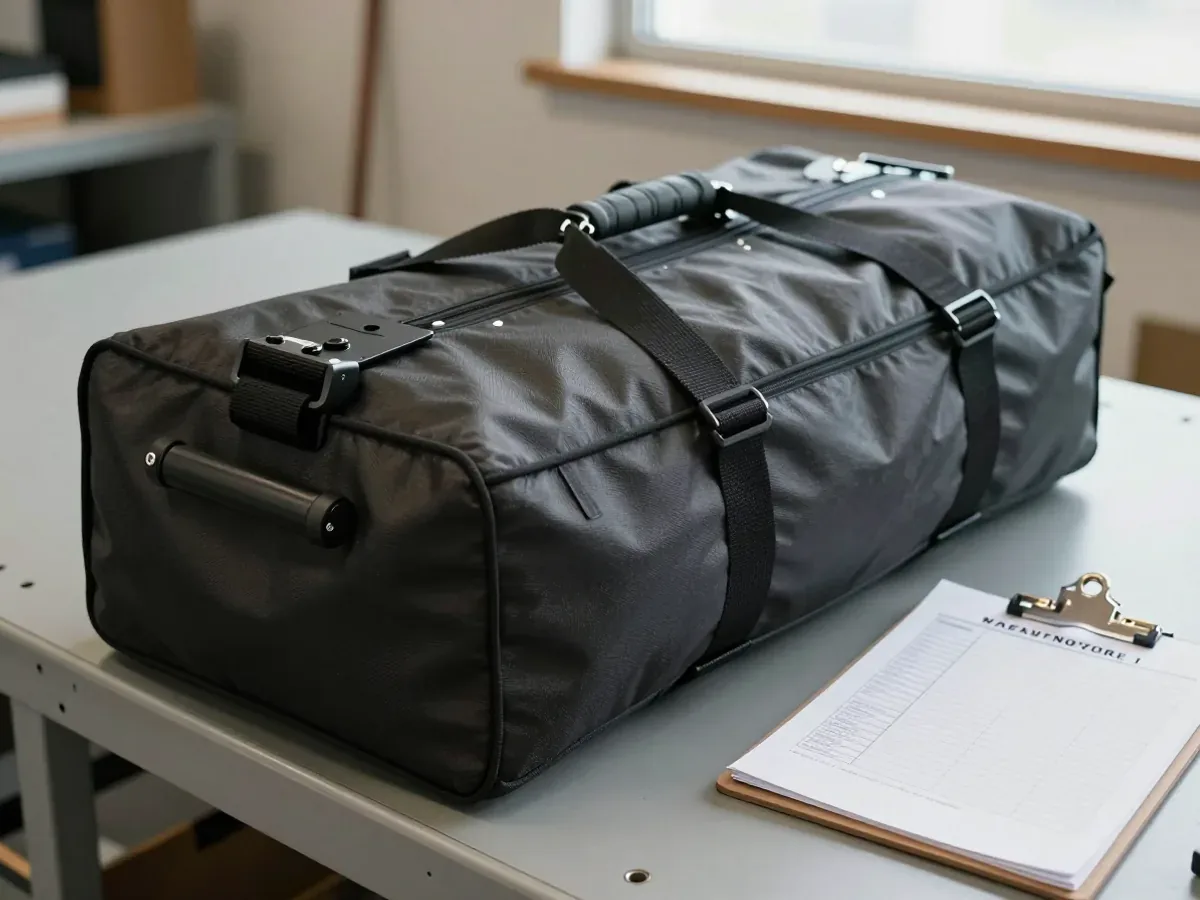
The buyer had a sample on the desk and assumed it settled the question. It did not. A pre-production sample has to be built from the exact shell, the exact webbing, the exact stitch pattern and the exact print method. A reference sample from a different batch proves nothing about the order.
The proof the buyer needed came in two parts. First, a sample in the specified materials with the handle attachment photographed up close. Second, a load test that puts the bag under dynamic force rather than static weight, because a mover swings a bag and a photo cannot show what happens at that moment.
A sample without a load test is a showpiece. The buyer who asks for both, before approving the run, is the buyer who does not open a carton of returns three months later.
What the Buyer Never Asked: Does the Shell Survive the Second Move?
The order shipped, the first moves went well, and then the fleet started reusing the bags. That is when the question the buyer never asked became the one that mattered. A moving bag is not a single-use item for a relocation fleet. It goes out, comes back, gets folded, and goes out again.
The shell decides whether that cycle works. A woven texture hides marks better than a smooth film, so a scuffed bag still looks serviceable on the second job. A clear PP shell wipes clean between jobs, which matters when the previous load was a dusty garage. An empty bag folds flat, so a fleet can stack hundreds between runs without renting extra storage.
The heavier shell in the range sits on the longest bag, the 27.2 × 13.8 × 15 in body that most home moves are built from. That shell carries a full bedding load without the base sagging, which is the failure that turns a reusable bag into a one-trip bag. The buyer had specified for the first move and never tested the second.
Every order we run passes four checkpoints before it ships, and the shell check is one of them. The handle check is another. A fleet buyer who writes both into the purchase order, alongside the logo position, gets a bag that survives the season rather than the first driveway.
FAQ
Can a logo be printed directly on woven PP, or does it need a patch?
Both work. Direct screen printing suits simple bold marks and sinks into the weave. A heat-transfer patch gives a smooth surface for full-color artwork and resists peeling better on a textured shell. Match the method to the artwork, not the other way around.
How do I check handle stitching without a lab test?
Ask for a close photograph of the handle attachment on your exact sample, straight on and at an angle. Needle count and stitch density are visible. Pair it with a dynamic load test, since a static photo cannot show what happens when a mover swings the bag.
Does a heavier shell make the bag harder to fold between jobs?
A PP shell folds flat when empty regardless of weight. The heavier shell sits on the longest bag, where the extra body is needed to stop the base sagging under a full bedding load. Folding is not the trade-off; sagging is what the weight solves.






