
Based on our own packing and inspection records for flat-packed PP bags, plus the Incoterms definitions the old post compared.
The first inspection of a flat-packed moving bag order failed on a carton count, not on a seam. The buyer had booked FOB, assumed the factory would photograph and count every carton before the container sealed, and found out at the loading bay that nobody on the factory side had been asked to do it. The bags were fine. The paperwork trail was not.
That failure is a useful place to start, because it shows where the DDP and FOB line actually sits. It is not drawn at the port, and it is not drawn at the customs broker's desk. It is drawn station by station on the factory floor, and each station hands a different task to a different desk depending on the term on the purchase order.
The PO Line That Decides Everything

A flat-packed bag order begins with one line on the purchase order: the Incoterm. Everything downstream reads from it. Under FOB, the supplier's responsibility ends when the goods are loaded on the vessel at the origin port. Under DDP, the supplier carries the goods to the buyer's named address, duty paid.
That single line changes who owns the carton count, who books the freight, who files the entry, and who pays the terminal handling charge at the destination port. Most suppliers quote FOB based on port cost alone, which leaves terminal handling, brokerage and inland delivery off the sheet. Those omissions are not small. They are the reason two quotes for the same bag can look 8 to 15 percent apart and land at the same number.
The audit walk below follows one order of flat-packed moving bags from the PO to the container door. At each stop, the question is the same: which desk owns this step under the term the buyer chose?
Incoming Material: Who Owns the First Checkpoint
The roll of PP fabric arrives at the factory before anything else, and the first checkpoint is a material check. The line runs four checkpoints between incoming material and the final count, and this is the first. Under both terms, this check belongs to the factory. DDP does not move it, and FOB does not move it.
What changes under DDP is the consequence of a miss. If the fabric weight drifts and the bags come out lighter than the spec, a DDP supplier still owns the goods until they reach the buyer's door. A FOB supplier's exposure narrows once the container is on the water, which is why the material record matters more, not less, when the buyer is carrying the freight risk.
The check to run here is simple. Ask for the incoming material record with the roll lot and the weight per square meter, and confirm it was signed before cutting started. A record created after the fact is a record with no checkpoint behind it.
Cutting and Sewing: Where the Bundle Depth Is Set
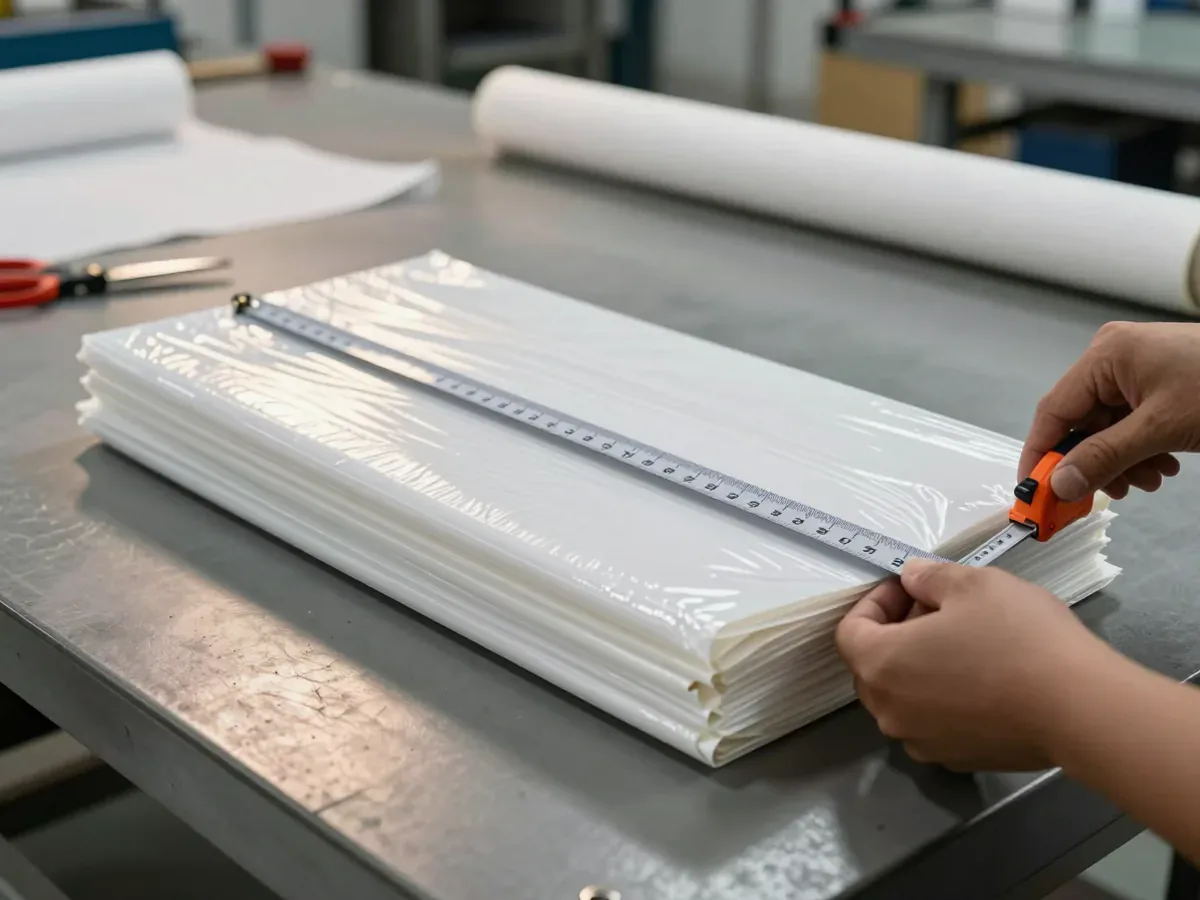
At the cutting table, the flat-pack decision gets made. A clear PP bag at 29.1 by 13.8 by 13.0 inches packs to a bundle 1.6 inches deep. An extra large bag at 45.3 by 15.7 by 21.7 inches packs to 1.8 inches. A backpack strap bag at the same footprint as the first packs to 1.0 inch.
Those depths are not cosmetic. Flat-packed bags cut DDP freight by 20 to 30 percent because volume, not weight, drives the ocean rate on light goods. Under DDP, that saving lands in the supplier's all-in quote, and the buyer sees it as a lower per-bag number. Under FOB, the saving lands in the buyer's freight invoice, which means the buyer has to know the bundle depth to check the forwarder's volume calculation.
Handles, zips and seams are sewn on the same floor as the stock runs, so the sewing station is also where a custom handle or a printed panel gets its first real test. The check here is a bundle sample pulled from the actual cut, measured flat, and photographed next to a tape. If the bundle is deeper than the spec sheet says, the freight math on both terms is wrong before the goods ever reach a container.
Final Check: The Four Stops Before the Seal

The finished bag check reads dimensions, handles, logo and packed quantity by hand. That is one stop. The line's four checkpoints run from incoming material through to this final count, and the last two are where DDP and FOB start to pull apart.
Under DDP, the supplier's quote is supposed to cover everything to the door, so a failed final check is the supplier's problem to fix before the goods move. Under FOB, the final check still happens at the factory, but the buyer's leverage drops the moment the container seals. A defect found after loading is a claim, not a correction.
The stops to confirm before the seal are the dimension check against the spec, the handle and zip pull test, the logo position against the approved artwork, and the packed quantity count. Each one should produce a photo with a date. A final check with no photo is a verbal promise.
Packing List: Barcodes, Cartons and the Term You Chose

Retail packing can carry per-store packing and barcode labels, and this is the station where the term on the PO becomes visible on the carton. Under DDP, the supplier is delivering to a named address, so per-store splits and barcode labels sit inside the supplier's scope if the PO says so. Under FOB, the supplier delivers to the port, and the per-store split usually happens at a third-party warehouse the buyer pays for.
The carton count is the other item that lives here. Cartons are counted and photographed before the container seals, and that record is the buyer's only proof of what left the factory. Under FOB, the buyer needs that record to reconcile against the forwarder's bill of lading. Under DDP, the supplier needs it to prove the delivery was complete.
Ask for the packing list with carton count, per-carton quantity, barcode label sample and the photo set, all before the seal. If the answer is that the factory does not do carton photos, the term on the PO does not change that. It only changes who is exposed when the count is short.
At the Container Door: Two Desks, One Decision
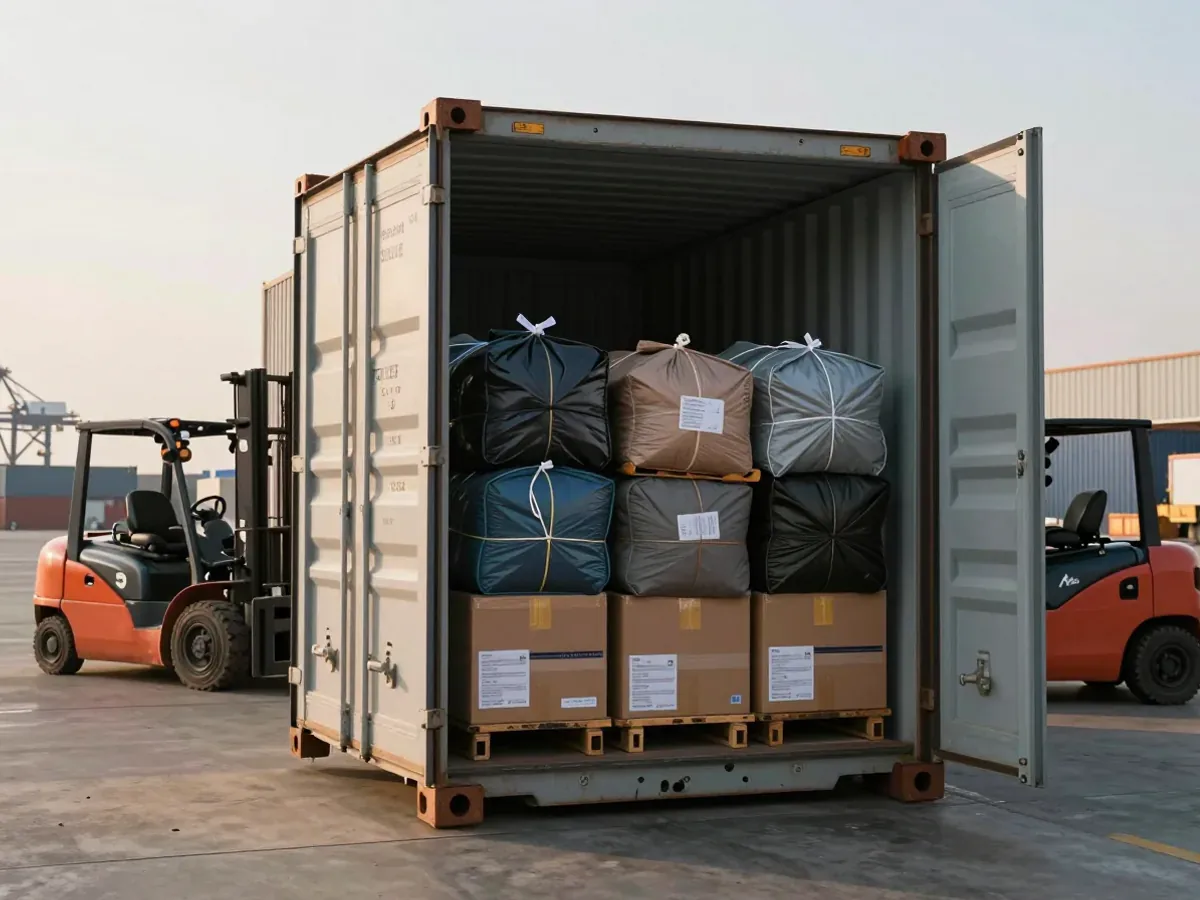
The container door is where the two terms finally show their shape. On a DDP order, the supplier's freight desk books the vessel, pays the terminal handling charge at destination, files the entry through a broker, pays the duty, and arranges the inland truck to the buyer's warehouse. The buyer's desk receives one invoice and one delivery date.
On an FOB order, the factory's job ends at the origin port. The buyer's forwarder books the vessel. The buyer's broker files the entry. The buyer pays terminal handling, duty and inland trucking. The buyer's desk holds four or five invoices and owns the risk on each.
That split is why DDP wins for small runs, tight deadlines and first-time importers. A buyer importing a 20-foot container or less, with no existing customs broker relationship and a timeline under 45 days, gets a single all-in cost to approve. FOB wins for buyers who routinely import full containers, hold in-house customs clearance, and have a broker and carrier relationships already in place. The standard freight term is FOB, and a buyer's own forwarder is accepted, which keeps that route open for buyers who want it.
What to Confirm Before You Sign
The decision between DDP and FOB comes down to total cost visibility, and visibility is built at the stations above, not at the signature line. Before signing, confirm five things in writing.
First, the all-in landed cost breakdown: ocean freight, terminal handling charge, customs brokerage, duty rate and inland delivery, itemized line by line. Second, the carton count and photo record, with the date and the person who signed it. Third, the bundle depth from an actual cut sample, since that number drives the freight on both terms. Fourth, the barcode and per-store packing scope, written into the PO rather than agreed by message. Fifth, the defect remedy, including who pays freight on replacements and under which term they ship.
A buyer who has those five items can compare a DDP quote against an FOB stack and see where the difference actually sits. A buyer who has only the unit price is comparing two numbers that were never measuring the same thing.
FAQ
Does DDP cover the carton count and photos before the container seals?
It should, because DDP puts delivery to the named address inside the supplier's scope. Confirm it in the PO anyway. The count and photo record is a factory station task, and it only happens if someone is told to do it.
If the standard term is FOB, can the buyer still use a own forwarder?
Yes. FOB is built for that arrangement, and a buyer's nominated forwarder is the normal route. The buyer then owns the freight booking, the terminal handling charge and the inland leg.
How does flat packing change the DDP versus FOB comparison?
Flat packing cuts the shipped volume, and volume drives the ocean rate on light goods like moving bags. Under DDP the saving shows up in the all-in quote. Under FOB it shows up in the buyer's freight invoice, so the buyer has to check the bundle depth to verify it.
Who handles barcode and per-store labels under each term?
Under DDP, per-store packing and barcode labels can sit inside the supplier's scope if the PO specifies them. Under FOB, the supplier delivers to the port, and the per-store split usually moves to a warehouse the buyer pays for. Write the scope into the PO either way.






