Cost figures and material specs drawn from the original article and TIIOCTI product data; no new pricing or test results were added.
The buyer's reference photo showed a return bag with a zipper pull wrapped in tape. Zoomed in, the tape covered a seam that had opened along the handle, and the note under the photo said the bag had come back that way on its fourth trip. Her question was not about the seam. It was whether the per-unit price she had negotiated still meant anything if the bag failed before the tenth return.
That question reframes the whole purchase. A return bag is not bought once. It is bought once and used many times, and every cost that matters sits between those two moments.
The quote line that decides everything: cost per trip, not cost per unit
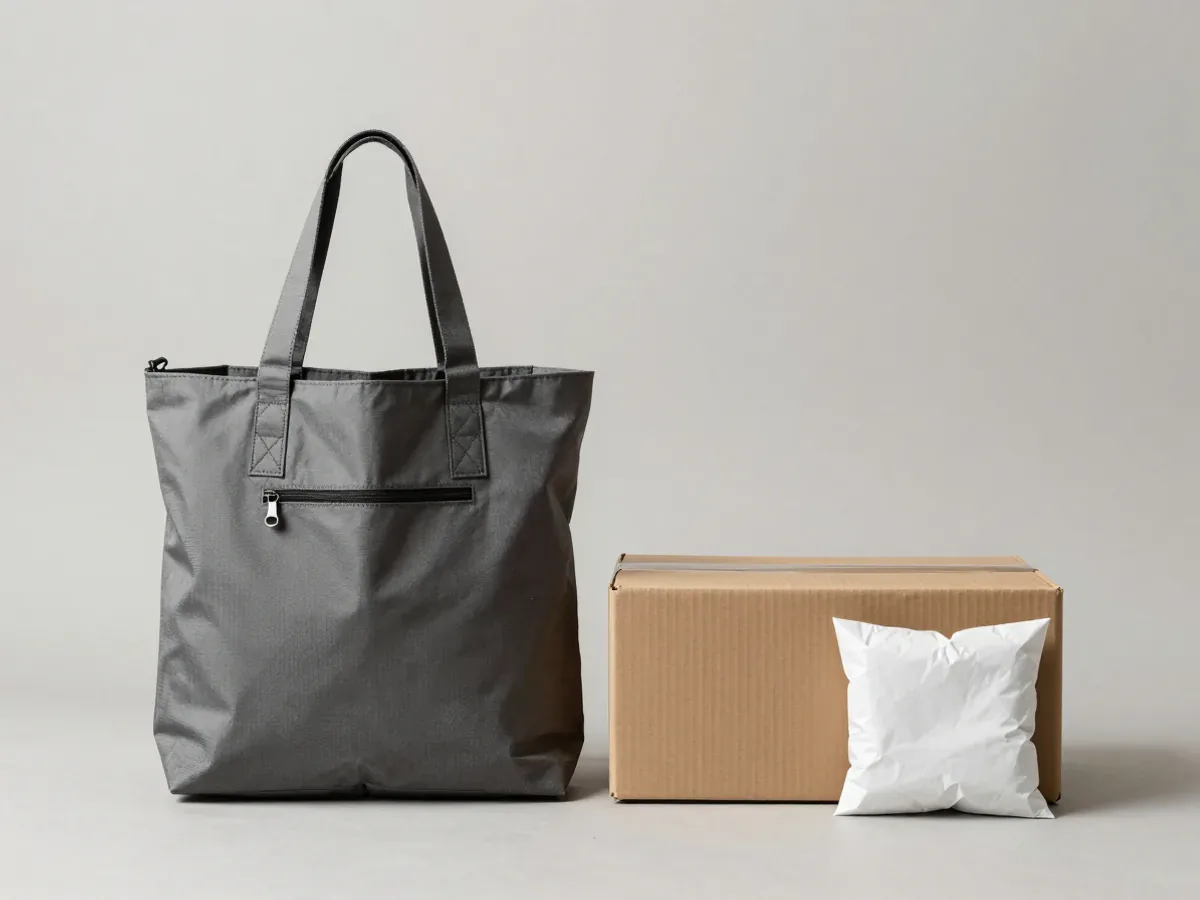
Two numbers arrive on the same page and only one of them predicts what the finance team will pay. The unit price sits at the top: roughly $2.50 for a heavy-duty reusable tote at bulk wholesale, against about $0.80 for a standard corrugated box. Read alone, the box wins by a wide margin and the conversation ends there.
The second number is the one that belongs in the decision. Divide the bag price by the trips it survives. At 20 cycles, $2.50 becomes about $0.125 per trip. The box does not divide, because it does not return. It leaves the warehouse once and becomes waste at the customer's door.
A single-use poly mailer looks even cheaper at around $0.15 per cycle, and it carries the weakest structure of the three. The mailer tears at the seam during the first unboxing and offers no way to reseal without tape. Whatever it saves on the invoice, it gives back in damaged goods and customer effort.
Where the single-use box hides its second invoice
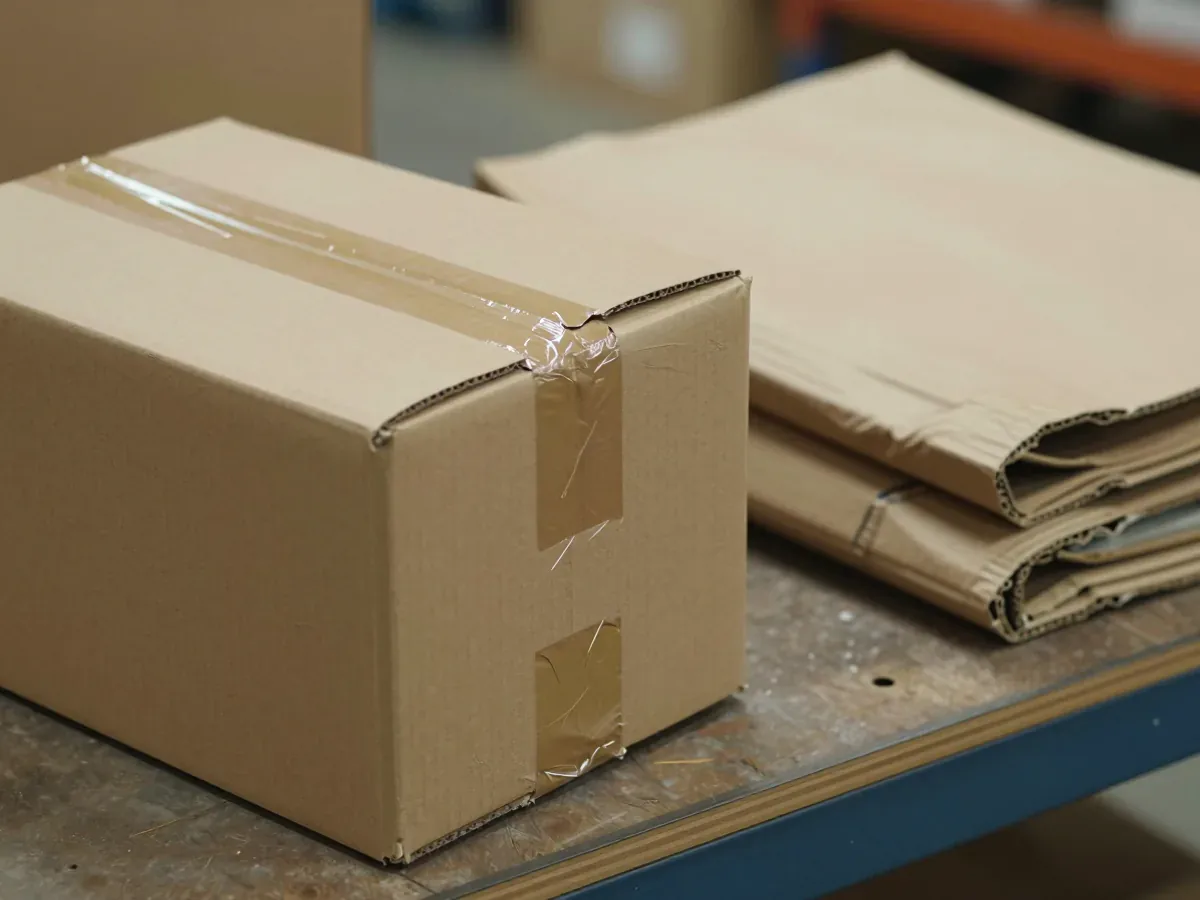
The box's second invoice arrives in three places, none of them printed on the quote. The first is damage on the return leg. Cardboard loses roughly half its stacking strength after the first outbound shipment, and the fibers that crush on the way out do not recover for the trip back. A box that arrives collapsed pushes the customer toward a replacement container, and a replacement container is a second purchase the brand never budgeted.
The second is labor. Every customer who has to hunt for a box, print a label, and tape it shut adds a step where something can go wrong. The return arrives late, arrives in the wrong packaging, or does not arrive at all, and each of those outcomes costs more to resolve than the box ever cost to buy.
The third is the reseal problem. Adhesive strips fail after one or two cycles, and a box has no closure at all once the tape is cut. The customer is left improvising, and improvisation is where return damage begins.
The storage line nobody puts in the spreadsheet

An empty cardboard box takes up roughly three times the warehouse space of a collapsed fabric bag. That ratio does not appear in any packaging quote, but it shows up in the rent. A facility handling 10,000 returns a month feels the difference in every aisle and every rack position.
A return-ready tote folds flat in seconds and occupies about 80 percent less volume than the box it replaces. The saving is not glamorous. It is the difference between a returns area that absorbs a seasonal spike and one that rents overflow space for six weeks.
Storage cost also compounds with damage. Crushed boxes cannot be reused even when the customer tries, so the warehouse holds inventory that will never go out again. A bag that wipes clean and folds flat goes back into rotation on the next job.
What a reusable return bag actually costs across 20 cycles
Run the full twenty trips and the shape of the cost becomes clear. The bag is paid for on the first trip and depreciates with every subsequent one. By trip twenty, the original $2.50 has spread so thin that the per-trip figure sits near $0.12.
The box restarts at $0.80 every single time. Twenty returns mean twenty boxes, twenty purchases, and twenty chances for the return leg to fail. The bag's advantage is not that it is cheap on day one. It is that day one is the only day it costs full price.
The damage rate widens the gap further. Heavy-duty reusable totes built with 200g/m² fabric and bonded nylon stitching show a return damage rate under 3 percent in testing, against 12 to 15 percent for cardboard and 12 to 18 percent for poly mailers. Every damaged return is a replacement, a refund, or a customer conversation, and those costs land on the brand's side of the ledger.
The failure cost that erases the savings: thread and zipper
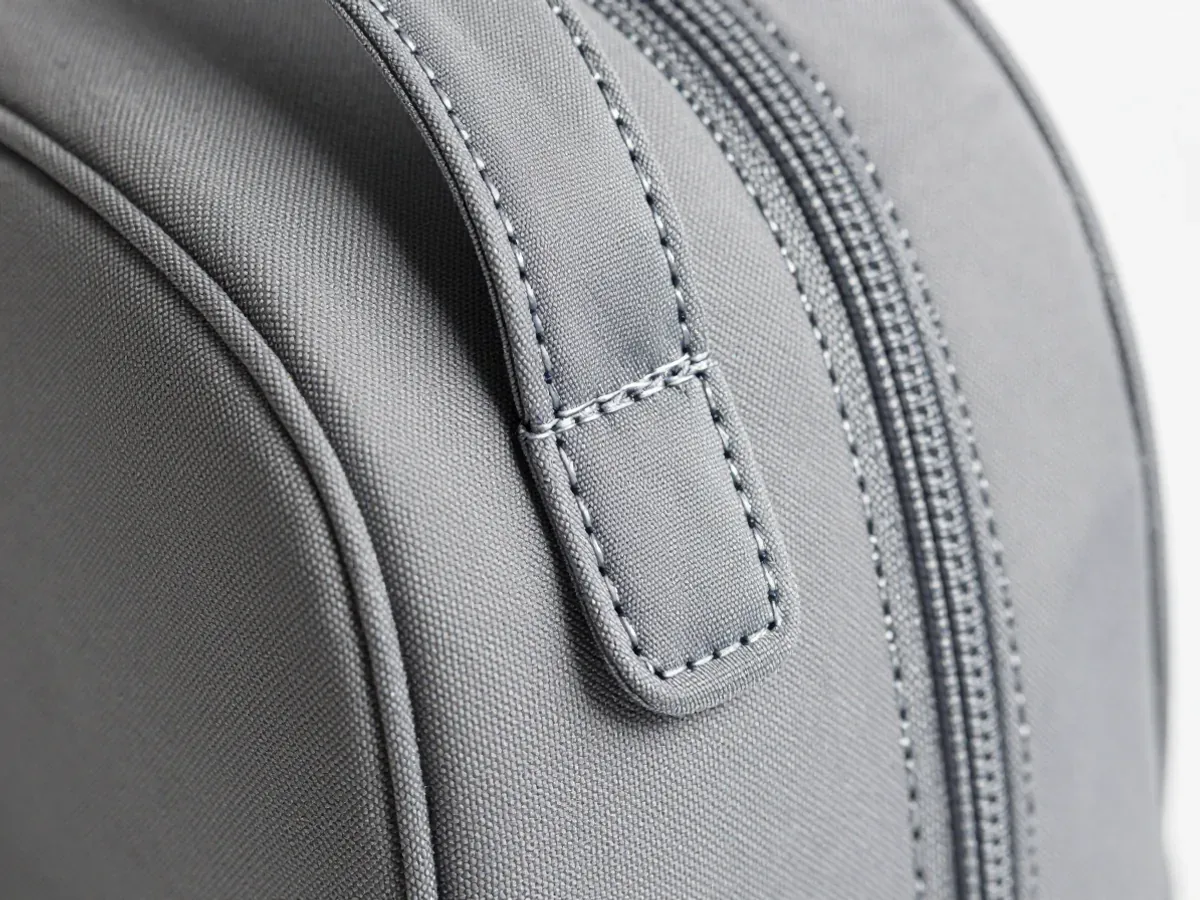
A bag that fails on trip four is more expensive than a box, because the brand paid the reusable premium and still bought single-use performance. The failure almost never starts in the fabric. It starts at the stitching and the closure.
Standard manufacturers use 100D polyester thread because it is cheap, and that thread snaps well under ten cycles at a 10 kg load. A 250D bonded nylon thread with bartack stitching at every handle and stress point is what carries a bag past twenty trips. The thread difference is small on the quote and decisive in the field.
The closure matters the same way. A full-coverage zipper rated for 100 or more reseals, such as a YKK #10 or equivalent, turns the bag into a permanent asset. A pre-applied adhesive strip works once, maybe twice, and then the bag is finished.
Branding belongs in the same calculation. A printed tag peels off after two washes, while a woven label stays crisp for 50 or more cycles. The label is not decoration. It is the part of the bag that keeps the return looking like a brand moment instead of a chore.
How to write the cost assumptions into a purchase order
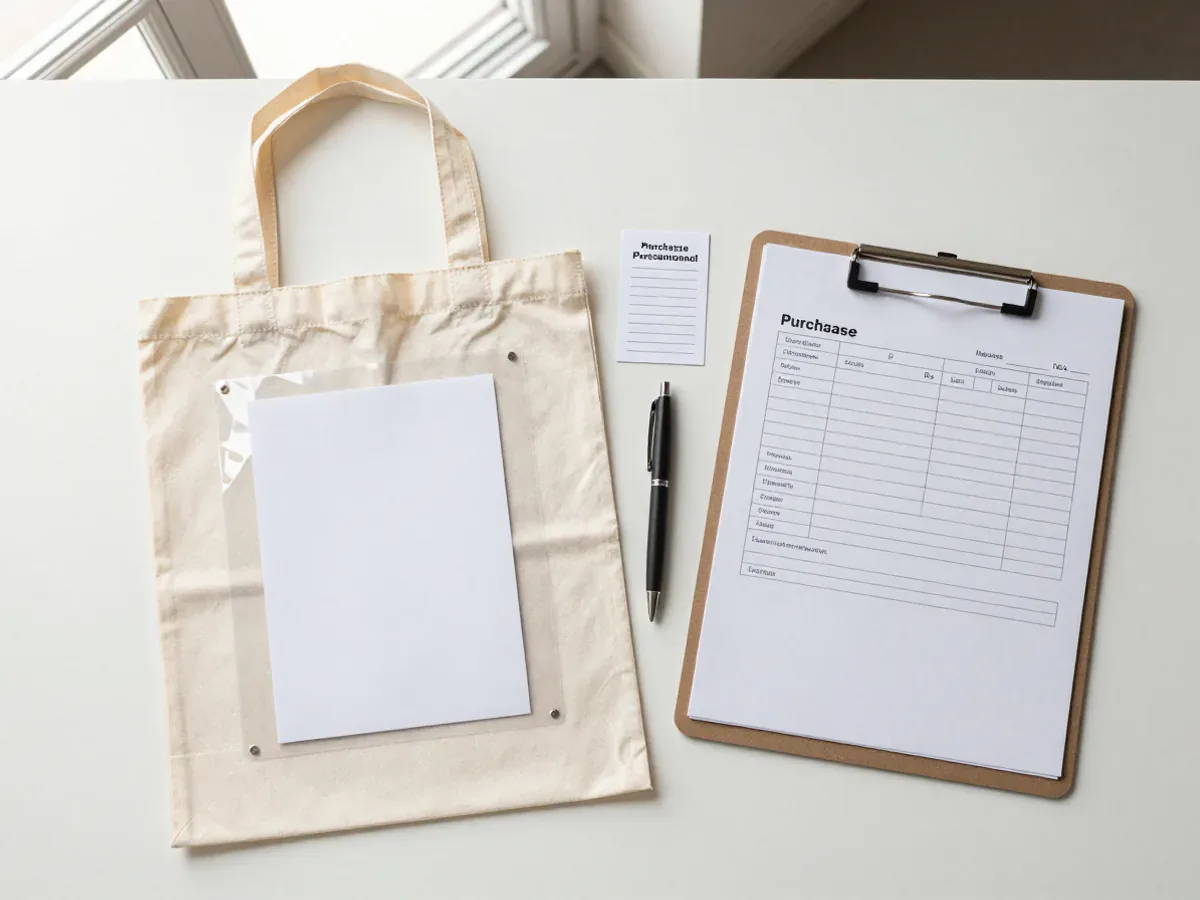
The per-cycle number only holds if the specification that produced it travels with the order. A purchase order that names the bag but not the thread invites a supplier to substitute the cheap version and keep the price.
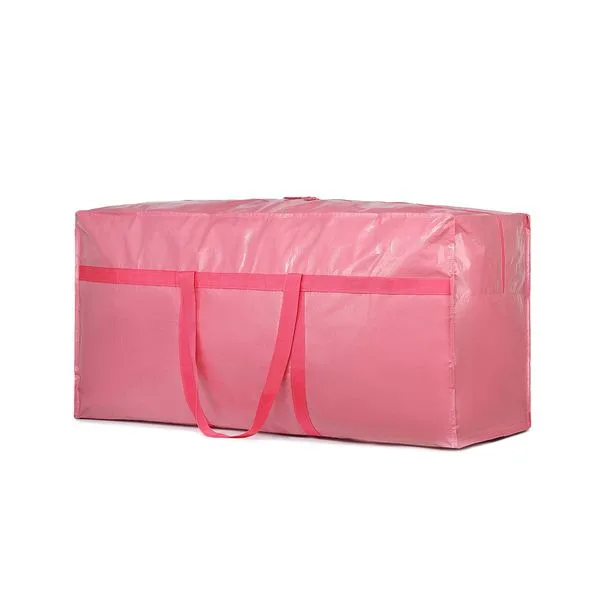
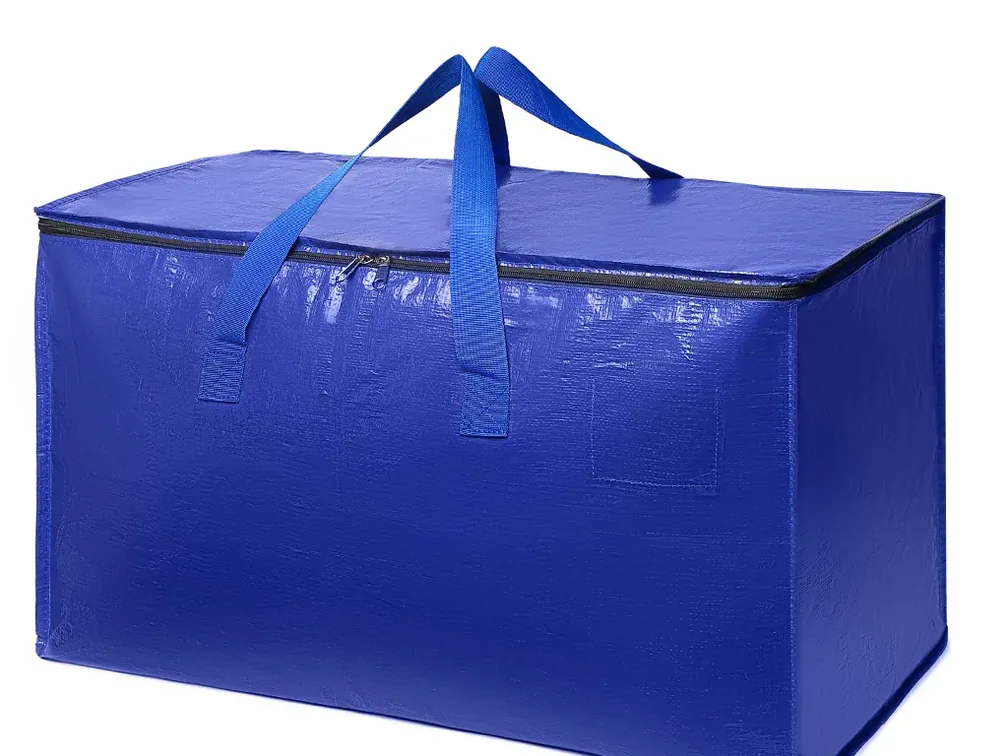
Write the material first: 200g/m² recycled non-woven polypropylene or 600D RPET, both of which hold structural integrity for 20 or more return shipments. Then the stitching: 250D bonded nylon minimum, bartack at all handle and stress points. Then the closure: full-coverage zipper rated for 100 or more reseals, with adhesive strips explicitly excluded.
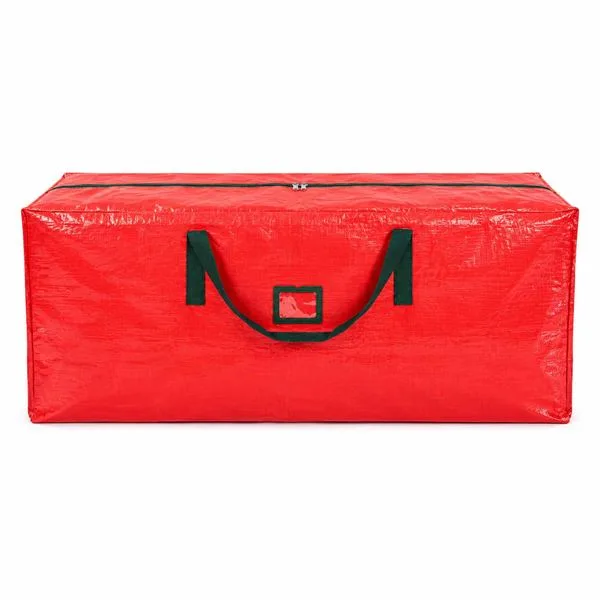
Add the return label sleeve as a line item. A sewn clear or branded internal pocket sized for a standard 4x6 label keeps the label in place through transit, and it avoids the adhesive pouch that peels off after a single use. Confirm the sleeve depth against the carrier's label format before the order goes out.
Finish with the instruction card and the reuse message. A 4x6 card on 300gsm recycled stock showing three steps, zip closed, insert label, drop at carrier, removes the guesswork for a first-time returner. A small printed line telling the customer the bag is theirs to keep for grocery runs or storage turns the return into a second brand touchpoint.
What to ask a supplier before you sign the per-cycle number
Four questions separate a supplier who can meet the number from one who is quoting the bag and hoping.
Ask what thread the sample was sewn with, and ask for the ticket. A supplier who cannot name the thread denier is quoting a bag that will fail before the cycle count on the sheet.
Ask how the closure was tested and over how many reseals. A zipper spec without a reseal rating is a promise, not a specification.
Ask for the damage rate on the return leg, not the outbound leg. Outbound testing tells you the bag survives the warehouse. Return testing tells you whether it survives the customer.
Ask whether the label sleeve and instruction card are included in the quoted price or added later. Those two items decide whether the return experience matches the bag, and a bag that looks premium with a taped-on label does not.
FAQ
How many return trips can a heavy-duty bag survive?
A properly constructed bag with 250D bonded nylon thread and a full-coverage zipper typically lasts 20 or more return cycles before replacement. Verify the thread and zipper specifications with the supplier before committing to a volume.
Is a reusable return bag more expensive than a standard box upfront?
Yes, at roughly $2.50 against $0.80 for a corrugated box. The comparison only makes sense per trip, where the bag falls to about $0.125 per cycle across 20 returns and the box restarts at full price every time.
What thread and zipper specs protect the per-cycle cost?
Specify 250D bonded nylon thread minimum with bartack stitching at all handle and stress points, and a full-coverage zipper rated for 100 or more reseals. Avoid 100D polyester thread and adhesive strips, both of which fail well before the twentieth trip.
How do I attach a return label to a reusable bag?
Sew a clear or branded internal sleeve sized for a standard 4x6 label, deep enough that the label cannot fall out in transit. Avoid adhesive pouches, which peel off after one use and leave the customer improvising.