
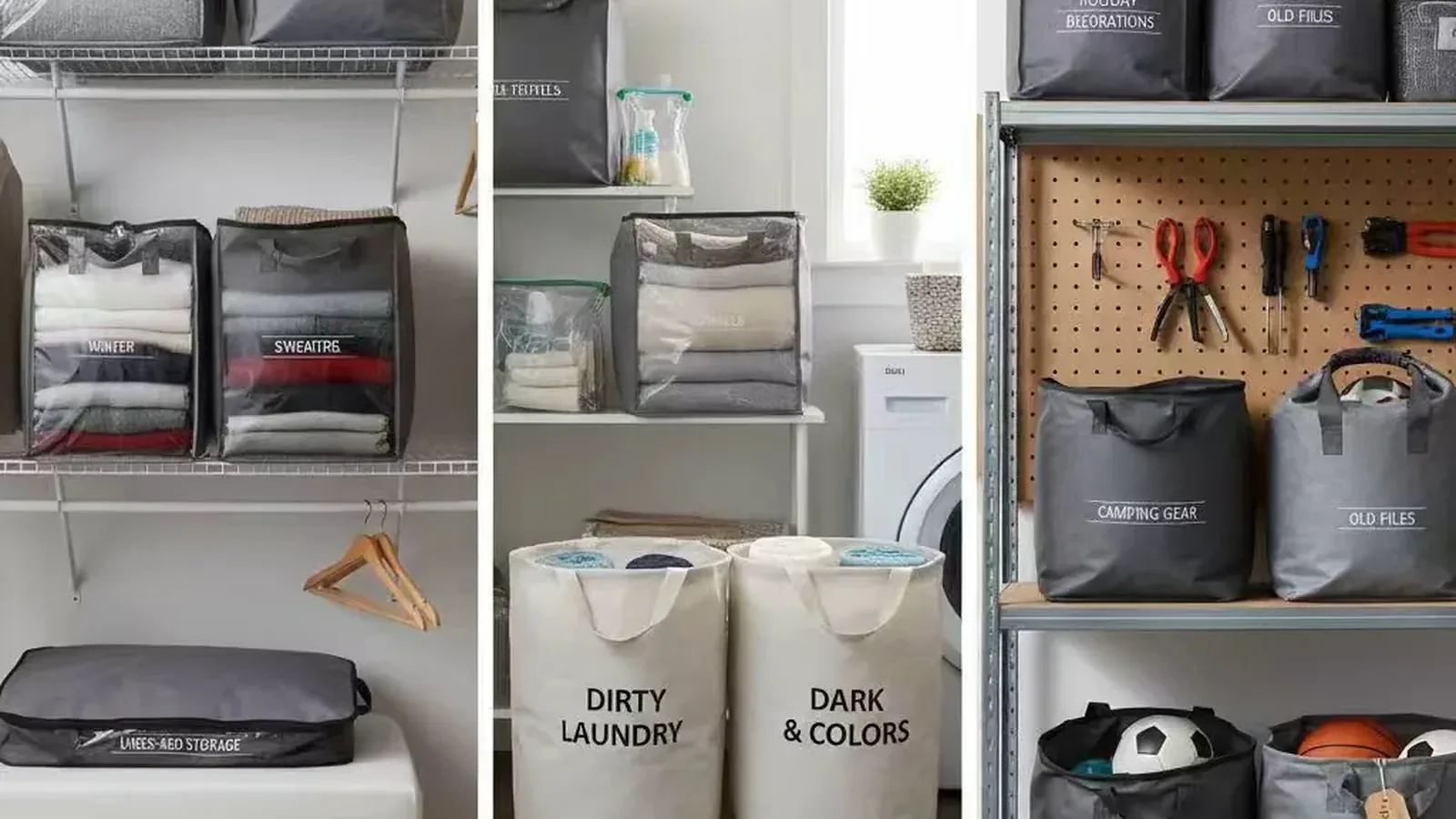
Reorganised from the TIIOCTI archive on EU textile labeling, with product spec data from the bag line.
The container doors were already closing when the importer's compliance manager asked for a photo of the sewn-in label. The cartons were sealed, the pallets wrapped, and nobody on the loading bay could answer whether the fiber line on that label matched the shell that had been cut three weeks earlier. The container sailed. The question stayed behind.
That question is the spine of every EU-bound textile bag order. A label is not a sticker added at the end. It is a legal statement about what the product is made of, how it should be cared for, and where it came from, and it has to be true at the moment the bag is sold. The failures that show up in an importer's label audit are almost never dramatic. They are small drifts between what was written at PO release and what was actually cut, sewn, and packed. Following one order from release to loading shows where those drifts begin.
At PO release, the label line is written before the fabric is booked

The order starts with a document, not a roll of fabric. On a typical EU-bound bag PO, the label specification appears as a line item: fiber composition, care instruction, country of origin, and where each piece of information sits on the product. That line is often copied from a previous order or from a buyer's template, and it is signed off before anyone confirms which mill will supply the shell.
This is the first place a label can break. The composition written at PO release is a promise about a material that has not been booked yet. If the buyer's template says 60% cotton and 40% polyester because that was last season's canvas, and this season's quote comes back on a different canvas, the label line is already wrong before production begins.
A useful check at this station is simple. Ask whether the composition on the PO matches the composition on the fabric order confirmation, not the fabric sample from six months ago. If the two documents were written by different people on different days, compare them line by line. The label line has to be accurate to the actual construction, and at PO release the actual construction is still a set of documents that must agree with each other.
The country of origin statement belongs here too. It is not a shipping detail added later. It is part of the label content, and it should be fixed at the same moment the fiber line is fixed.
At fabric intake, the composition on the roll and the composition on the label meet
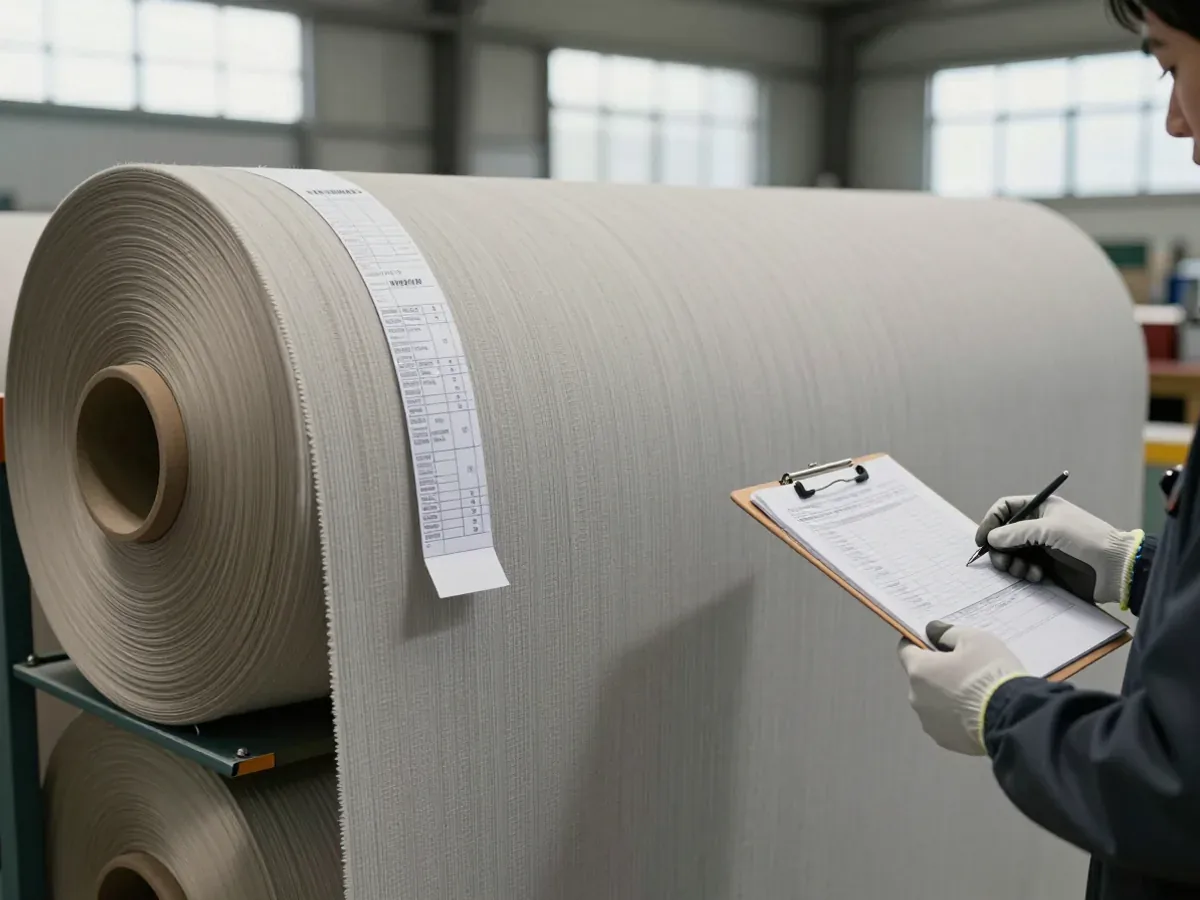
The fabric arrives with paperwork. The roll ticket or mill certificate names a fiber content, and the incoming inspection checks the fabric, webbing, zips and thread against the approved spec. This is the first physical moment where the label can be tested against reality.
Two things get checked at intake. The first is whether the fiber named on the mill document matches the fiber named on the PO label line. The second is whether the fabric itself behaves like the stated material. A coated shell, a laminated backing, or a bonded lining can carry a fiber content that differs from the face fabric, and the mill document may describe only the base cloth.
A buyer's audit does not usually begin at intake, but the evidence for a later audit is created here. If the intake record shows the fabric spec and the label spec side by side, the rest of the route has a reference point. If intake only records weight and colour, the label line floats free until final inspection, by which time the fabric is already cut.
The composition has to be stated by percentage, in descending order, using standard fiber names. A roll ticket that says "poly canvas" tells the label writer nothing usable. The intake station is where that vague description has to be converted into a percentage breakdown that can survive scrutiny.
At cutting, a coated shell changes the fiber the label must name

The cutting table is where the label question becomes physical. A bag that looks like one material on the outside may be a composite on the inside, and a coated or laminated bag is the common confusion. The coating changes the fiber the product is legally made from for labeling purposes, because the label describes the textile product as sold, not just the visible face.
Consider a tote with a woven PP body and a laminated film backing. The face reads as polypropylene. The laminate may add a different polymer, and the label has to reflect the construction the buyer will actually hold. If the PO label line was written from the face fabric alone, the cutting station is the last easy moment to catch the gap.
What gets checked here is the bill of materials against the label line, not the fabric roll against itself. The cutter works from a marker and a material list. If that list shows a coating or a bonded layer, the label writer should be looking at the same list.
This is also where a bag stops being a generic textile and becomes a specific product with a specific composition. The fiber and the material are the label's content, and at cutting the material is finally fixed. Any change after this point means either recutting or relabeling, and relabeling a sewn bag is more expensive than most buyers expect.
At the sewing floor, the care label and the woven label land in different places
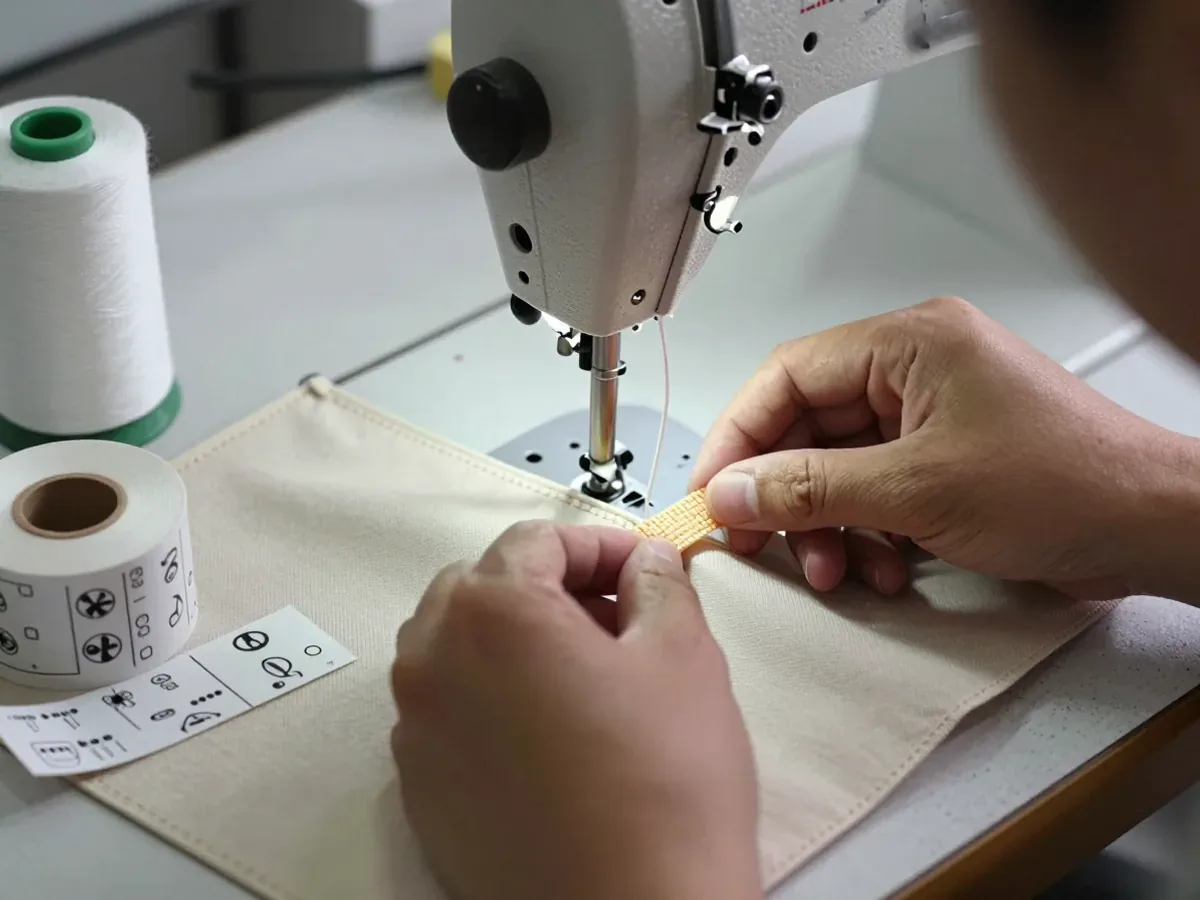
Two labels usually enter a bag on the sewing floor, and they are not the same label. The woven label carries branding and often the fiber and origin statement. The care label carries washing and handling instructions. They are attached at different stations, sometimes by different operators, and they can disagree.
A care instruction is only correct if it matches the fiber. A cotton canvas tote and a coated polyester tote do not share a wash instruction, and a care label copied from a previous style can tell the end user to do something the material cannot survive. The label is part of the product, not an add-on that an importer can skip, and a care instruction that damages the bag is a defect even when the stitching is perfect.
Placement matters as much as content. A woven label buried inside a seam or a care label attached where it will be cut off in use fails the practical test an importer applies. The label has to be readable, attached securely, and positioned where the buyer's audit expects to find it.
On the sewing floor, the check is whether the two labels were issued together for this order and whether the operators know which one goes where. A common drift is a leftover roll of care labels from a previous style still sitting at the station. The fiber line may be right and the care line wrong, and only a side by side read catches it.
At final inspection, the label is read the way an importer reads it

Final inspection is where the label meets the buyer's standard rather than the factory's habit. An importer reads a bag label in a fixed order: fiber composition by percentage, standard fiber names, care instruction, country of origin. Each element is checked for presence, accuracy, and legibility.
The composition has to use standard fiber names rather than a brand or trade name. A label that says "EcoWeave" or "TechCanvas" tells the auditor nothing about what the bag is made of, and a trade name cannot replace the fiber statement. The percentages have to descend, and they have to add up in a way that reflects the actual construction.
Country of origin is checked here as a statement on the product, not only on the carton. A bag can carry a correct origin on the shipping documents and still fail a label audit if the product itself does not state it.
The inspection also looks at durability. A label printed in ink that rubs off, or a care label on a material that will not survive its own instruction, fails the same audit as a missing label. This is the station where the earlier checks either hold or collapse, and it is the last one before the product is packed.
At packing and loading, the carton label and the bag label have to agree
Packing is where two labeling systems meet. The bag label describes the product. The carton label, barcode, and polybag marking describe the shipment. Retail ready packing ships as per-store cartons, barcode labels and shelf ready polybags, and each of those carries information that has to match the product inside.
A mismatch here is easy to create and hard to see. A polybag printed for one size, a carton marked for another, and a bag label that names a third composition can all leave the factory together if nobody reads them as a set. The packing format is agreed before production, which means the carton and polybag labels are designed early enough to be checked against the bag label before the container is loaded.
On loading day, the practical check is a three way read: bag label, polybag or retail marking, and carton label. If the fiber line, the size, and the origin agree across all three, the shipment is internally consistent. If they were written at different times by different teams, that consistency is luck rather than control.
The labeling requirement sits alongside the broader textile and product safety rules the product also has to meet. A label audit is one gate, not the only one, and a shipment that passes the label check can still fail on other grounds. But the label is the gate that travels with the product all the way to the shelf.
What the buyer decides before the first cut
The label breaks down first at PO release, in the gap between a copied template and a fabric that has not been booked. Every later station inherits that gap or closes it. The buyer who fixes the composition, care instruction, and origin statement before the fabric is ordered spends the rest of the route confirming rather than correcting.
A workable sequence for the next EU-bound bag order looks like this. Write the label line from the confirmed fabric order, not from last season's template. Compare the mill document to the label line at intake and record both. Read the bill of materials at cutting and confirm the label names the construction as sold, including any coating. Issue the woven and care labels together and clear old stock from the sewing stations. Read the finished label in the importer's order at final inspection. And read bag, polybag, and carton labels as one set before the container doors close.
None of these steps requires a new system. They require the label to be treated as part of the product from the first document, which is where the audit will eventually look.
FAQ
Must an imported bag carry a fiber label in the EU?
Yes. A textile bag has to show the fiber composition by percentage, the care instruction and the country of origin. These are the core content of the label, and they must be present before the product can be sold legally in the Union.
Can a bag label use a trade name instead of the fiber name?
No. The label uses the standard fiber name by percentage, not a brand or trade name. A trade name can sit alongside the branding, but it cannot replace the fiber statement.
How is a recycled bag labeled?
By its fiber type and percentage, the same as any other textile bag. An eco claim can be supported by a GRS transaction certificate, but the fiber line on the label still follows the standard naming and percentage rules.






