Drawn from TIIOCTI production records and the checks run on heavy duty moving bag orders.
The audit report landed on a Tuesday, three weeks before the container was due to seal, and the buyer read the same line four times: testing equipment not verified. The factory had already offered a discount and a fresh sample. Neither answered the question sitting in the buyer's inbox, which was simpler and harder: what do we ask them now?
A failed audit is not a verdict on the bags in the warehouse. It is a list of gaps between what a factory says it does and what it can prove on the day. The buyers who recover fastest are the ones who stop negotiating and start asking narrow, answerable questions. Five of those questions follow, in the order they tend to arrive.
The question that arrives after the report, not before it
Most audit preparation happens on the factory side. The buyer sees the report only when it is finished, usually as a PDF with checkboxes and a few photographs. By then the audit team has left, the production floor has moved to the next order, and the person who could explain a gap is back on a sewing station.
That timing shapes what a buyer can usefully ask. Broad questions about quality culture get broad answers. Narrow questions about a specific batch, a specific station, or a specific document get answers that can be checked. The report itself usually points to where the narrow questions belong.
One detail matters more than the rest. A failed audit rarely says the bags are bad. It says the factory could not demonstrate control. Those are different problems with different fixes, and a buyer who confuses them will either overreact or underreact.
First: which station signed off the batch that failed?

An order moves through four stations, and each one has a named person responsible. Nothing goes to the next station until the check for that stage is signed. That is the structure a buyer should test first, because it turns a vague failure into a name and a date.
Ask for the sign-off sheet for the batch named in the report. Look for three things: a signature at every station, a date that matches the production log, and no gaps where a signature should be. A sheet with one missing signature is not proof of bad bags, but it is proof that the control broke at a known point.
The follow-up question is the useful one. Ask who covered that station on the day, and whether the substitute had been trained on the check. Factories that answer this without hesitation usually have a real system. Factories that need a day to find out have a system on paper only.
Second: can the factory show the calibration date on the tester?

Pull and seam strength are tested on every batch, and the results are recorded. The recording is only worth something if the machine that produced the numbers was itself checked. A tester that drifts quietly produces confident numbers that mean nothing.
Ask for the calibration record on the specific machine used for the failed batch, not a general certificate for the lab. The date should fall inside the factory's own calibration interval, and the record should name the equipment, not just the department. A certificate with no machine number is a decoration.
Then ask for a live demonstration. A QC operator should be able to run a pull test on a random bag from the batch while the buyer watches, and the reading should be written into the batch record on the spot. A factory that can do this has nothing to hide. A factory that postpones the demonstration has told you something too.
Third: what does the stitch density log say for that shift?

Dimensions, handles, logo and stitch density are checked by hand on the finished bag. Of those, stitch density is the one most likely to drift between shifts, because it depends on machine tension and operator attention rather than a fixed mould or a printed panel.
Ask for the daily tension log for each sewing station that worked on the batch. The log should show a reading per station per shift, with an operator initial beside it. A log with the same number copied down every row for a month is not a log. It is a habit.
The physical check is quick and worth doing. Count stitches over a measured length on three bags from the batch and compare the counts. Variation across the three tells you more about the shift than any document. If the counts differ widely, the tension was moving, and the handle-to-body seam is where that movement shows up first.
Fourth: was the bag tested at rest or under a sudden pull?
A weight limit printed on a spec sheet usually comes from a static test: fill the bag, let it sit, see whether it holds. Each handle also gets a static pull, recorded per batch. Both are useful, and neither reproduces what happens when a loaded bag is lifted quickly or set down hard.
Ask whether the batch went through a loaded drop, where the bag is dropped on a corner and then inspected. Ask whether the zip was opened and closed repeatedly on a loaded bag. These are routine checks on a moving bag order, and they expose the failures that a static test cannot.
The answer to listen for is not a yes. It is a record. A factory that runs these checks can show the result per batch, including the batches that failed and what happened to them. A factory that runs them only when a buyer is watching will describe the test in detail and produce no paper.
Fifth: who photographed the cartons before the container sealed?

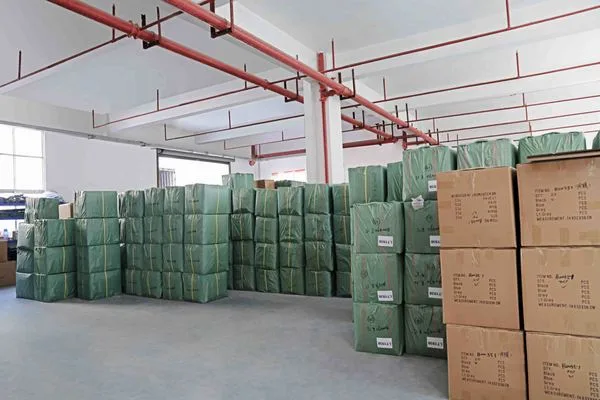
Cartons are counted and photographed before the container seals. Four checkpoints are photographed so the buyer keeps the file. This is the cheapest control in the whole chain and the one most often skipped when a shipment runs late.
Ask for the photographs from the failed batch, with the carton count visible and the date readable. Then ask who took them and where the file is stored. A photograph on a supervisor's phone is not a record. A photograph in a shared folder with a date and a batch number is.
The reason this matters after a failed audit is timing. If the container has not sealed yet, the photographs are a chance to catch a labelling or count error before it becomes a claim. If it has sealed, the photographs are the only evidence of what actually left the building.
The question nobody asks until the pallet is in the warehouse
All five questions above concern the factory's control of its own process. There is a sixth that buyers tend to reach only after the pallet is unwrapped in their own warehouse, and it decides whether the audit failure turns into a field failure.
The question is this: which of these checks will still be running on the next order, after the audit team has gone and the discount has been agreed? A factory can pass a re-audit by preparing for it. It can only hold a process by running it when nobody is looking.
The way to test that is to ask for the records from an order the buyer was not involved in. Incoming fabric, webbing, zips and thread checked against the approved spec. Pull and seam results recorded per batch. Handle pulls recorded per batch. Carton photographs on file. If those records exist for an unrelated order, the system is real. If they exist only for the audited batch, the buyer has purchased a performance.
What the answers add up to
A failed audit is a set of unanswered questions wearing a formal cover. The buyer who walks away with a discount has settled the price and left the questions open. The buyer who walks away with a sign-off sheet, a calibration record, a tension log, a drop test result and a carton photograph has something more useful: a baseline to compare the next batch against.
None of those documents proves a bag will survive a move. Together they show whether the factory knows what it is doing, and whether it can prove it twice. That second proof is the one worth asking for, and it is usually requested far too late.
FAQ
Does an ISO 9001 certificate prove a bag will hold its rated load?
No. ISO 9001 certifies that a factory has a documented quality management system. It does not set a burst strength threshold or guarantee a load rating. Ask for the test records behind the rating, not the certificate on the wall.
Why do bags rated for a high static load still tear in use?
A static rating measures a bag holding weight at rest. Lifting, dropping and sudden concentrated force are different stresses. A loaded drop on a corner and a repeated zip cycle on a loaded bag show what a static test misses.
What is the first document to request after a failed audit?
The station sign-off sheet for the batch named in the report. It ties the failure to a person, a date and a stage, which makes every later question specific instead of general.
How many checkpoints should a factory photograph for the buyer's file?
Four checkpoints photographed before the container seals give a buyer a usable record. The count matters less than the discipline: a date, a batch number and a stored file, every time.