
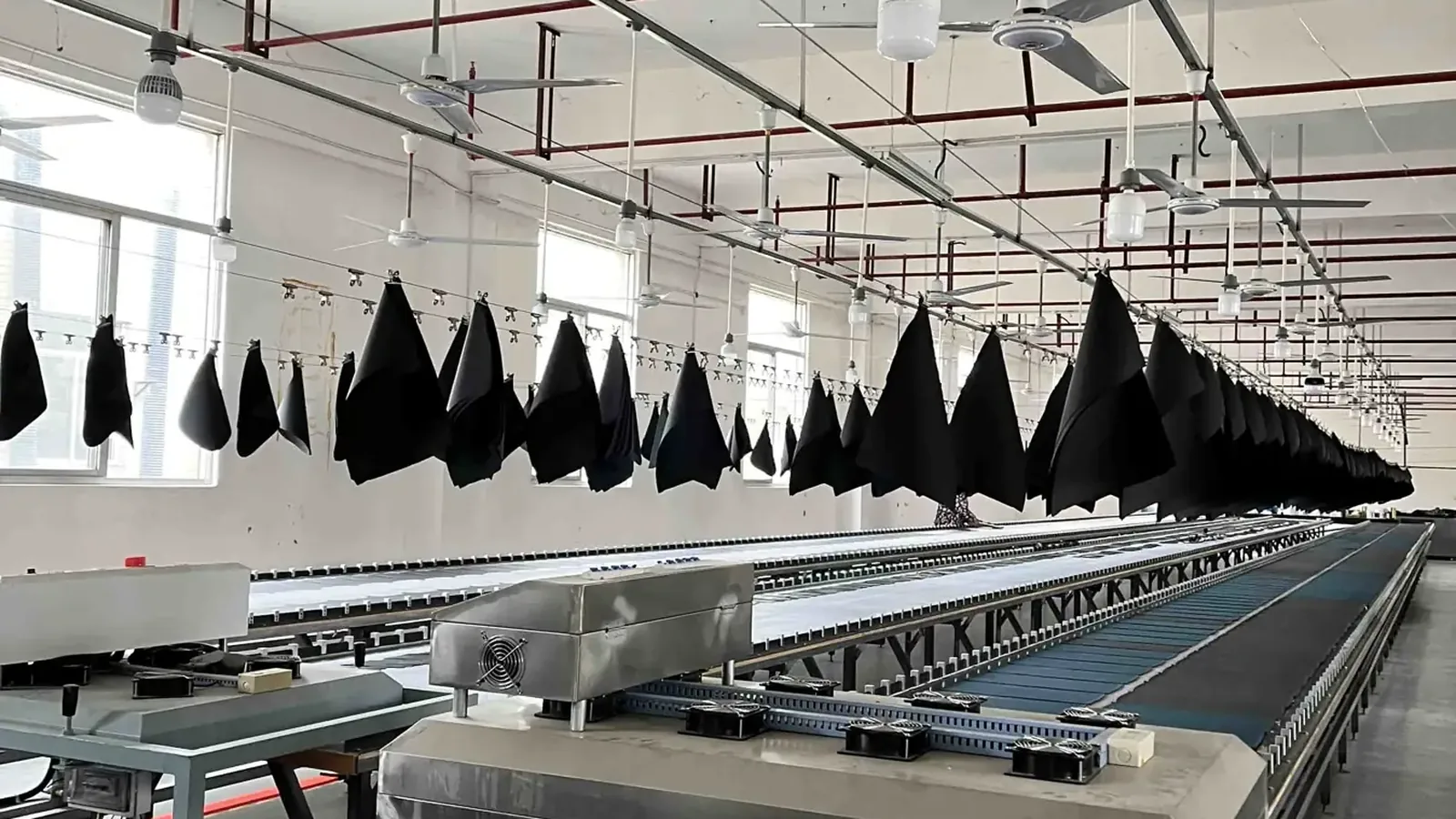
This checklist draws on our own sewing floor, QC station, and warehouse records to show how each spec line becomes a stop on the tour.
A buyer from Rotterdam arrived at a bag factory with a two page purchase order and a camera. She had flown eleven hours, and the first thing she asked the production manager was where the fabric roll came from. The roll sat in the corner of the warehouse with no tag on it, and the manager said the mill would send the paperwork later.
That answer set the tone for the rest of her visit. She had come to watch machines run, but what she actually needed was to check each line of her own spec sheet against what stood in front of her. A factory tour becomes useful when the PO stops being a document and starts being a checklist. Here is how to read one that way, line by line.
The First Line on the PO: Fabric Weight and Batch Code
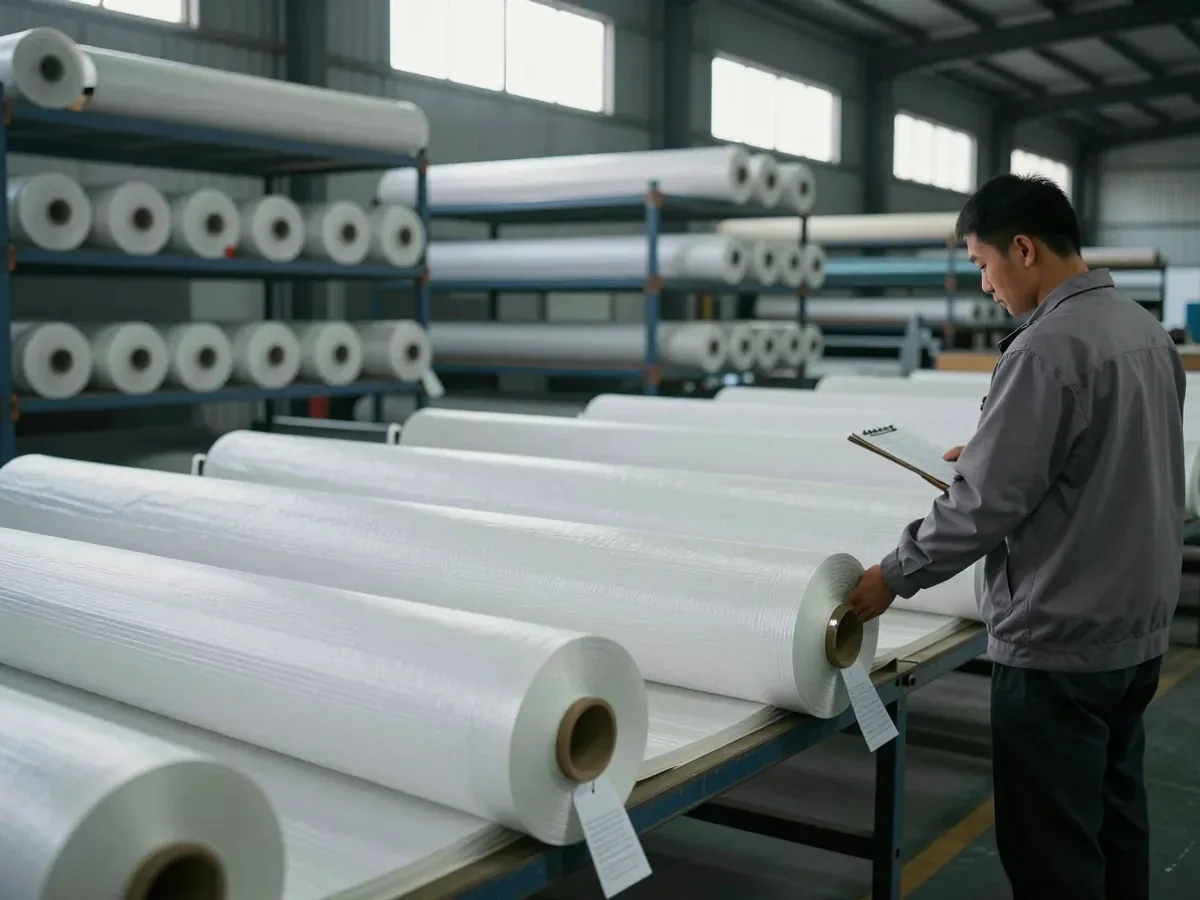
The opening line of most moving bag orders states a fabric weight, and that number decides how the bag behaves under load. A woven polypropylene shell at the stated weight resists splashes and handles abrasion, while a lighter roll saves the factory money and costs the buyer a season of complaints. The spec line is short, but it carries the whole product.
Walk to the fabric warehouse before the cutting floor. Look for a tag on every roll that ties it to a batch record from the mill. A roll without a code cannot be traced to its weight test, and an untraceable roll means the bag you receive has no material history behind it.
Ask the warehouse keeper to pull the roll allocated to your order and read the tag aloud. Then ask for the batch record that matches the code. If the two do not meet, the fabric line on your PO is unverified, no matter how good the sample looked.
The Handle Line: Webbing Length and Stitch Pattern
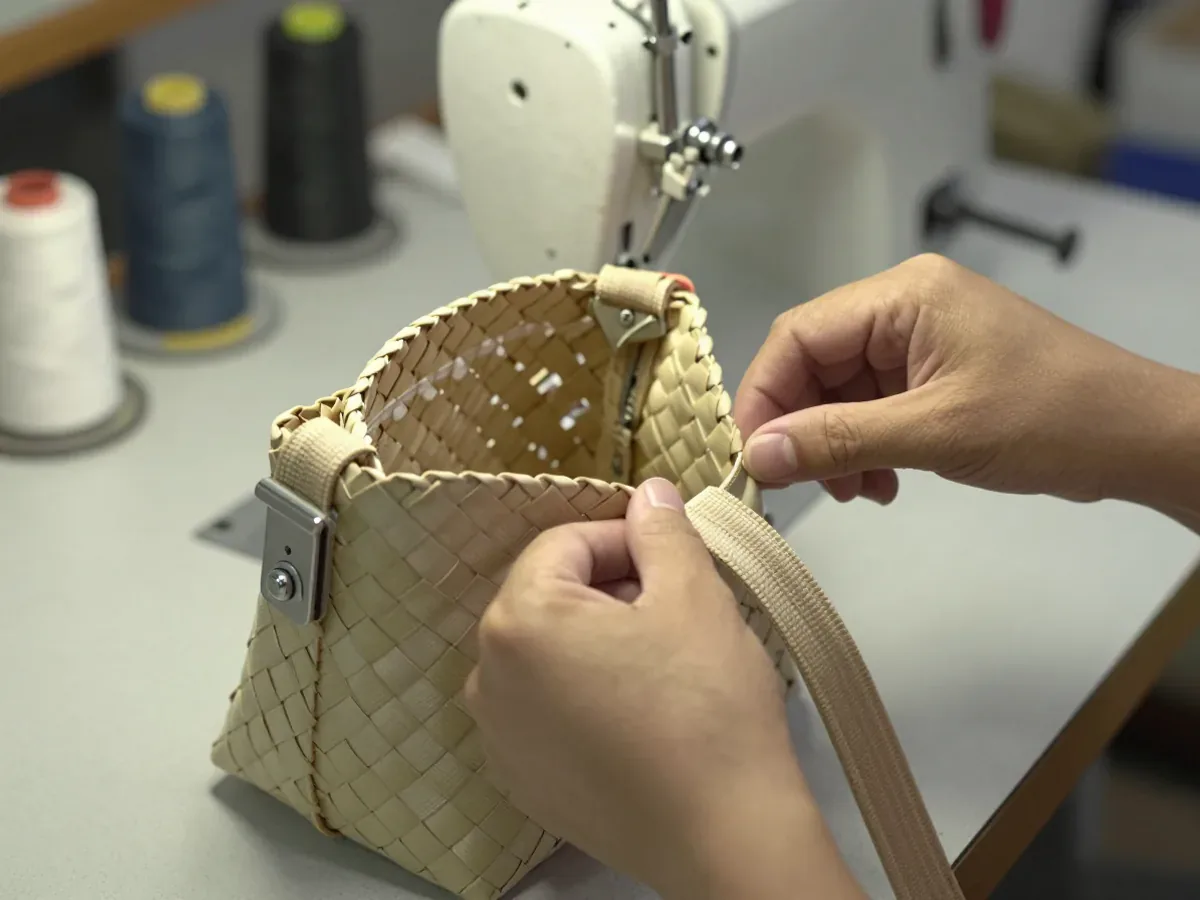
Handles fail at the attachment point, and the spec sheet usually says only "reinforced handle." That phrase means nothing on the floor. What matters is how far the webbing runs and how the stitch row sits where the handle meets the body. On a well built moving bag the webbing continues down the full length of the bag, not just under the grip.
At the stitching line, pull a finished bag from the output bin and turn it inside out. Follow the webbing with your thumb from the handle down the side. If it stops short, the load concentrates on a few centimetres of stitch, and that is where the bag will open.
Ask the line supervisor to show the stitch setting used on the handle joint. A close, even row is what an inspector looks for, and a loose or skipped row shows up clearly against the shell. Compare what you see with the stitch description on your PO, and write down any difference before you leave the station.
The Zipper Line: Pull Count and Cycle Testing
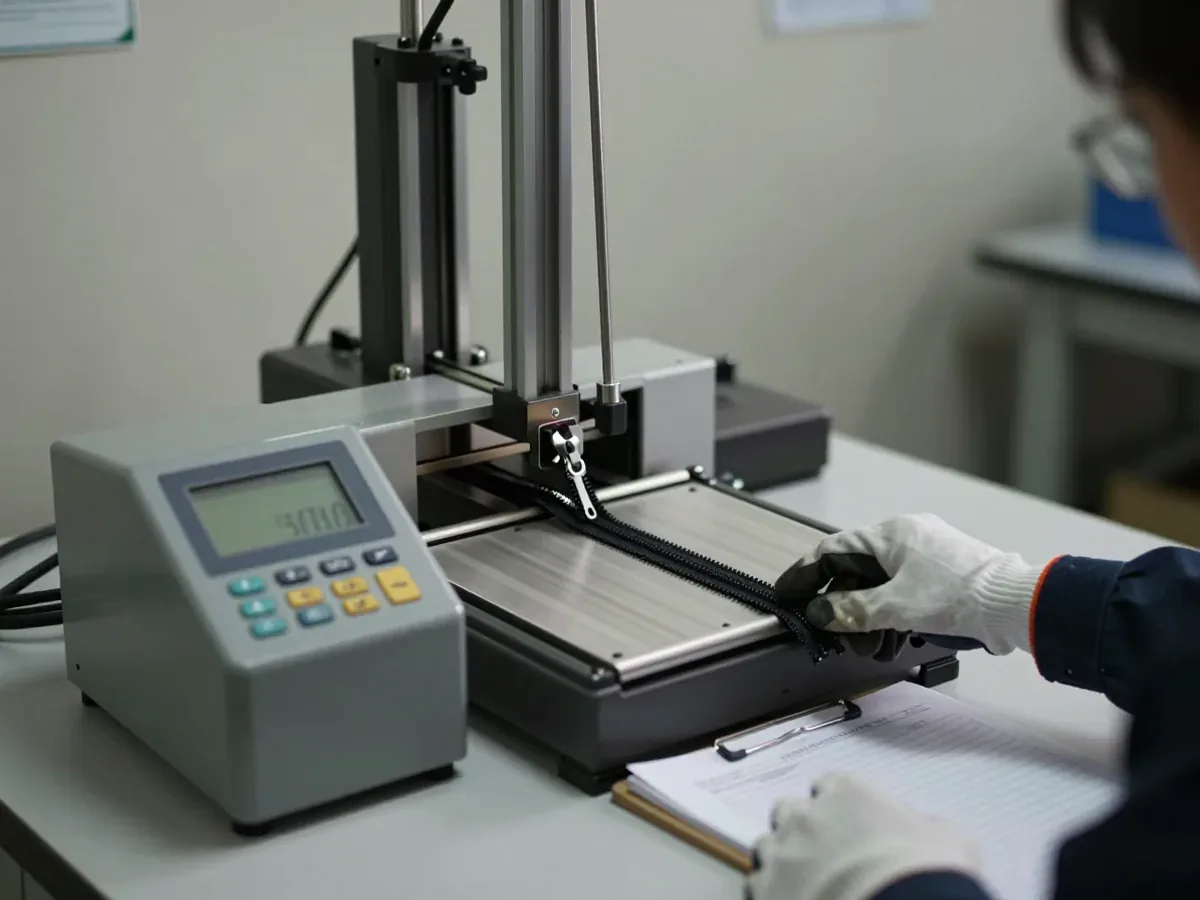
The top opening on a moving bag often carries a zip with two pulls, so the bag closes from either end. That detail appears on the spec sheet as a single line, and it is easy to overlook during a tour. The question to ask is not whether the zip exists but how many cycles it survives before a tooth breaks or the slider jams.
Find the station where the factory tests zips, or ask where the tester sits. A factory that builds heavy duty bags runs an in house cycle tester and keeps logs of the pulls. If no tester exists, the answer to your question is already clear, and the zip line on your PO rests on nothing.
Request the log for the current production batch and check that the dates fall inside your order window. Then take a bag from the line and work the zip yourself, slowly, from both ends. A zip that catches on the first pass will catch again in a customer's hallway.
The Seam Line: Stitched, Not Sealed
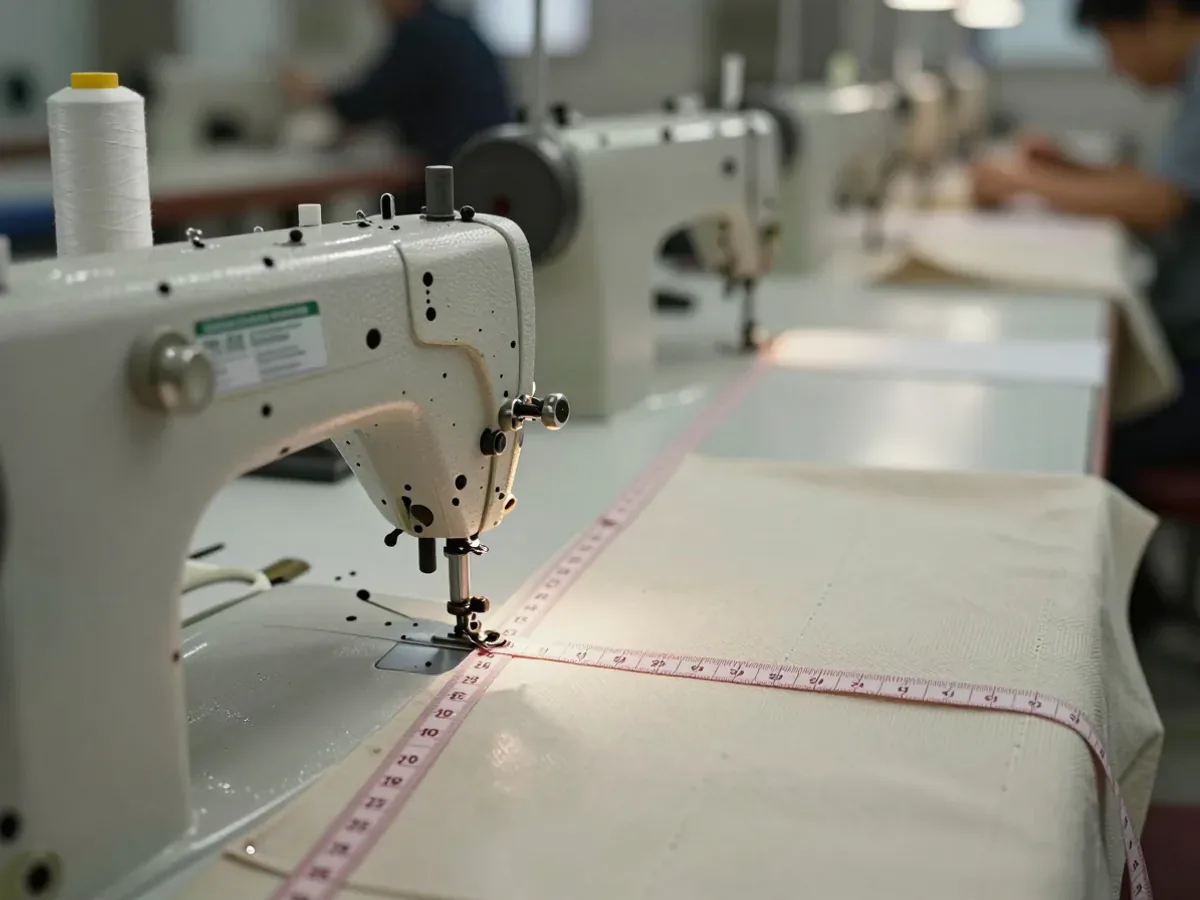
The seam line on a moving bag spec often reads "strong seam," and that wording hides a real distinction. These bags are stitched rather than sealed, which means the seams resist tearing but do not make the bag waterproof. A buyer who expects a sealed shell will be disappointed, and a buyer who knows the construction can plan around it.
Stand at the sewing floor and watch one bag pass through the seam station. Look at the thread spools on the industrial machine and note whether the thread weight matches what the PO states. Thin thread on a heavy shell pulls through the fabric under load, and the seam opens along the stitch line.
Take a tape measure to the seam allowance on a finished bag. An inspector does this on every audit, and the measurement tells you whether the line holds a consistent width. If the allowance wanders from bag to bag, the seam strength wanders with it.
The Label Line: A Stitched Clear Panel
Many buyers treat the label as a printing detail and skip it during a tour. On a moving bag the label area is usually a clear panel stitched onto the bag face, and the stitching around that panel is a small seam that can fail like any other. A loose panel edge curls in transit and makes the bag look used before it reaches the customer.
Ask to see a bag with the label panel attached and check the stitch line around the clear area. Pull gently at the corner of the panel and watch whether the stitch holds. Then compare the panel position with the placement drawing on your PO, because a panel set a few centimetres off centre reads as a defect at retail.
If the factory prints or stitches the label in house, ask to see a rejected panel from the current run. The reason it was rejected tells you what the line actually checks, which is more useful than any quality statement on a wall.
The Carton Line: Packed Bags and Final Check
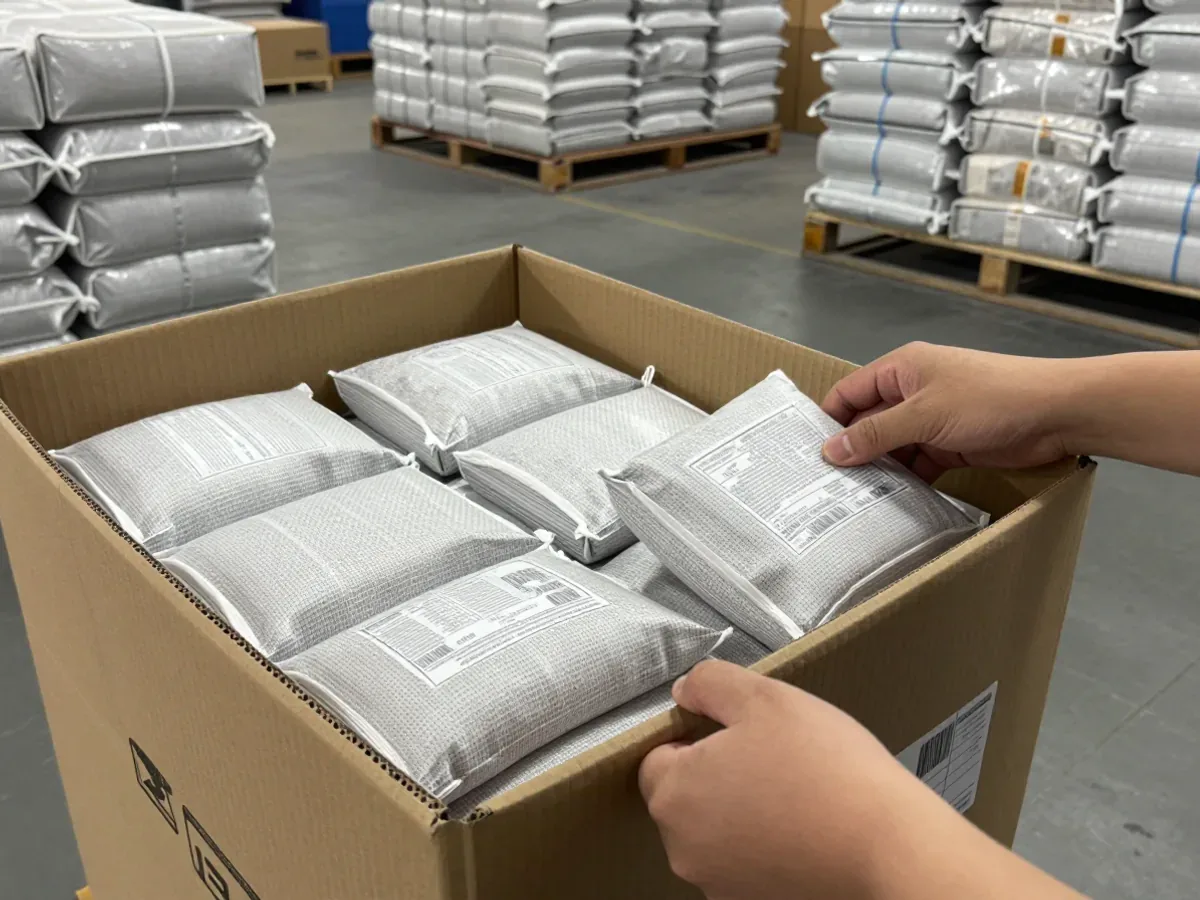
The last section of the spec sheet covers packing, and it is the section most buyers read last and regret first. Packed bags stacked on a loading platform look finished, but the carton line is where count, fold and label placement get decided. A carton that holds the wrong count costs the buyer a claim and the factory a chargeback.
Walk to the packing area and open one sealed carton from your production batch. Count the bags inside against the PO quantity per carton, and check the fold pattern against the packing instruction. Then look at the carton label and confirm it matches the bag inside, because a mislabelled carton sends the wrong size to the wrong warehouse.
Ask the packing supervisor what the final check covers before the carton is taped. Bulk cartons inspected in the warehouse before shipment are the last chance to catch a short count or a wrong colour. If the final check happens after sealing, the check is a formality.
The Line Buyers Skip: Written Tolerance
Near the bottom of most spec sheets sits a tolerance column, and it is the line buyers skim past. A tolerance states how much variation the factory may accept on fabric weight, seam width, stitch length and label position. Without a written figure, "close enough" becomes the working standard on the floor.
Ask the quality manager for the written tolerance document that governs your order. Read the fabric weight band and the stitch skip limit aloud, and ask what happens when a batch falls outside them. A factory with a real tolerance system can describe the rejection step without hesitation.
Then check that the tolerance matches what you saw at each station during the visit. If the document says one thing and the line does another, the document is decoration. The visit exists to catch that gap while you are still standing in the building.
Questions That Come Up After the Tour
Can a factory visit replace a pre shipment inspection? No. The tour qualifies the process and the people, while a final inspection verifies the specific bags leaving the dock. Use the visit to decide whether the factory can build your order, and keep the inspection for the shipment itself.
What if the supplier refuses to let me take photos? A flat refusal in general production areas is a warning sign. Most factories allow photos on the floor while protecting a proprietary finishing step. Settle photo permissions before you travel, and treat a last minute block as information about how the supplier handles scrutiny.
How many bags should I pull from the line during a tour? Five to ten bags taken at random from different sewing stations give a useful snapshot of consistency. Fewer than five will not reveal a systematic stitching flaw, and letting the factory choose the samples defeats the purpose.
Do I need an interpreter for a bag factory tour? Yes, unless you speak the production language fluently. Terms like fabric weight, stitch skip and seam allowance need precise translation, and a vague rendering of a tolerance figure can cost more than the interpreter's fee.
What the Rotterdam Buyer Did Next
She left the factory with photographs of six rolls, a copy of the batch record for three of them, and a note that the other three had no tag. The zip tester existed but the log stopped two months earlier. None of this was a disaster on its own, and together it told her the factory could build her bags but did not yet control the inputs.
Her next step was a short written list sent to the supplier: tag every roll before cutting, restart the zip log with dates and batch numbers, and sign the tolerance page she had photographed on the wall. The factory answered within a week, and the second visit took half a day because the checklist had already done the work. A spec sheet read line by line turns a factory tour from a morning of watching machines into an afternoon of confirming facts.






