

Based on the document set that accompanies each canvas bag dispatch and the checkpoints our production line records before a carton is sealed.
A freight forwarder once returned a set of shipping papers because the carton count on the packing list read 412 and the container held 410. Two cartons had been pulled for a last minute sample request and nobody updated the sheet. The bags were fine. The paperwork was not, and the container sat for three days while the numbers were reconciled.
That question of which papers travel with a canvas bag order comes up in almost every shipment review. The answer is not a single folder handed over at the end. Documents are born at different stations, and each one is checked by a different person. Following one order from confirmation to the loading bay shows where each paper appears and what a buyer should verify before the doors close.
At Order Confirmation, the Paper Trail Starts Before the Fabric

The purchase order is the first document, and it sets the terms every later paper will repeat. It carries the bag style, the print placement, the label text, the carton marking instructions and the delivery terms. A mismatch here does not stay here. It travels down the line and reappears on the invoice, the packing list and the carton marks.
The commercial invoice is drafted from the same order data, usually within a day or two of confirmation. It states the description of the goods, the quantity, the declared value and the terms of sale. The certificate of origin is requested at this stage as well, because issuing bodies need lead time and the document cannot be produced from memory later.
A buyer should compare the invoice description against the purchase order line by line. Vague descriptions such as "cotton bags" cause more customs questions than a precise line that names the material, the construction and the print method.
When the Canvas Arrives, the First Document Is a Receiving Note

The fabric arrives at the factory gate with a supplier delivery note, and the warehouse writes a receiving note against it. That note records the roll count, the lot number and the date. It is an internal paper, but it matters to the buyer because it is the first link in the traceability chain.
If a shade problem appears three weeks later on the sewing floor, the receiving note is what tells the factory which rolls came from which lot. Without it, the only option is to inspect every roll again.
At this station the buyer's checklist is short. Ask whether the factory keeps receiving notes by lot, and whether the lot number is carried forward onto the cutting record. A factory that cannot answer this question is probably not tracking material at all.
At the Cutting Table, Print Alignment Gets Its Own Record
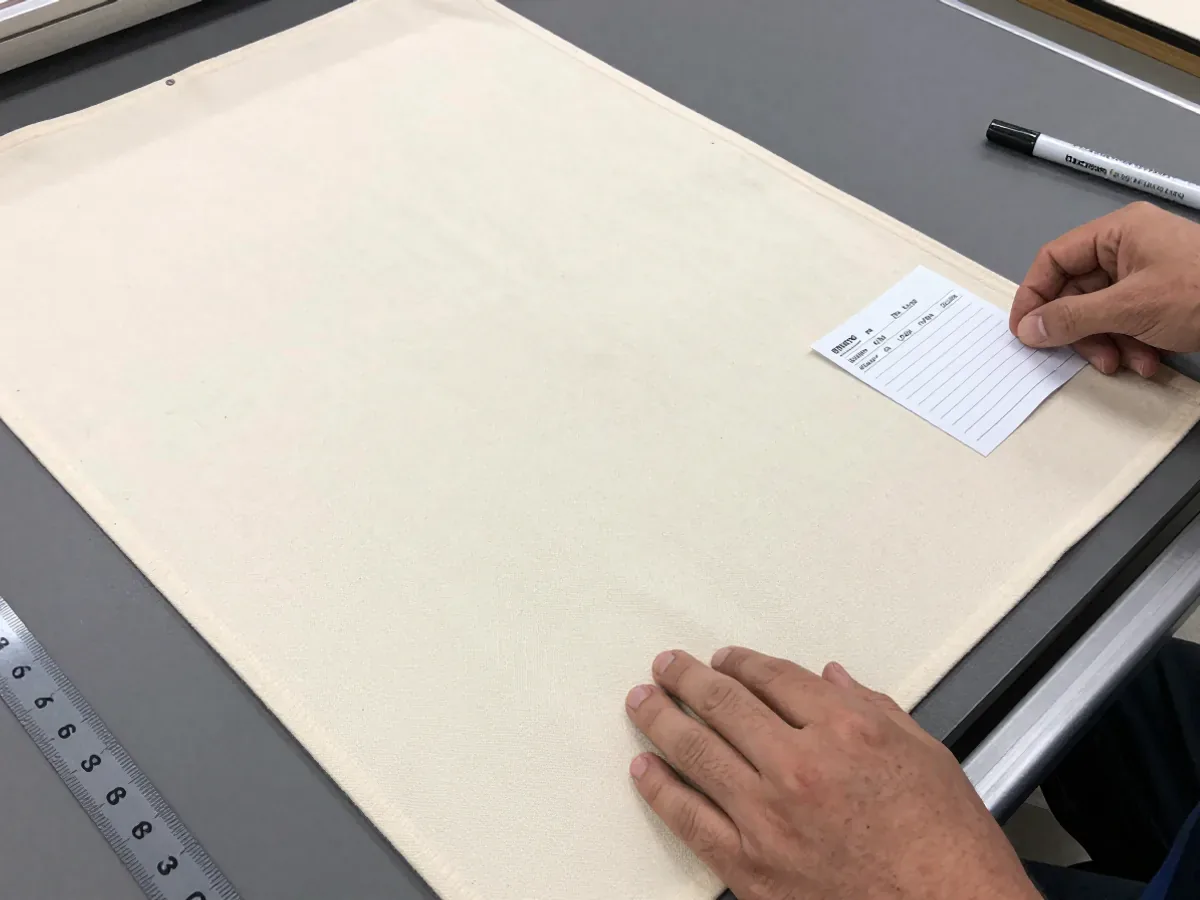
Before the run is cut, the print alignment is inspected on the bag sample. The sample carries the approved artwork position, and the inspection note records whether the print sits where the buyer signed off. This is a small paper with a large consequence, because a shifted print on a promotional tote is a visible defect on every unit.
The cutting record follows the fabric through the table. It links the lot number from the receiving note to the number of panels cut and the number of bags expected from those panels. That expected count becomes the reference figure for everything downstream.
A buyer reviewing documents should ask for the approved sample photo alongside the alignment note. If the two do not match, the note is describing a different bag than the one being produced.
On the Sewing Floor, Labels and Carton Marks Are Decided
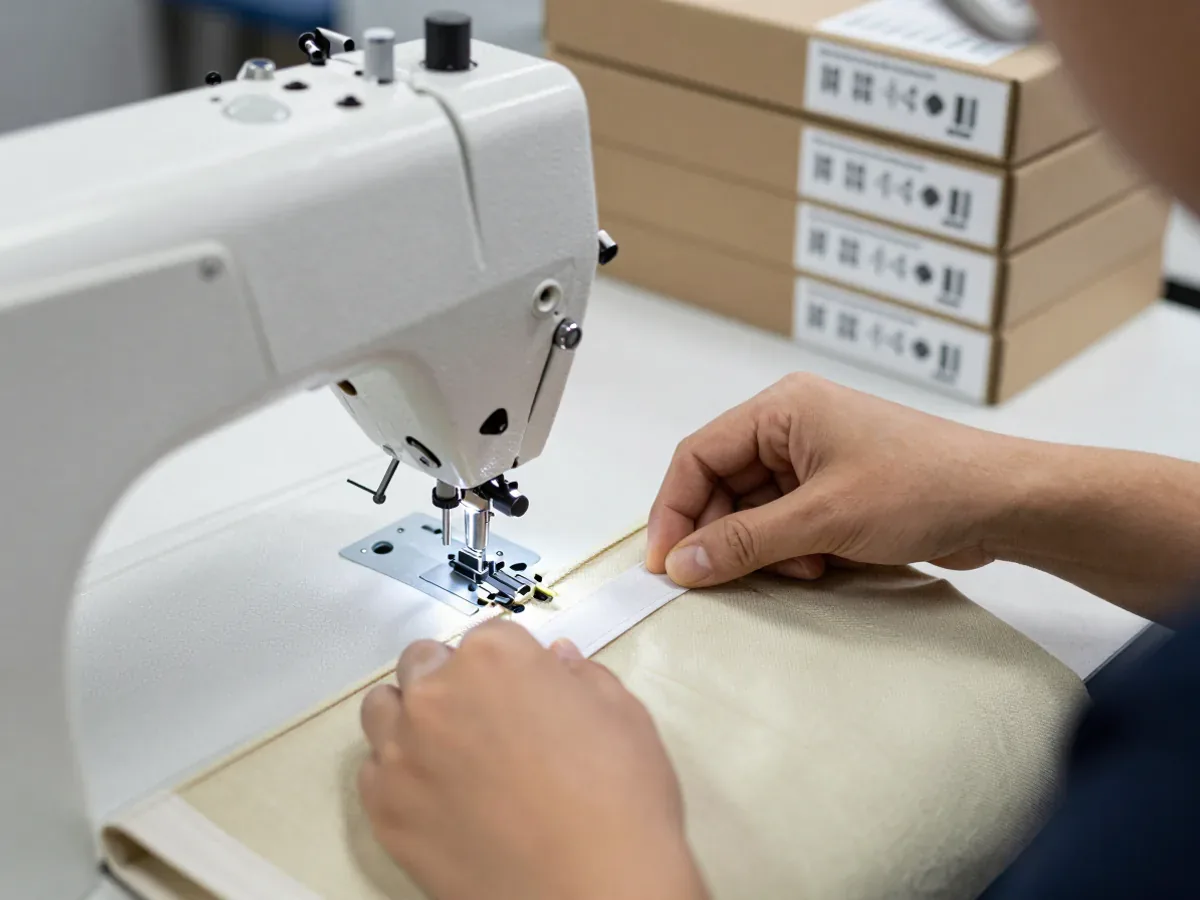
The sewing floor is where the label decisions become physical. Woven labels, care labels and any stitched label area on the bag face are attached here, and the label text must match the approved artwork exactly. A wrong care instruction on a retail bag is a compliance problem, not a cosmetic one.
Carton marks are also confirmed at this stage, before the first carton is packed. The factory and the buyer usually split this work. The buyer supplies the brand name, the style code and any barcode requirements. The factory supplies the carton dimensions, the quantity per carton and the sequential carton number.
Every dispatch carton is labelled by hand in the warehouse before it is sealed, and a sealed carton carries a printed number that ties it back to the order. That number is what makes the packing list verifiable. Without it, a carton count is just a claim.
At Final Inspection, the Carton Count Becomes a Document

Final inspection is the fourth checkpoint in the order flow, and it ends with the carton count. The inspector opens cartons, checks the bags against the approved sample, and then counts what is actually packed. That count is written down before anything moves to the loading area.
The packing list is built from this count. It lists the carton numbers, the quantity per carton, the total quantity and the gross and net weight. The commercial invoice is reconciled against it at the same time, because the declared quantity and the shipped quantity must agree.
The carton count is written on the stack before the truck is loaded. That handwritten figure on the stack is the last chance to catch a discrepancy while the cartons are still accessible. Once they are inside the container, correcting a count means unloading.
At the Loading Bay, the Packing List Meets the Truck
Cartons are stacked inside the open sided freight truck at loading, and the container is filled with brown cartons of finished bags. The loading supervisor works from the packing list, calling out carton numbers as they go in. Any carton that does not appear on the list should stop the loading.
This is where the documents separate into two streams. The commercial invoice, the packing list, the certificate of origin and any test reports travel with the forwarder, not inside the carton. The carton itself carries only the marks and the label. A buyer who expects paperwork inside the box is looking in the wrong place.
A copy of the packing list usually stays with the loading supervisor until the container is sealed. That copy is signed and dated, and it becomes the record of what actually left the building.
What a Buyer Should Open Before the Container Leaves
The practical check happens in the hour before sealing, not after the vessel sails. A buyer or agent on site should open four things and compare them against each other.
The purchase order against the commercial invoice, to confirm the description, quantity and value match what was agreed. The packing list against the physical carton count on the stack, to confirm the numbers agree before loading. The carton marks against the approved artwork, to confirm the brand name, style code and barcode are correct. The certificate of origin against the invoice, to confirm the origin statement and the consignee details are consistent.
Any one of these four comparisons takes minutes. Fixing a mismatch after departure takes weeks, and sometimes a reissued document that the destination customs office will question.
FAQ
Does the commercial invoice travel inside the carton or with the forwarder?
It travels with the forwarder as part of the shipping document set. Nothing that customs needs should be sealed inside a carton, because the carton may not be opened until after clearance.
Who writes the carton marks, the factory or the buyer?
Both contribute. The buyer supplies brand, style and barcode requirements. The factory supplies carton dimensions, pack quantity and the sequential carton number applied at sealing.
Can a certificate of origin be issued after the container sails?
It can be requested late, but the issuing body needs the shipment details and lead time. Requesting it at order confirmation avoids a scramble after departure.
Why does the packing list sometimes not match the carton count?
Usually because cartons were pulled, added or renumbered after the list was drafted. The signed loading copy is the version that should match the container.






