

The figures below come from the chain's own accounting and the factory's commercial proposal, with assumptions left visible so you can rebuild the model.
Every August, the same request lands on sourcing desks at regional grocery chains: a reusable tote that survives a full year of Saturday shops, not one summer promotion. In 2025 a 40-store chain in the midwestern United States answered it with a spec sheet written before any factory was contacted. The buyer's brief was blunt. Find a bag customers keep, one that carries the brand into homes, and one that cuts a $198,000 annual bag line by at least 25% in year one.
The chain had reasons to move. It operated in three states, and by early 2025 two of them had active bag laws. Plastic film bags were restricted at checkout and paper bags carried fees. Store managers absorbed most of that cost rather than pass a bag fee to customers, which turned checkout bags into a quiet line item procurement had never benchmarked.
What follows is that spec sheet, read line by line. Each row did a job: it told the factory what to build, it told the chain what to expect at the loading dock, and it told the buyer whether the program could hold a register price. The first row decided more than any other.
The line that started the order: 24 x 16 x 8 inches

The top of the sheet read 24 x 16 x 8 inches, with a 14-inch handle drop and a flat bottom so the bag stands on its own at the register. Those numbers were not chosen for looks. The chain tracked bags used per transaction at 0.55, roughly one bag for every two transactions, and average basket size set the floor plan.
A bag that stands upright at the till changes how cashiers pack. It also changes how customers carry produce home. The flat bottom meant the tote could take a full shop without the base folding under a gallon of milk. The 14-inch drop cleared a winter coat sleeve, which matters in a region with real winters.
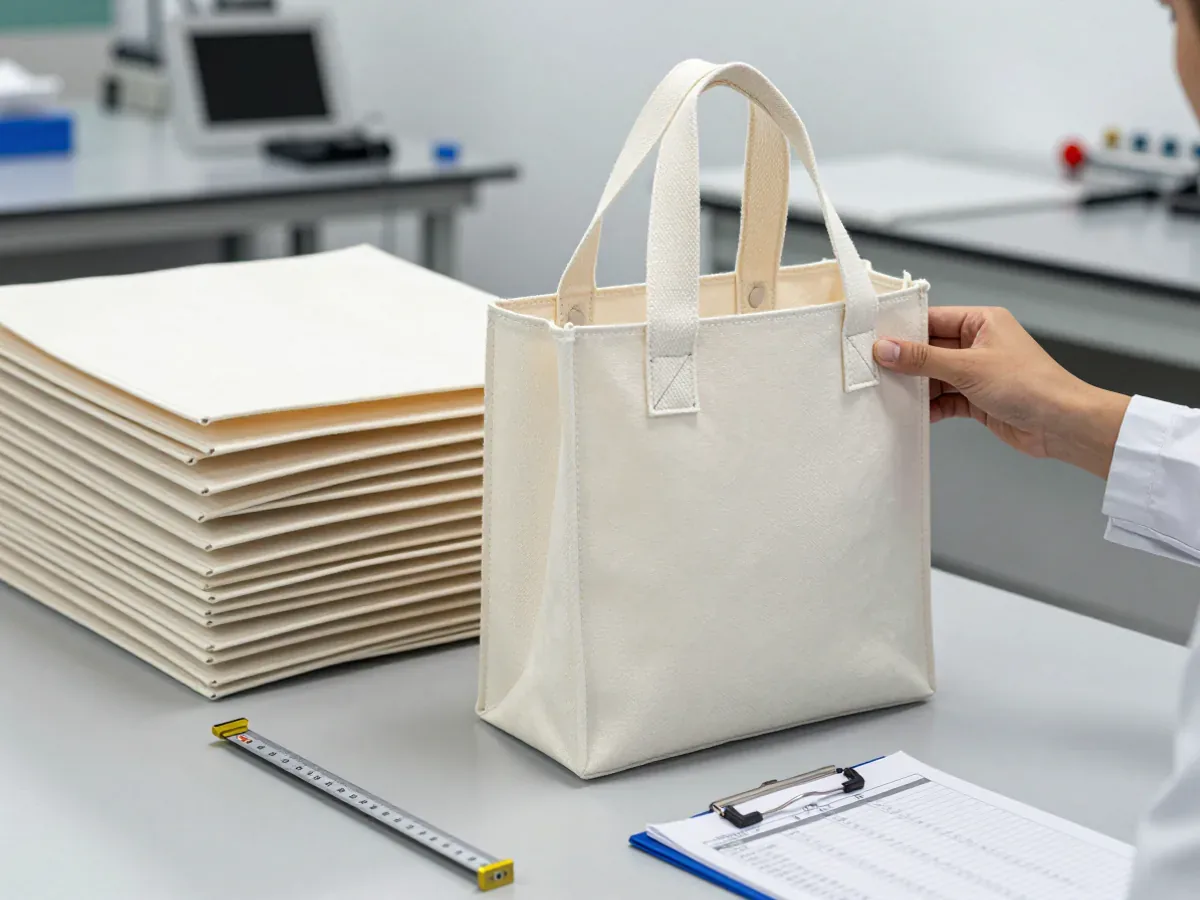
Verification for this row is dimensional, not visual. A tape measure on the finished bag, checked against the approved sample, catches the drift that creeps in when a factory trims fabric to save a few centimetres. A tote that measures 23 inches instead of 24 will still sell, but it will not pack the same basket, and the checkout script built around it starts to misfire.
Fabric weight at 90 GSM and why lamination was non-negotiable

The sheet set fabric weight at 90 GSM in laminated PP woven. The lamination was written as non-negotiable, and that word carried the program. An unlaminated woven bag takes on moisture from wet produce, and the chain’s complaint log already showed customers returning paper sacks that soaked through.
Lamination also protects the print. A laminated surface gives the ink a stable base, so a one-color logo survives handling in a cart, a car boot and a kitchen drawer. The chain chose PP woven from a material range that also runs cotton canvas, non-woven and rPET, because woven PP holds a standing shape and takes print well at this weight.
Checking this row happens before the bags are cut. Incoming material is inspected against the approved swatch, and the lamination is checked for bubbles, delamination at the fold lines and a consistent hand feel. A roll that passes the weight check but fails the lamination check will produce bags that look right on day one and wrong by month three.
A 500-use cycle written into the durability column
Most spec sheets have a price column and a size column. This one had a durability column, and the number in it was 500. The chain took that figure from published research on reusable totes against cardboard, which put the realistic use cycle of a well-made PP woven tote at 500 trips.
Writing 500 into the sheet changed the conversation with factories. It moved the question from what does a bag cost to what does a bag have to survive. Handle attachment, base stitching and the seam at the side gusset all became checkpoints rather than details. A bag rated at 500 trips is a bag a customer can forget in the car for a week and still trust.
The verification is a pre-production sample put through its paces, then a production check that locks the same construction into mass output. Every order passes four checks at the factory: incoming material, seams and zip, the finished bag, and the final carton count. The 500 figure lives in the first three.
One-color screen print and the wash-and-rub test behind it

Branding ran as one-color screen print in the chain’s signature green on both sides, applied at the factory. One color kept the print station simple and kept the cost inside the landed target. The sheet also allowed for heat transfer or a woven label, but screen print won on durability per dollar at this volume.
The buyer did not approve the print on sight. The sample went through a wash-and-rub test before sign-off: 30 wash cycles and 100 rub cycles with no ink flake. That test turned a subjective judgement about colour into a pass or fail. The sample process ran three weeks from artwork to approval.
The factory then locked the print standard into the mass production QC sheet so the production run matched the sample. This is the row where programs quietly fail. A print that flakes after a few washes comes back as a complaint, and a complaint about a branded tote is a complaint about the brand. Checking it means keeping the rub test on the pre-production sample and repeating the check on the first cartons off the line.
Landed cost at $1.35 and the register price it supported
The tote cost $1.35 landed at the chain’s distribution center under DDP delivery, which bundled ocean freight, duties and the domestic leg into one number. That single figure let the buyer set a register price before the first container was booked. The chain priced the tote at $1.99.
That price felt fair to customers, and it left the chain subsidizing about 30 cents per tote after covering its own cost and card fees. The subsidy became the program’s only real cost line, and it was a known number rather than a surprise. DDP mattered here because the buyer could compare the tote against the 9-cent blended cost of the paper bags it replaced without guessing at freight.
The cost row is verified at the dock, not on the quote. Landed cost holds when the carton count holds, when the duties are what the broker quoted, and when nothing gets reworked at the DC. Cartons are counted and photographed before the container seals, which gives the chain a record to check the invoice against.
Packing rows: per-store cartons and carton marks
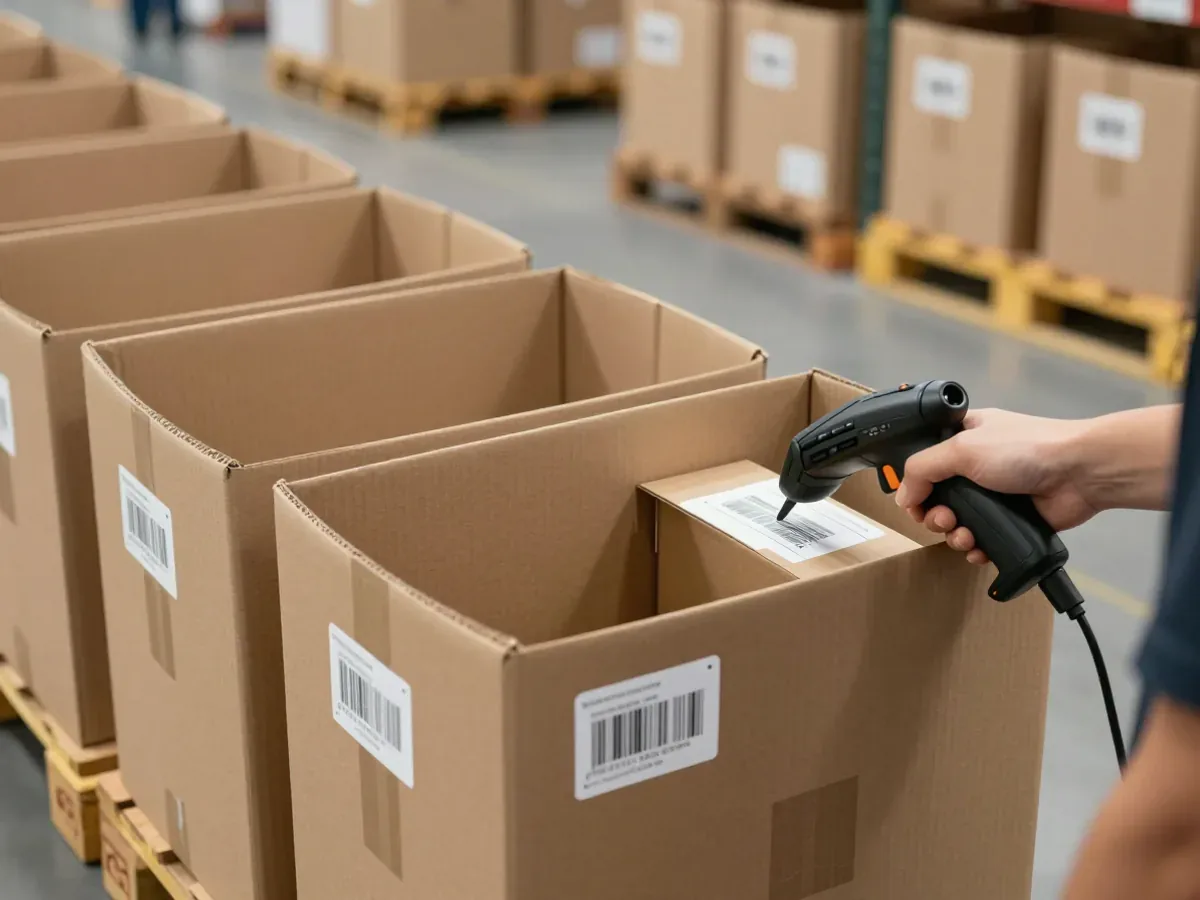
Below the cost rows sat the packing block, and it was longer than the buyer expected. The sheet called for per-store cartons, barcode labels and shelf-ready polybags, with carton marks set per store so each branch received its own allocation. Forty stores meant forty destinations, not one pallet to a central warehouse.
Per-store packing is a standard option rather than a special project, and it changes the rollout. A store manager opens a carton marked for that store, scans a barcode and puts totes on the shelf without sorting. The chain’s distribution center slotted the totes into the existing replenishment schedule instead of building a separate flow.
Checking this row happens at packing, before the container leaves. Carton marks are read against the store list, barcode labels are scanned, and the final count is confirmed. A mislabelled carton is a small error that becomes a stockout in one store and a surplus in another, and it usually surfaces in week one of a launch.
The line most buyers leave blank: bags per transaction
The last row on the sheet was not a product specification at all. It read bags per transaction, target 0.55 falling over time, measured weekly from launch. Most spec sheets stop at the product and leave store behaviour to the marketing team. This one treated checkout behaviour as a spec item with a number attached.
That row is what made the rest of the sheet pay. The chain trained cashiers with a single script, ask once and move on, and tracked the ratio weekly. Single-use bag volume fell from 2.2 million to 1.42 million bags a year, a 35% drop driven by tote owners skipping a bag on most trips. The 12,000-tote annual sales target depended on that training and on display placement, which the chain budgeted as a program cost rather than a given.
Verification is a weekly report, not an inspection. If the ratio stalls, the cause is usually a display moved to the back of the store or a cashier script that drifted. Neither shows up in a factory audit, and both decide whether the program earns back its subsidy.
What the 40 stores learned about sequencing
The first batch of 4,000 totes arrived as a 20ft container under DDP. Flat-packed totes load 8,000 units per container, so one container covered two rollout waves. The chain rolled out across 8 stores per month over 12 weeks.
Six months in, tote sell-through ran 78% of the 12,000-unit annual plan, slightly ahead of forecast, and 61% of tote buyers returned with the tote at least once a week. Summer produce season, the heaviest bag-use period, ran without stockouts because the reorder point was set at 60% of the annual plan. The one decision the chain would not repeat is the 12-week rollout. With 20,000 totes in reach, it could have launched all 40 stores in two weeks and captured more of the summer window.
FAQ
How many totes does a 40-store grocery chain need per year?
One tote with a 500-use cycle replaces up to 500 single-use bags. This chain set a target of 12,000 totes sold per year across 40 stores, which covered its entire bag volume once the bags-per-transaction ratio fell.
Does a reusable tote program require new warehouse space?
No. Totes ship flat-packed at 8,000 units per container and flow through the existing distribution center and store replenishment schedule. Per-store cartons and carton marks let each branch receive its own allocation without a separate handling line.
What tote specification made this program work?
A laminated PP woven tote at 24 x 16 x 8 inches, 90 GSM fabric, 14-inch handle drop, a 500-use cycle, one-color screen print tested to 30 washes and 100 rubs, at $1.35 landed cost under DDP, priced at $1.99 at the register.
The row to write first
A spec sheet is a set of promises between a buyer and a factory, and the promises only hold when each row has a number and a check behind it. The size row decides packing behaviour. The fabric and lamination rows decide whether the bag survives wet produce. The durability row decides handle construction. The print row decides whether the brand flakes off in a washing machine. The landed cost row decides the register price, and the packing rows decide whether forty stores get the right cartons.
The row most buyers leave blank, bags per transaction, is the one that turns a product order into a program. It belongs on the sheet with a target and a weekly owner, because it is the number that tells a chain whether the subsidy is buying behaviour change or just inventory.
Before the next factory conversation, benchmark the current bag cost including replacement and complaints, write the use cycle into the durability column, fix the landed cost under DDP, and put the bags-per-transaction target on the same page as the dimensions. The sheet that carries all of those rows is the sheet that decides the program.