

A station by station walk through a heavy duty bag order, using the four checkpoints and batch records a factory keeps for each run.
A buyer forwarded a competitor's page last spring with one line highlighted: "ISO 9001 certified, GS1 compliant." She wanted to know where on a moving bag line anyone actually checks those claims. So the next order became a walk, from the PO desk to the sealed container, with the certificate file open in one hand and a clipboard in the other.
The competitor's sentence was not false. It was just unattached to any station, any record, or any person. A certificate describes a system; a bag line produces evidence. The walk below follows one heavy duty moving bag order through six stops and shows what the paper has to match at each one.
At the PO desk, the certificate number is the first thing to open

Before a single roll of fabric is booked, the paperwork sets the terms of the walk. The buyer asks for the certificate number, the legal company name printed on it, and the issuing accreditation body. Not a logo on a website, not a screenshot in a chat thread.
The check happens on the registrar's own public database, found by searching rather than by following a link the supplier sends. The certificate number goes in exactly as printed. Three details decide whether the file stays open: the company name must match the supplier's legal entity, the certificate must still be active, and the scope must cover manufacturing rather than trading.
That last point catches more buyers than the first two. A certificate scoped to "trading of packaging materials" describes a broker, and a broker cannot show anyone the sewing floor. The order also names four production stations, each with a person responsible, and nothing moves to the next station until the stage is signed. That line in the order is what the rest of the walk tests.
At incoming material, the spec sheet meets the roll of fabric
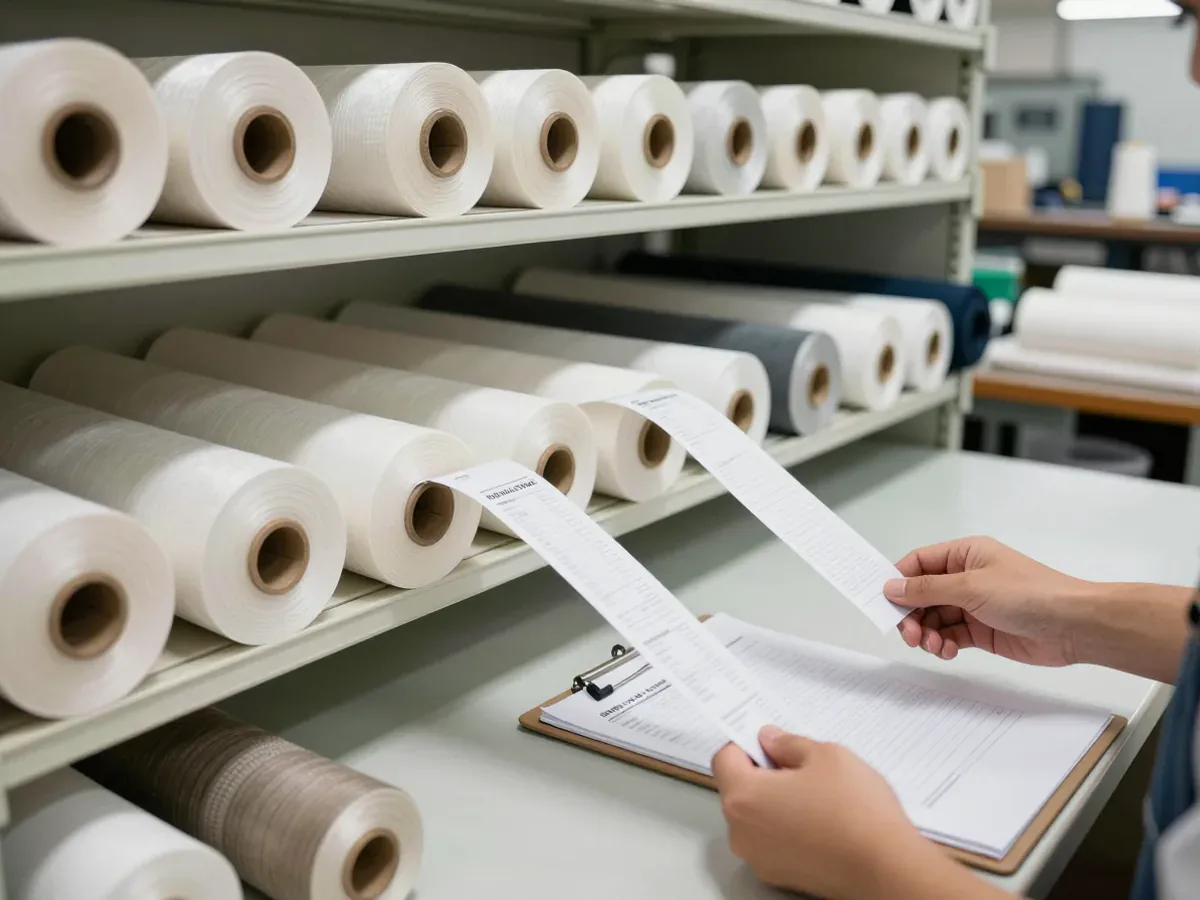
The first physical stop is the material store, where fabric, webbing, zips and thread are checked against the approved spec. This is where an ISO 9001 claim stops being abstract. A quality management system is supposed to control incoming goods, and the receiving record is the proof that it does.
The buyer's checklist at this station is short. Does the roll ticket carry the same article code as the approved spec? Is the fabric weight written down, or only felt by hand? Are the zips and webbing from the named supplier, or from whatever was in stock that week?
A factory without a working system can quietly swap cheaper thread or lighter fabric after the first order, and the receiving desk is where that swap would show. If the incoming record is blank or filled in after the fact, the certificate on the wall has no bearing on the roll in front of you.
At the cutting table, the certificate scope meets the actual product
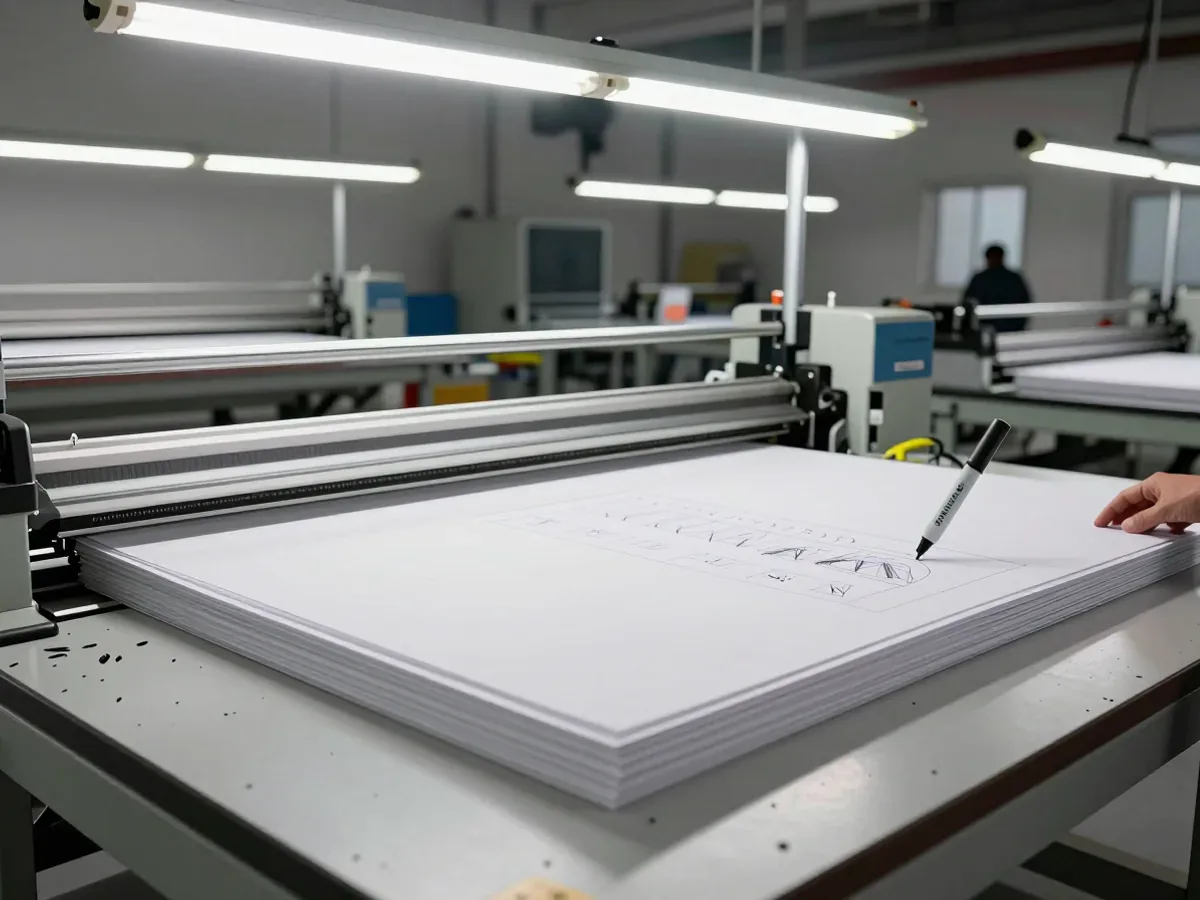
Cutting is fast and easy to photograph, which makes it a good place to compare the certificate's scope with what is being made. The scope says bags; the cutting table says which bags. If the certificate covers a product family the factory does not cut here, the mismatch surfaces at this bench.
The buyer watches three things. The marker lays out panels at the dimensions on the order. The layers are counted before the blade goes down. Offcuts are kept separate rather than swept into the next batch.
None of this is dramatic. It is the ordinary discipline a documented system should produce, and it either appears or it does not. A cutting table running without a marker drawing, or with panels stacked beyond the machine's rated depth, tells the buyer more about process control than any PDF.
At the sewing floor, batch pull records replace the logo on the website

The sewing floor is the station most buyers never see and the one that decides durability. Here the order requires pull and seam strength testing on every batch, with results recorded, and a static pull on each handle logged per batch. Those records are the living version of the certificate.
The buyer asks to see the last three batches, not the best one. A record with dates, handle counts, and a signature per batch shows a system running. A single sheet with no dates shows a system posed for visitors.
Stitch density gets checked by eye against the approved sample, and the zipper alignment on each heavy duty bag is inspected before the panel moves on. The named person at this station signs the stage. If that signature is missing on a batch that already left the floor, the four-station promise in the order was decoration.
At final inspection, hand checks answer what the PDF cannot

Finished bags arrive at inspection and the checks turn physical. Dimensions, handles, logo placement and stitch density are checked by hand on the finished bag. A tape measure and a trained eye do work no certificate can do remotely.
The buyer pulls bags at random from the batch, not from a neat stack prepared for the visit. Each handle gets a static pull, and the result joins the batch record from the sewing floor. The logo is compared with the approved artwork at arm's length and up close, because print position drifts in ways a photo approval never catches.
This is also where a GS1 question gets settled for distributors. If the barcode is printed on the fabric, the buyer scans a finished bag with a handheld reader and confirms the code resolves to the right item. A supplier can claim GS1 compliance; a scanner either reads the bag or it does not.
At the loading bay, carton photos close the file
The last stop is the loading bay, where cartons are counted and photographed before the container seals. The count matches the packing list, the carton labels match the order, and the photos go into the buyer's file alongside the four checkpoint images from the line.
The buyer's habit at this station is to photograph the seal itself, with the container number visible. That image, plus the carton count, closes the chain of custody from the certificate number opened at the PO desk to the goods leaving the yard.
Certificates only prove what the chain of custody shows. A file with a verified certificate number, receiving records, batch pull logs, hand inspection notes and sealed carton photos shows a chain. A file with a logo and a sample shows a hope.
What the walk proves about the paper
The walk does not prove that ISO 9001 makes a bag strong. It proves something narrower and more useful: whether the system the certificate describes is the system running on the floor. At every station, the paper had a physical counterpart, and the counterpart was either there or missing.
A buyer who walks the line once, with the certificate open, learns which stations produce records without being asked. That habit carries to the next order, the next factory, and the next certificate number. The document is the start of the conversation, never the end of it.
FAQ
Does an ISO 9001 certificate guarantee the bags will be durable?
No. It confirms the factory runs a documented quality management system, which supports consistent output across a large run. Durability still comes from the spec, the materials and the batch testing records, so ask for those alongside the certificate.
How does a buyer check that a certificate belongs to the factory making the bags?
Open the registrar's public database directly, enter the certificate number exactly as printed, and compare the legal company name and the scope. If the scope covers trading rather than manufacturing, the certificate belongs to a broker, not the line.
Why does a GS1 barcode matter on a heavy duty moving bag?
A GS1 barcode gives each item a globally unique identifier, which supports traceability through receiving, warehousing and inventory counts. For distributors, a printed code that scans correctly at final inspection is the practical test of the claim.
Should a buyer trust a sample more than a certificate?
They answer different questions. A sample confirms the spec for one bag; a certificate speaks to whether the factory can repeat that spec across a run. Approve the sample, verify the certificate, then use batch records to confirm the two stayed connected.






