

Cost lines drawn from a 120L woven polypropylene moving bag spec, a 5:1 safety factor, and the QC checkpoints behind a rated load.
On dispatch day, a carton of 120L moving bags sits open on the loading bay while a QC worker checks the handle stitching of the top unit. The buyer who ordered them has already approved the sample, signed the purchase order, and told her client the bags will take 100 kg. What she has not done is compare the quote line by line against the cost of a handle that fails in the field.
That gap is where the money goes. A heavy duty moving bag is priced in four visible lines and one invisible one, and the invisible line is the one that decides whether the order makes money. This breakdown follows a 220 lb (100 kg) rated bag from fabric to claim, so a buyer can see which lines to pay for and which to question.
The quote that looked cheap until the first claim arrived
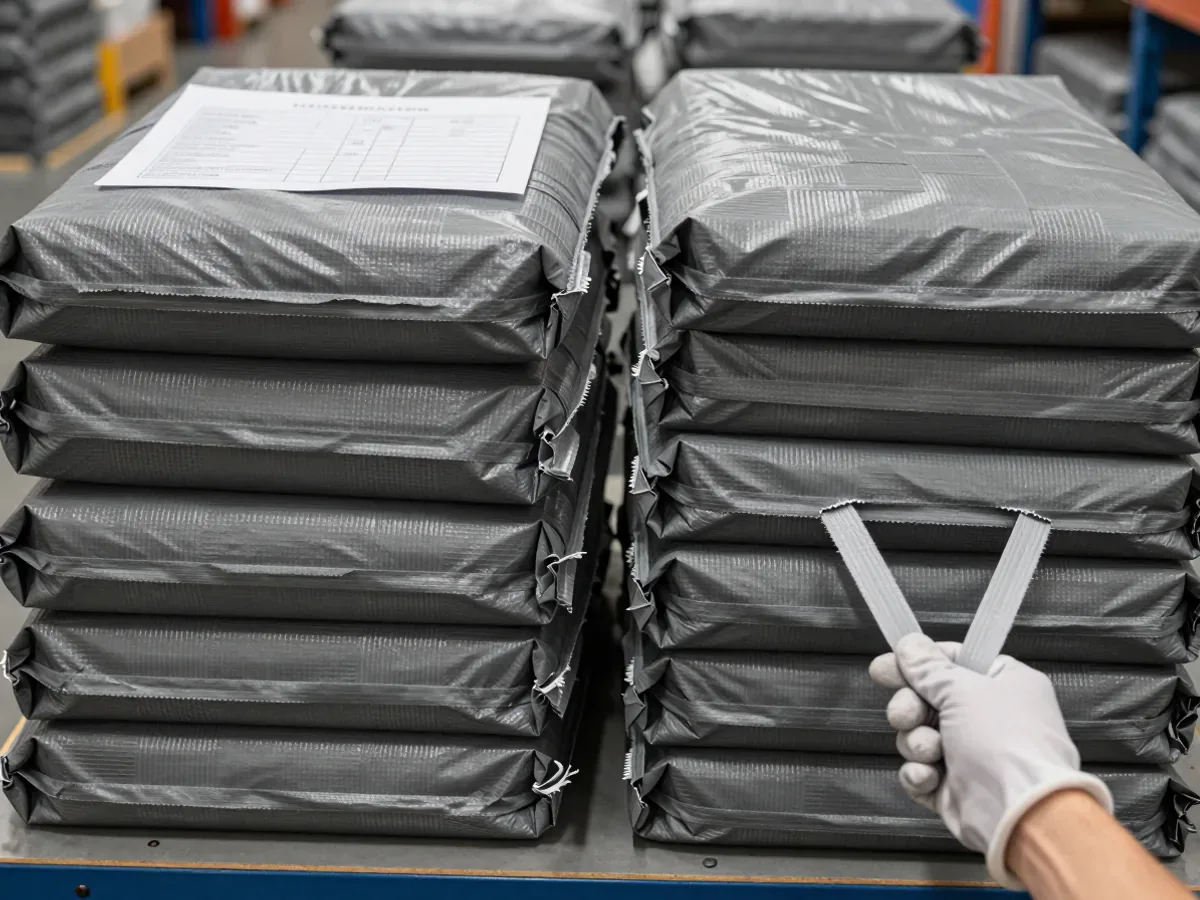
A distributor compares two quotes for the same 120L bag. The first is lower per unit by a margin that looks like easy savings. The second costs more and comes with a test report. Both bags hold the same volume, both look grey and sturdy on a photo, and both are described as heavy duty.
Six weeks into the contract, the cheaper bag starts coming back. The failures are not torn fabric panels. They are handles, where the stitching pulls away from the body after a mover lifts a packed bag fast. The distributor replaces the units, pays the freight, and absorbs the complaint from a client who now questions every future order.
The per unit saving disappears in one claim cycle. That is the shape of the cost problem: the quote shows what the bag costs to make, not what it costs to own.
Line one: the shell weight that carries the load
Fabric is the first line on any quote, and it is the easiest to shave. A 120 GSM woven polypropylene shell can be quoted as a 120L heavy duty bag. The same bag in a 180 GSM shell is a different product, and the price reflects it.
Volume alone does not set the load. A 120L bag is 0.12 m³, and household goods run roughly 500 to 800 kg/m³. At the dense end, a full bag holds about 96 kg before anyone adds a heavy item on top. That is why 180 GSM woven PP is the practical minimum for a 100 kg payload, and why a 240L bag filled with books or tools can pass 150 kg, beyond what one person can lift safely.
The 180 g shell is the heaviest in the range, and it exists because the lighter shell keeps failing the same way. The cost of the heavier fabric is real and visible on the quote. The cost of the lighter shell is deferred to the claim.
Line two: stitching where the handle meets the body
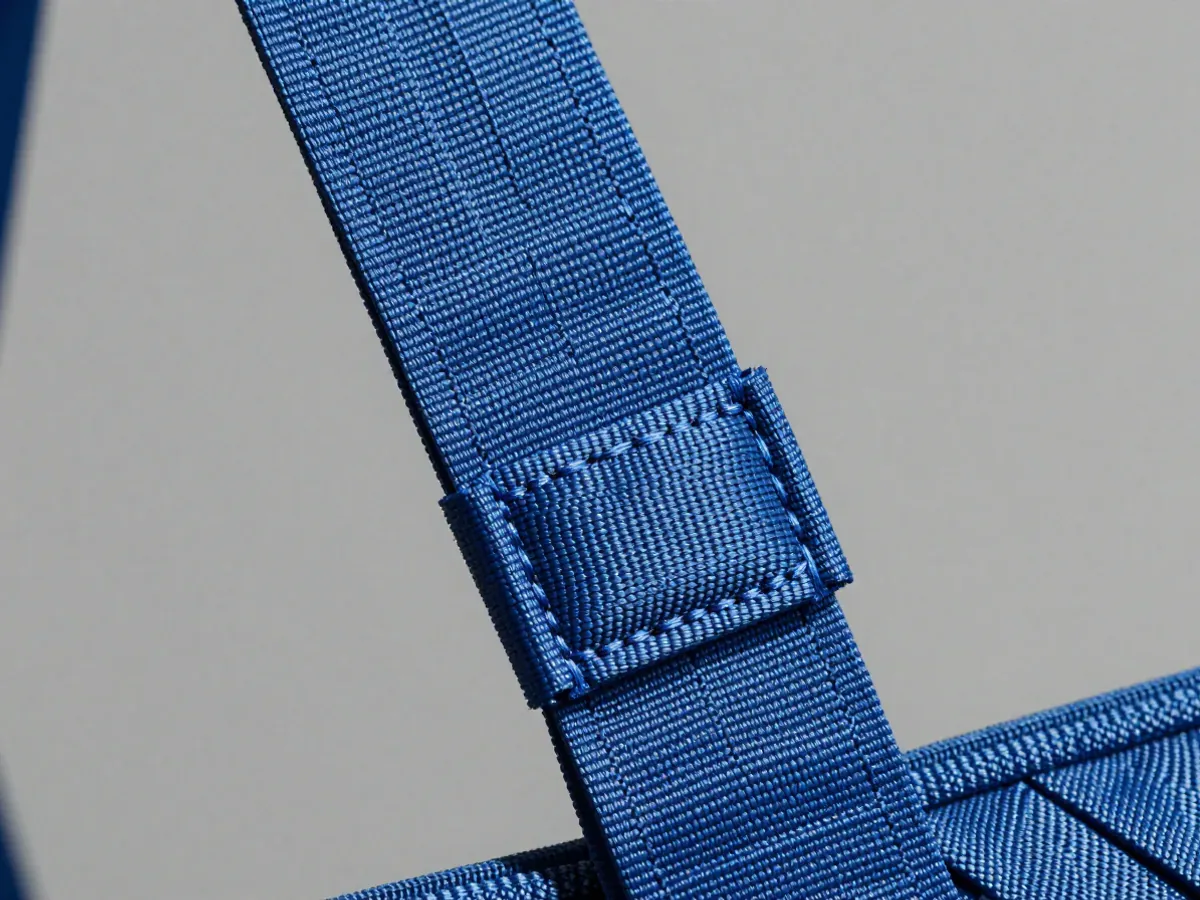
Most failures in moving bags happen at the handle, not the fabric. The handle stitching takes the shock when a user lifts a packed bag suddenly, and that dynamic spike is a different load from the static weight printed on a spec sheet.
A handle attachment built for static load can pass a simple pull test and still open up under a fast lift. The fix is mechanical: wrap-around webbing that distributes force into the body, long carry handles that let two people share the load, and a stitch pattern that locks the seam rather than running a single line across the stress point. The custom woven strap carries blue stitching and a square reinforcement at the anchor, which is the kind of detail a quote rarely itemises.
This line is where a supplier can save the most without changing the bag's appearance. A buyer comparing two quotes should ask what stitch pattern and how many passes sit at the handle anchor, then ask for the stitching tensile figure for the main seams.
Line three: the test report that turns a claim into a number
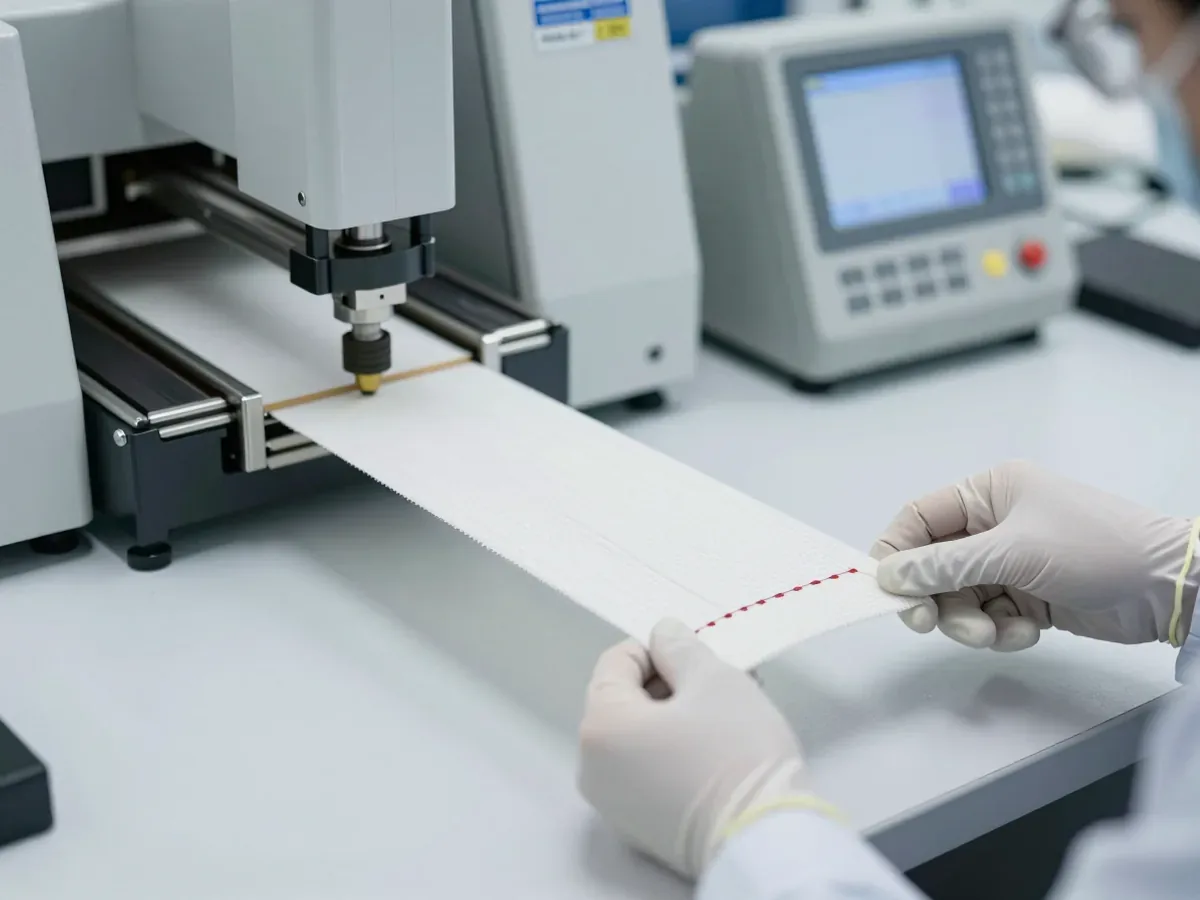
A capacity claim without a test method is a marketing line. The number that matters is Safe Working Load, defined with a 5:1 safety factor. For a 100 kg payload, the bag must hold 500 kg before breaking, which is the margin that covers dynamic shock, uneven loading, and a mover who lifts too fast.
The report behind that number should come from a certified lab and reference ASTM D5034 for fabric and seam strength. A credible sheet shows minimum 250 N burst resistance and 150 N stitching tensile for the main seams. It also lists shrink rate after 24 hours at 80°C, with a target of 3% or less, and UV resistance of at least 300 hours without colour fade or embrittlement.
A supplier who quotes "50 kg capacity" as a static limit is not answering the dynamic question. A supplier who cannot produce the report is likely cutting fabric weight or stitch density somewhere the buyer cannot see. The report costs money to obtain, and that cost belongs on the quote.
Line four: packing that keeps a rated bag rated in transit
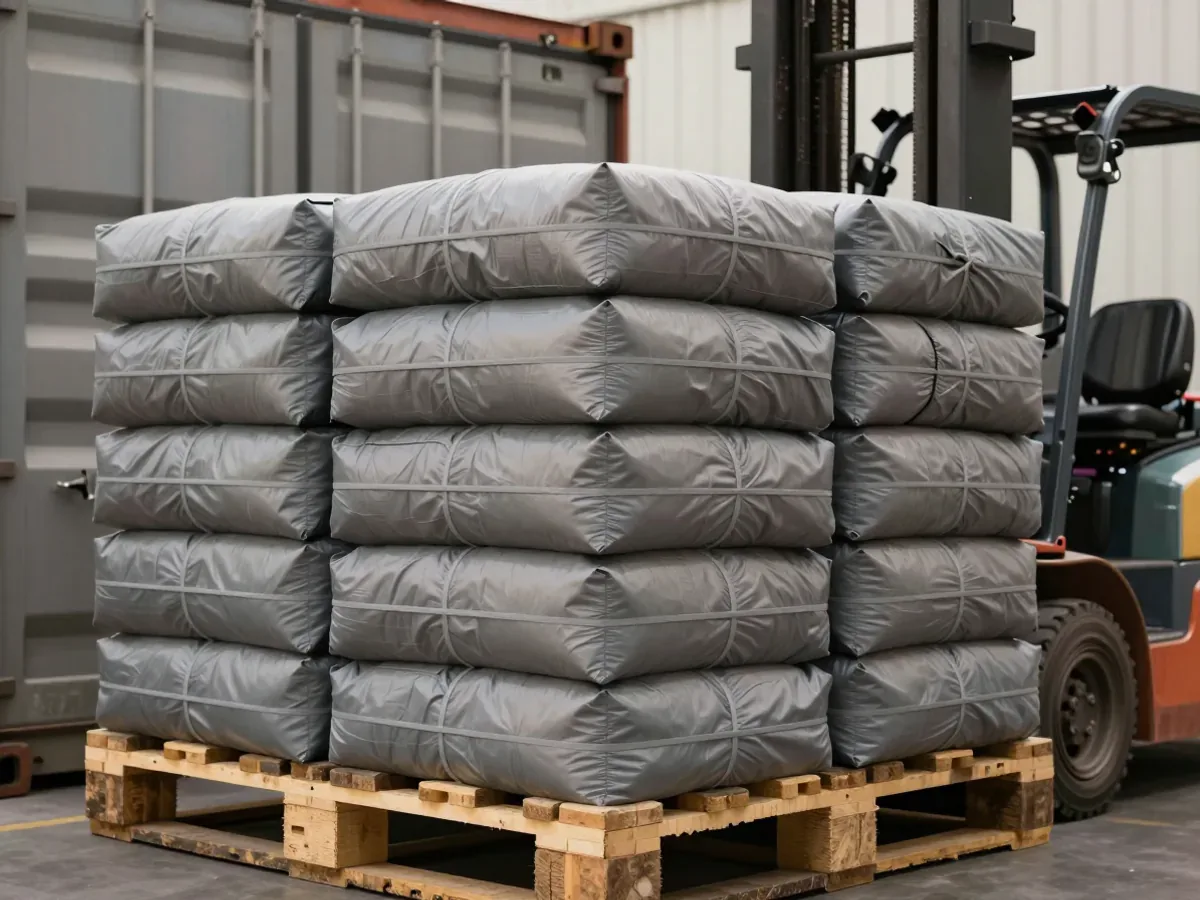
A bag that passes the lab can still arrive unusable. Bags shipped loose in a container get crushed, and a crushed bag stacks badly in the distributor's warehouse. The rated capacity has not changed, but the sellable unit has.
Packing specifications carry a real cost: palletised loads, L-shaped corner protectors at each stack edge, and a carton count that matches the label. A mislabelled carton on the loading bay is a small event with a large consequence, because the size line gets copied wrong through the whole order.
This line also covers the small features that decide whether the bag gets used correctly. A clear label window lets a mover write the room and contents, which reduces overload. A top zip with two pulls keeps dust off the contents and lets the bag close flat. None of these are expensive, and all of them are easy to leave off a quote to win on price.
The hidden line: what a failed handle costs after delivery
The claim is the line no quote shows. When a handle fails, the distributor pays for the replacement unit, the outbound freight to send it, and the labour to process the return. The client relationship takes a hit that does not appear on any invoice.
A defect allowance written into the contract changes who carries that cost. The industry standard for generic woven bags is 5%. A buyer ordering a rated bag should push for 2%, with the supplier covering replacement freight for units found defective during a 30 day inspection window.
The arithmetic is simple once the claim rate is known. A bag that fails at the handle costs several times its unit price to replace in the field. A bag that holds costs its unit price once. The cheaper quote wins only if the failure rate stays at zero, and no supplier can promise that without the test report and the stitch specification.
How to price a 220 lb bag before you place the order
Start with the payload and work backwards. A 220 lb load needs a Safe Working Load rated at least 200 kg with a 5:1 safety factor, which sets the breaking strength the bag must reach. That figure drives the fabric weight, the seam specification, and the test the supplier must run.
Then price the four visible lines against that requirement. Ask for the GSM of the shell, the stitch pattern at the handle anchor, the ASTM D5034 report with burst and stitching tensile figures, and the packing method for container shipment. Each answer either supports the rating or exposes where the quote was trimmed.
A supplier who undercuts by 20% or more on these requirements is almost certainly using recycled PP with lower UV stabiliser and a lighter denier weave. The gap between a 160 GSM and a 200 GSM shell is a material decision, not a negotiation tactic. A buyer who knows the payload math can tell which quote is a bag and which is a promise.
What to put in the purchase order so the cost stays honest
The purchase order is where the cost case becomes enforceable. Write the Safe Working Load and the 5:1 safety factor into the specification, not the marketing sheet. Name ASTM D5034 as the test method and require the certified report before bulk production starts.
Add the stitching tensile minimum for the main seams, the shrink rate limit, and the UV exposure hours. Specify palletised packing with corner protectors, and state the defect allowance with the replacement freight terms. A 30 day inspection window gives the distributor time to catch a bad batch before it reaches the client.
Quality control at the factory should run checkpoints that match these lines: incoming fabric weight, stitch pattern at the handle, seam tensile on a sampled unit, and packing condition before the carton is sealed. Four checkpoints cover the four visible costs. The hidden line is covered by the report and the contract terms, which is the only place a buyer can control it.
FAQ
Does a higher fabric weight always mean a higher load rating?
No. Fabric weight sets part of the load path, but the handle attachment and seam strength decide where the bag fails. A 180 GSM shell with a weak handle anchor rates lower than the same shell with wrap-around webbing and a locked stitch. Read the Safe Working Load and the stitching tensile together, not the GSM alone.
Why does a 5:1 safety factor matter for a 220 lb load?
The safety factor covers the difference between static weight and a sudden lift. A 100 kg payload needs a bag that holds 500 kg before breaking, because a fast lift spikes the force well above the resting load. A bag rated only for static weight has no margin for the way movers actually work.
What test report should a buyer ask for before approving a bulk order?
Ask for a certified lab report referencing ASTM D5034, showing minimum 250 N burst resistance and 150 N stitching tensile for the main seams. The sheet should also list shrink rate after 24 hours at 80°C and UV resistance of at least 300 hours. A supplier who cannot produce it is not testing the bag.
How can a buyer compare two quotes when one bag is lighter?
Compare the Safe Working Load, the stitch pattern at the handle, and the test report before the unit price. A lighter bag can be the better buy if the report supports the rating and the handle is reinforced. A heavier bag with an unverified handle is the more expensive order once claims are counted.






