Based on TIIOCTI product spec data for heavy duty moving bags and the archived spec comparison notes.
Two cartons sat on the same loading dock, one marked with a woven PP code and one with an Oxford code, and the labels described almost the same bag. Both listed a heavy-duty shell, a full-length strap, a two-pull zip and a card pocket on the face. The warehouse team had to decide which carton to open first, and the labels gave them nothing to go on.
That is the moment a moving bag spec sheet stops being paperwork. Two suppliers can describe the same product in the same words and still deliver bags that behave differently after ten trips through a van. The comparison below puts the two material routes side by side, then narrows to the four points where the choice actually changes the outcome.
Two Spec Sheets Land on the Same Desk
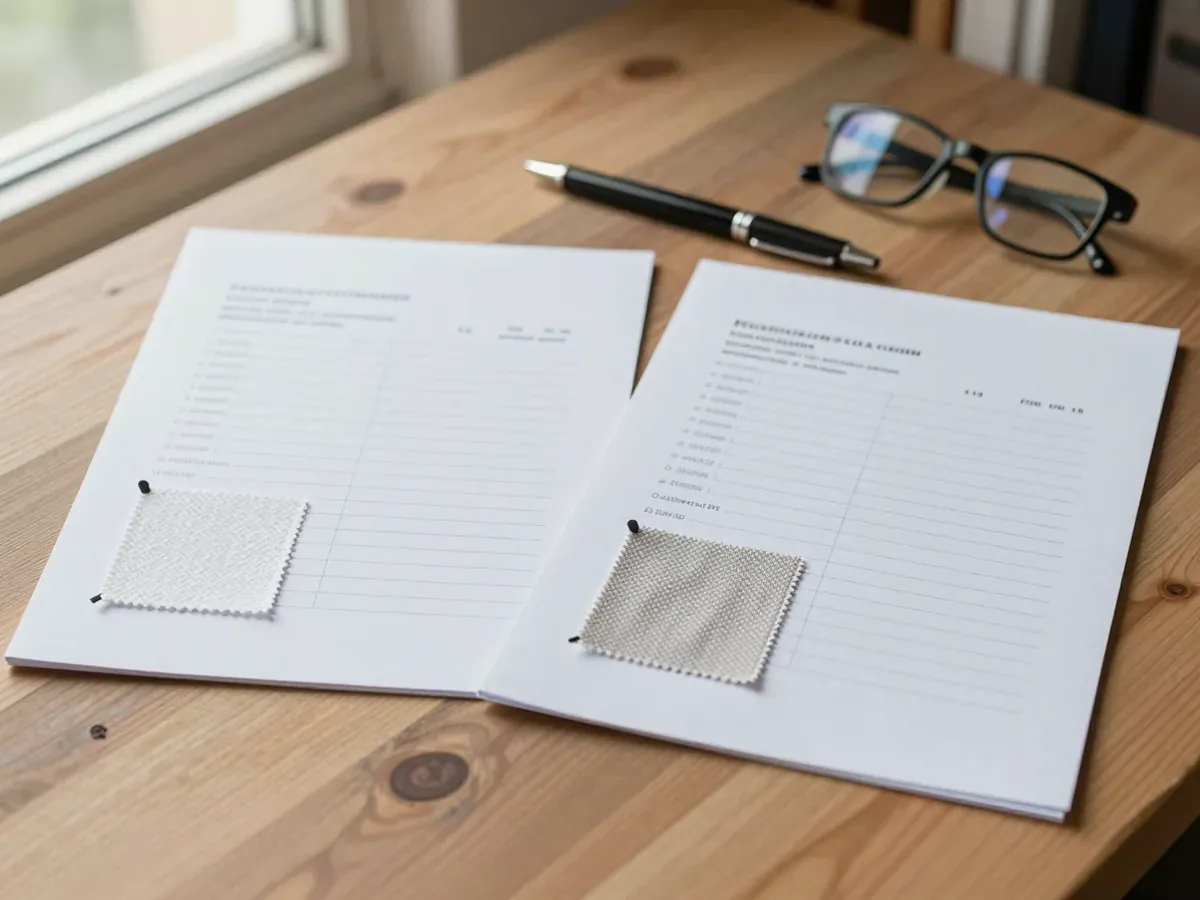
The first sheet reads like a woven polypropylene job: extruded tape yarn woven into a grid, a GSM figure, a coating option, and a line about UV additive mixed into the resin. The second reads like an Oxford job: a denier rating, a back coating, and the word water-resistant somewhere near the bottom.
Both sheets promise a bag that carries a household move. Neither sheet says where the bag will fail. Procurement teams tend to start with material type and weight capacity, because those are the two numbers that appear first on every quote. The problem is that a rated capacity is only as good as the test method behind it, and a material name is not a construction.
A bag that holds a static load in a lab can split when a loaded handle lifts it, because the seam takes the force, not the fabric face. So the useful question is not which material sounds tougher. It is which sheet tells you how the bag was built at the points that carry weight.
The Webbing Line Tells You Which Bag Was Designed to Be Lifted
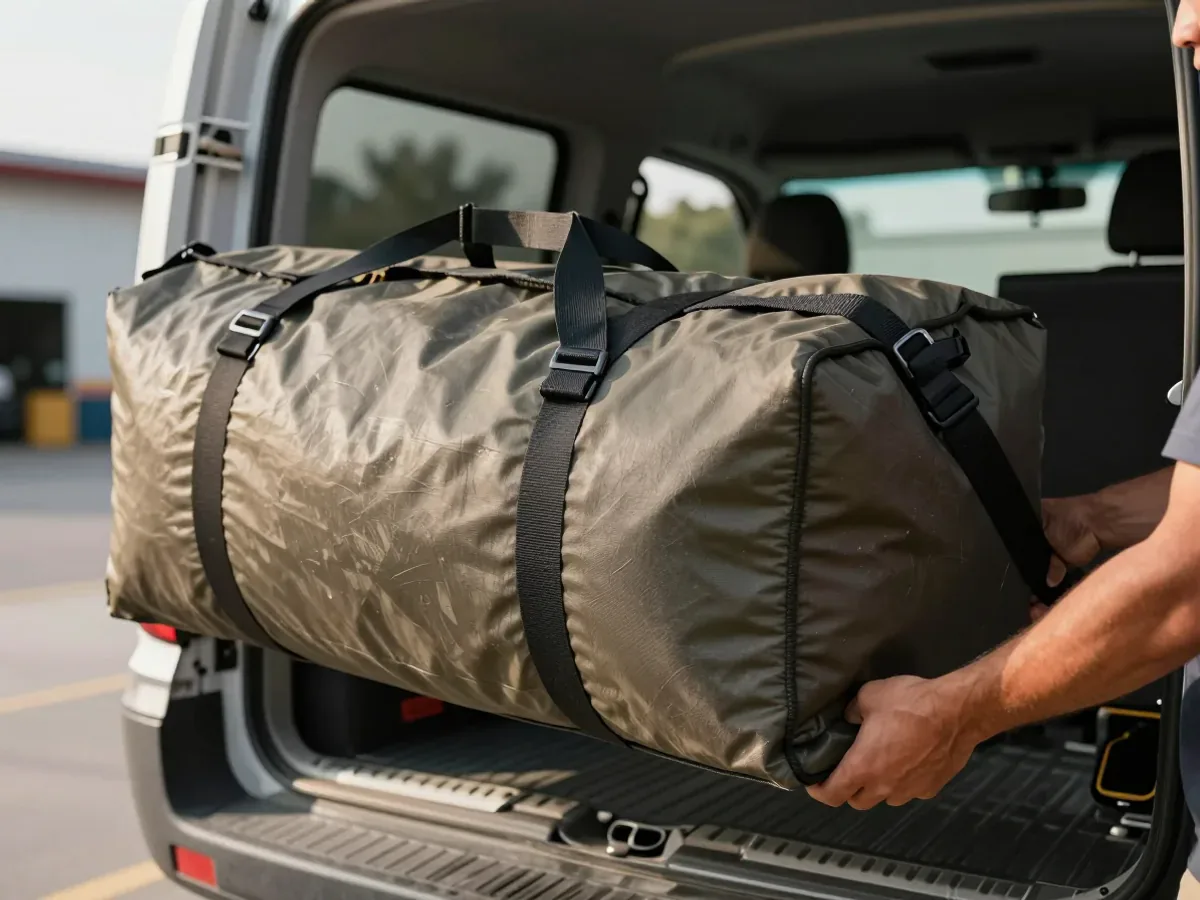
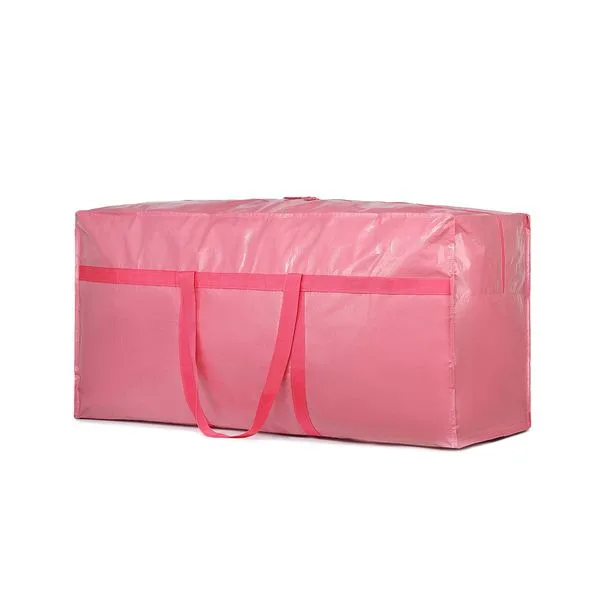
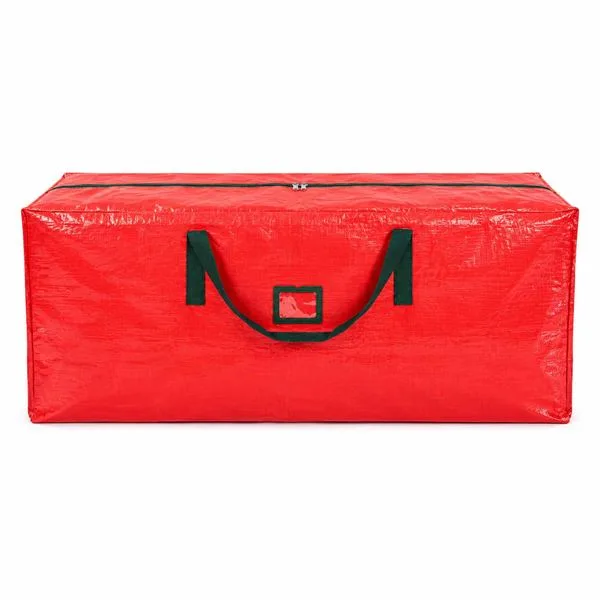
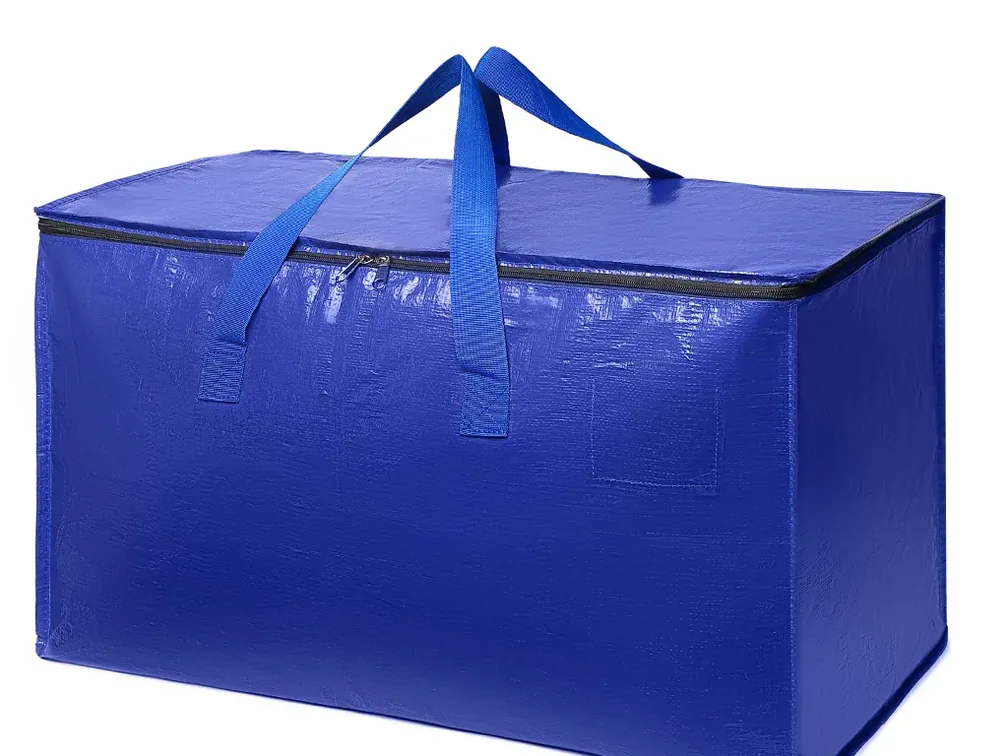
On the woven PP sample, the webbing strap runs the full length of the bag rather than only across the handles. That single line changes how the load travels. A strap that continues down the body spreads lift force into the fabric instead of concentrating it at two attachment points.
The same sample carries a side grip, a second handle on the end, positioned for lifting a loaded bag into a van. That handle exists because someone thought about the moment a mover tilts the bag and takes the weight on one arm. An Oxford sheet that lists only top handles is describing a bag designed to be carried flat, not swung.
Neither feature appears in a denier or GSM figure. When two specs look equal, the webbing layout is the first place they stop being equal. Ask for a photo of the strap run and the end handle on the actual sample, not a line drawing.
Seam and Stitch: Where the Load Actually Breaks
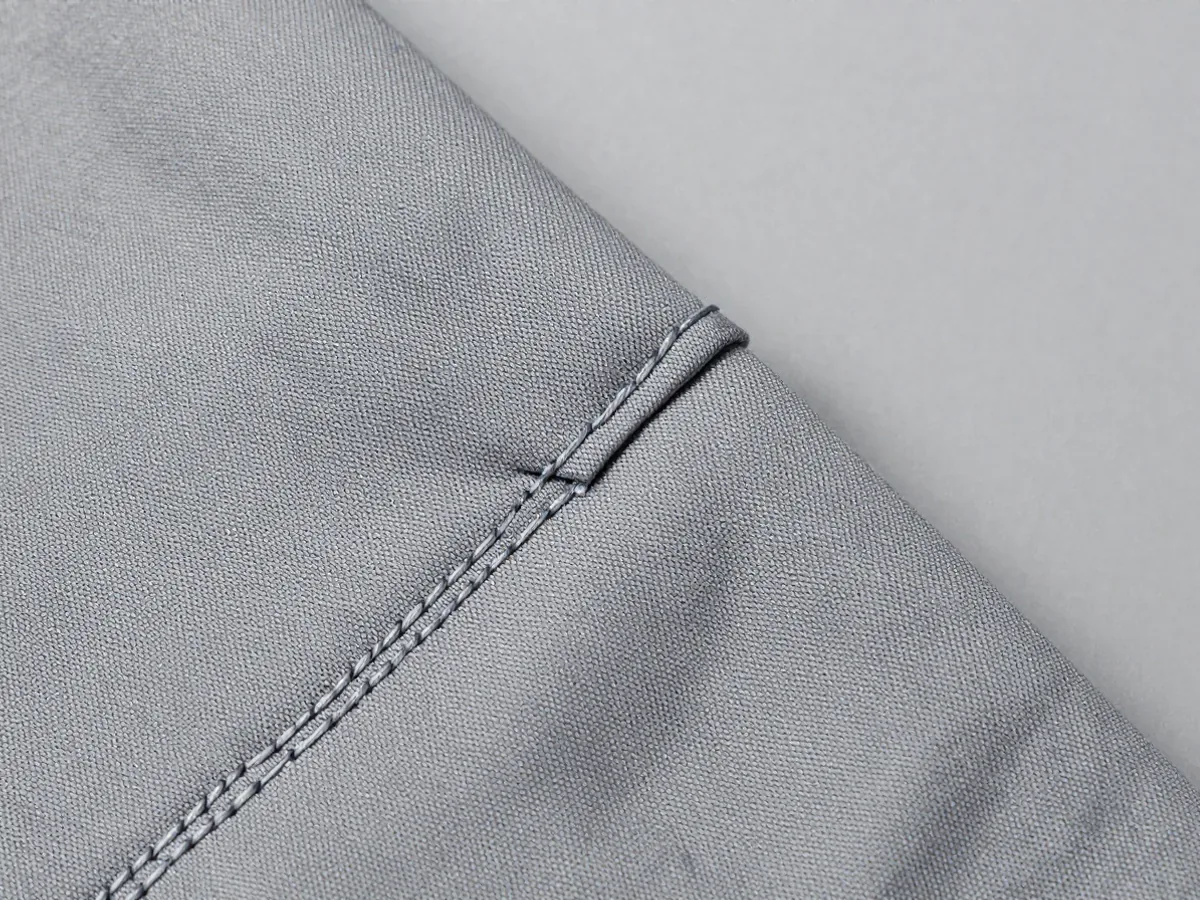
Most moving bags fail at the seams under load, not at the fabric face. That holds for both materials, which is why the seam line matters more than the shell line on either sheet. A double-stitched lock seam with a reinforced bar tack at the stress points behaves very differently from a single row of stitching.
The stitch count belongs on the sheet as a number, not an adjective. A common working range for a lock seam is eight to ten stitches per inch, with bar tacks at the handle roots and the zip ends. A sheet that says reinforced seams without a stitch count or a bar tack location has left the important part to the factory.
Stitch-line tear strength predicts field failure better than fabric weight alone. If a supplier cannot show a seam test from a batch, the material debate is premature. On our line, pull, seam strength and bar tack are tested on every batch, and incoming thread is checked against the approved spec before it reaches a needle.
Coating Side and What It Does to a Wet Loading Dock
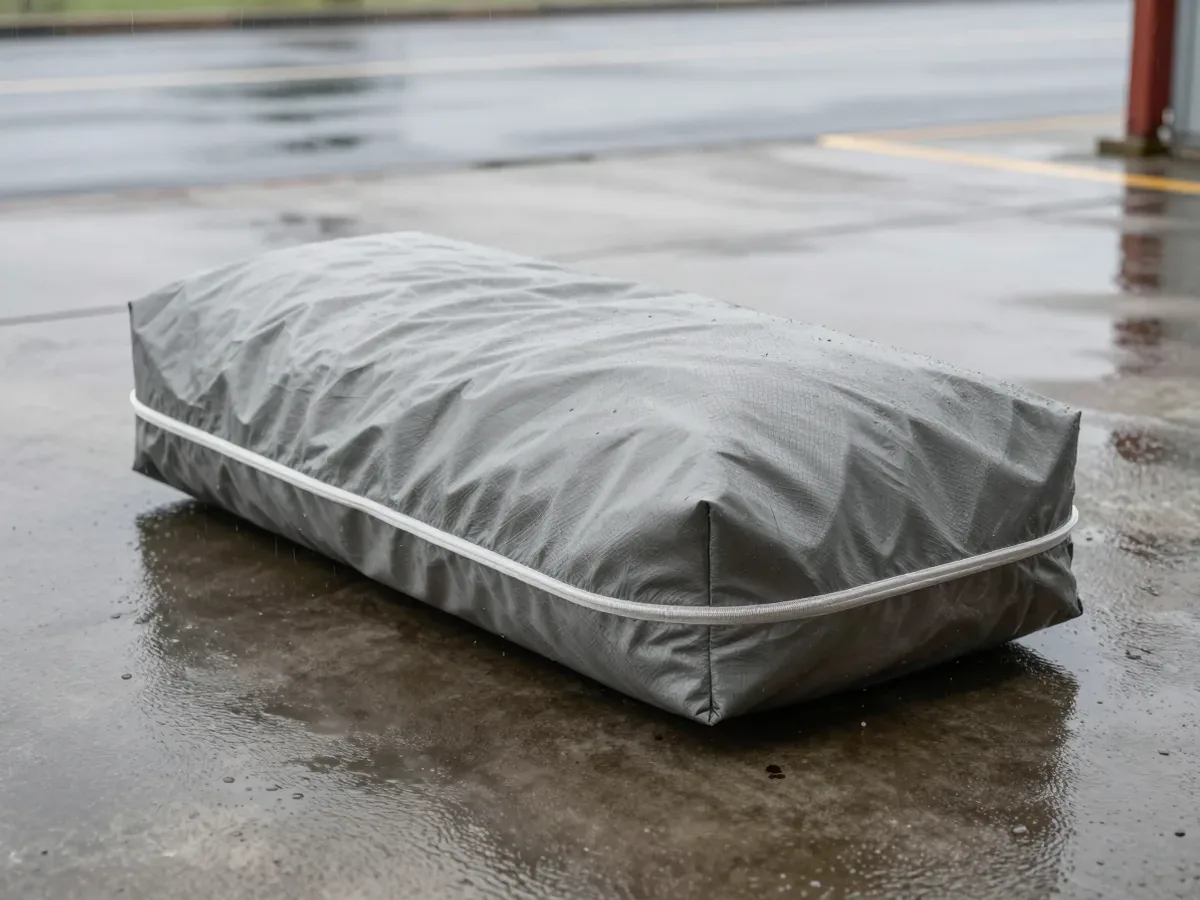
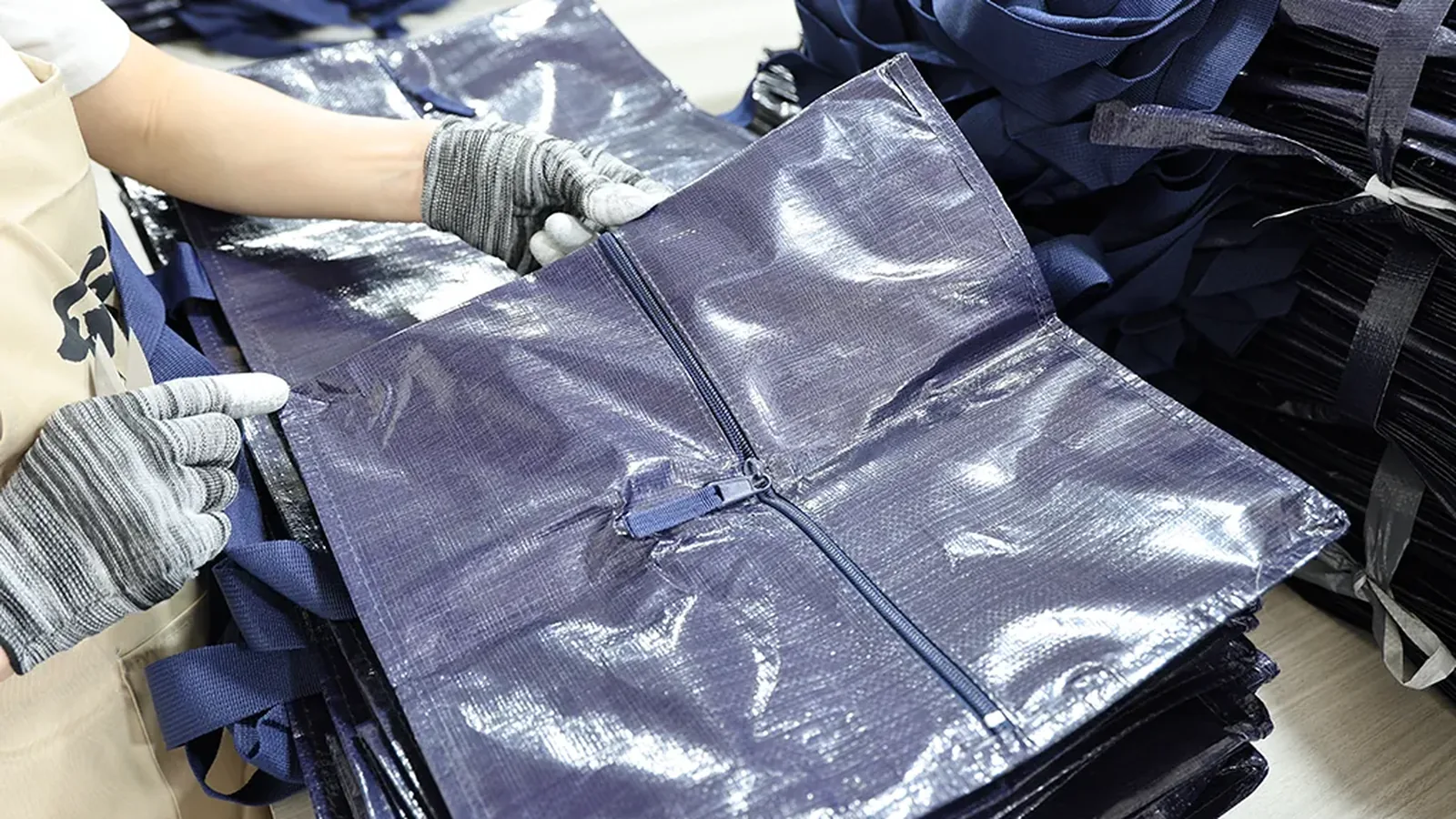
A woven PP shell resists splashes, but the seams are stitched and not sealed, so the bag is not waterproof. That sentence belongs on the sheet in plain words. A laminated PP face with a continuous film handles a damp truck floor and a light rain shower; the stitch holes still let water through under standing water.
Oxford usually arrives with a PU or PVC back coating. The coating resists water while it stays bonded, and it can delaminate over time, especially where the bag folds at the same crease on every trip. A supplier claiming water-resistant Oxford without a water column figure has told you nothing you can compare.
The coating side matters too. A coating on the inside protects the film from abrasion; a coating on the outside takes the scuffs. Two sheets can both say coated and mean opposite constructions. Ask which face carries the film and how the seam is finished at the zip ends.
Outdoor Storage and the Additive Line Nobody Writes Down
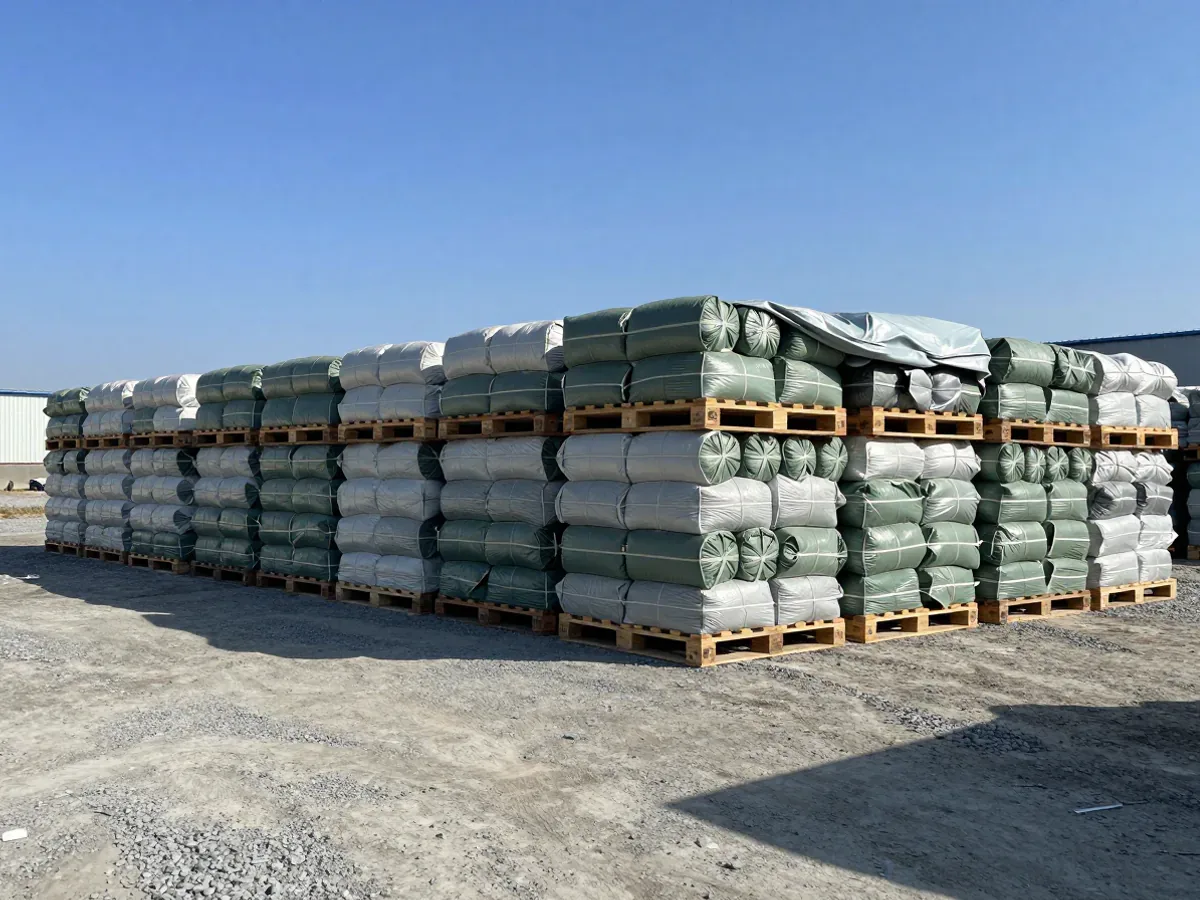
Standard woven PP degrades under direct sunlight. The polymer chains break, the fabric turns brittle, and seam failures start appearing on bags that looked fine in the warehouse. UV stabilization additive mixed into the resin before extrusion is the third option beyond coating, and it is the line most sheets leave blank.
A bag with UV stabilizer in the resin holds up longer in a yard than a standard PP bag, which matters when pallets sit outside between moves. The additive package used by any given supplier is rarely disclosed, so the honest request is a statement of what was added and at what stage, not a marketing claim.
Oxford has its own outdoor weakness. A durable water repellent finish resists stains and light rain, but it wears off with handling and washing. If the bags will live on a dock or in an open yard, the storage line on the sheet deserves the same scrutiny as the load rating.
Who Should Order Which, and What to Put on the Sheet
Woven PP suits buyers moving volume through repeated short trips: household moves, bulk storage, pallets that sit in a yard between jobs. Laminated PP brings abrasion resistance that uncoated Oxford does not match, and the shell can be power-washed and air-dried without structural damage. The bag is lighter, which lowers freight weight across a large order.
Oxford suits buyers whose bags face frequent handling and abrasion on the surface, and who want a softer hand and a more textile look. The denier rating gives a familiar reference point, but denier measures yarn weight, not the finished fabric's resistance to tearing. A high denier bag with a weak stitch line still splits at the seam.
The sheet should carry the same four lines whichever material wins: seam type with stitch count and bar tack locations, coating face and water column figure, UV additive statement, and a reuse target with the test that supports it. Add the webbing run and the end handle, because those decide how the bag behaves when someone lifts it full.
The Decision Table a Buyer Can Take Into a Meeting
| Decision point | Woven PP route | Oxford route |
|---|---|---|
| Load path | Full-length webbing spreads lift into the body; end grip for van loading | Check whether webbing stops at the handles; top handles only on many sheets |
| Seam | Double-stitched lock seam, 8 to 10 stitches per inch, bar tacks at stress points | Same requirement; denier does not protect the stitch line |
| Coating and water | Laminated film resists splashes; stitched seams are not sealed, so not waterproof | PU or PVC back coating resists water; can delaminate at repeated creases |
| Outdoor storage | UV stabilizer in the resin extends yard life; ask what was added | DWR finish resists light rain and wears with handling |
| Reuse and care | Power-wash and air-dry without structural damage; lower freight weight | Softer hand; coating wear decides replacement sooner |
| Best fit | Volume moves, yard storage, repeated short trips | Frequent surface abrasion, textile feel, moderate reuse |
Read the table down the seam row first. If either sheet cannot answer that row, the material comparison waits until it can.
What to Check on the First Batch Before It Ships
The first batch is where the two sheets either converge or drift. Check fabric, webbing, zips and thread against the approved spec before production runs far. Then test pull, seam strength and bar tack on the batch itself, not on the sample that won the order.
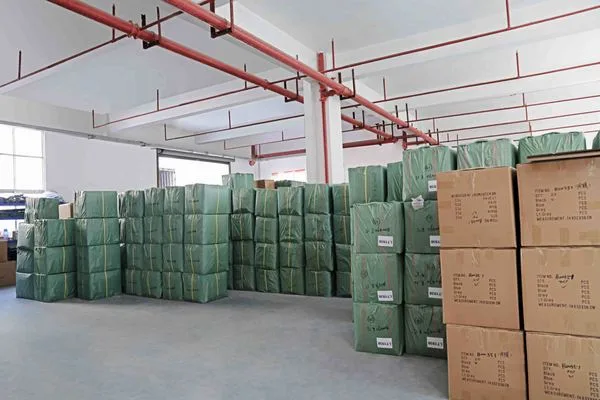
Check dimensions, handles, logo and packed quantity by hand, because a copied size line is one of the quietest errors in a moving bag order. Count and photograph the cartons before the container seals, so the record matches what left the factory.
A two-pull zip belongs on the check list as well. Two pulls let the opening close from either end, which matters when a bag is packed full and the top will not lie flat. A single-pull zip on a heavy bag forces the mover to drag the slider across a loaded opening, and that is where zip failures begin.
FAQ
Is a higher denier Oxford bag always stronger than woven PP?
No. Denier measures yarn weight, not the finished fabric's tear resistance. A high denier Oxford bag with a weak stitch line can split at the seam before a well-built PP bag shows wear.
Can a woven PP moving bag be stored outside?
Standard PP degrades under direct sunlight. A bag with UV stabilizer mixed into the resin holds up longer in a yard, but the stitched seams are not sealed, so standing water still gets in.
What stitch count should the seam spec ask for?
A working range for a double-stitched lock seam is eight to ten stitches per inch, with bar tacks at the handle roots and zip ends. Put the number and the bar tack locations on the sheet.
Does a two-pull zip matter on a moving bag?
It does when the bag is packed full. Two pulls close the opening from either end, so the mover is not dragging a single slider across a loaded top.