

Based on legacy TIIOCTI articles about heavy duty moving bags, moving bags vs boxes, reusable moving bags, wholesale moving bags, cost, and handle stitching.
The artwork was approved on schedule, the fabric arrived early, and the ship date still slipped by eleven days. A regional moving company had ordered 500 heavy duty moving bags for a spring contract, and the delay traced back to a single line on the purchase order: the handle stitch. The buyer had compared three quotes by unit price, picked the middle one, and never asked how the handle was attached. That omission cost more than the difference between the cheapest and most expensive quote.
The same pattern shows up in fleet after fleet. Procurement teams treat a moving bag like a box with a zipper, compare the sticker price per unit, and assume the rest will sort itself out. The bag is not the problem. The comparison is.
The Sticker Price Habit That Costs Fleets More
A purchase order lands on a desk with three columns: unit price, quantity, lead time. The cheapest bag wins, because that is the only number that looks comparable across suppliers. A bag at $6.50 and a bag at $8.50 sit side by side, and the $2 gap reads as savings multiplied by 500 units.
That math holds for a consumable. A moving bag is not a consumable. It is a piece of equipment that a crew will load, drag, stack, and unload dozens of times before it either holds or fails. Judging it by the first transaction ignores every transaction after it.
The habit is not foolish. It is inherited. Boxes trained a generation of buyers to think in single-use units, and the bag quote arrives in the same format. The format is the risk.
Why a Low Unit Price Looks Like a Safe Bet
A cheap bag looks safe because the failure is invisible at the point of purchase. The fabric feels similar in the hand. The zipper runs. The handle lifts when pulled empty. Nothing on the sample table announces that the material is thin or the stitch is single needle.
Suppliers also make the comparison easy. Most budget moving bags sold online use lightweight woven polypropylene around 0.3mm, which tears under loads that an industrial spec is built to carry. The material saving per bag is small, often under a dollar, but it is enough to win a price column.
The buyer sees a bag that looks like the expensive one and costs less. Without a spec sheet that names fabric weight and stitch type, there is no visible reason to pay more. The low price feels like discipline rather than risk.
Where the Cheap Bag Actually Fails
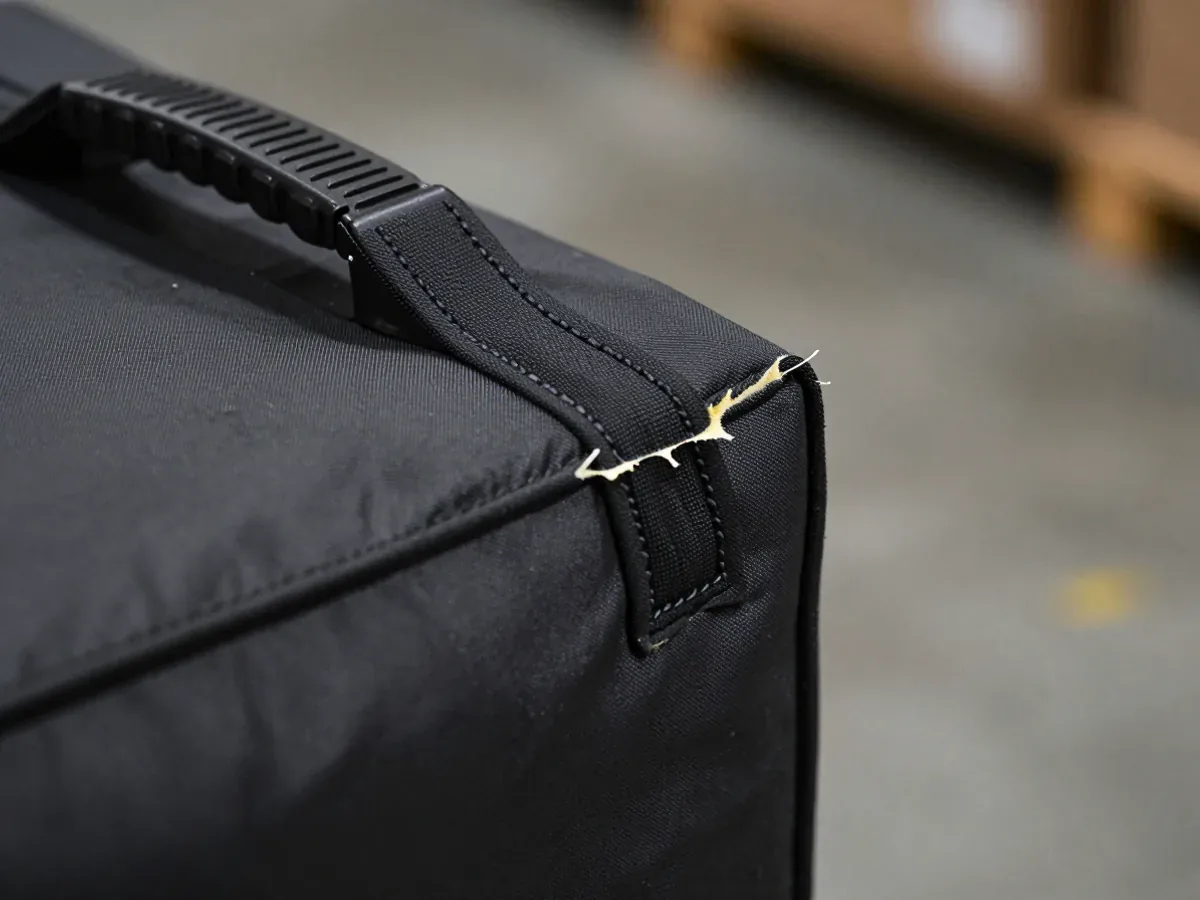
Failures cluster at two points. The first is the handle joint, where the strap meets the body. Single needle stitching on a budget bag gives way under a heavy pull, and the handle tears free while the bag is loaded. The second is the zipper, where a light coil jams under pressure and the slider separates when the bag is packed with irregular items.
Fabric is the third weak point, and the least obvious. Thin polypropylene punctures on a sharp furniture corner or splits along a fold after repeated compression. A bag that survived ten moves can fail on the eleventh because the material was never rated for the load the crew actually carried.
The cost of a failure is not the bag. A burst during a client move can damage electronics, stain upholstery, and put a crew behind schedule in front of a paying customer. One incident can erase the savings from an entire order.
The Per-Use Number That Changes the Decision
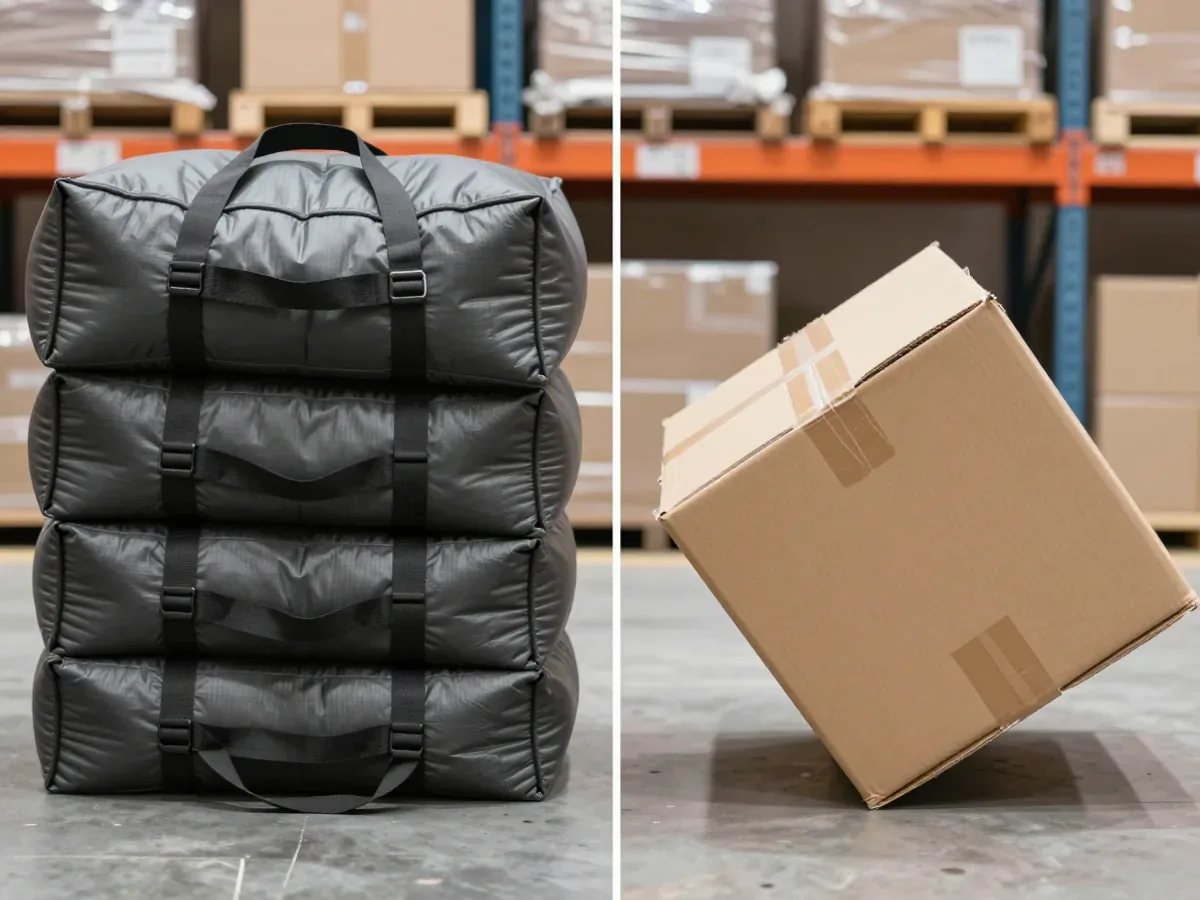
The number that matters is cost per use, not cost per bag. A bag priced at $8.00 that survives 50 moves costs about $0.16 per move. A cardboard box at $2.50 that survives one or two moves costs well over a dollar per move, and it has to be replaced, taped, and hauled away each time.
That comparison only works if the bag actually reaches 50 cycles. A cheap bag that fails at use twelve changes the math entirely, because the replacement cost and the disruption land inside the same contract. The per-use figure is a promise, and the promise depends on the build.
Storage and transport shift the same equation. Collapsed bags take far less warehouse volume than knocked-down boxes, and flexible bags fill the gaps that rigid cartons leave in a truck. Fewer pallets and fewer truckloads are real savings that never appear on the bag invoice.
What to Write Into a Fleet Spec Instead
A fleet spec should name the things that decide whether the bag survives. Fabric weight belongs at the top, expressed in GSM rather than a vague "heavy duty" label. A minimum of 200 GSM woven polypropylene covers standard duty, and heavier fleet use calls for 500 GSM.
Stitch type belongs next. Double needle lockstitch with bar tack reinforcement at stress points is the difference between a handle that holds and a handle that peels. Handle attachment should be described as stitched through the body, not tacked on, and a reinforced base protects the load where it presses hardest.
Zipper grade deserves its own line. A heavier coil with a locking slider resists jamming under load, and the spec should say so rather than leaving the choice to the supplier. A label pocket and handle webbing are small additions that save crew time on every move.
How to Check a Sample Before a Bulk Order
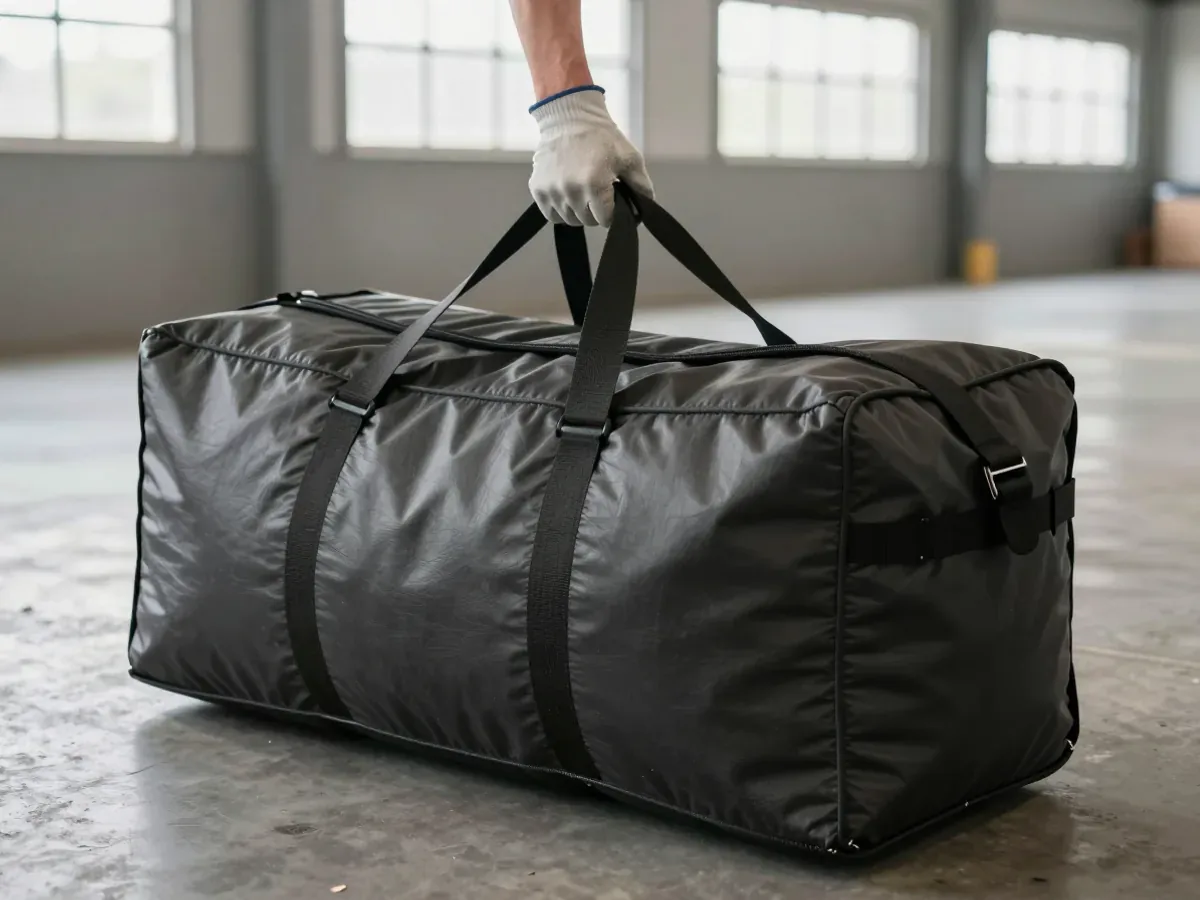
A sample tells you more when you load it the way a crew would. Fill the bag to its intended working weight, lift it by one handle, and carry it across a room. Then lift it by the other handle. A stitch that is going to fail usually announces itself under an uneven pull.
Check the handle joint closely. Look for dense stitching, a bar tack at the corner, and webbing that runs into the body rather than stopping at the seam. Pull the zipper closed over a full bag and see whether the slider holds or slips.
Ask for the fabric weight in writing and compare it to the sample in hand. A supplier who cannot name the GSM is guessing. Confirm that the order will pass documented quality checkpoints, and ask what happens at each one. Branding is a separate check: screen print, heat transfer, or a woven label should be proofed before the run, not after.
FAQ
How much weight can a heavy duty moving bag hold?
It depends on the fabric and the stitch. Bags built with heavier woven polypropylene and reinforced handles are rated for loads that light retail bags cannot carry. Ask for the working load in writing and test the sample at that weight.
Do heavy duty moving bags come with zippers?
Most do, but the grade varies widely. Budget bags often use a light coil that jams under load, while fleet-grade bags specify a heavier coil with a locking slider. Put the zipper grade in the spec.
Are moving bags better than cardboard boxes for long term storage?
For repeated use, yes. Bags collapse flat, resist moisture better than corrugated, and do not lose strength after a move or two. Boxes remain useful for one-way shipments where the container will be discarded.
Can I brand my moving bags with a company logo?
Yes. Screen print, heat transfer, and woven labels are all common, and the artwork should be proofed before production begins. Confirm placement and colour on a physical proof rather than a screen image.
The Judgment a Factory Makes
A factory that builds fleet bags looks at the handle joint before anything else. The wrapped and double stitched handle, the stitched-through attachment, and the reinforced base are not decorative details. They are the reason a bag can be priced above a retail competitor and still be the cheaper order.
The buyer who compares only unit price is comparing the wrong number. The buyer who asks about fabric weight, stitch type, zipper grade, and per-use life is comparing the bag that will still be in service after the contract ends.
What to Check Next
Before the next order goes out, pull the spec sheet and confirm four lines: fabric GSM, stitch type at the handle, zipper grade, and base reinforcement. Then load one sample to working weight and lift it by each handle in turn. If any line is missing, the quote is incomplete, and the lowest price on the table is the one with the most unknowns.






