

Built from an industrial distributor's moving bag order file, the loom-side tension records behind it, and the four-check QC routine that runs on every batch.
The spec sheet arrived with a single line for the bag body: "3.0 oz woven PP, heavy duty." A distributor's sourcing manager read it twice, then emailed the factory a question the sheet could not answer. If the handle tears out at 40 kg, which line on this page was supposed to prevent that?
The reply came back with a photo of a similar bag and a promise that the material was strong. That exchange is common. A moving bag spec sheet often reads like a shopping list of materials, while the failures that generate returns live in the gaps between lines. Handle tear-out is the most frequent complaint in this category, and it is rarely caused by the shell alone. It comes from how the weave, the handle attachment, the stitch tension and the test clause fit together.
What follows is a walk through one heavy duty moving bag purchase order, line by line, in the order a buyer would read it. Each line gets the same treatment: what to write, why it matters, how to verify it, and where the wording tends to go quiet.
The order line that started the argument: 3.0 oz woven PP, heavy duty
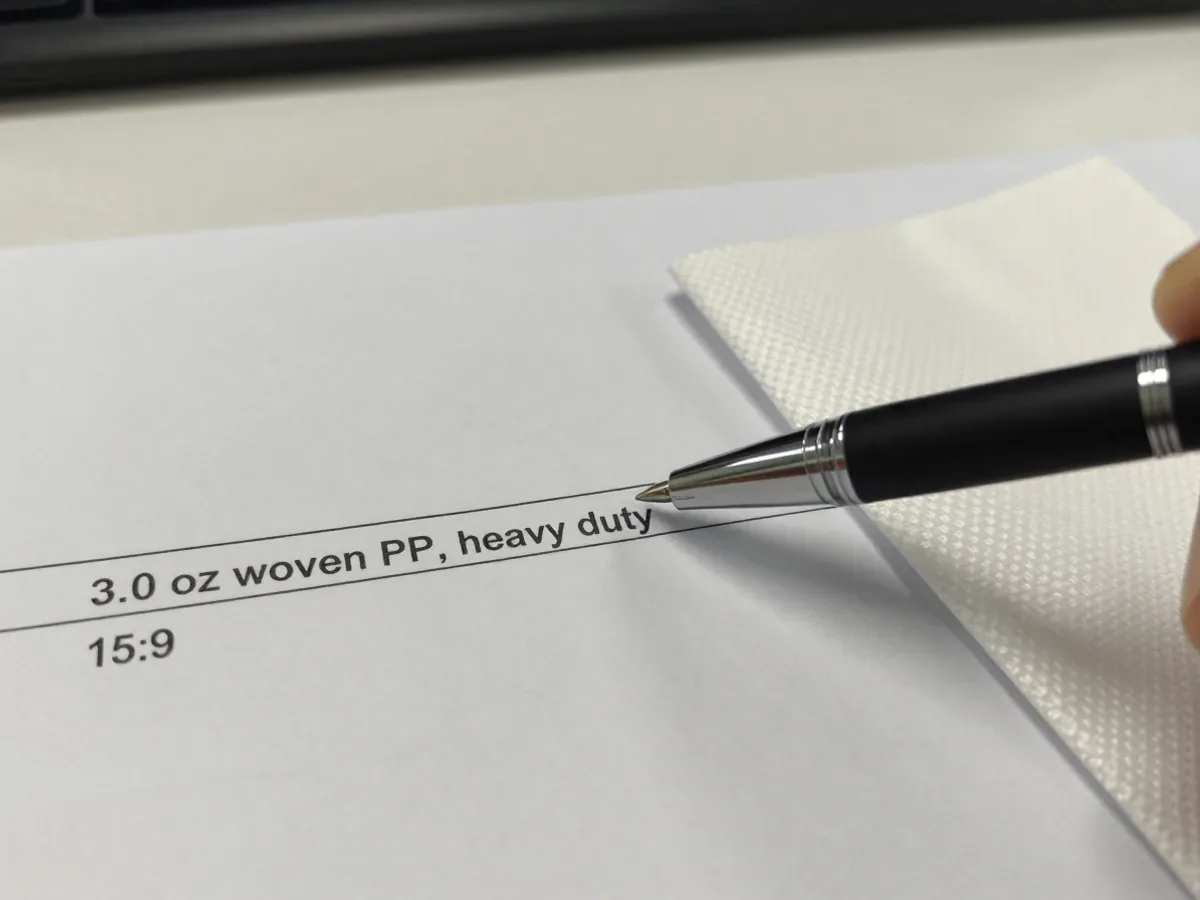
"3.0 oz woven PP" is a real specification. It describes a shell weight of roughly 100 GSM when converted, and it tells a factory which loom setting and which tape width to plan for. "Heavy duty" is not a specification. It is a marketing adjective that survives because both sides of the table let it.
The problem is that two factories can quote the same 3.0 oz line and deliver bags with very different handle performance. One may run a tighter weave and a six-point bar-tack. Another may run a looser weave and a single row of stitching. Both bags match the sentence on the page. Only one survives a move.
A buyer who wants the handle question answered has to convert the adjective into numbers before the order is placed. That means adding lines for weave density, handle attachment, stitch tension and a tensile test clause. The shell weight stays, but it stops carrying the whole promise by itself.
GSM: the number that decides how much load a handle carries
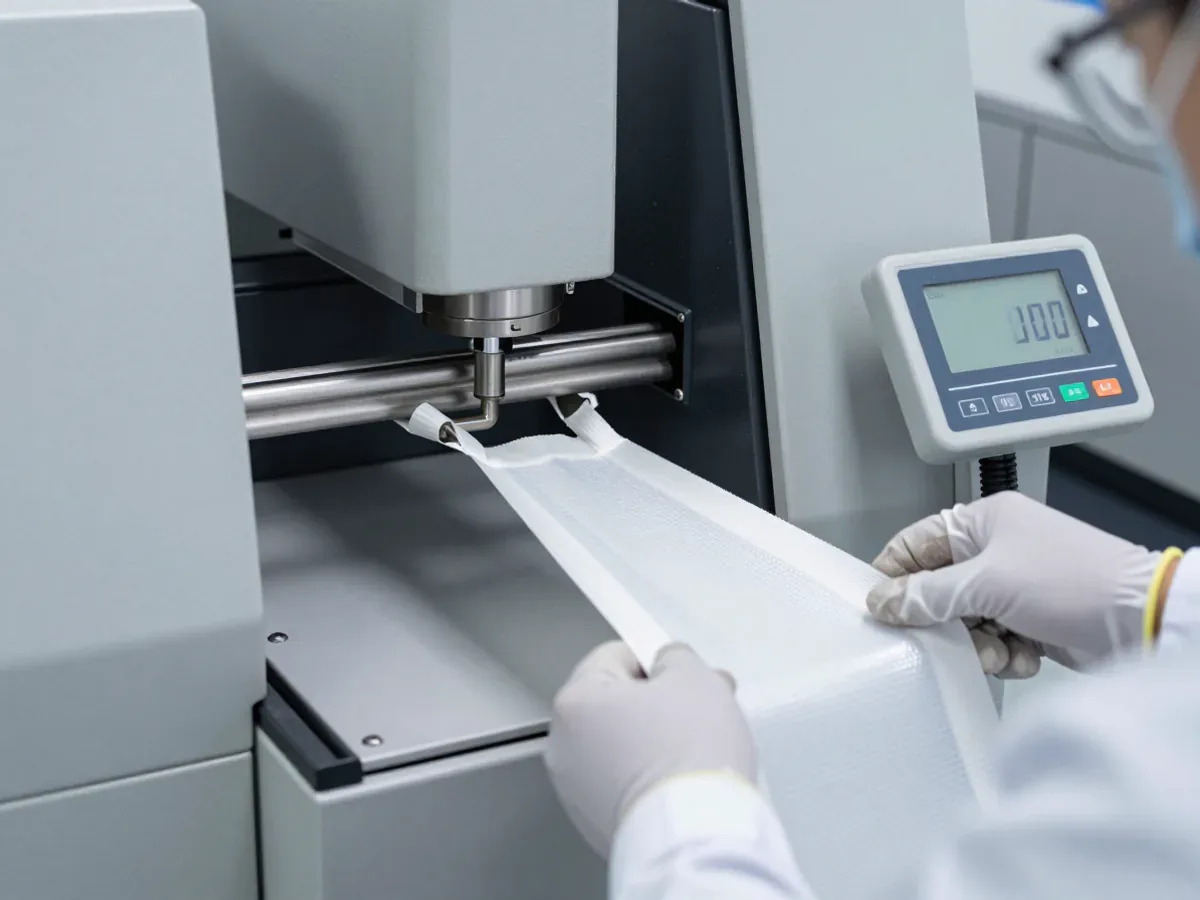
GSM is grams per square meter, and it is the first number that should appear on any moving bag spec. It sets the amount of polypropylene tape in the shell, and the shell is what the handle pulls against when a bag is lifted. A heavier shell distributes the load across more material before the stress reaches the stitch line.
The relationship is not linear, but it is directionally clear. Woven PP at 120 GSM tends to show handle tear-out around 55 kg in static pull tests. At 160 GSM the same construction can hold closer to 90 kg. At 200 GSM the figure moves past 120 kg. Those numbers come from controlled pulls on reinforced handles, not from a warehouse floor, but they show the trend a buyer is paying for.
Verification is straightforward if the buyer asks early. Request the GSM from the tape supplier's incoming inspection record, not from the marketing sheet. Ask for a photo of the loom beam label. A factory that cannot produce either is quoting a number it does not measure.
The trap on this line is the word "heavy duty" attached to a light shell. An 80 GSM non woven bag with a single stitch handle can look acceptable on a showroom shelf. Under a load of books or kitchenware, the handle is the first thing to go.
Weave density and let-off tension: the line most spec sheets never mention

Weave density is expressed as picks per inch, and it describes how tightly the weft threads are packed into the warp. A tighter weave spreads the load across more crossover points, which reduces the stress concentrated at the handle root. A looser weave lets the shell distort under load, and the handle takes the strain directly.
Let-off tension is the loom setting that controls how evenly the warp threads feed into the weave. When let-off tension drifts, weave density varies across the roll. One section of the bag may be tight and another loose, and the handle is attached to whichever section the cutter happened to use.
Most spec sheets never mention either variable. A buyer can add a line that reads "weave density 10 by 10 picks per inch, tolerance plus or minus 3 percent, let-off tension monitored inline." That sentence gives the factory something to control and gives the buyer something to inspect.
Verification happens at two points. During production, ask whether the looms carry inline tension sensors that correct let-off speed when picks per inch drift beyond tolerance. At inspection, cut a small square from a rejected bag and count the picks under a pick glass. A factory running statistical process control on weave density will have a chart to show. One running visual checks will not.
Handle construction: bar-tack points, stitch type and where the stress lands
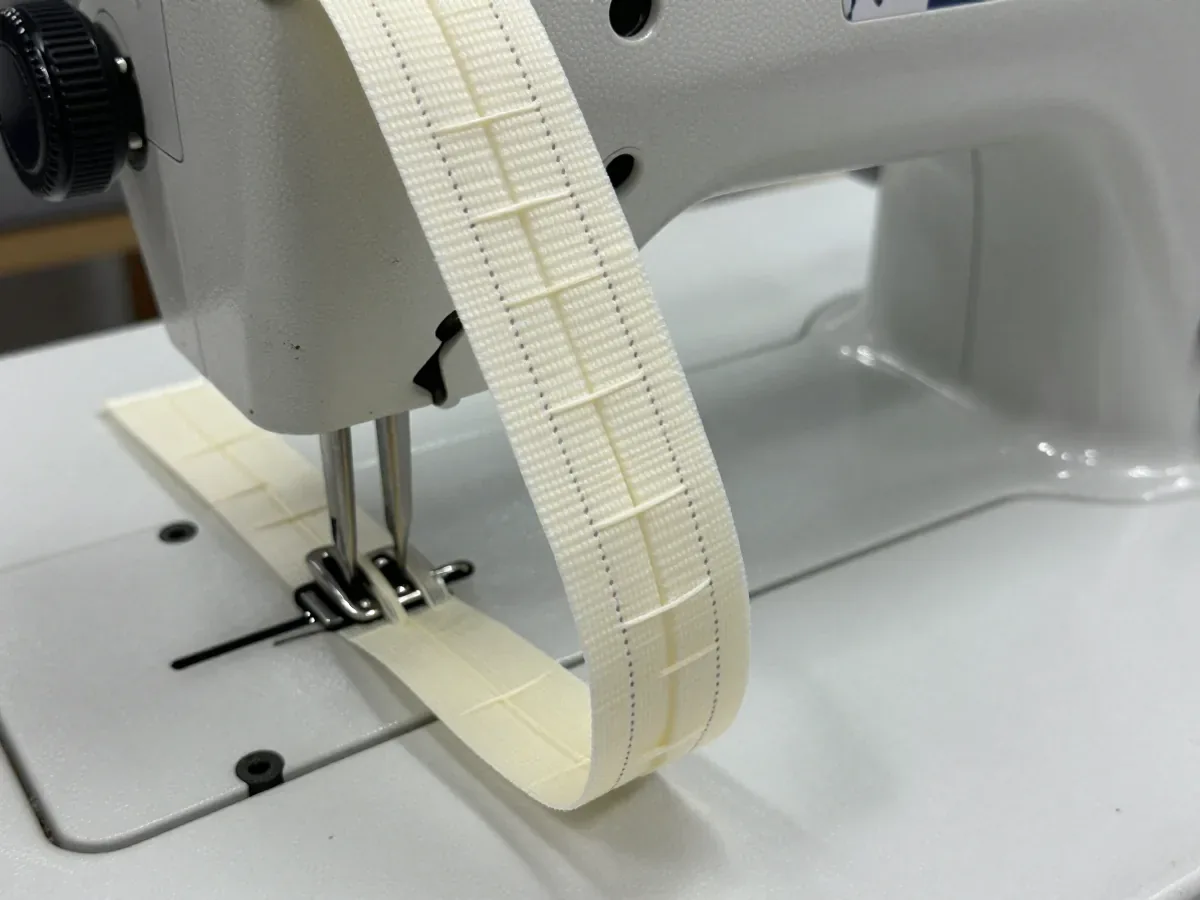
The handle is where the load becomes a point force. A woven PP handle attached with a single stitch row concentrates stress along one line of thread. A handle attached with a bar-tack at multiple points spreads that stress across a wider area of shell.
The spec line should name the attachment method, the number of bar-tack points, and the stitch type. A heavy duty moving bag typically calls for a bar-tack at each handle root, with the tack crossing the handle webbing and the shell. Six points across two handles is a common target for bags rated to hold around 90 kg static load.
Stitch type matters as much as count. A chain stitch can unravel if one thread breaks. A lock stitch holds its place. The spec should say lock stitch, and it should say the thread is UV stabilized polyester rather than a generic cotton-poly blend.
Verification is visual and physical. At inspection, count the bar-tacks on a sample and pull the handle by hand before the load test. A handle that shifts or puckers under a firm hand pull is telling you the stitch tension is wrong, even before a weight is added.
Seam and stitch tension: what a locked servo head changes on the floor
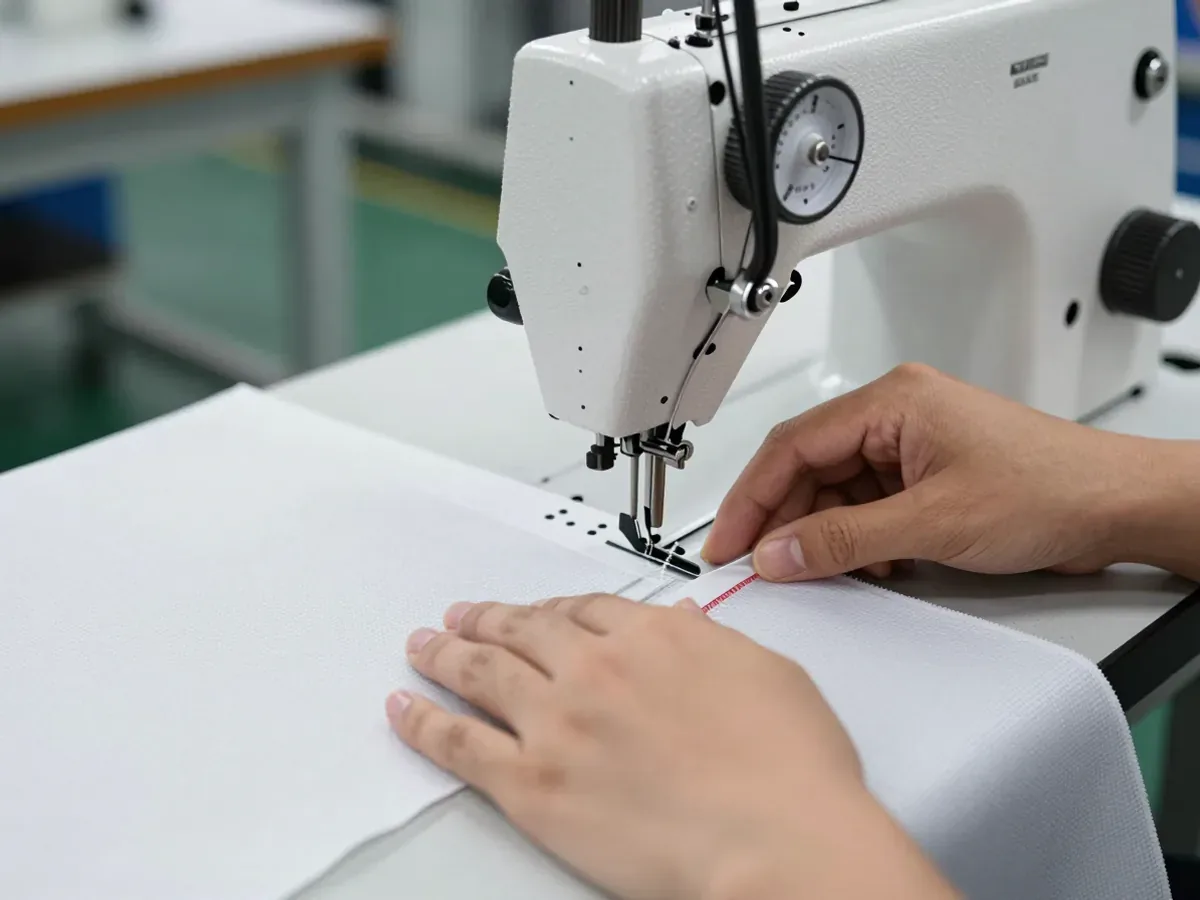
Stitch tension is the variable that rarely appears on a purchase order because it is hard to write as a number. Too loose, and the seam gaps under load. Too tight, and the thread cuts into the weave, creating a starting point for a tear. On a ten-hour shift, a manual sewing head drifts as the operator tires.
A servo-driven sewing head with a locked tension setting removes that drift. The machine holds the same thread tension from the first bag to the last, and the seam behaves the same way across the batch. A buyer does not need to specify a brand. The spec line can read "servo-driven sewing head with locked tension, tension verified at start and mid shift."
Verification at the factory is a matter of watching the line and asking for the tension log. At inspection, the seam test is a firm pull along the stitch line and a look for skipped stitches, loose thread tails or puckering. A seam that looks flat and even under light is usually holding tension correctly.
The seam also carries a material truth worth writing into the spec. A stitched PP seam resists splashes, but it is not sealed. A moving bag with stitched seams is not waterproof, and a spec sheet that implies otherwise will generate complaints the factory cannot fix.
The test clause: ASTM D5034, sample frequency and what a report should show
A test clause turns the rest of the spec into something a buyer can check after the fact. ASTM D5034 is the standard grab test for tensile strength of textile fabrics. It measures how much force a sample withstands before it ruptures, and it gives the buyer a number to compare across batches.
The clause should state the standard, the sample frequency and the action taken on a failure. A workable frequency is a random pull every 100 bags, with the preceding 100 quarantined if a sample fails. That creates a traceable link between a test result and a group of bags.
What a report should show is often misunderstood. A single certificate issued at product development does not describe a production batch. The buyer wants batch-level reports with the date, the sample size, the test method and the result. A report without a batch number is a marketing document.
Verification is a request made before the purchase order is signed. Ask to see two recent batch reports from a similar order. If the factory can produce them, the test clause is live. If it offers a certificate from last year, the clause is decoration.
The line buyers leave blank: defect rate and how it is proven
The last line on most moving bag spec sheets is the one that decides the commercial outcome, and it is usually empty. That line is the acceptable defect rate, and the method the factory uses to prove it.
A defect rate written as a percentage without a sampling method is a number both sides will argue about at the claim stage. A workable line reads "defect rate not to exceed 2 percent, verified by AQL sampling at final inspection, with handle pull and seam pull included in the check." That sentence ties the rate to a method and to the specific failure the buyer cares about.
Verification runs through the factory's quality checkpoints. An order that passes incoming material, seams and zip, finished bag and final count checks has four chances to catch a handle problem before it ships. A factory relying on a single end-of-line glance has one. Ask which checkpoints exist and what happens when one fails.
The blank line is also where the cost of defects becomes visible. A container of 8,000 bags at a 5 percent defect rate means 400 bags that may come back. At a landed cost near $4.50 per unit, that is roughly $1,800 in product loss before return shipping and chargebacks are counted. A defect line with a method attached is how a buyer keeps that number from becoming a surprise.
FAQ
Does a higher GSM always mean a stronger moving bag?
Not always. GSM sets the shell weight, but handle performance also depends on weave density, bar-tack points and stitch tension. A 160 GSM bag with a single stitch handle can fail earlier than a 140 GSM bag with a six-point bar-tack. GSM is the first line to write, not the only one.
What does an ASTM D5034 report actually tell me about a batch?
It tells you the tensile strength of the samples pulled from that batch, on the date stated, using the grab test method. It does not describe the whole container. Read the sample size and the batch number, and compare results across several reports rather than trusting one.
How many bar-tack points should a heavy duty handle have?
Six points across two handles is a common target for bags rated around 90 kg static load. The number matters less than the placement. Each bar-tack should cross both the handle webbing and the shell so the load spreads into the weave.
Can a stitched PP moving bag be called waterproof?
No. A stitched PP seam resists splashes, but the needle holes are not sealed. A bag described as waterproof needs sealed seams or a coated construction. For moving and storage use, splash resistance is the honest claim.
The judgment call on the factory floor
The line that decides whether handles tear is not the GSM line, even though it is the one buyers read first. It is the cluster of lines that describe how the shell, the weave, the handle attachment and the stitch tension hold together under load. A spec sheet that writes only the shell weight leaves the handle question unanswered.
A factory that can show inline tension monitoring, a locked servo sewing head and batch-level ASTM D5034 reports is telling a buyer that the spec is controlled, not just quoted. That evidence is worth more than a heavier shell with a vague promise attached.
What to check before the next order
Rewrite the shell line to include GSM with a tolerance, then add weave density in picks per inch with a let-off tension control requirement. Name the handle attachment method, the bar-tack count and the stitch type. Add a servo tension clause and a batch-level ASTM D5034 test requirement with a sample frequency. Fill in the defect rate with an AQL method and include handle pull and seam pull in the final inspection. Then ask for two recent batch reports before signing.






