

Drawn from factory spec sheets, stitch checks and handle construction notes on heavy duty moving bags with handles.
A buyer on a video call held up a handle and asked why the webbing stopped short of the seam. She had received a sample of heavy duty moving bags with handles, liked the fabric, and then pulled the strap with both hands until the attachment point creased. That single gesture set the agenda for the next forty minutes, and it is the same gesture that should start any sourcing conversation.
The question that started the last factory visit
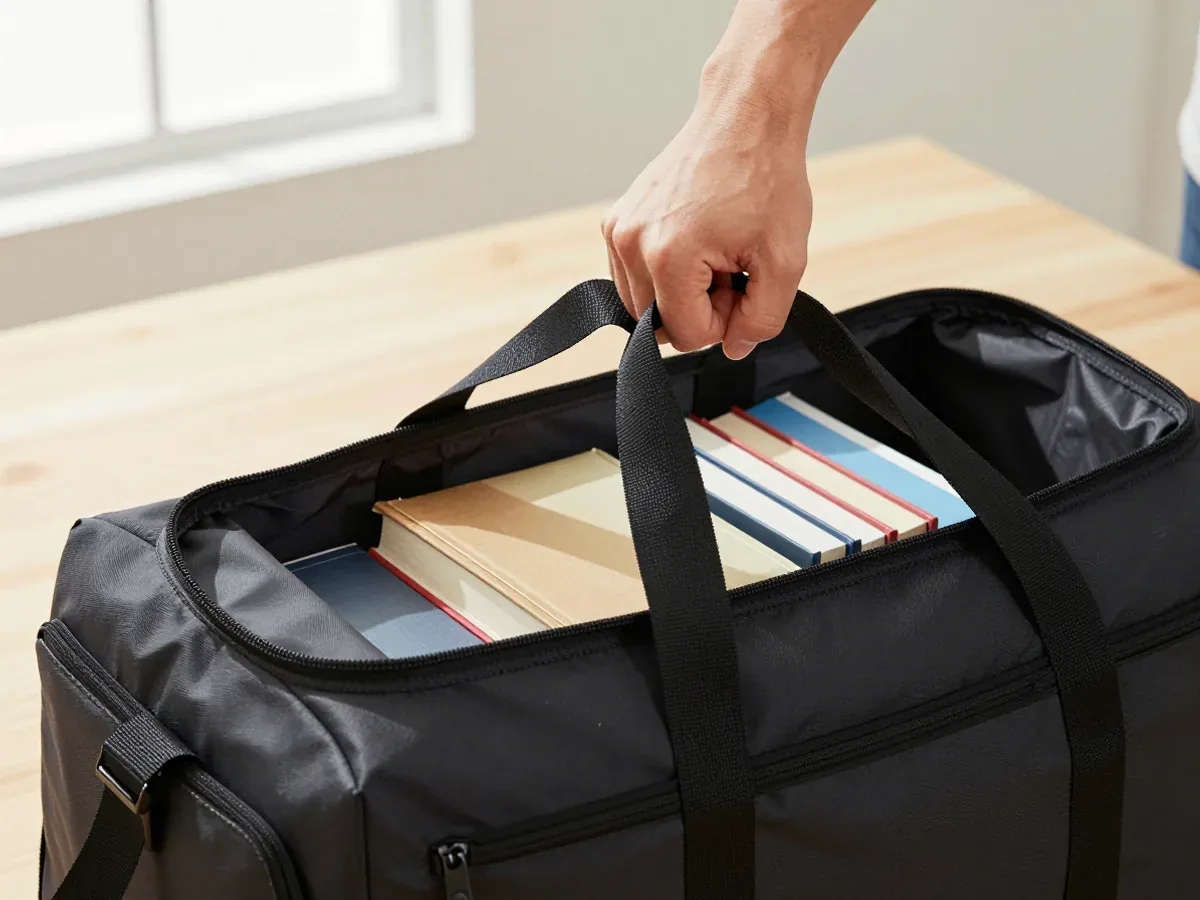
She had ordered three samples from three suppliers and could not tell them apart on the table. Same 600D look, same black webbing, same printed logo position. The difference appeared only when she filled each bag with books and lifted it by one handle.
Two bags held. One handle pulled the stitching loose at the top edge before the bag was half full. She wanted to know what to write into a purchase order so that the failure could not repeat, and she wanted the answer in a form a factory could not argue with.
That is a fair way to buy. Most heavy duty moving bags look identical in photos, and the marketplace listings rarely separate a bag built for a warehouse from a bag built for a weekend. The questions below are the ones worth putting in writing before a deposit moves.
How much weight should a handle really carry?
The buyer’s first assumption was that a higher number is always safer. Her own listing said 25 kg, and she had seen competitors claim 30 kg and 40 kg with the same fabric weight. She asked which figure a factory would actually stand behind.
For heavy-duty use, a specified and tested load capacity in the 20 to 25 kg range is a realistic rating, and it should come with a test method rather than a sticker. A bag rated higher than its stitching can support is a marketing number, not a load rating.
Ask the supplier what happens to the rating after fifty lifts. A bag is rarely carried with a static, even load. Lifting, swinging, and setting it down creates jolts that concentrate force at four small connection points, and material fatigue builds at those points over time.
A useful check is to request the batch record for seam and pull testing. If the factory tests seam strength on every batch and records the result, the load rating has something behind it. If the rating appears only on the artwork, it does not.
Where does the webbing stop on a loaded bag?
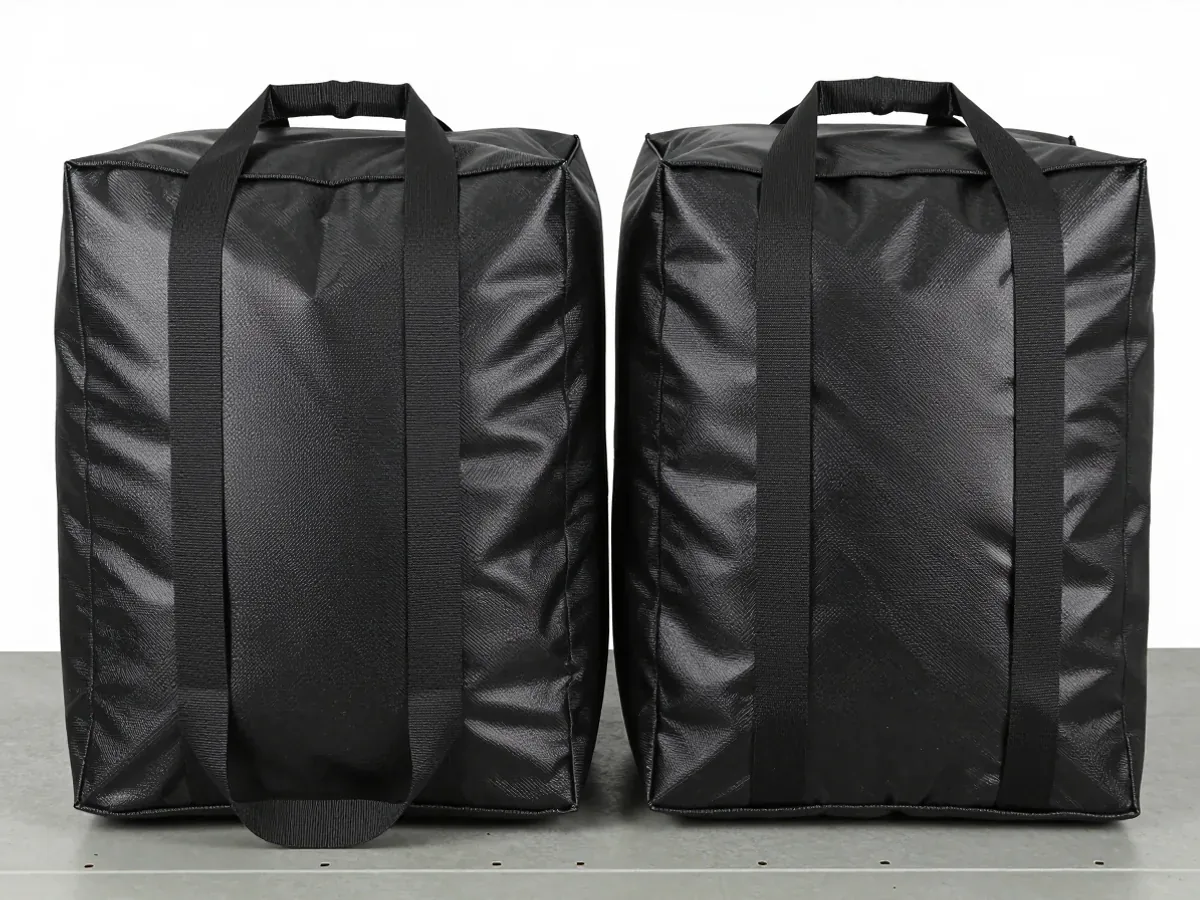
This was the question the sample answered without words. On the failed bag, the webbing began at the handle and ended a few centimetres down the side. On the better bag, the strap ran the full length of the bag, past the handle and around the body.
The reinforced webbing should run the length of the opening instead of stopping at the handles. That is where loaded bags fail, because the fabric between the handle and the body takes the entire load through a short seam.
Ask for a photo of the bag inside out. The strap path is visible in a way that a finished exterior shot never shows. If the webbing terminates at the handle base, the bag is relying on the shell fabric to carry weight it was not designed to carry.
A wrap-around strap changes the failure mode. Instead of one seam holding the load, the strap distributes it along the bag body. For a moving fleet that reloads the same bags across dozens of jobs, that difference shows up within a season.
What does double stitching look like on the sewing floor?
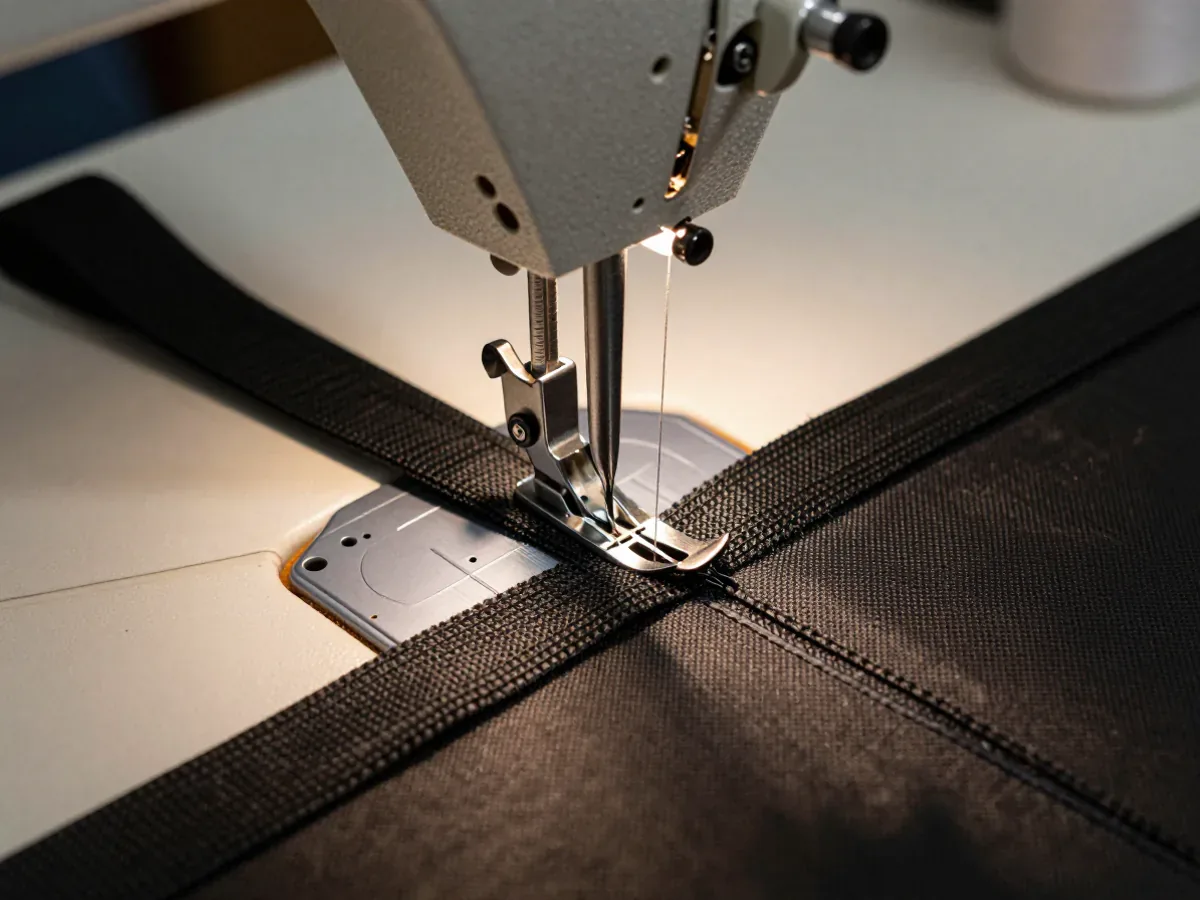
The buyer had seen the phrase double stitched on nearly every listing and had stopped trusting it. She asked what she should look for if she stood at the sewing station herself.
Double stitching means two parallel rows of thread where the handle meets the bag, and it can be reinforced further with a box and cross pattern, often called an X stitch. Handles across a moving bag range are typically wrapped and double stitched, which gives two lines of defence instead of one.
Single stitching creates one point of failure. When that seam breaks, the handle can detach completely, and the bag is finished as a usable item. Low stitch density makes the problem worse, because fewer stitches per inch cannot spread the load across the seam.
Thread quality matters as much as stitch count. Cheap, low tensile thread snaps under the sudden force of lifting a full bag, and the seam looks fine until the moment it does not. Ask what thread the factory uses and whether it is checked against the approved spec at incoming material.
Backtacking is the detail most buyers never mention. Reinforcement stitches at the beginning and end of a seam stop the thread from running, and a seam without them can unravel from the end inward. A factory that skips backtacking is saving seconds per bag and costing the buyer returns.
Which size line do you actually need for a moving fleet?
Her second sample box contained three sizes, and she admitted she had chosen them by looking at the photos. The largest looked impressive. The middle one looked practical. The smallest looked cheap to ship.
Size should follow the load, not the photo. One common style measures 29.1 by 14.2 by 12.6 inches and holds a duvet plus four pillows in a single bag. The extra large style measures 45.3 by 15.7 by 21.7 inches, the longest in a typical range, and suits bedding sets, curtains, or bulky soft goods.
A moving fleet usually needs two sizes rather than five. The workhorse size handles most household soft goods, and one long size covers duvets, coats, and anything that will not compress. Mixing sizes in one order is normal, and a factory that offers several styles in stock can usually run them together.
Ask how the size is measured. A bag measured flat and a bag measured filled can differ by several centimetres at the opening, and that difference decides whether a duvet goes in without a fight. Request the filled dimensions, not only the flat pattern size.
How do you check a handle before the cartons close?
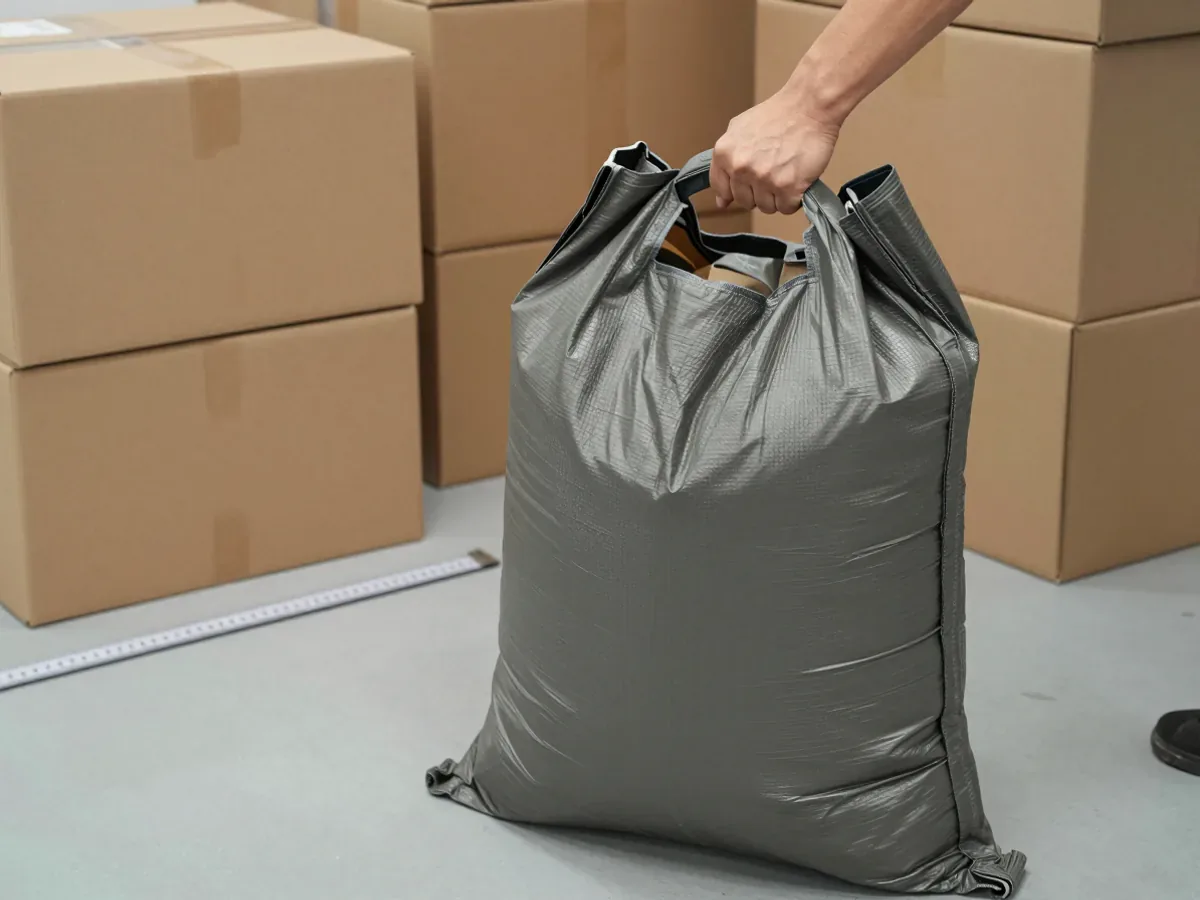
The buyer wanted a check she could teach a third-party inspector in ten minutes. She did not want a lab report. She wanted something that catches the bad bag before it reaches a customer.
Start with a hand pull on every sampled handle, straight up and then at an angle. The seam should not crease sharply at the attachment point, and the webbing should not slide. A handle that moves under a light pull will fail under a loaded one.
Then look at the stitch line itself. Count the stitches across a one inch span on the handle attachment and compare it with the approved sample. Stitch density is checked by hand on a finished bag in a normal factory routine, so the inspector is repeating a step the factory already performs.
Check the ends of every seam for backtacking. A loose thread end with no reinforcement is a seam waiting to open. Run a thumb along the top edge and feel for piping or a reinforced panel, since structural reinforcement at the attachment points is what keeps the handle from tearing the shell.
Finally, fill one bag to its rated load and lift it by a single handle for a count of ten. This is not a lab test and does not need to be. It is the same action a customer will perform in a hallway, and it exposes the bags that were built to pass a photo rather than a move.
The question buyers forget to ask about the strap run

After the samples, the buyer asked a question she had not prepared. She wanted to know whether the bag could be lifted into a van by one person without dragging it across the ground. The answer was not about weight at all. It was about where the second handle sits.
A side grip is a second handle on the end of the bag, positioned for lifting a loaded bag into a vehicle. Without it, the carrier grabs the top handles and swings the bag, which puts the entire load through two attachment points at an awkward angle. With it, the lift is shared.
The same logic applies to other strap runs. Two webbing straps let a bag ride on the back when both hands are full, which matters for a moving crew carrying boxes down a stairwell. A clear front window lets a handler see the contents without opening the bag, which saves time on a labelled load.
None of these features appear in a load rating. They appear in how the bag is used on the third hour of a move, when the crew is tired and the bag is being dragged rather than carried. Ask the supplier which strap runs are available and which one suits the way the bag will actually be lifted.
What to put in the purchase order
The buyer rewrote her spec sheet after that call. It now names the webbing path, the stitch type at the handle, the thread specification, the tested load range, and the filled dimensions of each size. It also asks for the batch test record on seam strength and a hand check of stitch density on the finished bag.
That sheet does more than protect her. It gives the factory a clear target and gives an inspector something to measure against. A supplier who cannot answer these points in writing is telling you where the risk will land.
The last question is the one worth asking first. Before comparing prices on heavy duty moving bags with handles, ask how the bag will be lifted when it is full, and whether the strap run was designed for that lift. The answer shapes every specification that follows.
FAQ
What load rating should a heavy duty moving bag with handles carry?
A tested rating in the 20 to 25 kg range is realistic for heavy-duty use. Ask for the test method and the batch record behind the number, not just the figure printed on the listing.
Is double stitching enough, or does the buyer need a box and cross stitch?
Double stitching gives two rows of thread at the handle attachment. A box and cross pattern adds a reinforced block around the join and is the stronger choice where the handle meets the bag body.
Can the buyer mix sizes in one order for a moving fleet?
Yes. A workhorse size plus one long size covers most household loads, and factories offering several styles in stock can usually run them together in one order.
How does the buyer check stitch density without a lab?
Count the stitches across a one inch span at the handle attachment and compare with the approved sample. A hand check on the finished bag is a normal factory step and needs no equipment beyond a ruler.