This comparison draws on TIIOCTI product spec data and the archived moving bag versus plastic tote article, with unverified price and test figures left out.
A procurement team replaced its worn cardboard boxes with a fleet of rigid plastic totes, expecting the switch to end the breakage complaints. Six months later the same team was back at the sample table, this time with a woven moving bag, because the totes had introduced a different set of problems. The assumption behind the first purchase is common enough to be worth taking apart: a hard box feels permanent, and permanence reads as durability.
That instinct is not foolish. It is built on a lifetime of handling rigid objects that survive drops, stacks and weather. The trouble is that a moving load does not test a container the way a shelf does, and the properties that make a plastic tote feel solid are not the properties that keep a heavy load intact through a doorway, up a stairwell and into a truck.
The advice that keeps coming back from procurement
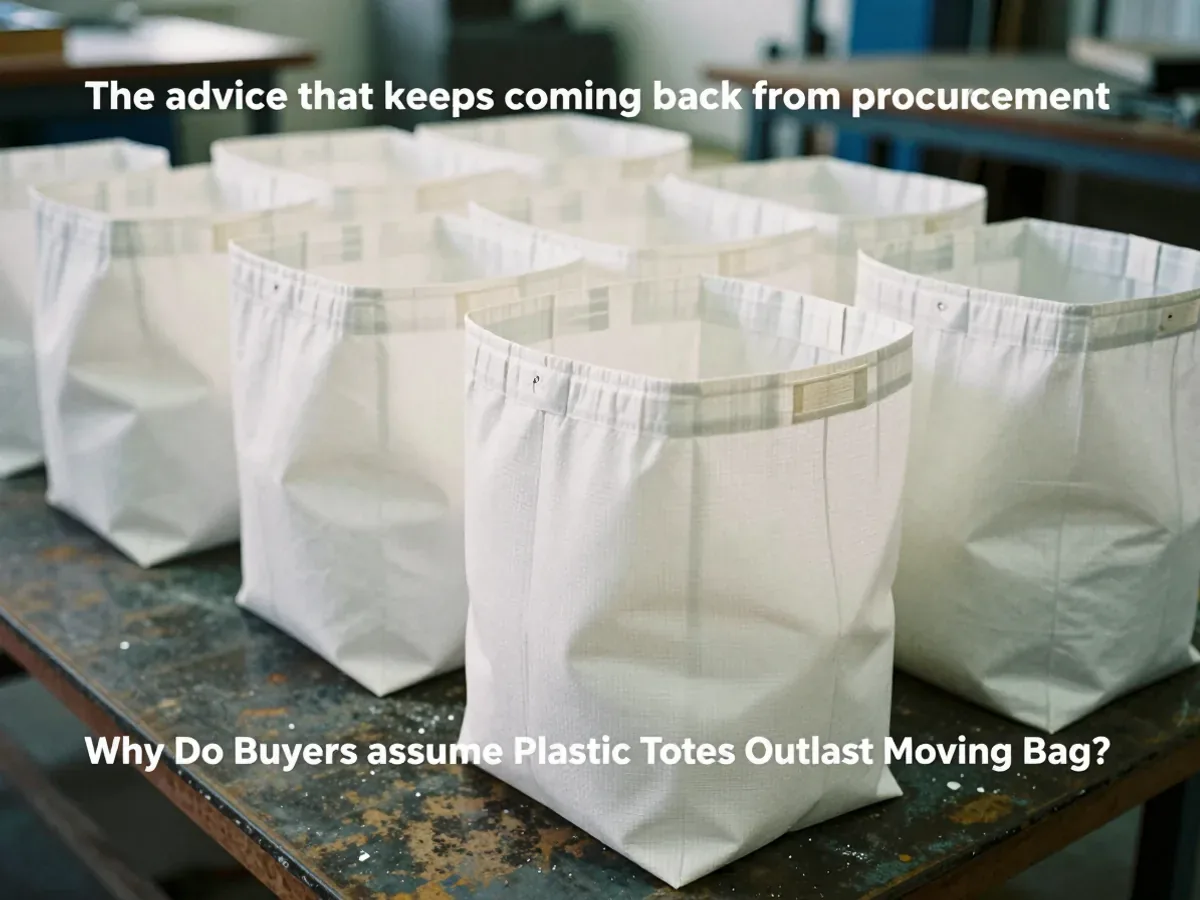
The recommendation arrives in almost the same wording every time: buy the rigid tote, it will outlast anything soft. It usually comes from someone who has watched a cheap fabric bag split at the seam and concluded that fabric is the weak material. The conclusion feels earned because the failure was visible and dramatic.
What the advice leaves out is the condition of that failed bag. A thin, unpadded sack with a single row of stitching and no webbing is not the same product as a heavy duty moving bag built around a reinforced opening. Comparing a plastic tote to the weakest possible fabric bag proves nothing about the category. The comparison has to be made against a bag designed for repeated loaded carries.
There is also a quiet assumption that "outlast" means the same thing for both products. A tote can survive as an object for years while still failing as a moving container, because the part that breaks is the handle attachment, not the body. A bag can be retired after a dozen moves and still have cost less per trip than the tote that is still sitting in the warehouse with a cracked grip.
Why a rigid box feels like the safer purchase
Rigid walls promise that the contents will not be crushed. That matters for some cargo, and it is the strongest honest argument for a tote. A buyer picturing a stack of boxes in a truck imagines the bottom one taking the weight of everything above it, and a hard shell looks like the answer.
The shape also photographs well in a quote. A molded tote has clean lines, a uniform colour and a stackable profile, so it reads as industrial equipment. A folded fabric bag looks like luggage. Procurement teams are human, and a product that looks like equipment tends to win the slide.
Then there is the mental accounting of reuse. A tote that survives five years appears to be free after the first year, while a bag that wears out after a dozen moves looks like a recurring cost. That arithmetic only holds if the tote actually completes those years without a handle failure, and if the storage and backhaul costs of a rigid box are left off the sheet.
Where the tote story breaks down under a real load

The weak point on a molded tote is the junction between the handle and the body. That junction is a single molded feature, and every carried load concentrates at that one point. When the plastic ages, or when the temperature drops, the material at that junction loses the flexibility that let it absorb impact.
Cold weather exposes the gap most clearly. Standard high density polyethylene becomes brittle in low temperatures, and a handle that flexed in summer can crack on a winter morning. A woven polypropylene bag does not share that failure mode because the load is spread across stitching and webbing rather than gathered into one molded tab.
The second breakdown is the empty weight. A large tote is heavy before anything goes into it, and a crew lifting that dead weight on every trip tires faster and risks more strain. A woven bag weighs a fraction of the tote empty, so the same crew moves the same cargo with less cumulative lifting. Neither product changes the cargo, but one changes the effort per trip.
What a woven moving bag does differently at the handle

The design answer is to stop treating the handle as a single attachment point. On a heavy duty moving bag, reinforced webbing runs the length of the opening instead of stopping at the handles. That continuous run spreads the load along the whole mouth of the bag, so no single stitch line takes the full weight of a packed load.
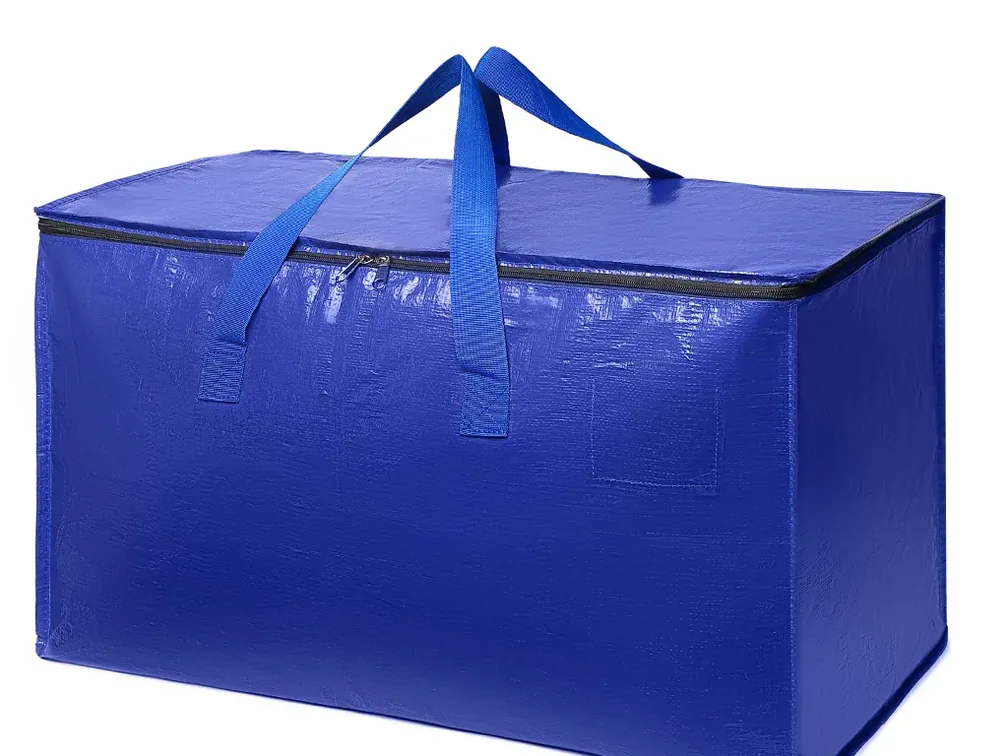
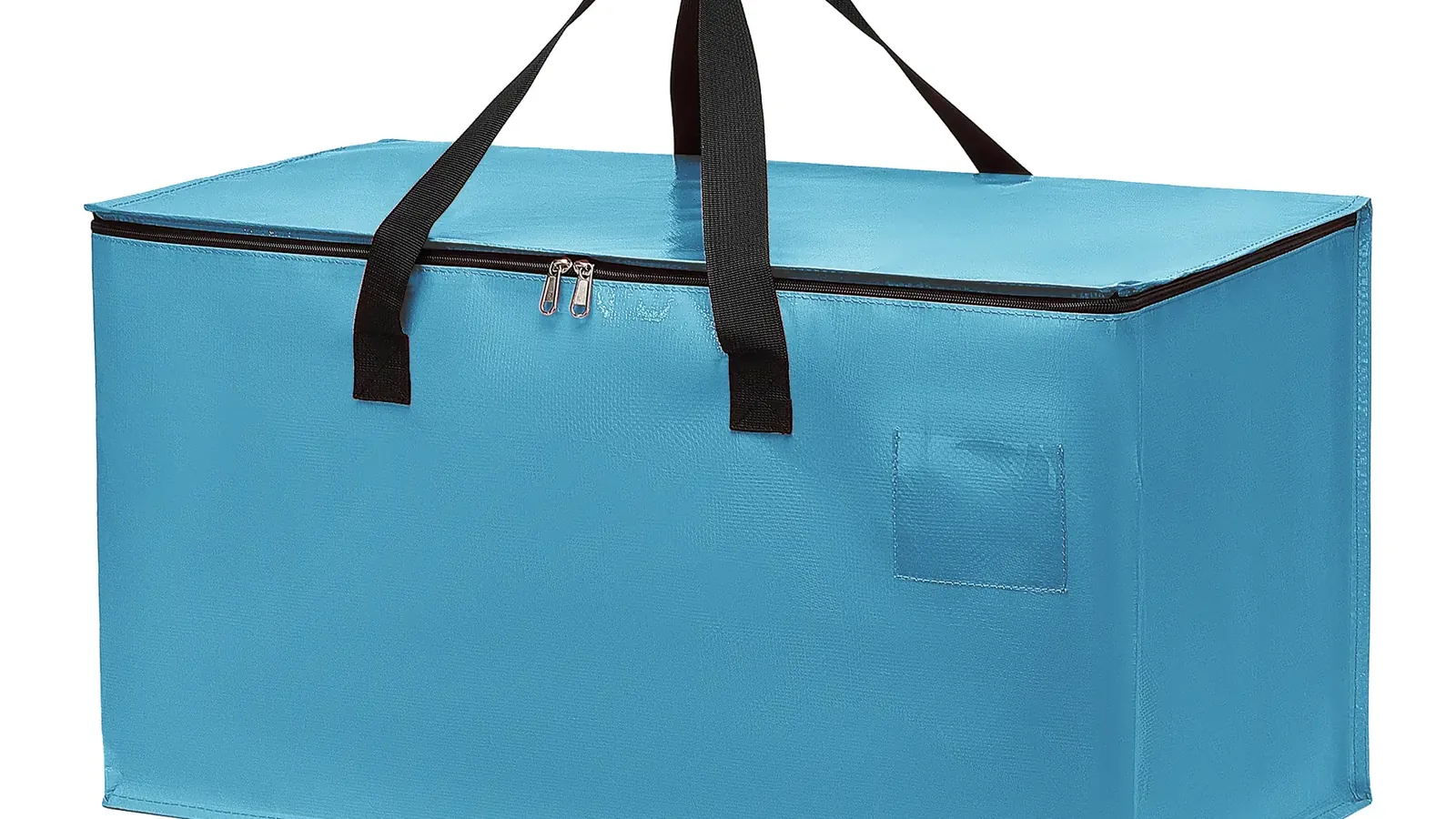
Handles are stitched to carry weight rather than just close the bag, which sounds like a small distinction until a bag is full. A full-length zip with two pulls lets the bag open flat on the floor, so a duvet or four pillows go in without folding twice. That flat opening also means the load sits evenly instead of bunching at one corner.
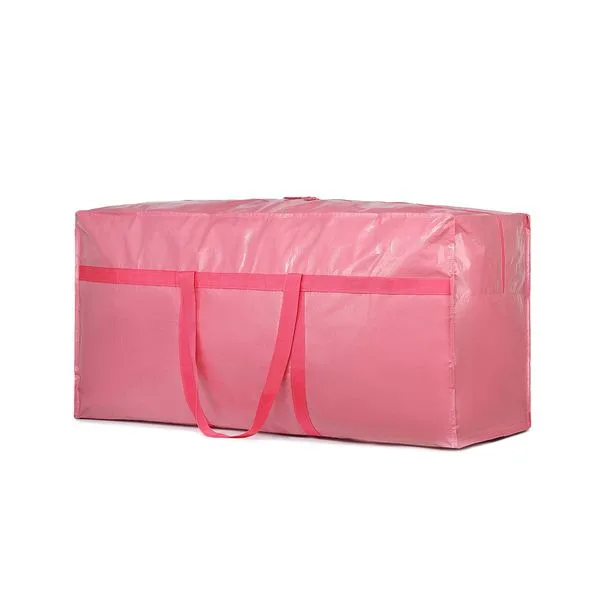
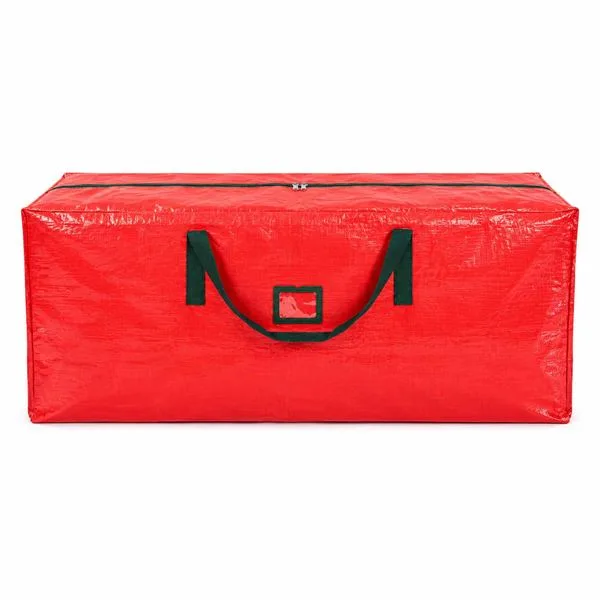
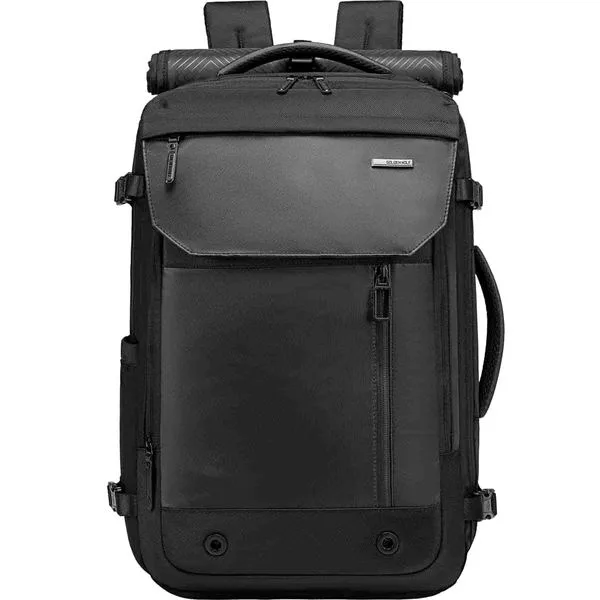
The structure choices follow the same logic. A top zip, wrap-around straps, a side grip and backpack straps each change how the load is carried, and handles and seams are matched to what is packed and how it is carried. A woven PE shell is water-resistant and is the stock default for moving loads, while a clear PP body with see-through panels suits storage and retail shelves. An Oxford shell gives a heavier hand feel for premium sets.
The storage and backhaul cost nobody puts on the quote
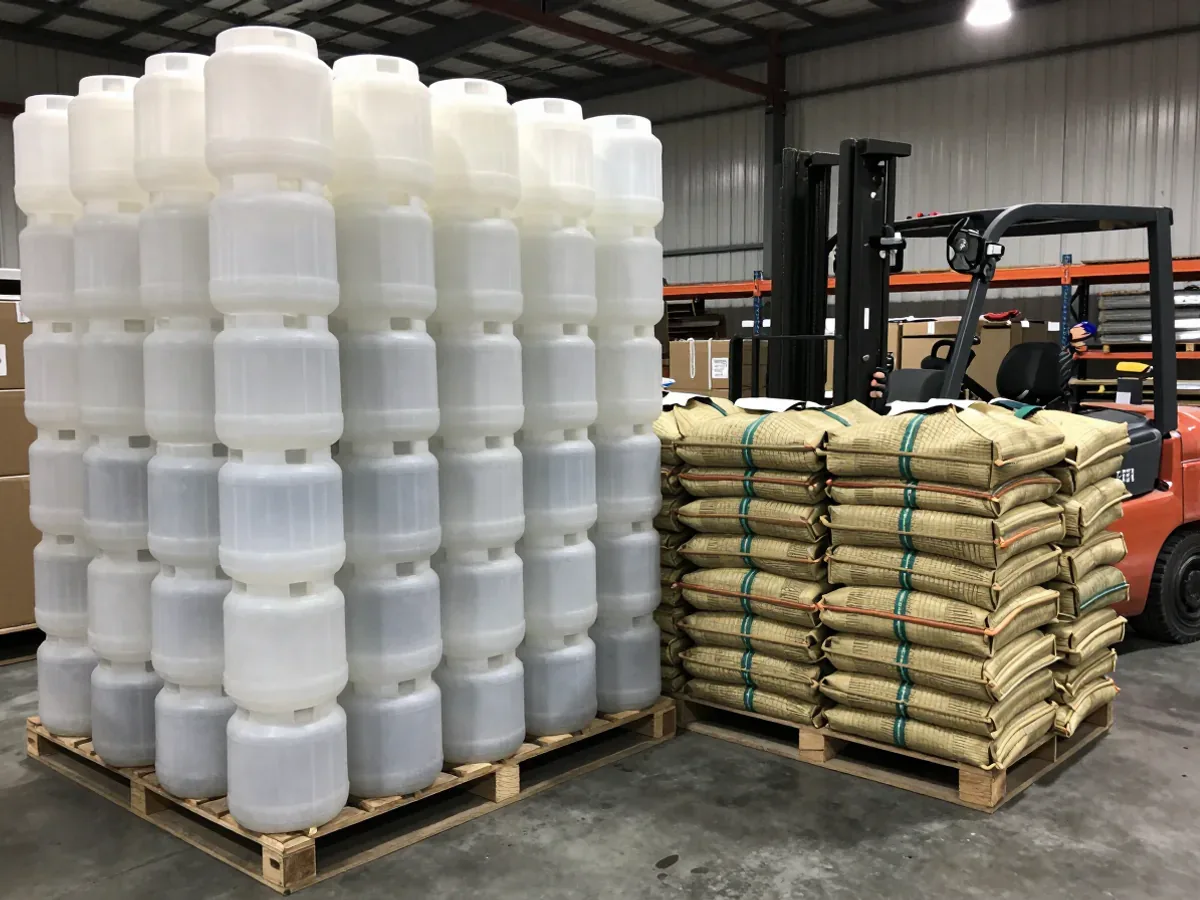
An empty tote is a volume problem. Thirty empty totes occupy warehouse space that has to be rented, heated or at least managed, and that space is invisible on the purchase order. Thirty moving bags fold into a stack thin enough to fit in a janitor closet, which changes the backhaul math for any operation that returns equipment between jobs.
Backhaul is where the rigid box quietly charges rent. A truck that has to carry empty totes back to a depot is carrying air, and every cubic foot of that air is a cubic foot that could have held revenue cargo. Folded bags collapse into a corner of the same truck. For a fleet that moves equipment between cities or between branches, that difference repeats on every return leg.
The storage question also decides how many units a buyer needs. If empty totes must be warehoused, the fleet size is capped by shelf space. If bags fold flat, the fleet can be sized to peak demand without renting a second room. That is a capacity decision disguised as a storage decision.
What to write into the spec instead of trusting the shape
A purchase order that says "plastic tote, heavy duty" or "moving bag, strong" gives the factory nothing to build against and gives the buyer nothing to inspect. The spec has to name the parts that carry load. Start with the webbing run: does it stop at the handles or continue along the opening.
Name the shell and the finish. A woven PE shell is water-resistant and suits moving loads, while a clear PP body with see-through panels serves storage and retail. If the range needs a premium tier, an Oxford shell gives a heavier hand feel. Write the closure and carry options explicitly: top zip, wrap-around straps, side grip, backpack straps.
Then lock the range logic. Five sizes can share the same construction, so a range can mix capacities without mixing quality. That matters because a buyer who adds a larger size later should not have to re-qualify the whole product. A new size takes one sample round, and stock colours can be swapped for a match, so the range can grow without a redesign.
Marking belongs in the same document. Screen print, heat transfer or a woven label are the options, and the artwork is proofed before production. A buyer who leaves the marking method open will get whatever the factory finds easiest, which is rarely what the brand needed.
How to check a batch before the container seals
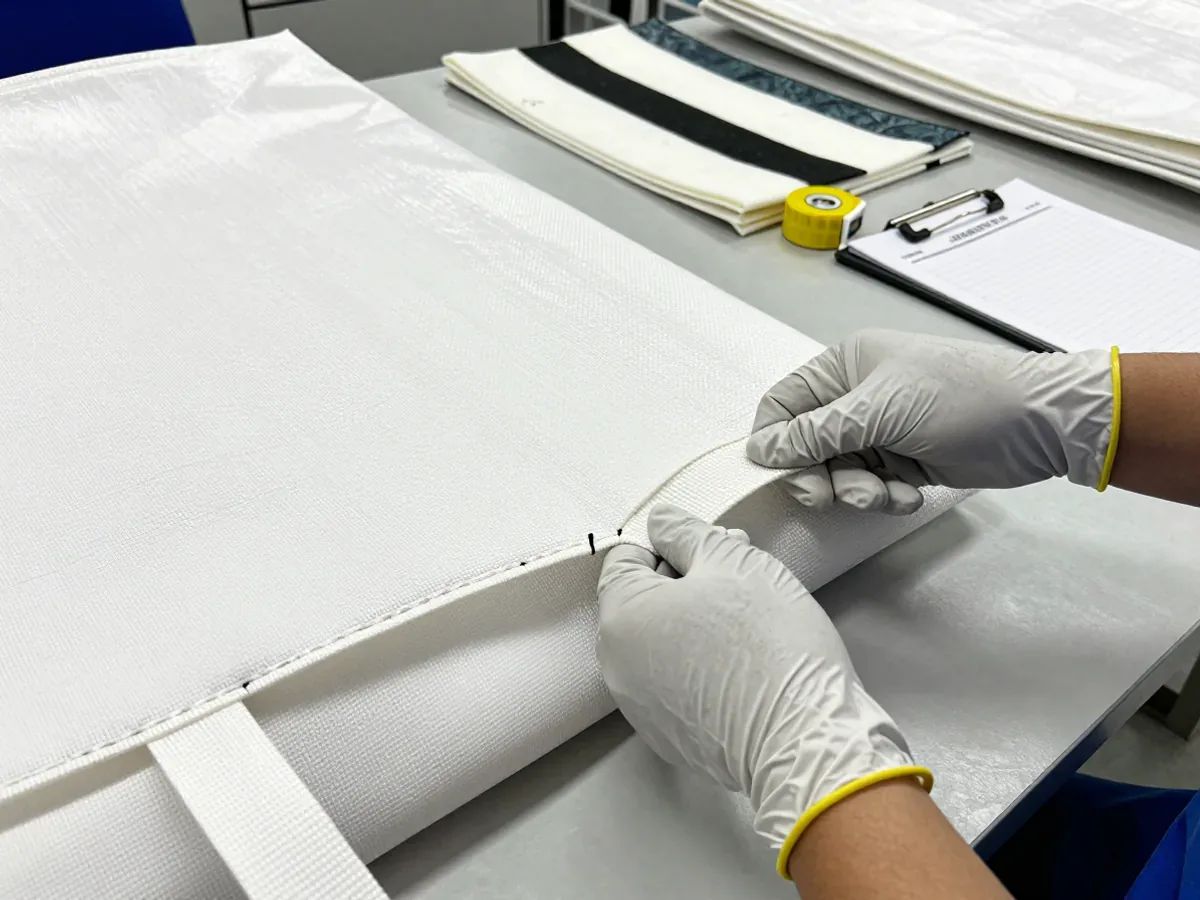
Inspection starts at the material, not the finished bag. Incoming fabric, webbing, zips and thread are checked against the approved spec, because a substitution at this stage cannot be corrected later. A batch that passes the visual check but uses a lighter webbing will fail in the field, not in the warehouse.
The functional checks are pull, seam strength and bar tack, tested on every batch rather than on a first article. These are the three places a loaded bag actually fails, so they deserve a routine test rather than a one-time approval. Dimensions, handles, logo and packed quantity are then checked by hand, which catches the drift that machines miss.
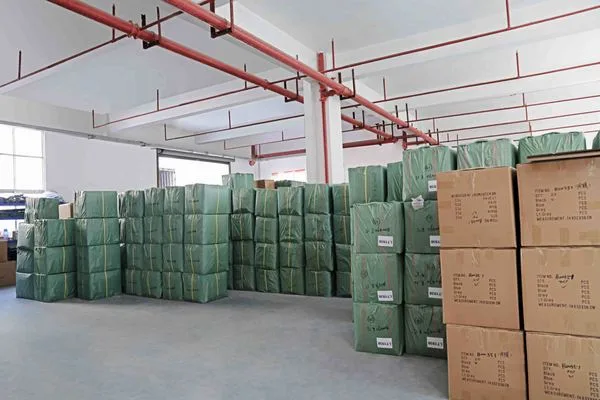
The last step is the carton count and a photograph before the container seals. That record settles any dispute about what left the factory and gives the buyer a baseline for the next shipment. A batch that clears material, pull, seam, bar tack, dimensions and carton count has been checked against the parts that decide whether the bag survives a move.
Questions buyers still ask before switching
Do heavy duty moving bags hold as much as a plastic tote? Capacity depends on the size chosen, not on the material. A bag range built on five sizes that share the same construction lets a buyer match a tote's usable volume without changing the build quality. The flat opening also means soft goods fill the space more completely than they do in a rigid box with rounded corners.
Can woven PP moving bags be printed with our logo? Yes. Screen print, heat transfer and a woven label are all available, and the artwork is proofed before production. The choice affects durability and hand feel more than it affects cost, so it belongs in the spec rather than in a last minute email.
How many sizes should a moving bag range include? Enough to cover the loads the crew actually carries, and no more. Five sizes sharing one construction is a practical starting point because it covers small personal loads through bulky soft goods without forcing a second set of quality checks. A new size takes one sample round if the range needs to grow.
What should a pre-shipment check cover on moving bags? Material against the approved spec, pull and seam strength, bar tack, dimensions, handles, logo and packed quantity, then a carton count with a photograph before the container seals. Those checks map to the failure points, so a batch that clears them has been tested where it matters.