Built from a seasonal storage range spec sheet and the storage method notes behind it.
A sample room table held three storage bags in different sizes, and the buyer kept lifting the smallest one. She had brought her own light strands, and the 24.0 by 11.8 by 14.6 in long box was the only one that swallowed a full garland without forcing it into a cube. The other two bags were cheaper on the quote sheet and useless on the table.
That moment usually decides an order. The specification that follows is where the decision either survives production or quietly falls apart. A storage bag looks simple on paper: fabric, zip, handle, size. In practice, each line on the purchase order carries a job, and the job is what the buyer needs to write down. What follows is one order read line by line, with what to write, why it matters, and how to check it before bulk.
The order line that starts everything: 24.0 by 11.8 by 14.6 in
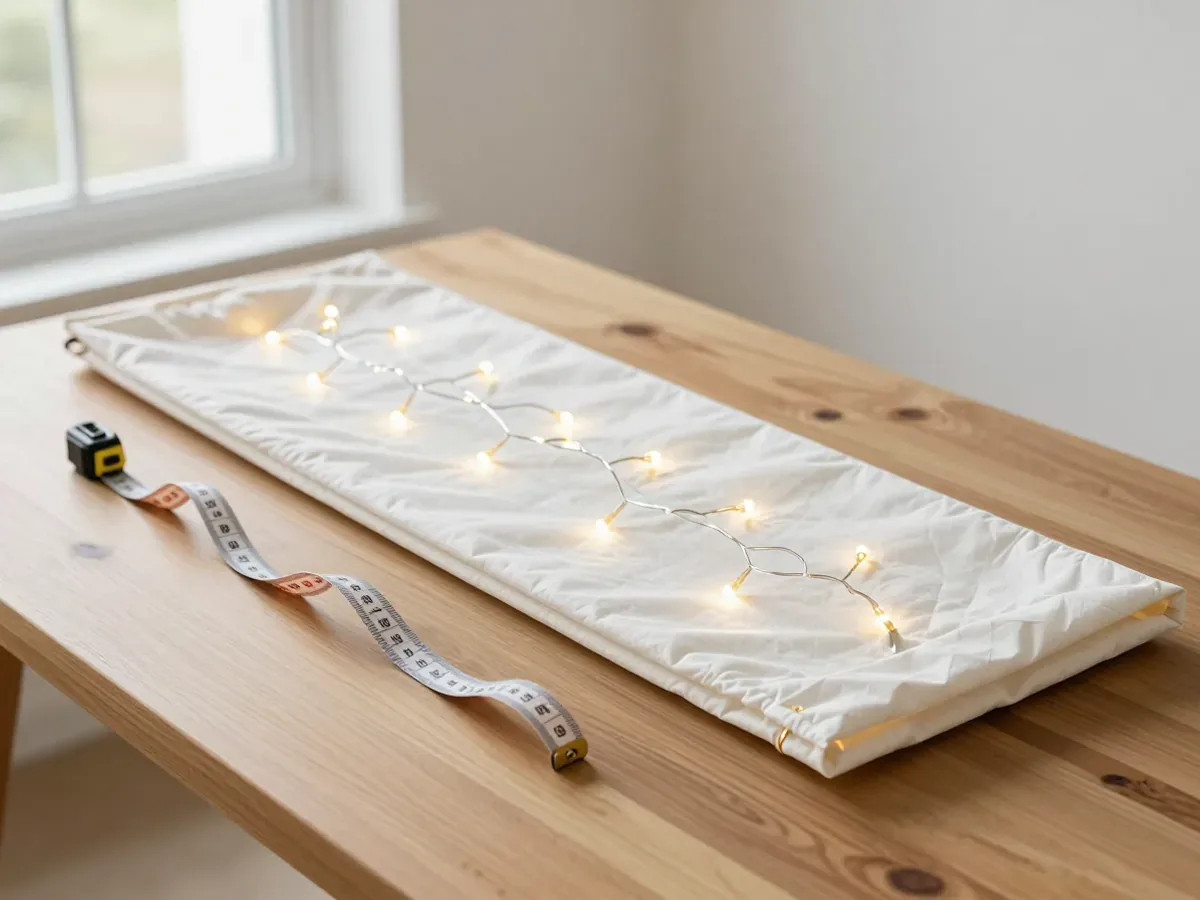
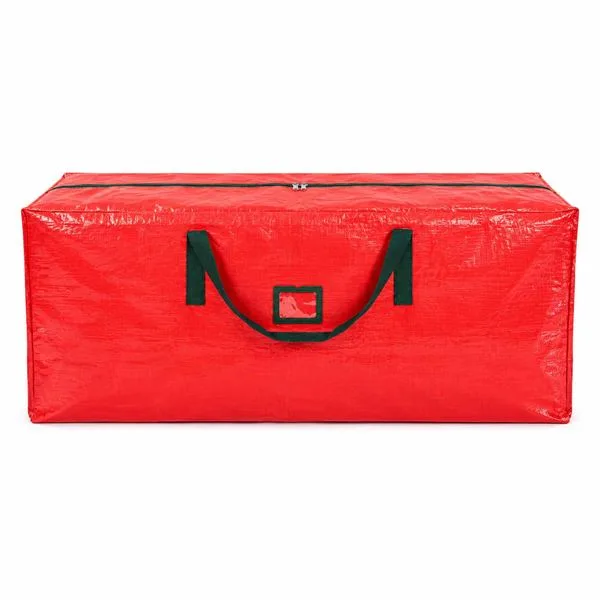
The first line on the sheet is the size, and it is usually written as three numbers with no explanation. Write it as a use statement instead: length, width and depth, followed by what must fit inside without coiling. The long box at 24.0 by 11.8 by 14.6 in exists because garlands, light strands and long decorations go in without being wound into a tight cube.
Why this matters is simple. A bag sized to the coiled bundle forces the user to coil again next January, and coiling is where tangles start. A bag sized to the strand's natural length lets the lights lie in long loops. The user pulls one end, and the strand comes out in the order it went in.
Check it with a real strand, not a tape measure alone. Lay the lights on the table, measure the loop length, and compare it with the bag's internal length. Then put the strand in, close the zip, and lift the bag by one handle. If the contents shift into a lump at the bottom, the length is right and the depth is wrong.
Depth is the line buyers skip: 5.5 in and what it decides
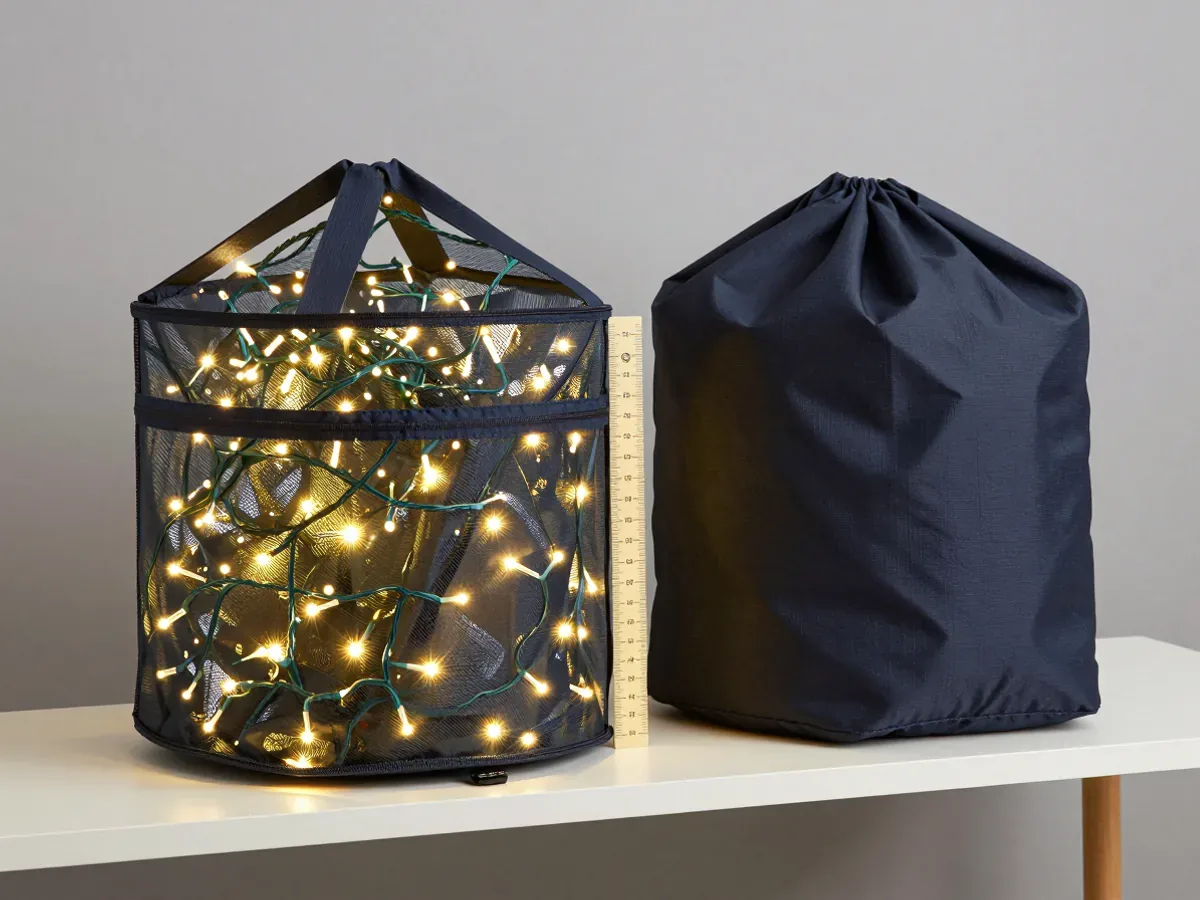
Most purchase orders list length and width and leave depth to the supplier. Depth decides two things: whether the bag slides under a bed or onto a shelf, and whether the contents stay flat. The shallow Oxford bag is 5.5 in deep for exactly that reason.
A deep bag holds more, and it also bulges. On a shelf, a bulging bag loses its shape and the zip takes the load. Under a bed, a deep bag does not fit at all, and the buyer discovers this after the cartons arrive.
Write depth as a maximum, not a target. Then check the sample by filling it to a realistic load and measuring the filled depth at the centre and at the zip line. A bag that measures 5.5 in empty and 7 in full has not met the line. Ask for the filled measurement in the sample report, and keep it with the approved sample.
The opening line: two pulls, closing from either end
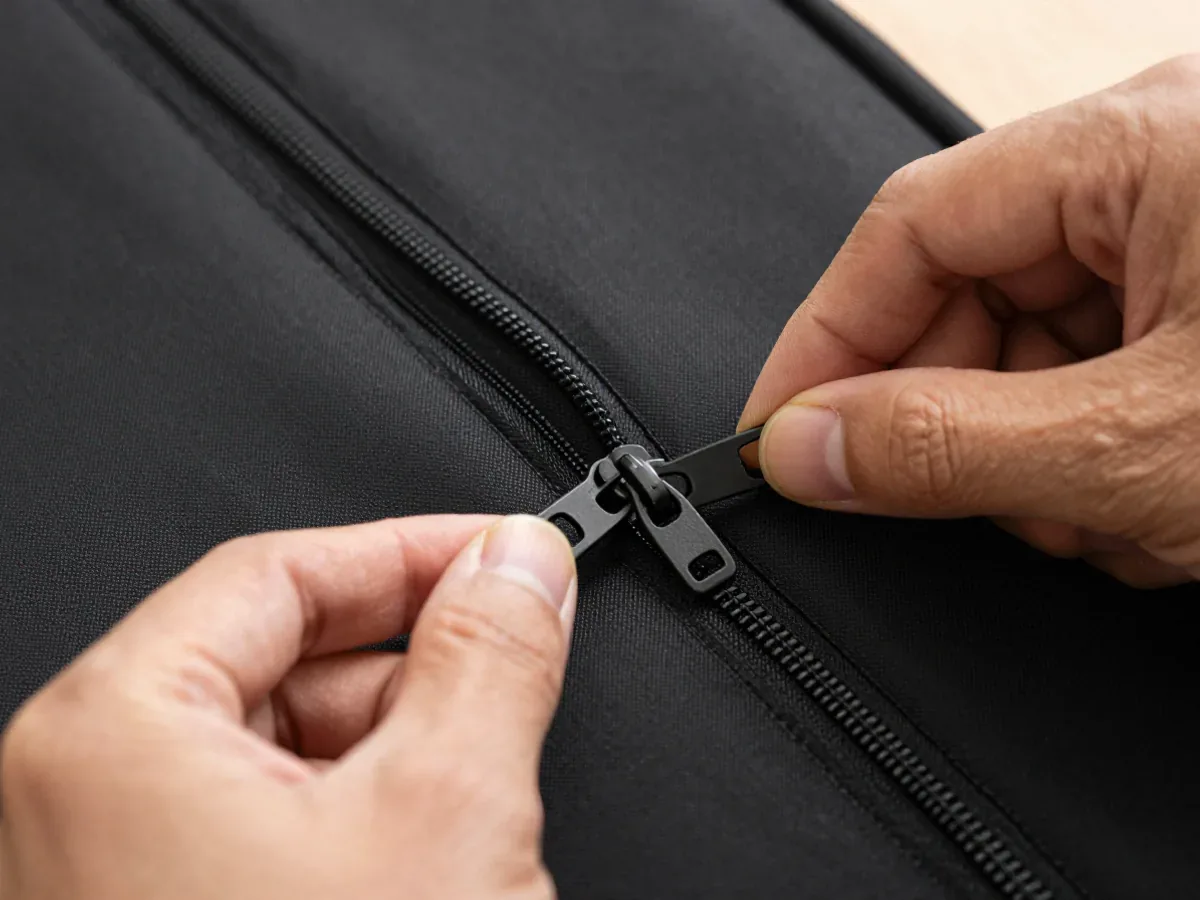
The zip line is where most storage bag complaints begin, and it is usually specified as a length. Write the pull count and the closing direction instead. The tree bag top zip has two pulls and closes from either end, so a user can open the middle of a packed bag without emptying it.
Why it matters: a single-pull zip on a long opening forces the user to run the slider the full length every time. On a full bag, that means pushing fabric aside with one hand while pulling with the other. The second pull turns a two handed job into a one handed one, and it spreads the closing stress across two sliders instead of one.
Check the zip on a filled sample, not an empty one. Close from both ends and look for a gap at the meeting point. Open from the middle and see whether the tape puckers. Run the slider ten times and feel for a catch. A zip that catches when empty will fail when full.
The line that saves a shelf search: a clear front panel and a label pocket
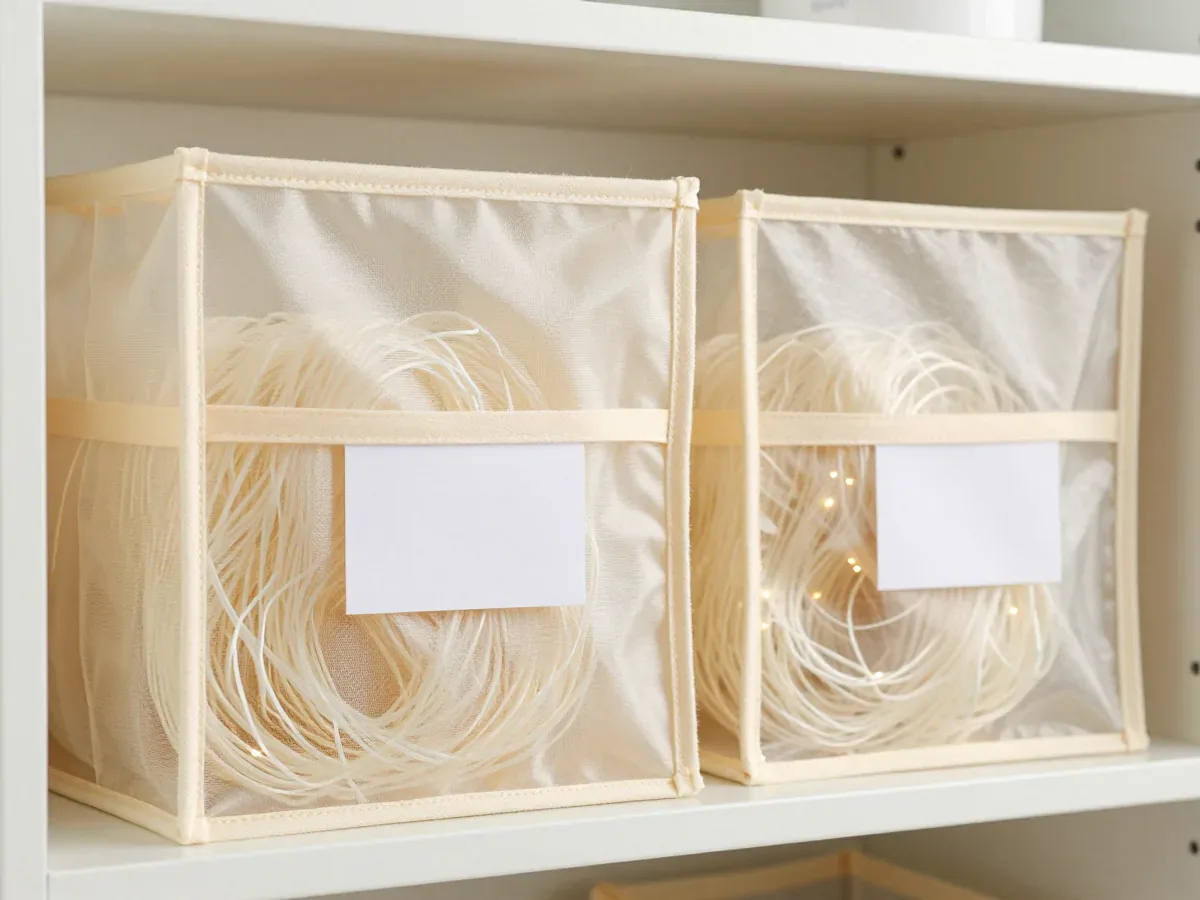
Two lines do the same job in different ways, and most orders carry neither. The clear front panel on the 41.7 in bag lets the contents be read from the shelf without opening the zip. A clear label pocket on the face holds a card naming what is inside.
Write both if the bag will sit on a retail shelf or in a home storage room. The panel answers the question at a glance. The pocket answers it in words, which matters when two bags look alike and hold different sets. A card that says which tree is inside saves the user from opening four bags in December.
Check the panel for clarity and attachment. Look through it at a printed card and read the text from a normal standing distance. Then tug the panel edge and check the weld or stitch line. A panel that clouds or lifts at the corner will look worn before the first season ends. For the pocket, insert a standard card and confirm it does not slide out when the bag is tipped.
One line for the wreath: a lid that opens the whole way round
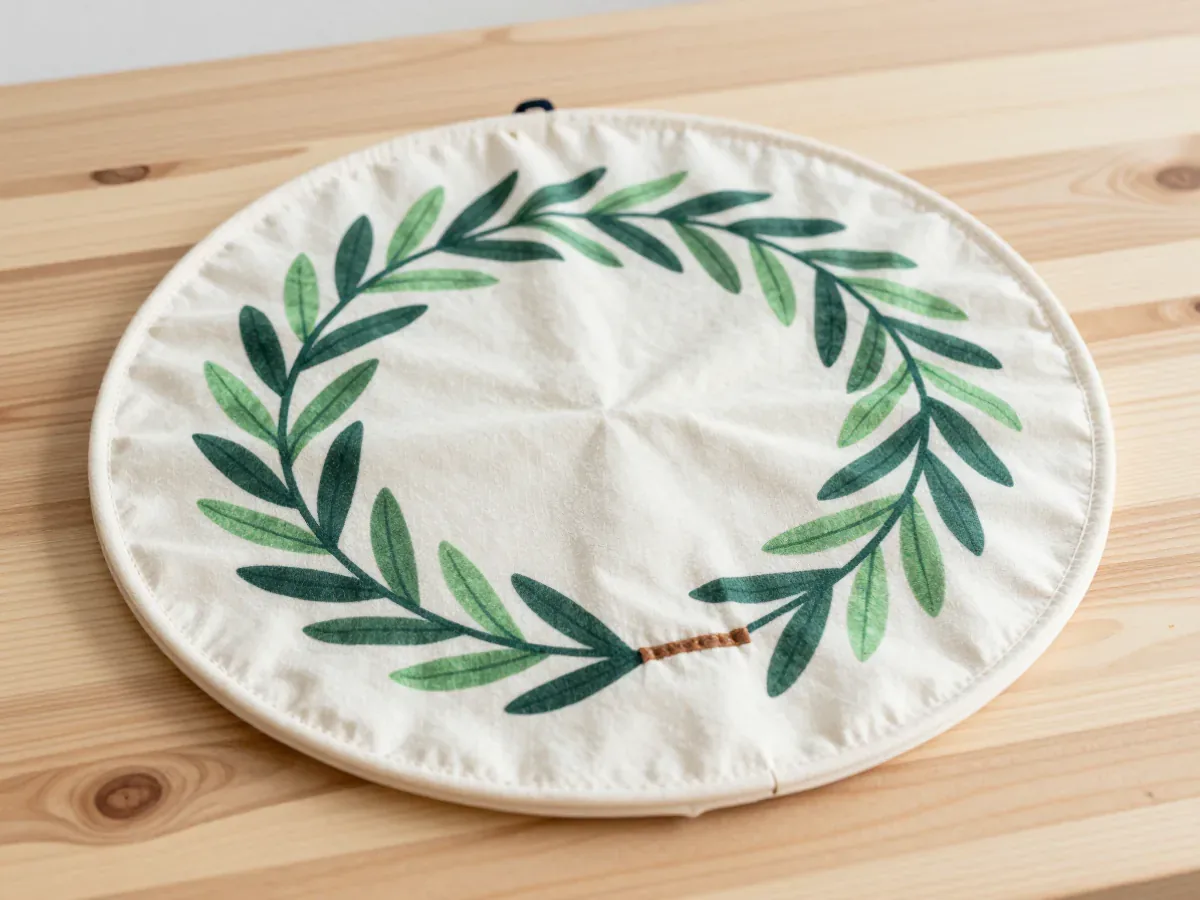
A wreath bag is not a light bag, and the order should not treat it as one. The round wreath bag opens across the whole lid, so a decorated wreath drops in flat. Write the opening type, not just the diameter.
Why it matters: a wreath is decorated on one face, and that face must not be compressed. A bag that opens only partway forces the user to slide the wreath in at an angle, and the decorations take the friction. A full lid opening lets the wreath go in flat and come out flat.
Check it with a wreath form, not a flat circle of cardboard. Place a decorated form on the open lid, close, and lift. Then open and check whether any decoration has bent. If the lid does not clear the wreath's depth, the bag will be stored open, and an open bag collects dust.
Nine styles on one purchase order, and the line that keeps them apart
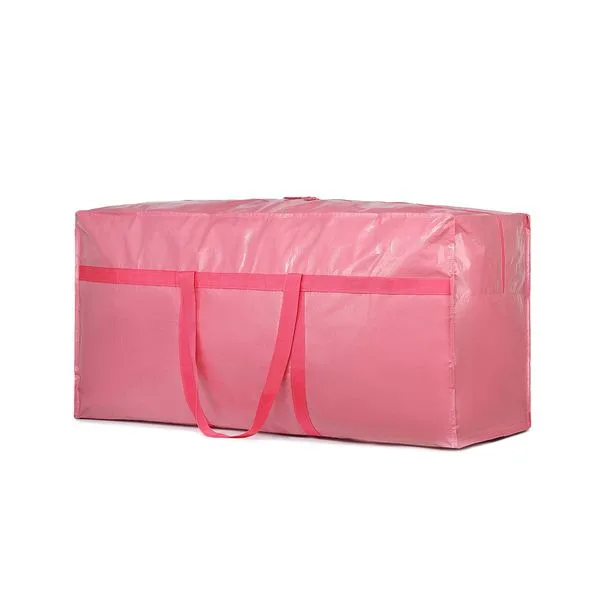
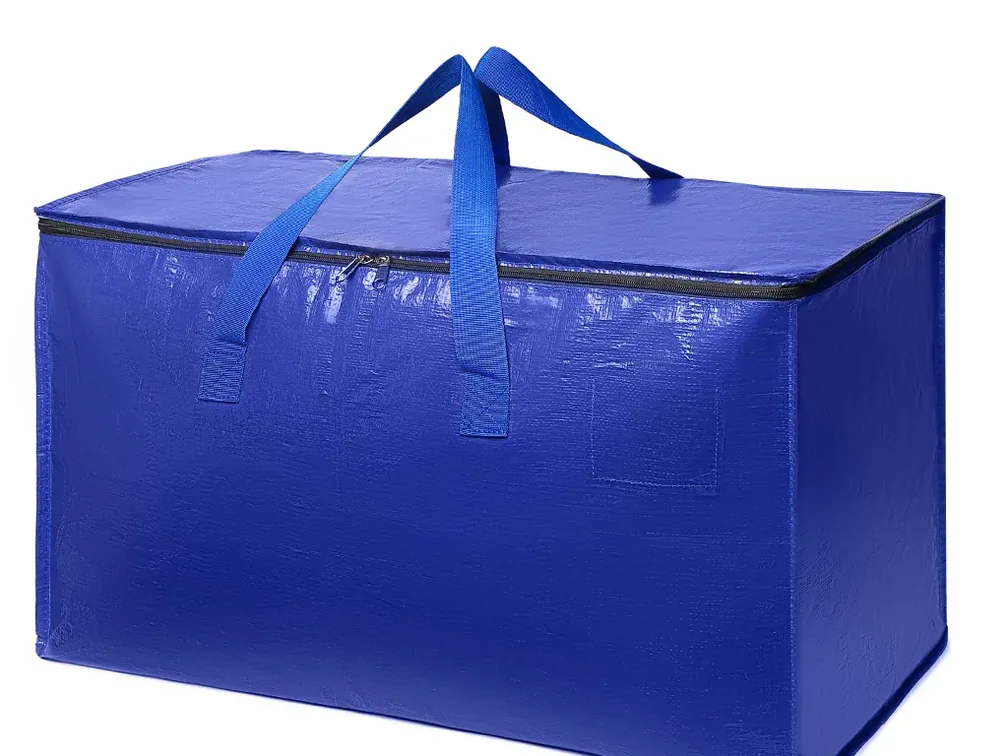
A seasonal range is rarely one bag. The range here is nine stock styles: tree and long bags, wrapping paper bags, non woven boxes, a clear front bag, an open top tote and a round wreath bag. On a single purchase order, the risk is not the bag. It is the mix up.
Write a style code on every line and repeat it on the carton mark. Then write the packing ratio per style, because a nine style order packed by eye arrives short on the smallest style. The line that keeps them apart is the code, not the description. Descriptions repeat across styles; codes do not.
Check the first carton of each style against the order line before the run continues. Open one bag per style, confirm the size and the feature that defines it, and photograph the bag next to its carton label. A clear front bag packed in a carton marked for a long bag is a warehouse problem that becomes a customer problem.
The line nobody writes: how the strand leaves the bag
This is the line that decides whether the lights come out tangle free, and it almost never appears on a purchase order. The bag can be the right size, the zip can be right, and the strand can still leave in a knot if nothing inside holds the loop.
Write an internal tie or loop as a line item. A small tie point near one end lets the user secure the first end of the strand before the rest goes in, and the same point holds the plug when the bag is closed. Without it, the strand settles into the bottom corner and the next opening starts with a search.
Check it by packing a strand the way a user would. Secure the plug end, lay the strand in long loops, close, and carry the bag by the handle for twenty steps. Open it and pull the free end. If the strand comes out in loops, the line works. If it comes out in a bundle, the bag needs the tie point or a different internal layout.
What four QC checkpoints can and cannot catch
Every bag passes four QC checkpoints before it is packed, and those checkpoints are worth writing into the order as a requirement. They catch the measurable things: size against the spec, zip function, seam integrity, and the panel or pocket attachment.
They cannot catch the thing the buyer actually cares about. A QC checkpoint measures the bag, not the experience of pulling a strand out of it next December. That gap is why the sample stage matters more than the inspection stage for this product. The sample is where the strand goes in and comes out, and where the tie point either exists or does not.
Before approving bulk, pack the sample the way the end user will. Use a real strand, a real garland and a real wreath form. Carry the bag, open it from both ends, read the label through the panel, and time how long the unpacking takes. Then write what worked into the order lines, because a sample that passes in the room and a spec that says nothing about it will not reproduce in production.
FAQ
Should the lights be wound on a spool before they go into the bag?
A spool, a piece of cardboard or a hanger keeps a strand organised, and it is the standard method for loose lights. In a long storage bag, the spool is optional. The bag's length does the same job if the strand goes in as long loops and one end is secured.
Can one storage bag hold both garlands and light strings?
A long bag can hold both if the depth allows the garland to lie flat and the lights to loop without compression. Keep the two on separate tie points so they do not interlock, and label the bag so the next opening does not become a sorting job.
Is a clear front panel worth adding to a storage bag order?
It earns its place when the bag sits on a shelf and the contents are not obvious from the shape. A label pocket covers the same need in words. If the budget allows one, choose based on whether the user recognises the contents by sight or by name.
How do I check a storage bag sample before approving bulk?
Fill it with the real contents, carry it by the handle, open and close the zip from both ends, and time the unpacking. Check the filled depth, the panel clarity and the tie point. Then write each result into the order line it belongs to.