
This piece follows one returned bag from the buyer's floor back to the fabric report, using archived notes and product spec data.
The bag came back from a spring trade show with a wet folder inside and a dry complaint form outside. A buyer had carried it through twenty minutes of steady rain, and the water had not come through the panel she had paid to upgrade. It had come through the seam where the panel met the base, and through the zip pull she had never thought to test.
That bag had replaced a cheaper model the buyer used for two seasons. The old one was lighter, plainer, and never claimed anything on the label. The replacement arrived with a waterproof tag, a laminated hangtag, and a fabric spec sheet quoting a hydrostatic head figure in the thousands of millimetres. The buyer assumed the upgrade had moved her from splash resistant to rainproof. The return told a different story.
The Bag Came Back Wet, and the Fabric Was Not the Reason
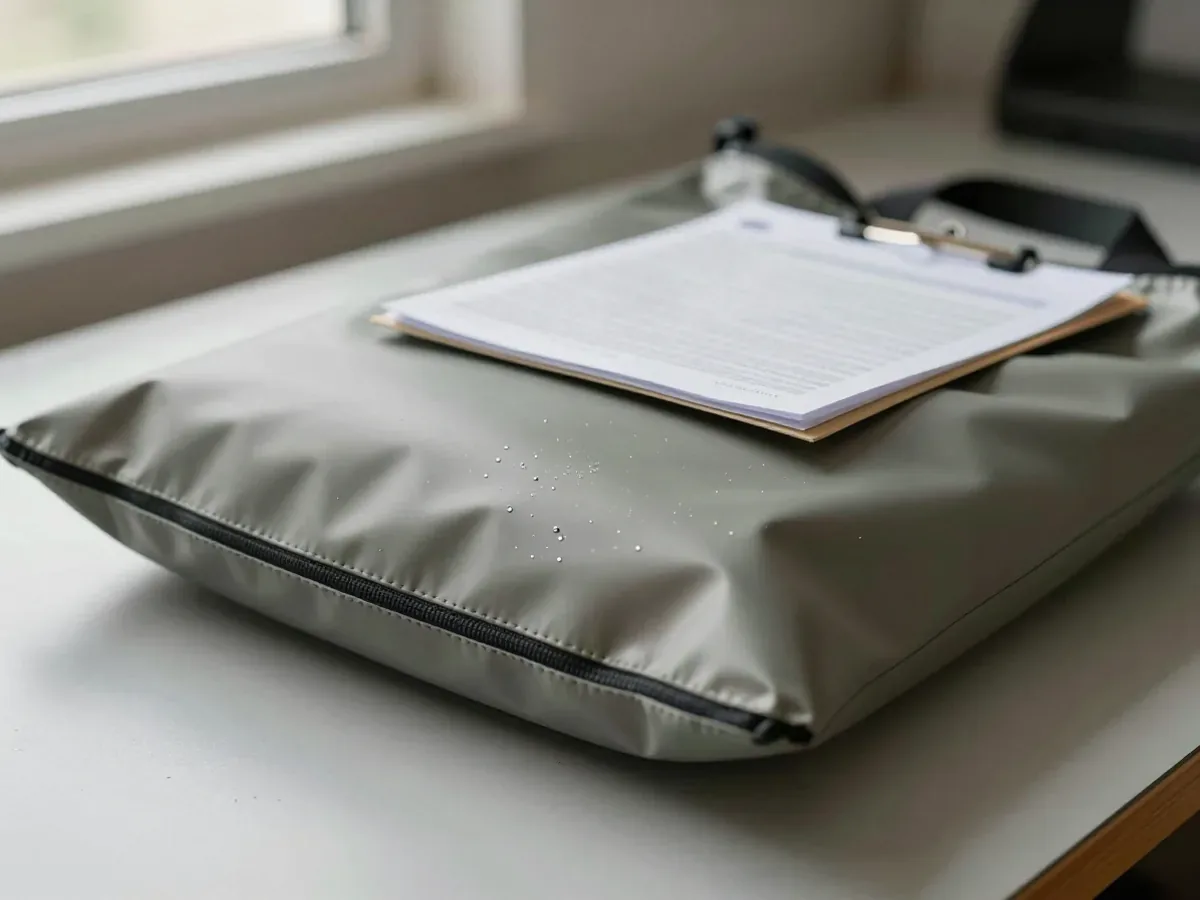
The water line on the returned bag was easy to read. The main body was dry across its whole face. The moisture sat in a narrow band along the bottom seam and spread upward about two centimetres, exactly where the stitching punched through the coated side of the fabric.
A hydrostatic head test would have passed that panel without argument. The fabric had been clamped, loaded with a column of water, and held. Nothing in the report described what happened after a needle went through it four hundred times.
The buyer's team had checked the tag, not the construction. The tag said waterproof. The construction said stitched. Those two statements can sit on the same bag and contradict each other.
Tracing the Claim Back to a Single Number
The number on the spec sheet came from a mill test on the roll, not from the finished bag. That is normal and not dishonest. A fabric mill reports what its fabric resists, and the figure travels forward into quotations, line sheets and buyer conversations until it starts to sound like a property of the product.
Somewhere in that chain, the figure stopped describing a material and started describing a promise. The buyer read a four digit millimetre value and heard rainproof. The factory read the same value and heard a fabric specification. Neither side was lying. The document simply never said which question the number answered.
A hydrostatic head is a column of water, measured in millimetres, that a clamped fabric holds before water passes through. It is a material test. It says nothing about thread holes, zip tape, binding edges, or the fold where a base panel meets a side panel.
Where Water Actually Gets In
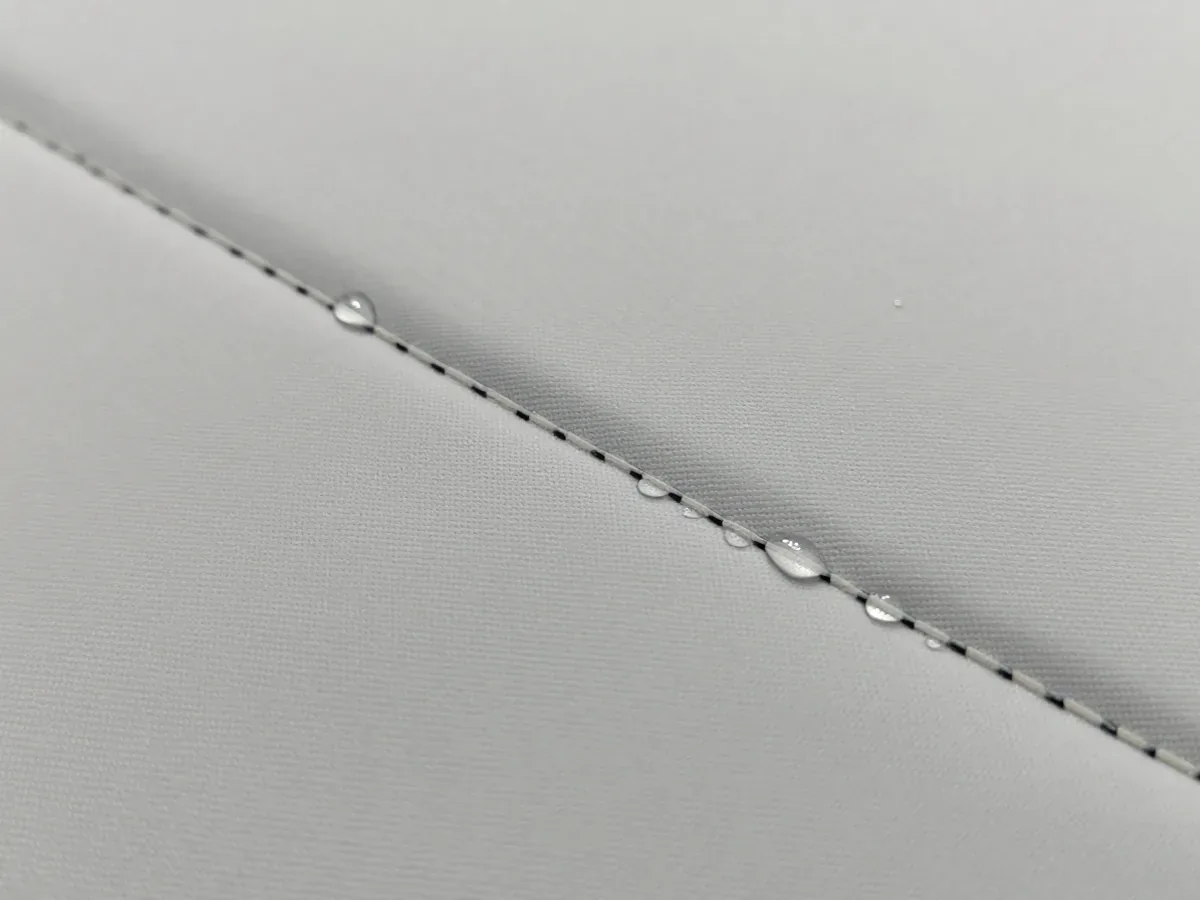
On a stitched bag, every needle creates a small channel through the coating. Under direct rain, water does not need pressure to find it. Capillary action does the work, and the thread wicks moisture inward along its length.
Seams concentrate that risk because they combine three weaknesses in one line: perforation, tension, and a folded edge where the coating is stretched thin. A taped or welded seam closes the perforation path. A stitched seam leaves it open unless the factory adds a sealant tape or a bound and coated finish.
Closures behave the same way. A standard nylon zip passes water along the tape and between the teeth. A sealed or covered closure interrupts that path. The fabric can be excellent and the bag can still fail at the two places where it was assembled.
Clear PP tells this story plainly. The shell shrugs off a splash, and a checker can see a damp patch through the panel without opening the bag. The seam is still stitched rather than sealed, so the bag is not waterproof, and no honest label should say it is.
What the Millimetre Figure Can and Cannot Cover
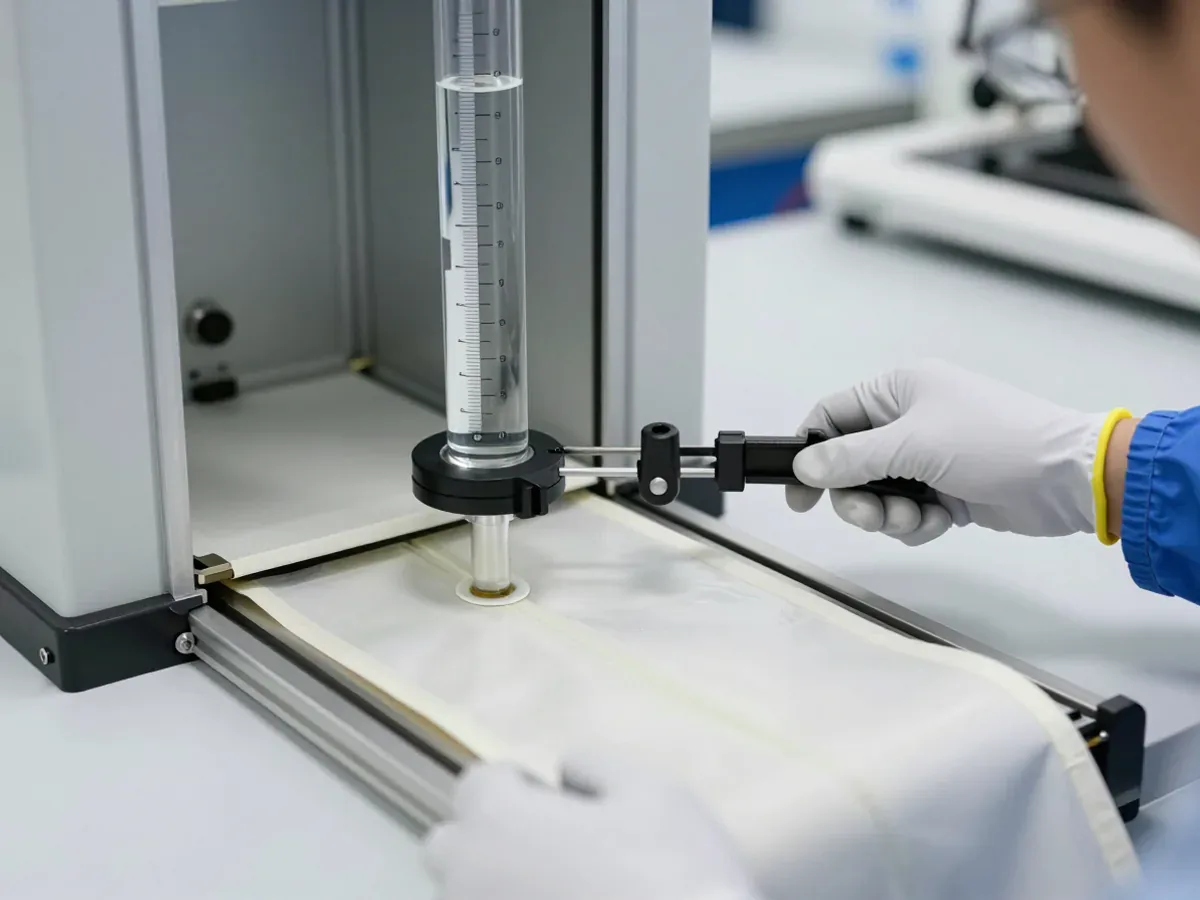
The figure covers the panel. It tells a buyer how much water pressure the coated fabric resists before moisture crosses to the inside. A few hundred millimetres handles a light shower and a splash. A higher figure is what a serious waterproof bag uses for longer exposure or heavier rain.
It cannot cover the seam, the zip, the binding, or the point where a handle is bar tacked through the shell. It also cannot cover age. A coating that passes on day one can crack along a fold after a season of packing and unpacking.
That gap is where most waterproof disputes begin. The buyer tests the bag in weather. The factory tested the fabric in a clamp. Both results are real, and they describe different objects.
The Evidence That Should Travel With the Order
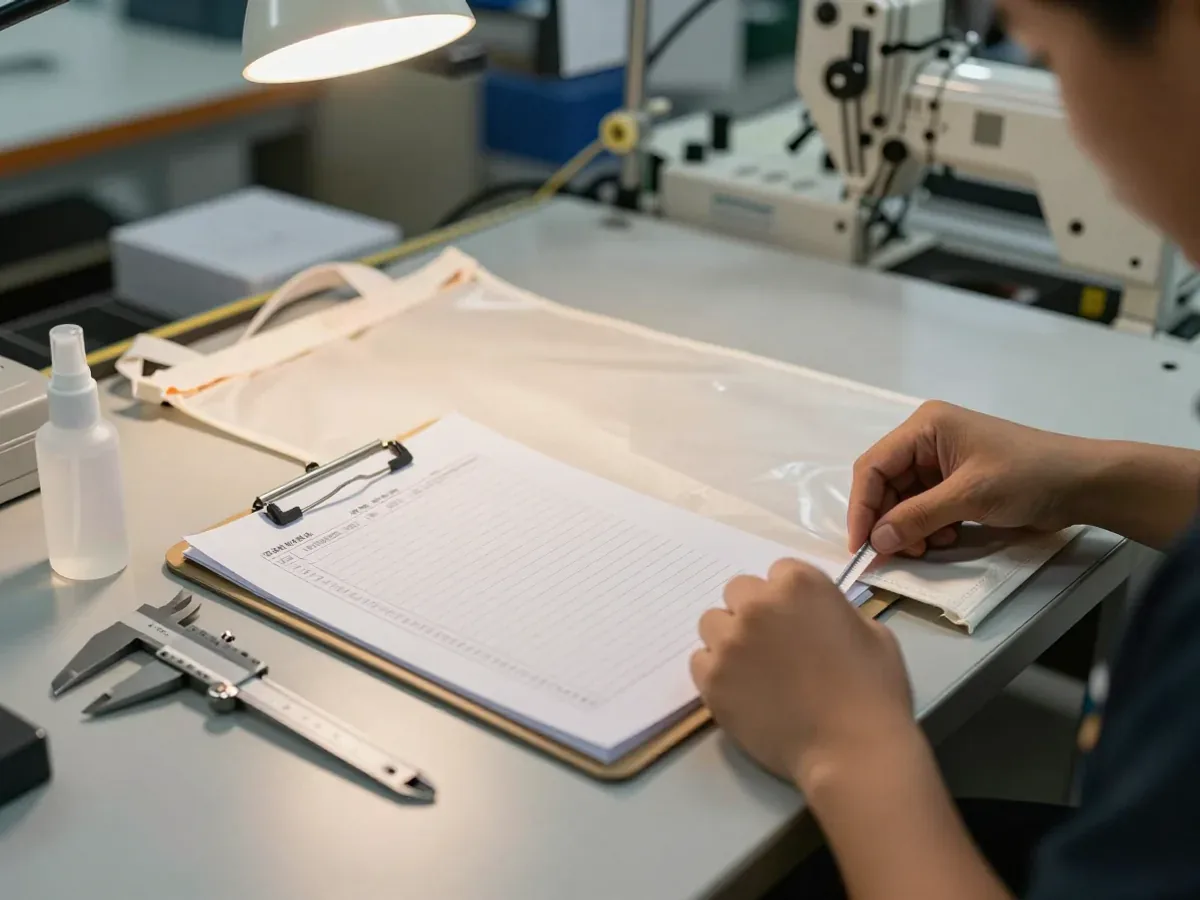
A purchase order for a rain exposed bag should carry more than a head figure. It should name the fabric, the test method, and the seam construction in the same document, so no one can quote one without the other.
Ask for the hydrostatic head of the fabric actually used, the method behind the number, and whether the seams are welded or taped. Ask for a lab report rather than a verbal figure, and confirm the head was measured on the production fabric rather than a hand picked sample.
On our own line, the honest position is narrow. Cutting, sewing, checking and packing sit on one site, and four checkpoints run from incoming material to the final count. Dimensions, handles, logo and packed quantity are checked by hand on the finished bag, and cartons are counted and photographed before the container seals. None of that turns a stitched seam into a sealed one.
Reading a Water Claim Against Real Exposure
A buyer should match the claim to the weather the bag will actually meet. A commuter bag that crosses a car park in drizzle needs splash resistance and a quick drying shell. A bag that rides on a bicycle rack for forty minutes needs sealed seams and a covered closure, or the claim is decoration.
Write the exposure down before the order. Twenty minutes of steady rain is a different requirement from a two hour hike, and the difference belongs in the spec, not in the buyer's head. A factory cannot build to a requirement nobody stated.
The returned bag failed that test before it ever left the building. Its exposure was rain. Its construction was stitched. The spec sheet never asked the two to agree.
What to Put on the Spec Sheet Before You Order
The line that matters most is the one most often left blank: seam construction. Fill it with welded, taped, or stitched, and treat stitched as splash resistant regardless of the head figure printed above it.
Then add the closure type, the coating, and the test method beside the head value. Require the report to reference the production fabric. Add a finished bag check that includes a short spray test at the seam and the zip, because those are the two places a claim usually dies.
A buyer who writes those lines gets a bag whose label and construction say the same thing. A buyer who writes only the millimetre figure gets a dry panel and a wet folder, and a return that takes a season to explain.
FAQ
Does a high hydrostatic head alone make a bag waterproof?
No. The head describes the fabric panel. Water enters at a seam or a zip long before the panel leaks, so the fabric figure is only half of the claim. Seams have to be welded or taped and the closure sealed before the word waterproof belongs on the label.
What should I ask a factory about a waterproof claim?
Ask for the hydrostatic head of the fabric used, the test method behind it, whether the seams are welded or taped, and a lab report on the production fabric rather than a hand picked sample. A verbal figure is not evidence.
Why do stitched seams fail even when the fabric passes?
Every needle leaves a channel through the coating, and the thread wicks water along its length. Rain does not need pressure to exploit that path. A taped or welded seam closes it; stitching leaves it open no matter how high the fabric head reads.






