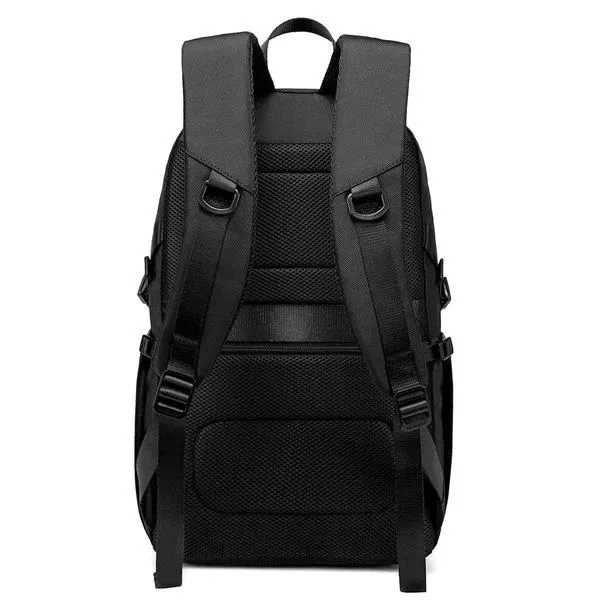
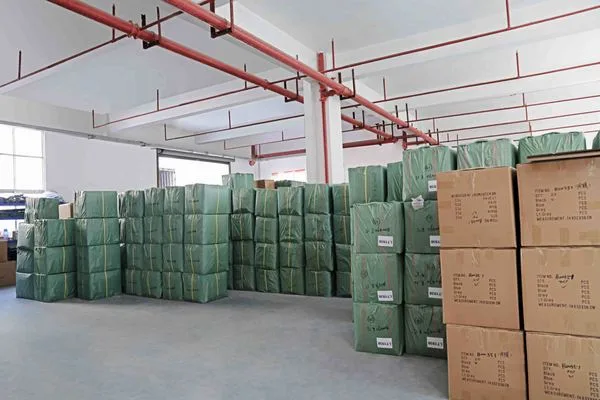
Based on the old import duty article and the moving bag product specifications kept in the source file.
At the customs broker's counter, a buyer slid a commercial invoice across the desk and asked a single question: does this line say the bag is a textile sack or a plastic one? The broker read the description, put the invoice down, and said the answer was not on the page. That exchange set the agenda for the next three weeks of the shipment.
The buyer had assumed the HS code was a formality, a number the forwarder would fill in. What she learned instead was that HS 6305.10 is a claim about what the bag is made of and how it is built, and that the paperwork has to support that claim line by line. The questions below are the ones she worked through, in roughly the order they came up.
Is My Moving Bag a Textile Sack or a Plastic Bag?

This was the first question, and it is the one that decides everything downstream. HS Code 6305.10 sits in Chapter 63 of the Harmonized System, covering sacks and bags of a kind used for packing goods, and the subheading applies to textile constructions. A moving bag built on a PE woven shell with stitched handles is making a textile argument. A bag whose structural strength comes from a visible plastic layer is making a different one.
The broker's test was blunt: look at the bag and ask which material carries the load. If the answer is the woven fabric, the entry belongs in the textile chapter. If a plastic film or coating is doing the structural work and you can see it without magnification, the bag drifts toward the plastic chapters instead.
For the buyer's order, the shell was PE woven and the handles were stitched through the body rather than glued or die-cut. Those two details were the evidence she needed, and they were already visible in the sample she had approved months earlier.
Which Bag Features Prove Reusable Textile Construction?
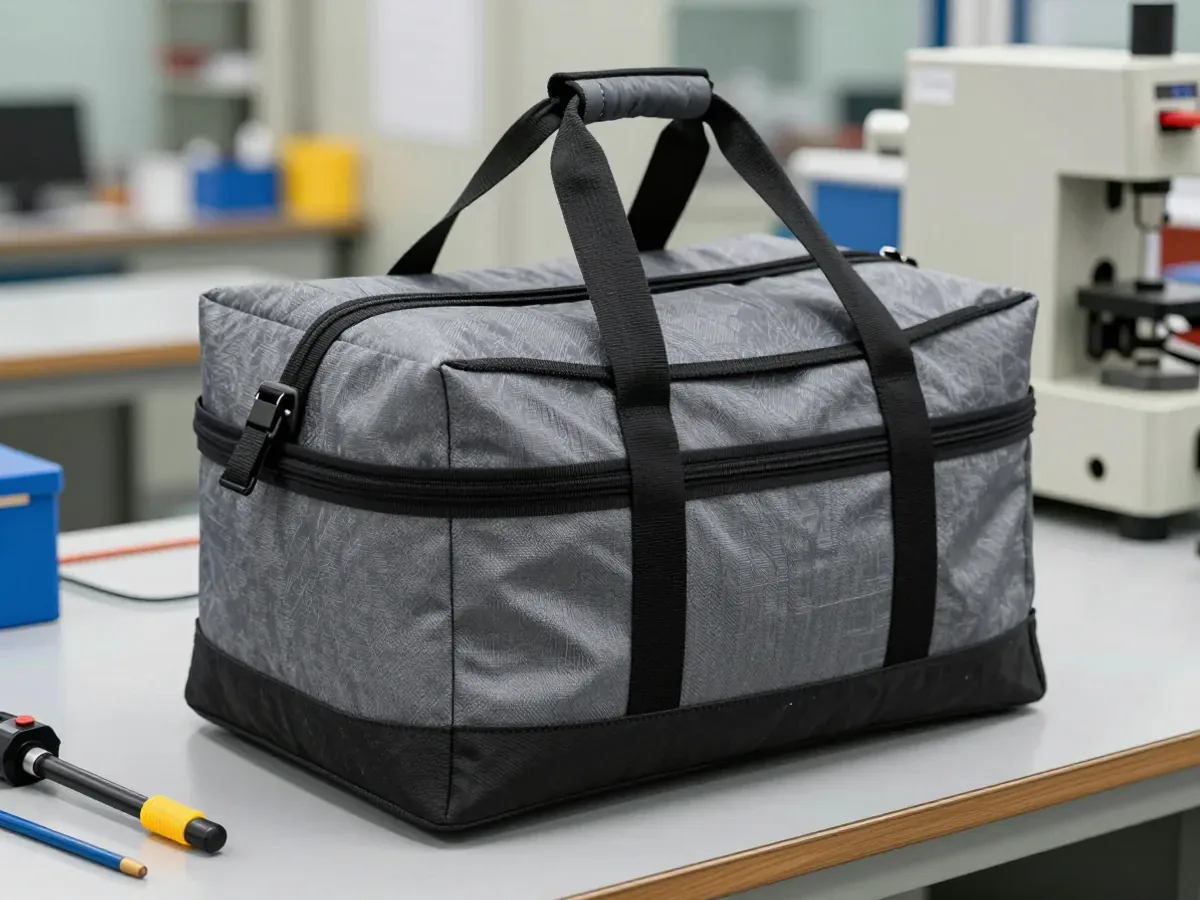
The broker did not want a marketing description. He wanted features that a customs officer could verify by handling the bag, and the buyer had to go back to the factory for confirmation on each one.
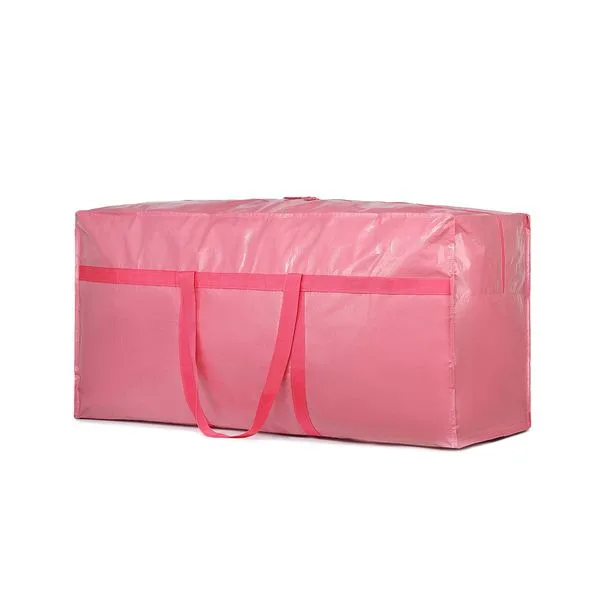
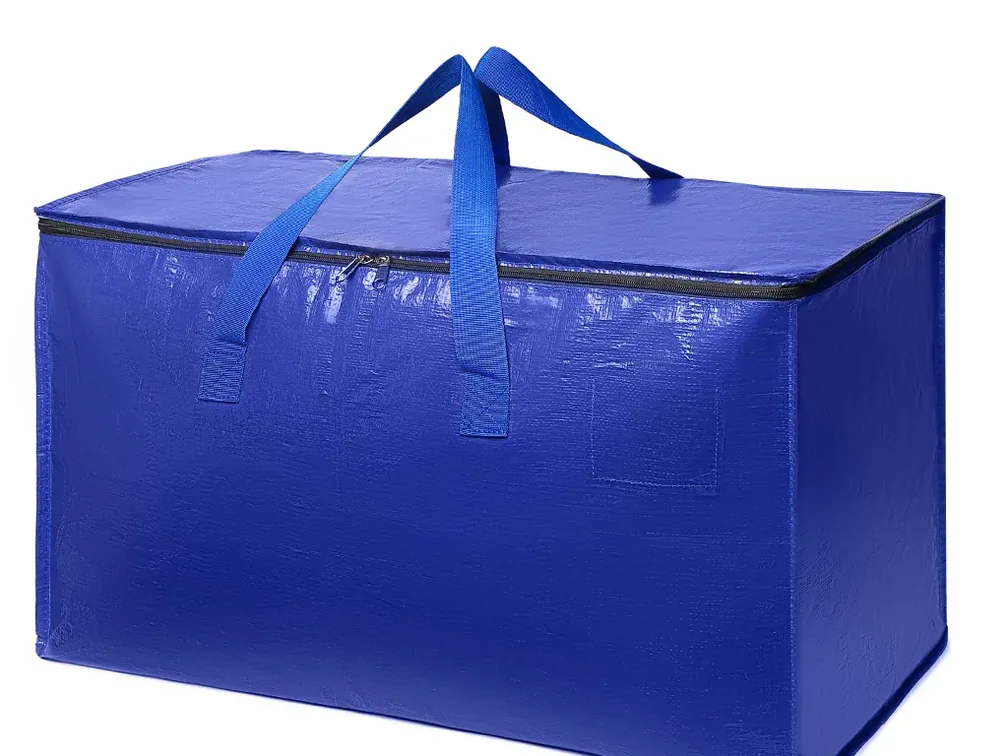
Stitched construction came first. Handles sewn into the body, seams that are reinforced rather than heat-sealed, and a base built to take repeated loading all point to a reusable industrial sack rather than a single-trip plastic bag. The buyer's bag had a reinforced base and wrap-around webbing, which gave the broker something concrete to cite.
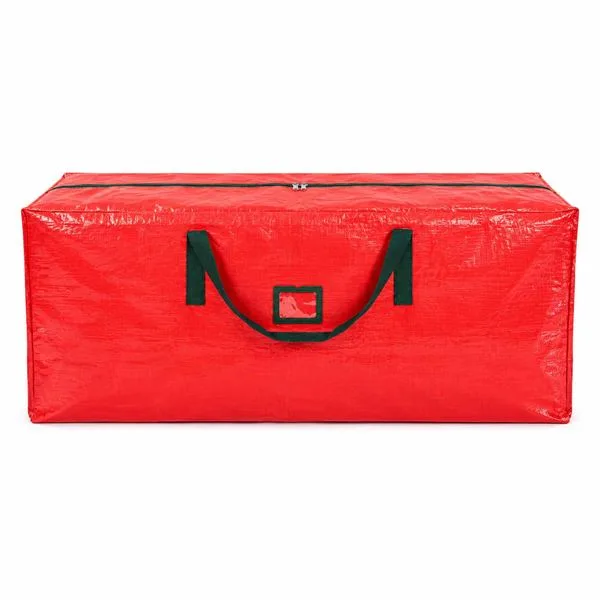
Hardware and closures mattered too. A top zip with two pulls and a clear label pocket suggest a bag designed for repeated commercial handling, not a disposable liner. The broker noted these as supporting details rather than the deciding factor, but they strengthened the file.
The factory's own quality routine turned out to be useful evidence. Every order passes four checkpoints from incoming material to final count, and pull, seam strength and bar-tack are tested on every batch. None of that is a customs document on its own, but it backs up the claim that the bag is engineered for reuse.
What Should the Commercial Invoice Line Say?

The invoice the buyer first sent described the goods as "moving bags, assorted." The broker sent it back the same afternoon. A line like that gives an officer nothing to classify against, and it invites a hold while someone asks questions by email.
The revised line named the construction and the material: a woven textile moving bag with stitched handles and a reinforced base, packed per carton with the quantity and unit value broken out. The description matched the physical sample the broker had on the desk, which is the standard he kept returning to.
Freight and insurance came out of the goods value and sat on their own lines. The buyer had bundled everything into one figure on the first draft, and the broker explained that a clean separation makes the declared value easier to defend if anyone reviews the entry later.
Packing details went onto the packing list rather than the invoice. Net weight per bag, gross weight per carton and carton dimensions were listed, along with the note that packing can run per store with barcode labels. The broker flagged that any mismatch between the invoice and the packing list is a common trigger for a physical examination.
Which Factory Documents Does the Broker Read First?

The buyer assumed the broker would start with the certificate of origin. He started with the material description instead, because origin only matters once the classification holds.
A material technical data sheet came first, naming the shell construction and confirming there was no visible coating doing structural work. Where a coating exists but is not visible to the naked eye, a lab report measuring the coating against the textile surface settles the question before an officer raises it.
The mill certificate came next, tracing the textile fiber. The broker read it less for duty purposes than for supply chain questions that can surface at the border independently of the tariff line.
Only then did he look at the origin document. The buyer's supplier was in a country covered by a preferential arrangement, and the certificate had to be issued before shipment rather than reconstructed afterward. A document produced late is often rejected, and the preference is lost with it.
What Changes on the 2026 Reusable Sack Subheading?

Midway through the file, the broker mentioned a proposed breakout under 6305.10 for reusable industrial sacks. The buyer's first reaction was that a new number meant new paperwork, and she was partly right.
The proposal would tighten what counts as reusable, which puts more weight on the construction details already in the file. Stitched handles, a reinforced base and batch testing stop being nice supporting facts and start being the criteria an entry is measured against.
Marking requirements are the other moving part. A reusable sack subheading is expected to come with labeling expectations around material composition and origin, and those need to be designed into the bag rather than added at the port.
The buyer's practical response was to ask the factory to keep the material data sheet and batch test records current, so that whichever subheading applies at the time of entry, the evidence is already assembled. She also asked for the label artwork to be reviewed before the next production run rather than after.
The Question Buyers Ask After the First Shipment
The first container cleared without a hold, and the buyer's relief lasted about a week. Then came the question she had not asked at the counter: what happens on the second shipment, when the sample is gone and the file has to stand on its own?
The broker's answer was that classification is not a one-time event. A different shell, a new coating, a change in how the handles are attached, or a revised label can all shift the analysis, and the invoice has to reflect the bag actually shipped rather than the bag approved last season.
Her checklist for the next order was short. Confirm the shell and handle construction against the approved sample before production. Ask the factory for the current material data sheet and batch test records. Review the invoice description against the packing list. Confirm the origin document will be issued before the vessel sails. Keep every entry summary and supporting document for at least five years, because reviews routinely reach back several years.
The detail that decided her entry was not the HS number itself. It was the stitched handle and the woven shell, both visible in a sample she had held long before anyone mentioned a tariff line. Buyers who start with the bag tend to finish with a cleaner entry than buyers who start with the code.
FAQ
Do I need a customs broker to classify moving bags under HS 6305.10?
No, but a licensed broker familiar with textile chapter rulings reduces the risk of a wrong line. Customs can reclassify an entry years later, so a written classification opinion gives you something to stand on during a review.
Can a moving bag with a plastic coating still enter under 6305.10?
Yes, if the coating is not visible to the naked eye or only reinforces the textile. A coating that is visible and carries structural strength pushes the bag toward the plastic chapters. Where visibility is borderline, a lab report settles it.
What happens if my moving bags are declared under 6305.90 instead?
6305.90 is a residual category for other textile sacks, and using it for a bag that belongs in 6305.10 can trigger a CF-28 request and a negligence penalty on underpaid duty. Intentional misclassification carries heavier consequences, so a prior disclosure is worth discussing with an adviser.
How often does the HS code for textile bags change?
The WCO revises the Harmonized System roughly every five years, with the next major revision in 2027. National rulings and binding tariff information can change classification sooner, so it pays to check your destination country's current position before each season.