

Based on legacy TIIOCTI coverage of industrial moving bag standards and the factory QC records behind each batch.
Two documents sat side by side on a distributor's desk in early spring: a one-page supplier spec sheet and a ten-page ASTM test report. The spec sheet promised "heavy duty" fabric and a 200 lb load capacity. The report listed grab strength in lbf, ball burst in psi, and thickness readings taken at multiple points across a woven polypropylene sample. The distributor had to decide which document would actually protect a container load of moving bags headed to hardware stores and job sites. The same question surfaces at almost every sourcing desk, and the answer depends less on which document looks more official and more on what each one can prove.
Two Documents Land on the Same Desk

The spec sheet arrived as a PDF with a logo at the top and a table of values below. It listed fabric weight, bag dimensions, handle type, and a load capacity figure. Nothing on the page indicated who ran the measurements, when they were taken, or how many bags were tested. The ASTM report carried lab accreditation details, a test date, a specimen count, and raw numbers for each method.
A buyer comparing the two might assume the ASTM report is always the safer choice. That assumption holds only when the report is recent, batch-specific, and issued by an accredited lab. A supplier's own QC department can produce a document that looks like a test report and still functions as marketing material. The decision is not between "official" and "unofficial" paper. It is between two different levels of evidence.
What Each Document Actually Contains
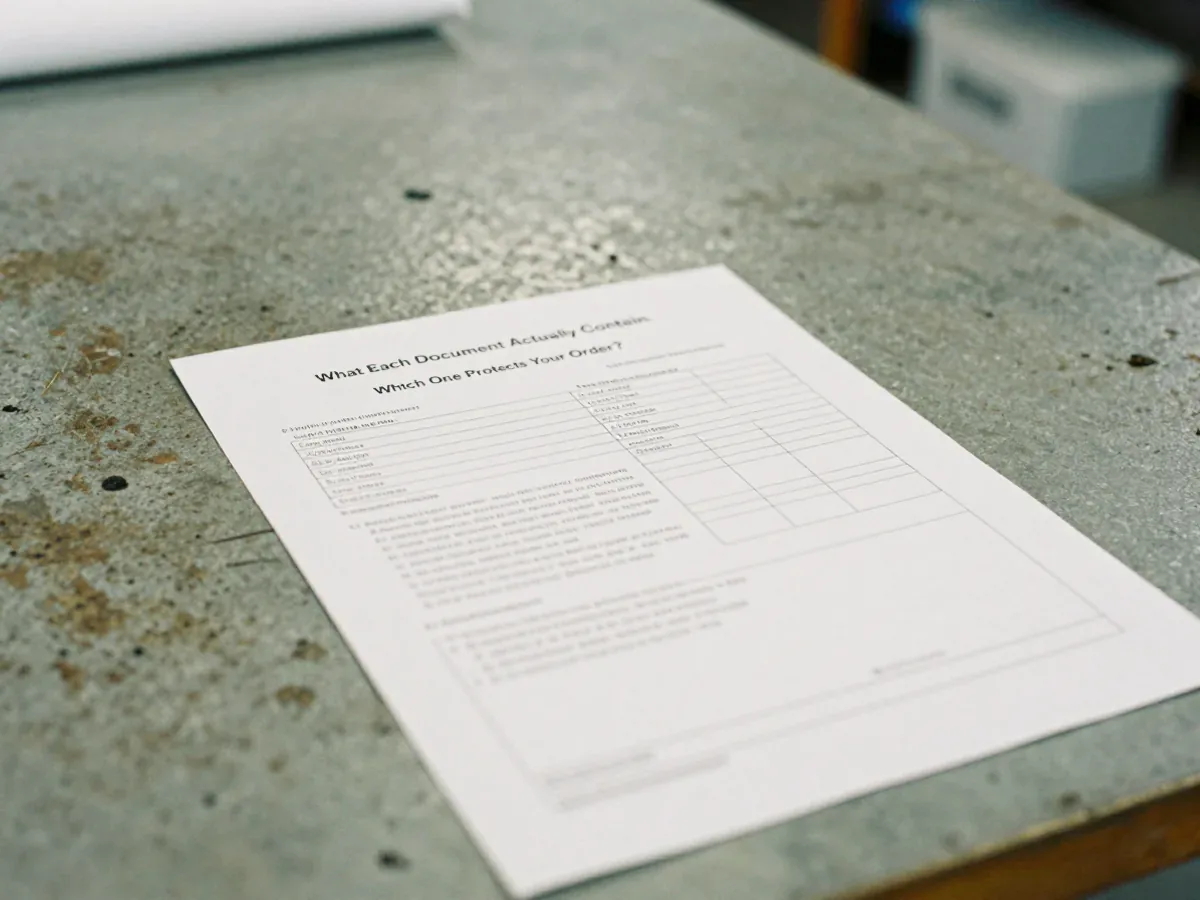
The supplier spec sheet states what the factory intends to produce. It may list a woven polypropylene thickness specification, a target burst strength, and a handle construction detail. These are design intentions, not measurements. A spec sheet can be accurate and still describe a bag the factory struggles to make consistently.
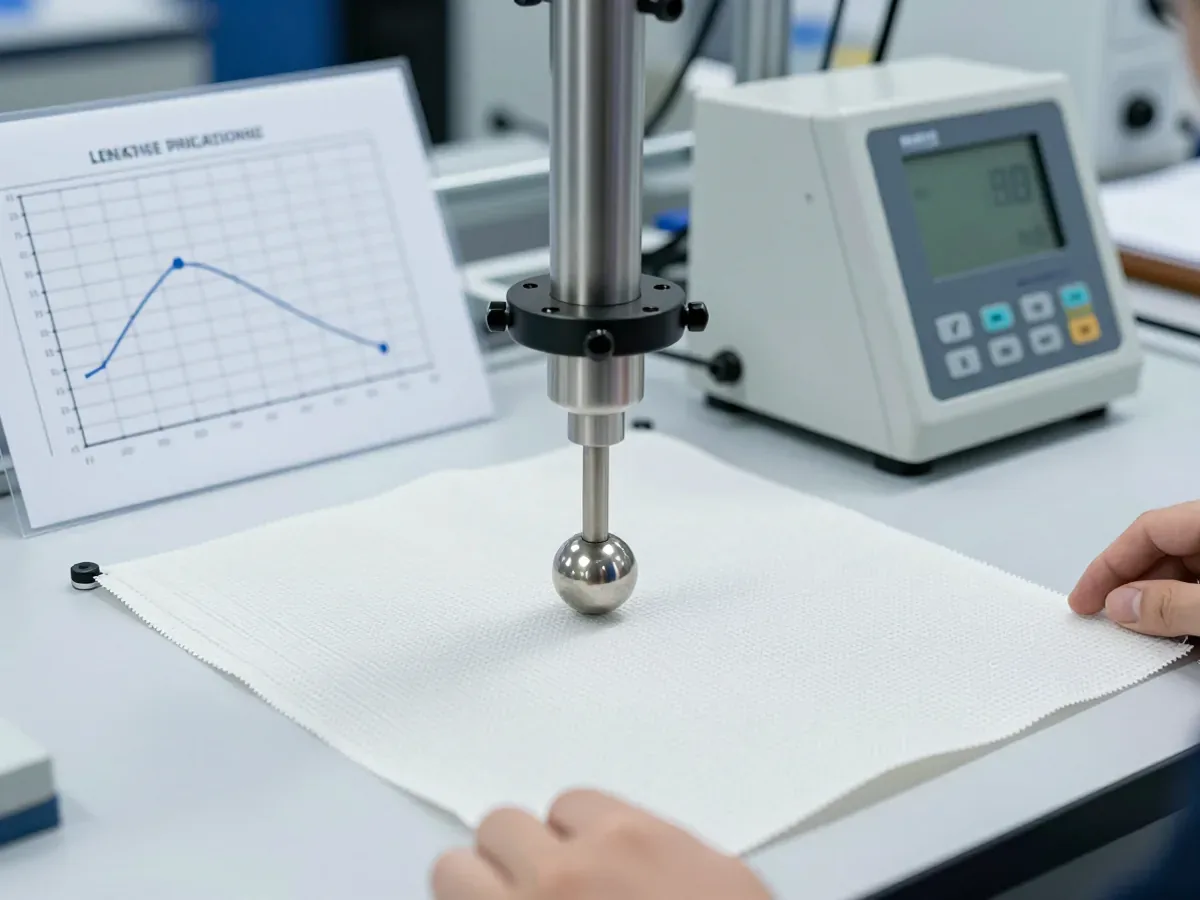
A third-party ASTM report records what a lab measured on specific specimens. ASTM D5034 covers grab strength, pulling on fabric and seams together. ASTM D3787 covers ball burst, pushing a steel ball against fabric until it ruptures. ASTM D1777 covers thickness, taken at multiple points to show uniformity. Each method answers a different question, and a report that includes all three gives a buyer a fuller picture than any single number on a spec sheet.
The spec sheet tells a buyer what the supplier promises. The ASTM report tells a buyer what a lab observed. Those are different kinds of information, and the gap between them is where order risk lives.
Dimension One: Who Produced the Numbers
A number typed into a spec sheet has no author. It may come from a fabric supplier's data sheet, from a previous production run, or from a competitor's published figure. The buyer cannot tell. When a batch arrives with weaker seams than expected, the spec sheet offers no recourse because it never claimed to be a measurement.
An ASTM report from an independent, ISO/IEC 17025 accredited lab carries an author, a date, and a method. That chain matters when a dispute arises. A report issued by the supplier's own QC department is effectively a self-declaration with a formal layout. It can be useful as an internal record, but it does not carry the same weight as an accredited third-party result.
Factory-direct sources can typically provide batch-level test data because they control the production line and can pull specimens from a running lot. Resellers and trading companies often cannot, because they do not hold the goods long enough or do not have access to the line. Asking who produced the numbers filters suppliers quickly.
Dimension Two: One Sample or a Ten-Specimen Lot
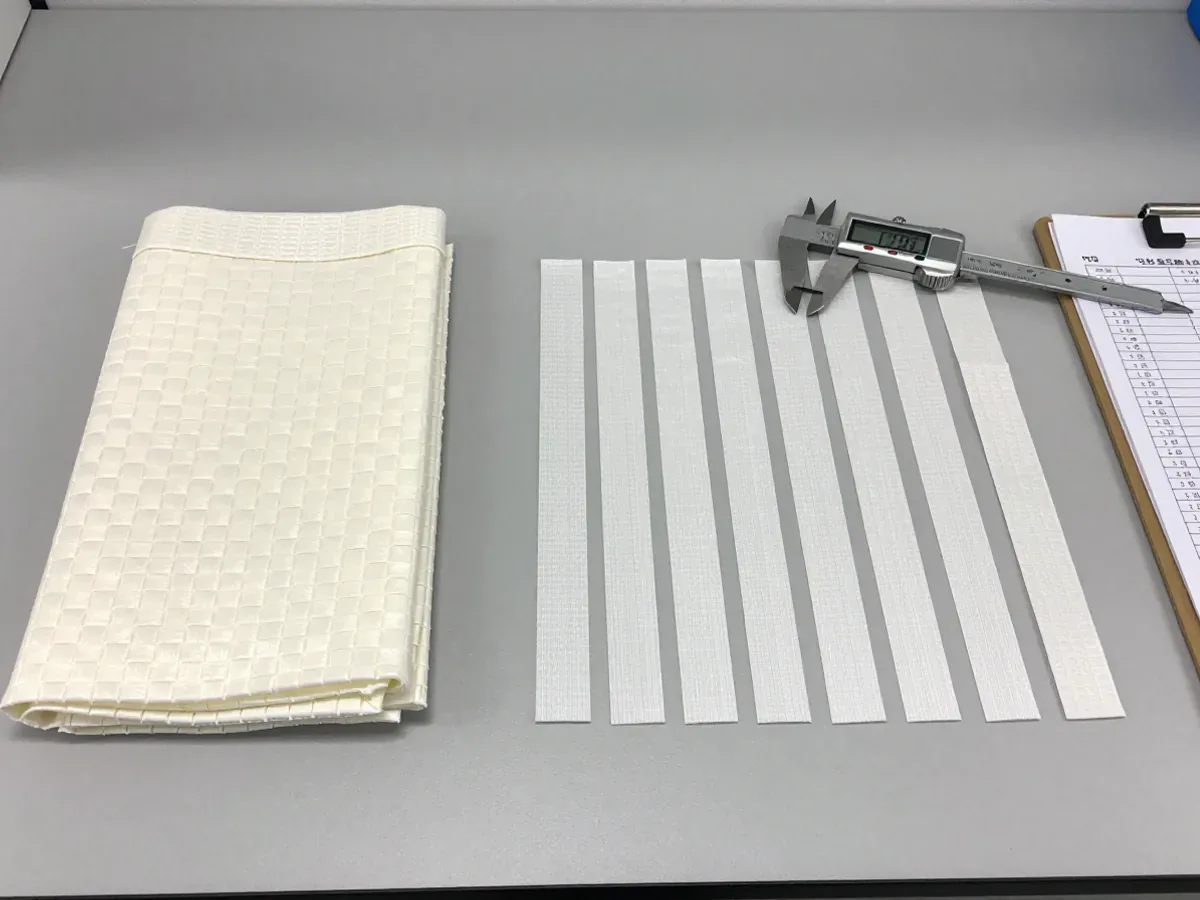
A single perfect bag proves that one bag can pass. It says nothing about the five thousandth bag off the line. Suppliers know this, and a polished pre-production sample is easy to produce under careful conditions. The sample approval stage catches obvious defects, not the latent failures that appear under real-world stress.
A ten-specimen lot tells a different story. When ten specimens are tested and the results cluster tightly, the process is under control. When the average passes but the spread between specimens is wide, the factory is producing inconsistent material. Thin spots and weak seams will appear in the shipment, and the buyer will discover them in the field rather than in the lab.
The specimen count is one of the first things to check on any report. A report built on a single sample is a marketing document. A report built on ten specimens with the individual results shown is a process record. The difference in cost to the supplier is small. The difference in information to the buyer is large.
Dimension Three: Units That Reveal Process Control
The units on a report act as a quick competence check. Grab strength from ASTM D5034 should appear in pounds-force or Newtons. Ball burst from ASTM D3787 should appear in pounds per square inch. Thickness from ASTM D1777 should appear in millimeters or mils, with readings at multiple points.
When a supplier mixes these units or uses vague terms like "strong" or "industrial grade," the report loses its value. A burst strength figure quoted without psi cannot be compared to a specification. A grab strength number quoted without noting warp and weft direction leaves out half the picture. These are small details that separate a lab report from a document assembled to look like one.
Thickness deserves particular attention because it exposes cost-cutting that a single average number hides. A factory trying to save material after sample approval will not make the entire bag thinner, which would be too obvious. It will produce fabric with thick spots and thin spots. A bag is only as strong as its thinnest point, and a multi-point thickness report shows whether the process holds a tight tolerance or wanders.
Dimension Four: What a Failed Batch Costs Downstream
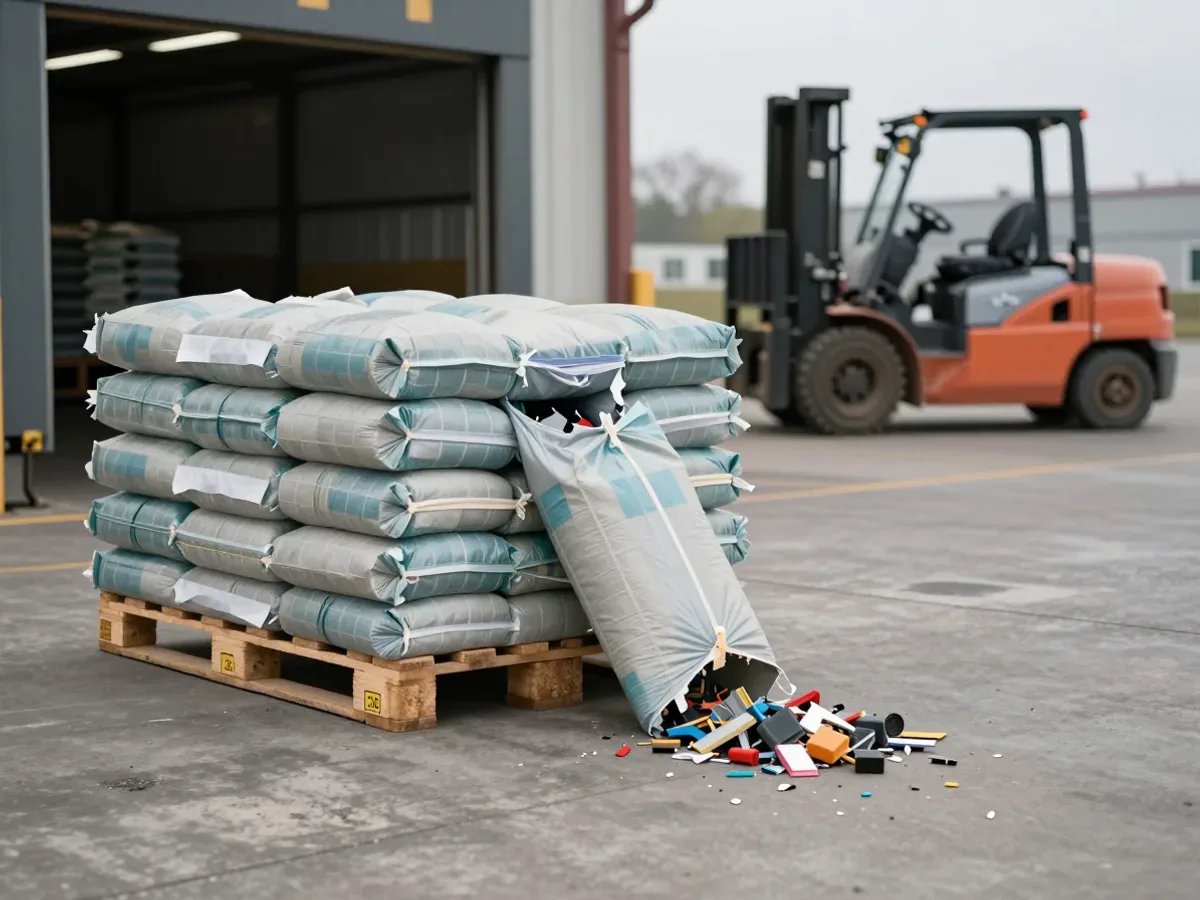
A failed batch does not announce itself at the factory gate. It shows up months later as a customer complaint about a bag that ruptured while moving boxed equipment with sharp corners. The supplier's spec sheet said 200 lb load capacity, and the bag passed when filled with sand. A box corner applies concentrated pressure that tensile strength does not address. The bag fails at a fraction of the rated load.
The cost of that failure runs well beyond the unit price of one bag. Field replacements, freight credits, cleanup of spilled parts, and damage to a distributor's reputation all land on the balance sheet. A single pallet of failed bags returned from a customer site can wipe out the margin from an entire truckload of good ones. The spec sheet offered no warning because it never measured the failure mode.
An ASTM report with ball burst data predicts that failure before it happens. A low burst strength number is a direct indicator of puncture risk. Writing a minimum acceptable value into the purchase order shifts the liability for out-of-spec product to the supplier. The difference between a frustrating loss and a simple credit memo is often a number on a report that was requested before the deposit left.
Which Buyer Should Choose Which Route
The supplier spec sheet suits buyers placing small, low-risk orders where the contents are soft goods and the end user is unlikely to stress the bag. It also works as a starting document during early sampling, before a production method is fixed. A spec sheet plus a careful sample approval covers a limited range of purchases.
The third-party ASTM route suits buyers placing bulk orders for industrial use, where contents include hardware, parts, or job site debris. It also suits distributors who cannot absorb the reputational cost of field failures. For these buyers, a batch-level report from an accredited lab is the baseline, not an upgrade. The report should cover grab strength, ball burst, and thickness, with results from a ten-specimen lot.
A middle route exists for buyers who want more assurance than a spec sheet but cannot yet demand full batch testing. Request the most recent third-party report for the exact model being ordered, check the date and specimen count, and treat it as a screening tool. If the supplier cannot produce even that, the conversation has already revealed something useful.
A Decision Table for the Next Purchase Order
| Question | Supplier Spec Sheet | Third-Party ASTM Report |
|---|---|---|
| Who produced the numbers | Unclear, often no author | Named accredited lab |
| How many specimens | Usually one or none | Ten-specimen lot preferred |
| Units and methods | Vague or mixed | lbf or N, psi, mm per method |
| Batch specificity | Generic, may be reused | Batch-specific when factory-direct |
| Failure prediction | Limited to stated claims | Covers puncture, seam, uniformity |
| Best fit | Small orders, soft goods | Bulk industrial orders, distributor risk |
The table does not rank one document above the other in every case. It shows where each document carries weight and where it goes quiet. A buyer can use both: the spec sheet to define what is wanted, the ASTM report to verify what was made.
What to Ask For Before the Deposit Leaves
The first request is a full ASTM D5034 report, not a pass or fail summary. The report should show grab strength for fabric and seams, with individual specimen results rather than only an average. The second request is ball burst data under ASTM D3787, with the minimum acceptable psi value written into the purchase order. The third is a multi-point thickness report under ASTM D1777, showing minimum, maximum, and average readings.
The fourth request is the lab's accreditation status and the report date. A report from six months ago for a slightly different model is not batch-specific evidence. The fifth request is confirmation that the same testing will run on the production batch, not only on the pre-production sample. Every order runs through four QC checkpoints, and seam strength and bar-tack are tested on every batch rather than inspected by eye. A supplier who can document that routine is showing how the line behaves when nobody is watching.
FAQ
Is ASTM D5034 the same as a load capacity rating?
No. D5034 measures grab strength, pulling on fabric and seams together. It indicates how the bag's construction handles being pulled apart, but it does not produce a load capacity figure in pounds. A load capacity claim should be backed by burst and seam data, not by a grab strength number alone.
Can a trading company supply batch-level ASTM reports?
Often not. Batch-level data requires access to the production line and the ability to pull specimens from a running lot. Factory-direct sources can typically provide it. A trading company may supply an older report for a similar model, which is not the same as evidence for the batch being shipped.
How old can a test report be before it stops counting?
A report should match the batch being produced. A report from six months ago, or one issued for a slightly different model, does not verify the current shipment. For repeat orders, ask for batch-specific documentation each time rather than accepting a reused report.
Does a passing burst strength number mean the bag is waterproof?
No. PP and PE shells resist splashes, but the seams are stitched rather than sealed, so the bag is not waterproof. Burst strength measures resistance to puncture and concentrated pressure. It says nothing about water resistance, and the two properties should not be confused.






