

Four options cover most briefs, and the table is organised by what each one adds to the build rather than by how it.
The sample round answers interior branding: the seam, the handle join and the label are read on a sample before the batch. Interior branding keeps coming up this season as the part of the sheet nobody owns, because the inside is the one surface a customer sees alone.
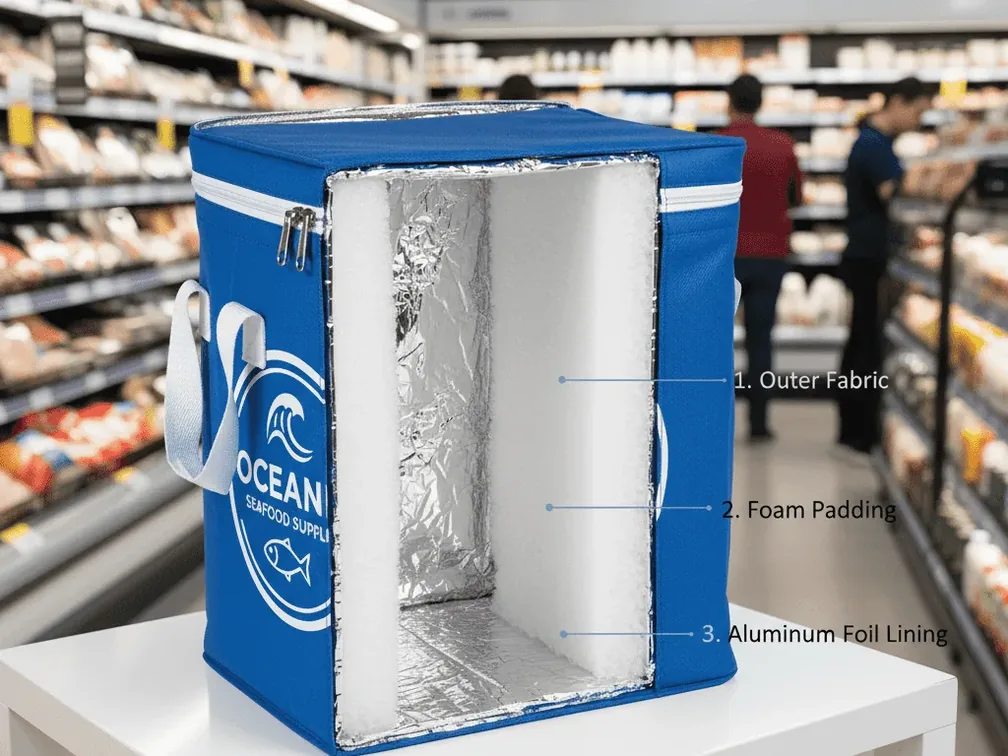
A buyer opened a finished tote on our bench, looked into it and closed it again without a word, because the inside was a plain unlined shell on a bag whose face was printed.
It is read here as a construction decision first and a branding decision second.
That order matters, because each treatment adds a different thing to the build and each one has its own test. What follows sets out the 4 treatments that cover most briefs, the fastness checks behind them, and the point in the build where the inside has to be settled.
What the inside of a bag has to do
Exterior branding is made to be seen at a distance, where it competes with the shelf, the packaging and every other item on display. The interior is seen at close range, in a private moment, which is why a small print or a lining in a second colour registers far more strongly than its size suggests.
The second job is information. The outside says what the brand is, while the inside can say how it behaves, through a care note, a message or a detail that rewards attention. A customer who finds a care line printed inside the bag has been told something the outside could not carry.
The third job is difference, and it is the one buyers underestimate. Interior treatments are less common than exterior ones, so a range that invests there stands apart without following a trend the whole trade is already running. Those 3 jobs are the whole brief: close range, information and difference, and a treatment that misses one of them is decoration rather than branding.

The four treatments and what each adds
Four options cover most briefs, and the table is organised by what each one adds to the build rather than by how it looks. A contrast lining adds a layer of material and the labour to fit it, while a print adds ink and a pass through the press and no material at all.
| Treatment | What the customer sees | What it adds to the build | Where it suits |
|---|---|---|---|
| Contrast lining | A second colour behind the opening | A full layer of material plus the labour to fit it | Gift and retail totes that are handled before use |
| Interior print | The brand on the lining or the reverse of the outer panel | Ink and a print pass, with no extra material | Promotional bags that ship flat and fold again |
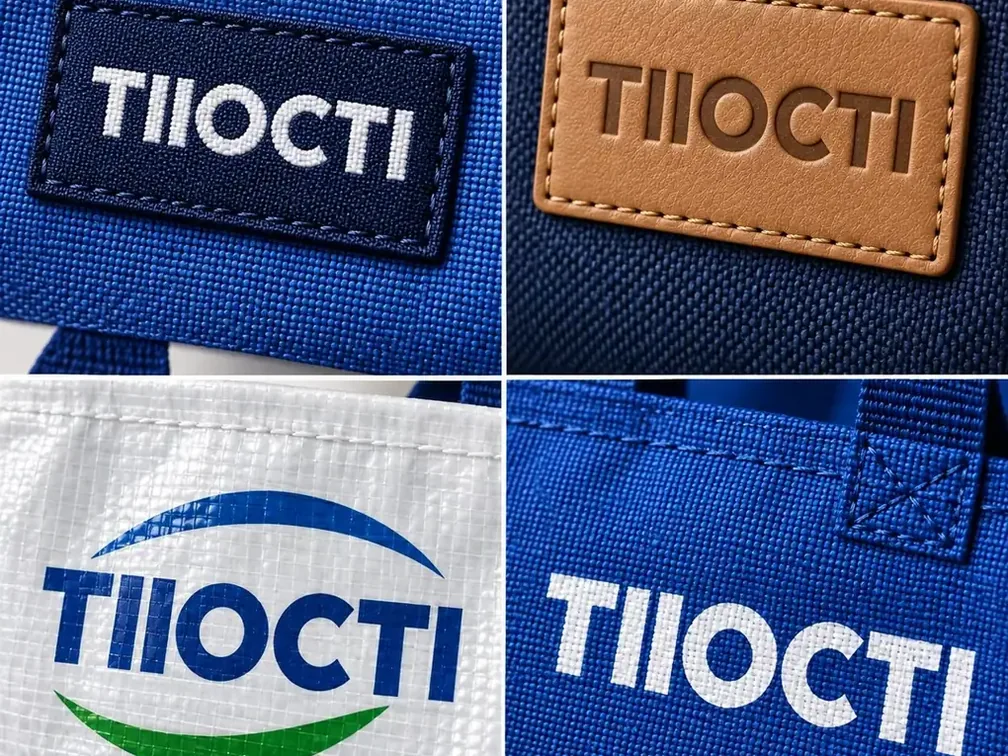
| Woven label or tag | A small branded block with the care line | A label plus its stitch line inside the seam | Any bag that has to carry care information |
| Interior pocket | A working detail in the opening | Material and labour for the pocket and its edge | Organisers, tech packs and travel bags |
Weight and bulk follow the layer, which is the part of the table buyers skip. A full lining makes a tote heavier and less packable, and that matters for a programme that ships flat or expects the customer to fold the bag between shops. An interior pocket is the other direction: our travel pack carries an organizer panel with slip pockets and elastic loops for a phone, pens, cables and a power bank, so the pocket earns its material in use.
What the fastness test proves
Colour fastness matters more inside a bag than out, because the lining rubs against whatever the bag carries. A lining that transfers colour onto a garment creates a complaint the brand owns, and the fault is in the cloth rather than in the print.
This part of ISO 105 specifies a method for determining the resistance of the colour of textiles of all kinds, including textile floor coverings and other pile fabrics, to rubbing off and staining other materials.
That rubbing method from ISO 105-X12 is the test a lining has to pass, and it runs 2 cloths, one dry and one wet. Washing is a separate figure, and ISO 105-C06 approximates one domestic laundering in a single test, so a care claim on a printed interior has something to rest on.
The assembly order is the other half of the evidence. An interior print on a panel has to go on before the bag is built, which changes both the production sequence and the sampling plan. Fabric, webbing, zips and thread are held against the approved spec before cutting, so a lining is checked as a material rather than as a decoration. An interior treatment needs a first article that shows the inside, with photographs of the opened bag, the lining seam and the label placement.
Where the inside and the outside agree
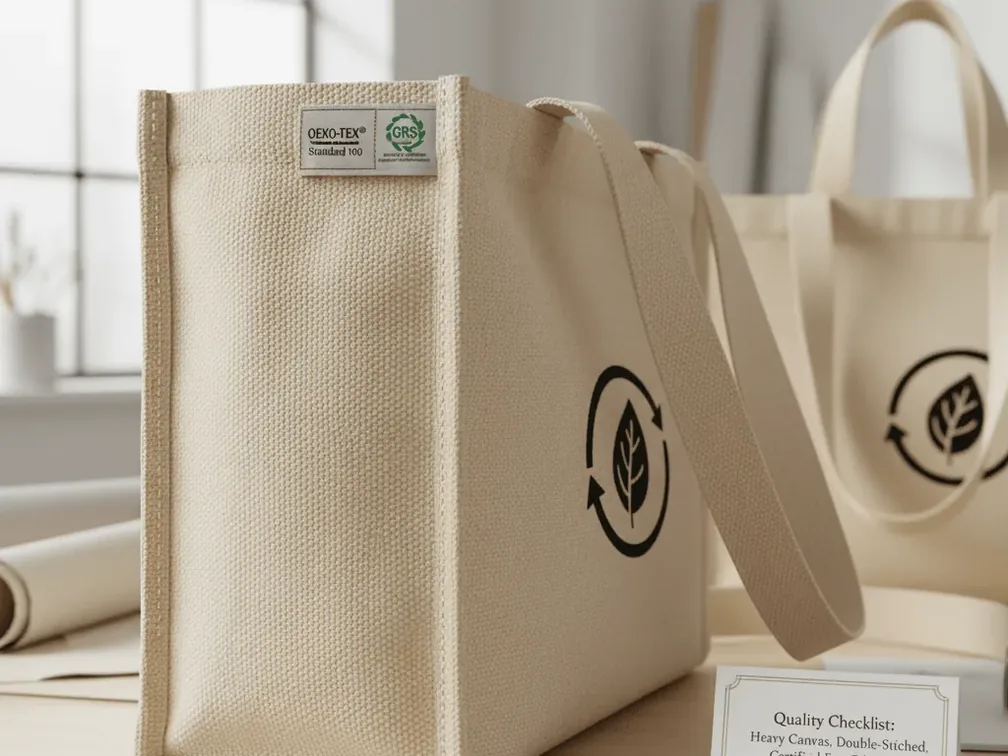
Interior branding works when it is coordinated with the rest of the bag rather than added at the end. A lining colour that echoes the exterior print, a woven label that repeats the care message and a tag that continues the story outside all reinforce one impression instead of competing.
The practical method is to design the complete package at once: exterior print, interior treatment, label and tag. Programmes that do that produce a coherent item, while programmes that add the pieces separately produce one that looks assembled. Each of those 2 approaches is visible in the finished bag.
Consistency across a range is worth the same attention. A brand that uses a signature lining in its shopping bags can carry it into totes and pouches, which builds recognition without reprinting an identity on every item. The one brake is weight and packability, so a flat-shipping promotional bag is better served by a print than by a full layer. A label pocket is the smallest version of the same idea for a bag that has to say what is inside, and it takes a patch of clear film rather than a printed lining.
Questions buyers ask about the inside of a bag
Which interior treatment should a first range choose?
Start with 1 treatment that survives flat packing and repeated folding, which usually means an interior print or a woven label. A lining can follow in the second range, once the bag shape is settled.
Where should an interior print go, on the lining or the panel?
Either can work, but the two read differently through the cloth, so the sheet has to state which one it is. A print on the reverse of the outer panel shows through as a ghost, while a print on the lining sits behind the opening.
What has to be tested before a lining is approved?
The rubbing performance first, because the lining contacts what it carries, then the washing figure if the bag carries a care claim. Both results belong on the record rather than in a conversation.
What should the first article show on a lined bag?
Ask for the inside as well as the face: the first article should be photographed open, with the lining joint and the label position both in frame. A sample that is only shot from the front hides the 3 places where the line drifts.
What makes an interior worth the layer
My judgement is that the inside earns its cost when it is specified as part of the build and loses it when it is added after the sample. An interior print that arrives after the panels are cut either delays the run or gets dropped, and a dropped interior leaves a bag that looks unfinished the first time it is opened.
Consistency between batches is the second half of that judgement. A lining is a batch material, so the colour match between lining lots needs the same approval discipline as the exterior, which in practice means a recorded reference rather than a verbal match.
The 3 jobs at the top of this page are the test. A customer opens the bag, sees a surface that looks finished, and reads something the outside could not tell them. A treatment that does not do one of those 3 things is decoration rather than branding.
How to specify an interior treatment
Five lines on the sheet settle an interior before the sample is cut, and they follow the order the bag is built in.
- Name the treatment type, with the material or ink reference, the position and the size.
- State whether a print sits on the lining or on the reverse of the outer panel, because the two read differently.
- Write the fastness requirement and the test it refers to, then record the result against the batch.
- State the assembly implication, so the print or the lining layer is scheduled before the bag is joined rather than after.
- Ask for the 3 first article views of the inside, and keep a reference swatch for the next lining lot.
Approve the artwork before the run starts, since a print or a woven label is signed off before the bulk and a change after that point costs a run. The branding route itself is chosen early, because screen print, heat transfer and a woven label each need a different artwork file proofed before production. The finished bag check also keeps the logo and its stitch density in the hand check, which is how a label that sits crooked is caught before packing.
Two sibling guides cover the pieces around this one. The care label that has to sit on the bag itself is read in our Care Labels on Custom Bags: The, and the hang tag and insert side of the same package is set out in our Hang Tags and Inserts for Bag.
Related reading from the same line: Care Labels on Custom Bags: The Hang Tags and Inserts for Bag.